

Appearance – a “distorted mirror” of self-doubt.
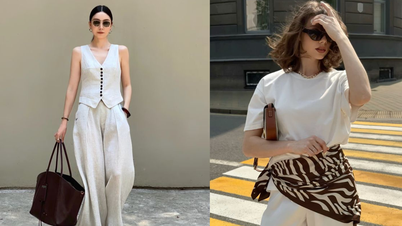
The debate over men's and women's clothing is a timeless one. Many women have several wardrobes and still feel like they "have nothing to wear," while men sometimes only need a few shirts, a couple of pairs of trousers, and a few t-shirts to be sufficient for all four seasons. Women are called the "fair sex," and the gentle reminder "eat for yourself, dress for others" has long kept women's fashion in a state of... overload. Some women are bothered by even a small wrinkle on their clothes, because they are constantly haunted by the preconceived notion that they must "dress beautifully for their husband," or at least to make the man beside them "proud."
However, the story of fashion today has transcended those outdated stereotypes. In the world of social media, where everything is highlighted by glamorous camera angles, the pressure to dress well is no longer a "privilege" of women.
Scrolling through social media, one easily encounters profiles overflowing with designer goods, supercars, and luxurious vacations, where each photo is meticulously curated like an advertisement. Gen Z calls this "chic and extravagant," a lavish lifestyle that seems to coat everything in a golden hue of prosperity. But how extravagant is truly the case remains unclear, because behind that glitz and glamour, numerous scandals emerge: borrowed designer items, counterfeit goods displayed as if they were real, and outfits and accessories worth a year's salary used only for a single photo before being stored away.
A picture with many likes might bring fleeting joy. But a designer handbag costing a month's salary can force you to tighten your belt for months afterward. The question is: where does true happiness lie? In the moment of admiration on social media, or in real life – where you have to carefully budget every penny?
The explosion of social media has inadvertently created a never-ending race. Because people only see the best version of each other, the feeling of "I'm inferior to them" is ever-present. No one posts about tiring days, unpaid wages, or buying counterfeit goods... but instead, everyone focuses on showing off their best outfits, their most polished faces, and their most glamorous trips.
Young people grow up feeling the need to constantly reinvent themselves. This includes not only internal renewal—knowledge and skills—but also external changes: hairstyles, shoes, accessories, style, wardrobes… all happening continuously. A day without "looking good" feels like falling behind. Statements like, "If you don't dress well, nobody will notice," "Wearing the same outfit as someone else at an event is so embarrassing," or "Posting a picture of an outfit you've already worn once ruins the mood"… sound like jokes, but they're painfully true.
And young people carry that mindset into their family life: an outfit worn only once for a photoshoot and then hung in the closet. A pair of shoes bought because they're trendy but hurt after just a few wears. A bag bought on installments just for check-ins. When the cycle of buying - wearing - getting bored - discarding becomes so short that it only lasts a few weeks, the consequences extend beyond just the wallet.
A mindset of contentment
In Vietnam, hundreds of thousands of tons of fashion waste are generated each year, mostly from cheap, low-quality clothing or items that are "no longer fashionable." The pressure to dress stylishly, therefore, not only drains the finances of young people but also silently harms the environment.
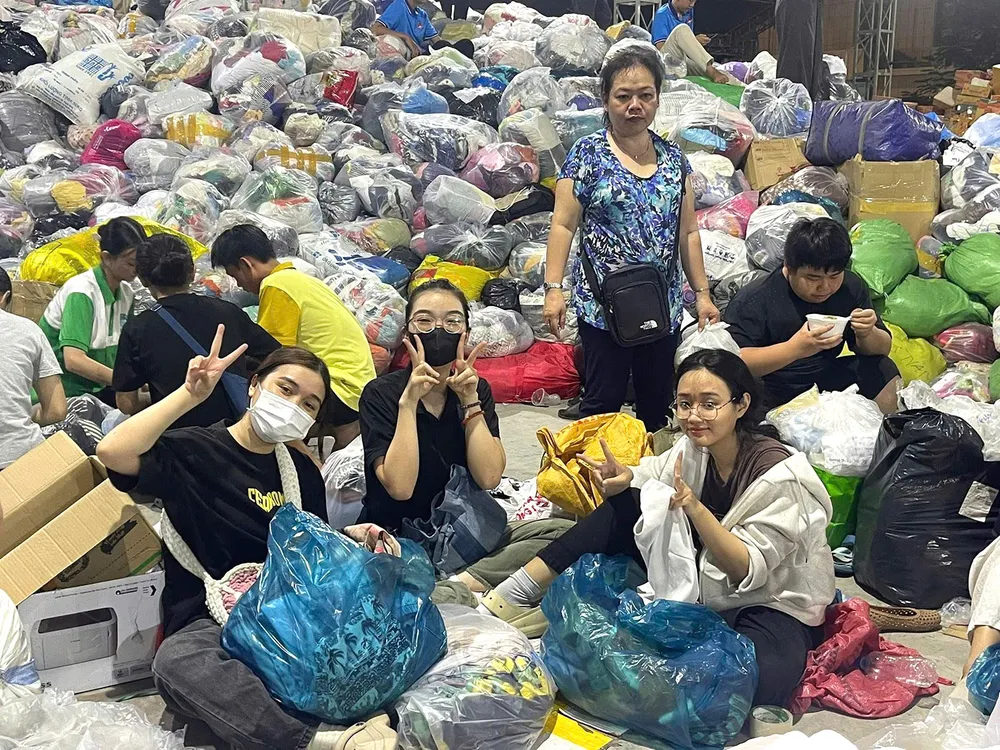
When we place these two stories side by side—one about young people caught in the pressure of dressing stylishly, and the other about flood victims receiving relief clothing amidst the paradox of an overabundance of women's clothing—we realize that perhaps fashion is becoming a larger-than-ideal vortex.
Happiness doesn't come from how many things you have in your closet, nor from the designer bag that makes your hands tremble when you pay. Happiness lies in balance—in the relationship between yourself and life, between genuine needs and financial means, between self-respect and not chasing after the opinions of others. A well-fitting outfit can boost your confidence. But lasting confidence only comes when you know who you are, what you need, and where the boundaries lie so that looking good doesn't become a burden.
Dressing up isn't bad, and there's nothing wrong with looking good. But when looking good becomes a burden, when a picture looks better than real life, when fashion items become a measure of a person's worth, that's when we need to stop and look deeper into what happiness truly is.
True happiness is when you don't have to worry about monthly installments, when you don't have to fear being judged for wearing the same outfit twice, or when you don't feel embarrassed about wearing a shirt three years old that still suits you. Happiness is when you know enough, are simple enough to be comfortable, understand yourself well enough not to follow the crowd, and are mature enough to realize that what truly defines a person's value isn't expensive clothes or designer bags, but a self-reliant mindset and a peaceful life.
On numerous occasions and in various forums, psychologists have pointed out that young people can absolutely live beautifully in their own way: dressing appropriately for the occasion, prioritizing quality over quantity, choosing a sustainable lifestyle, respecting themselves, and not letting their wallets and the planet suffer in invisible races... However, the percentage of young people who achieve this is still too small compared to the majority, a disparity as significant as the issue of men's and women's clothing sent as relief aid.
Source: https://www.sggp.org.vn/hanh-phuc-khong-chi-o-tam-ao-post826207.html

![[Photo] General Secretary and President visit the China-ASEAN AI Application Cooperation Center](https://vphoto.vietnam.vn/thumb/1200x675/vietnam/resource/IMAGE/2026/04/17/1776404277677_vna-potal-tong-bi-thu-chu-tich-nuoc-tham-trung-tam-hop-tac-ung-dung-ai-trung-quoc-asean-8706616-2286-jpg.webp)


![[E-Magazine]: Listening in silence to the changing seasons](https://vphoto.vietnam.vn/thumb/402x226/vietnam/resource/IMAGE/2026/04/17/1776436870717_e-magazine-lang-w1200t0-di2615d199d5160004t11920l1-lynkgm-017.webp)






















![[Photo] National Assembly Chairman Tran Thanh Man attends the policy seminar to promote Vietnam-Türkiye cooperation.](https://vphoto.vietnam.vn/thumb/1200x675/vietnam/resource/IMAGE/2026/04/16/1776351415367_vna-potal-chu-tich-quoc-hoi-tran-thanh-man-du-toa-dam-chinh-sach-thuc-day-hop-tac-viet-nam-tho-nhi-ky-8705791-jpg.webp)

















































Comment (0)