

C. Patchwork in many subjects
After four years of implementing the 2018 General Education Program, many secondary and high school vice principals in Ho Chi Minh City report that some subjects are currently being implemented in a piecemeal fashion, lacking coherence and therefore failing to achieve optimal results. The implementation of teaching local education content and organizing career guidance activities still faces difficulties. Classroom activities sometimes appear superficial, ineffective, and not truly reflect the intended purpose. Teachers still have limitations and are not yet fully capable of teaching all subjects, leading to implementation not aligning with the spirit of innovation, causing difficulties and inefficiency.
A deputy principal of a junior high school in District 1 (Ho Chi Minh City) admitted that there aren't enough teachers to adequately implement the curriculum. For example, the new curriculum includes experiential activities related to career guidance and local education, and although these are assigned to subject departments, the teachers lack the necessary expertise, thus hindering the effective execution of these activities.
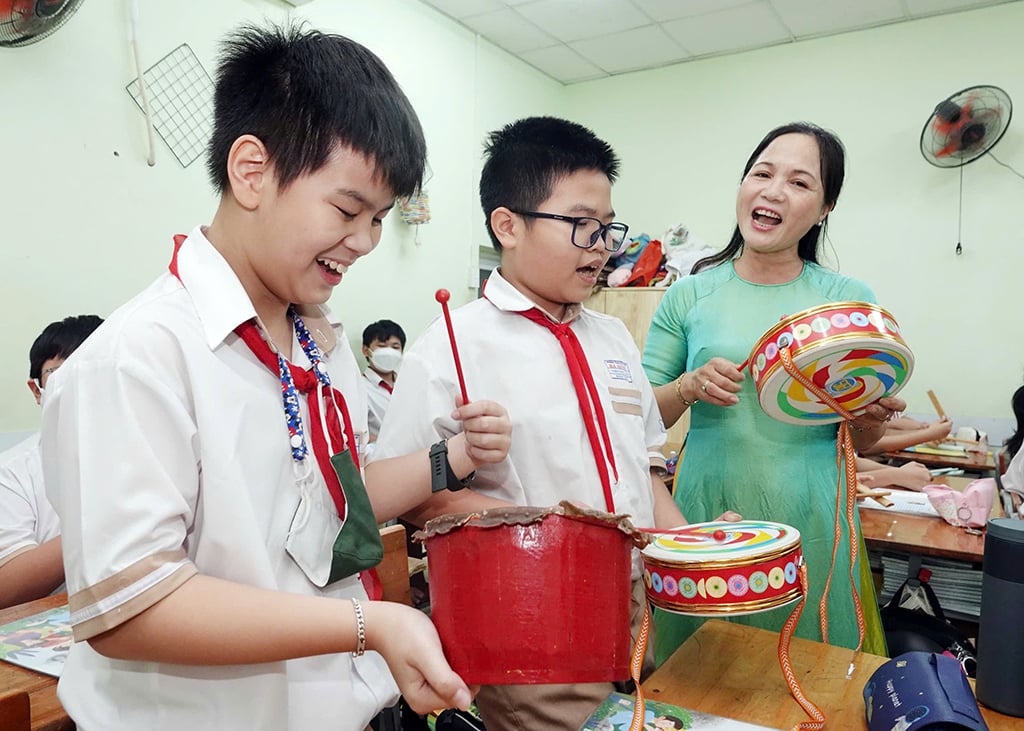
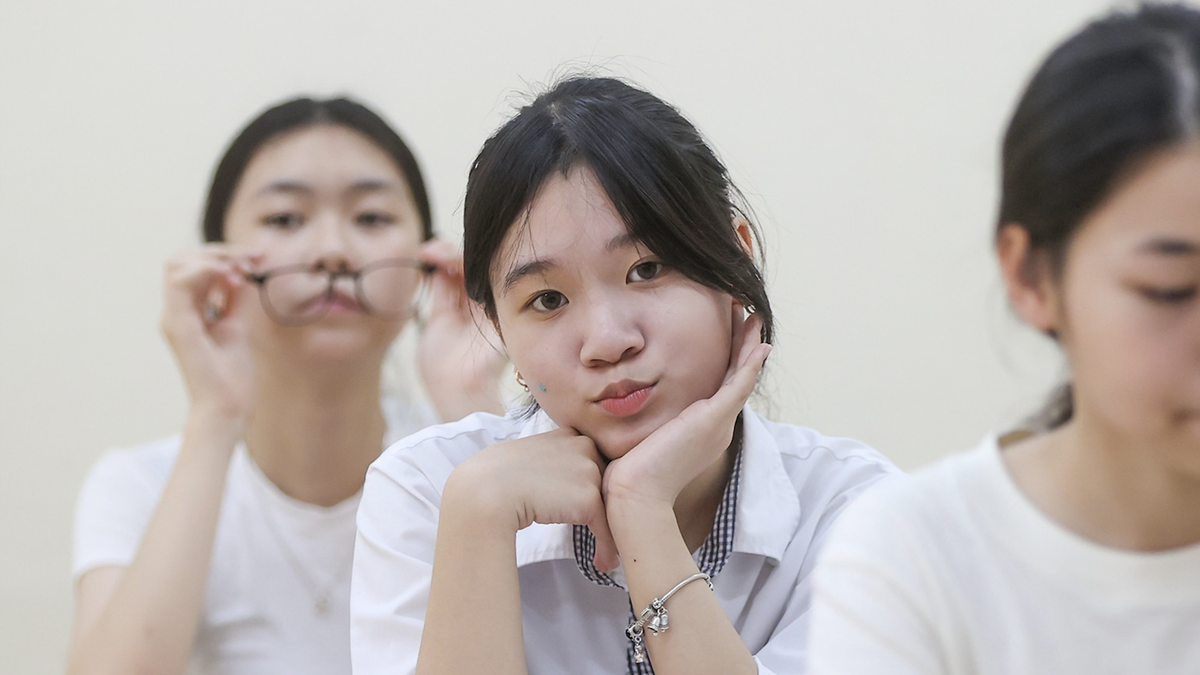
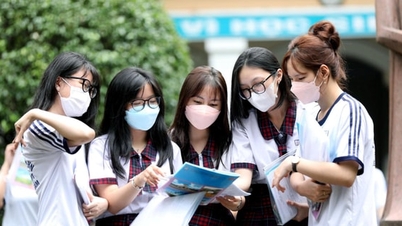
With the implementation of the new education program, many schools are facing a severe shortage of music teachers but have an excess in other subjects.
PHOTO: DAO NGOC THACH
According to the vice principal, there are still many issues in organizing career guidance experiential activities. For example, allocating 105 lessons per year, averaging 3 lessons per week, some schools dedicate one lesson to outdoor activities, one to the homeroom teacher, and one to a thematic lesson. Organizing experiential activities in this collective manner will not meet the desired requirements and will only increase the workload for teachers.
Similarly, Mr. Nguyen Quang Dat, Principal of Tay Thanh High School (Tan Phu District, Ho Chi Minh City), said that experiential education activities for career guidance and local education do not have dedicated teachers, so anyone can participate in teaching after training.
A lecturer from Ho Chi Minh City University of Education once commented that teachers from fields other than psychology often struggle to grasp and apply basic psychological concepts. Furthermore, according to this lecturer, some teachers participate in counseling and career guidance training courses only because of assignment rather than personal passion. As a result, the quality of counseling declines, directly affecting the ability to support students, preventing them from receiving the necessary and adequate help for personal and professional development. This significantly impacts the effectiveness of the program's objectives.
Teachers who teach multiple subjects do not have classes.
Another reality, according to school leaders, is that the implementation of the new curriculum, where students can choose their subjects, has led to a localized surplus of teachers in individual schools.
At Nguyen Huu Tho High School (District 4, Ho Chi Minh City), according to observations by Thanh Nien reporters, industrial technology and agricultural technology subjects were hardly chosen by students. Only a small number of students intending to pursue careers in medicine or pharmacy chose biology.
According to Mr. Nguyen Quang Dat, at Tay Thanh High School, there is an excess of teachers in biology, technology, computer science, economics, and law. These teachers do not meet their mandatory teaching hours (17 hours/week). Therefore, the school assigns them to teach educational activities or converts them to other duties such as invigilation duty or office duty to ensure they receive their salaries and to serve as a basis for evaluating criteria for additional income according to the resolution of Ho Chi Minh City.
Meanwhile, Mr. Huynh Thanh Phu, Principal of Bui Thi Xuan High School (District 1), said that for chemistry alone, previously, according to the school's staffing plan, there had to be enough teachers to teach 15 classes per grade level under the old curriculum. However, now, with the selection of subjects under the new curriculum, each grade level only has 4 classes teaching chemistry. According to regulations, the principal still has to teach a certain number of lessons, but teachers now lack teaching hours. Mr. Phu stated: "My expertise is chemistry, but I can't teach it because there are too many teachers. I have to switch to studying local education to meet the required number of teaching hours."
According to the principal of Bui Thi Xuan High School, teachers in the technology department also do not have teaching hours. The school has to find ways to reassign and convert teaching hours to ensure they meet the requirements for receiving their salary and income.
According to Mr. Phu, the imbalance and shortage of teachers varies from school to school. In some schools, students tend to choose science subjects, resulting in a surplus of teachers for social sciences or technology; conversely, in other schools, students only choose social sciences, leading to a surplus of teachers for science subjects.
"Typically, in top-tier schools, when students choose science subjects, teachers of social science subjects lack the required teaching hours, and vice versa. Therefore, if we only base the downsizing on the surplus of teachers, but 'accidentally' there's a fluctuation in student numbers in any given year, schools won't be able to recruit additional teachers in time," Mr. Phu commented.
Therefore, in addition to solutions within each school, Mr. Phu suggested that after schools finalize their class rosters, they should review and report to the Department of Education and Training to transfer teachers between schools, possibly within the same cluster, to prevent situations where school A has a shortage of teachers while school B has a surplus.
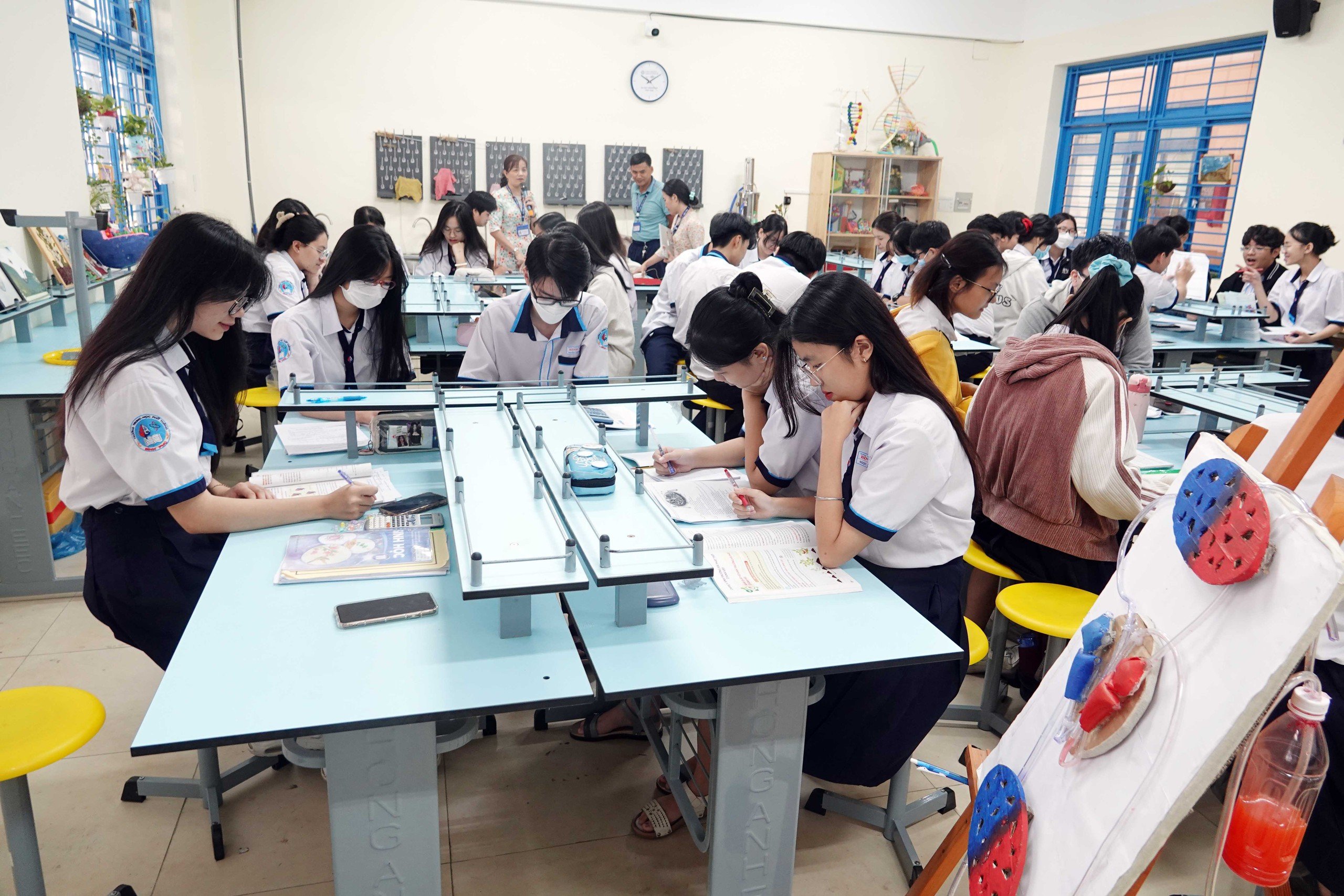
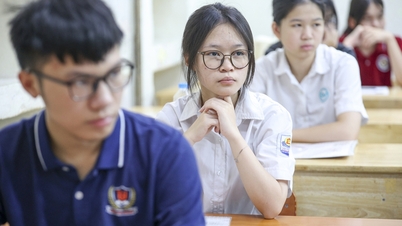
When implementing the new curriculum, where students could choose their subjects, a localized surplus of teachers arose in some schools.
PHOTO: DAO NGOC THACH
SEVERE DEBT OF MUSIC AND ART TEACHERS
Conversely, the majority of high schools today are facing a severe shortage of music and art teachers due to a lack of recruitment. Currently, many high schools are having to drop subjects or sub-subjects because of the lack of teachers for these two art forms.
Therefore, Mr. Nguyen Quang Dat frankly admitted: "The program's stated goal is for students to choose their subjects, but this hasn't been implemented properly. If students were allowed to choose in the true sense, where would we find teachers?"
Furthermore, according to Mr. Dat, although teachers have shifted from focusing on knowledge to developing qualities and competencies, some still adhere to old methods. This includes a segment of teachers who don't carefully read and implement the curriculum's required learning outcomes, instead simply following the textbooks. Many of these teachers choose the safe option of compiling content from various textbooks for teaching.
Some schools do not have enough functional rooms as required by regulations.
In a report submitted to the Ministry of Education and Training in early October regarding the implementation of tasks for the new school year, the Ho Chi Minh City Department of Education and Training stated that some localities (District 12, Binh Tan; Binh Chanh District, Hoc Mon District, etc.) still do not meet the conditions for teaching two sessions per day, and some schools do not have enough functional rooms as prescribed by the 2018 General Education Program.
Some schools have overcrowded classrooms, affecting the quality of learning. Some educational institutions still face a shortage of teachers in many subjects, forcing them to hire contract or visiting lecturers to ensure sufficient teaching staff. The teacher shortage is mainly concentrated in English, physical education, music, and art due to a lack of qualified candidates.
The education sector in Ho Chi Minh City still faces difficulties in developing the teaching staff and investing in the development of school systems in some districts, especially those with large populations.
Organizing extracurricular activities faces challenges in terms of scheduling and ensuring the consensus of participating students, while also considering the school's organizational capabilities.
Teachers at educational institutions lack specialized training and experience in organizing life skills education activities, so most institutions collaborate with businesses to implement them. Some institutions have not provided complete information about extracurricular activities to parents, leading to misunderstandings and misconceptions that these activities are mandatory. This has negatively impacted the policy of socializing education by increasing experiential, practical, and hands-on activities for students.
Source: https://thanhnien.vn/chuong-trinh-giao-duc-pho-thong-2018-khong-hoc-sinh-dang-ky-nhieu-mon-thua-giao-vien-185241023162746039.htm
![[Photo] Admire the coral "masterpiece" amidst the million-year-old heritage of Dak Lak province.](https://vphoto.vietnam.vn/thumb/1200x675/vietnam/resource/IMAGE/2026/05/30/1780107638639_y25-jpg.webp)



















































































Comment (0)