

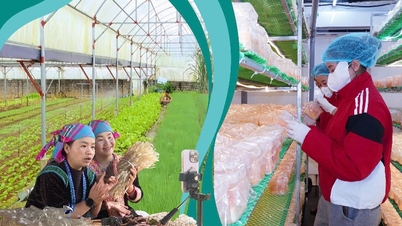
In recent times, Lang Chanh district has continuously promoted the search for, linkage with, and development of new crops that bring high economic value. Among them, bamboo and apricot trees, grown for their leaves, are expected to be the new "poverty alleviation crops" for the local people.
 The bamboo trees are grown in Tan Thuy village, Tan Phuc commune.
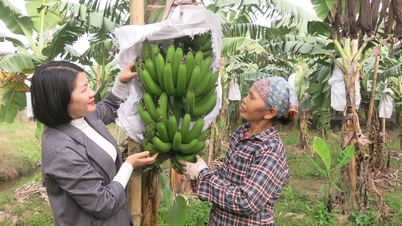
These two types of bamboo and rattan plants are well-suited to the climate and soil conditions of Lang Chanh district. According to research, rattan is currently a key crop yielding high economic returns in many northern mountainous provinces. The plant has the advantage of producing a larger new crop after each leaf harvest. In Lang Chanh, Mr. Mai Xuan Thao in Dong Luong commune has cultivated rattan and developed a leaf-harvesting model on nearly 20 hectares.
Besides harvesting leaves that meet the criteria for drying and export, the smaller branches and leaves can be used as feed for buffaloes and cows. During the bamboo shoot season, people prune some leaves to sell, increasing their income. This is an easy-to-care-for plant, ready for harvest after 8 months; leaves can be harvested 6 to 7 times a year. Currently, Mr. Thao's family is preparing documents to establish a cooperative, aiming to build a processing plant for exporting the leaves of the Giang plant.
Similarly, the apricot blossom tree is also a crop grown for its leaves. Lang Chanh district is developing this tree into a key local crop. This is because it is easy to grow, adapts well to natural conditions, requires low investment, but has a long harvesting cycle. With 300 apricot blossom bushes planted per hectare, it can generate an income of 120 to 150 million VND per year. Dried apricot blossom leaves can be exported to markets in Taiwan, China, Japan, etc. Currently, in Lang Chanh district, Tan Diamond Company (located in Hanoi) is investing in planting 30 hectares of apricot blossom trees in Yen Khuong commune, while also processing and exporting them. In 2024, the company plans to expand the area to 300 hectares in several communes such as Yen Thang and Tan Phuc. In phase 1, the company is leasing land from local people, hiring them to plant, care for, and harvest the trees. In the next phase, the company plans to supply seedlings to local people, who will then cultivate the crop in collaboration with the business, with the company committing to purchasing the entire harvest.
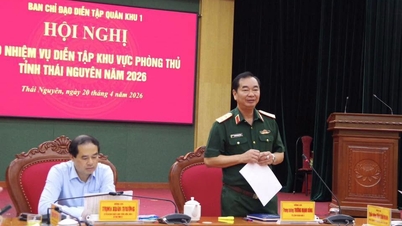
According to Tran Manh Thang, Vice Chairman of the Tan Phuc Commune People's Committee: The locality is currently experimenting with planting apricot and bamboo trees on an area of 2 hectares in several villages. It is planned to expand planting to 30 hectares in Chac Ranh village. Considering its economic value, as well as its characteristics and suitability to the climate and soil, this type of tree has many advantages. With ample land available, if all the necessary conditions are met to expand production linkages and product distribution, it is hoped that this will be a "poverty alleviation crop" for the people in the future.
Besides new crops showing positive results such as apricot blossoms and bamboo, Lang Chanh district has also made many efforts in maintaining and developing traditional strong crops. Specifically, the district has focused on intensive cultivation and restoration of over 5,000 hectares of bamboo forests. It has also expanded the area for planting bamboo in communes such as Yen Khuong, Yen Thang, and Lam Phu. Furthermore, the district has encouraged and expanded the cultivation of medicinal plants on dozens of hectares in the communes of Tan Phuc, Dong Luong, Giao An, Tri Nang, Yen Khuong, and Yen Thang, yielding positive results.
To foster sustainable supply chains, Lang Chanh district has prioritized attracting investment from businesses, especially those involved in processing and manufacturing, particularly those linked to intensive cultivation of raw materials such as bamboo, rattan, and other similar species. To date, the district has attracted 11 businesses, cooperatives, and timber processing facilities. These facilities primarily focus on the production and processing of products from bamboo, rattan, acacia, and other miscellaneous timber species.
Text and photos: Dinh Giang
Source
![[Photo] General Secretary and President To Lam meets with National Assembly delegates from ethnic minorities.](https://vphoto.vietnam.vn/thumb/1200x675/vietnam/resource/IMAGE/2026/04/20/1776696701056_a1-bnd-8331-3342-jpg.webp)

![[Image] National Assembly discusses the implementation of the socio-economic development plan.](https://vphoto.vietnam.vn/thumb/1200x675/vietnam/resource/IMAGE/2026/04/20/1776696707422_ndo_br_img-20260420-185419-jpg.webp)









![[Infographics] Hai Tien Beach Tourism Festival 2026 and celebratory activities](https://vphoto.vietnam.vn/thumb/402x226/vietnam/resource/IMAGE/2026/04/20/1776687221715_infographics-le-w1200t0-di2616d199d1165828t11358l1-2026-029.webp)




















































Comment (0)