

1. Legal basis
Vehicle identification plates are a crucial element in traffic management, applicable to both motorcycles and cars. This is a unique license plate issued to each vehicle to identify it, making it easier for authorities to manage and track. The use of identification plates not only prevents forgery and the use of vehicles with unclear origins but also protects the rights of vehicle owners and enhances traffic security and order.
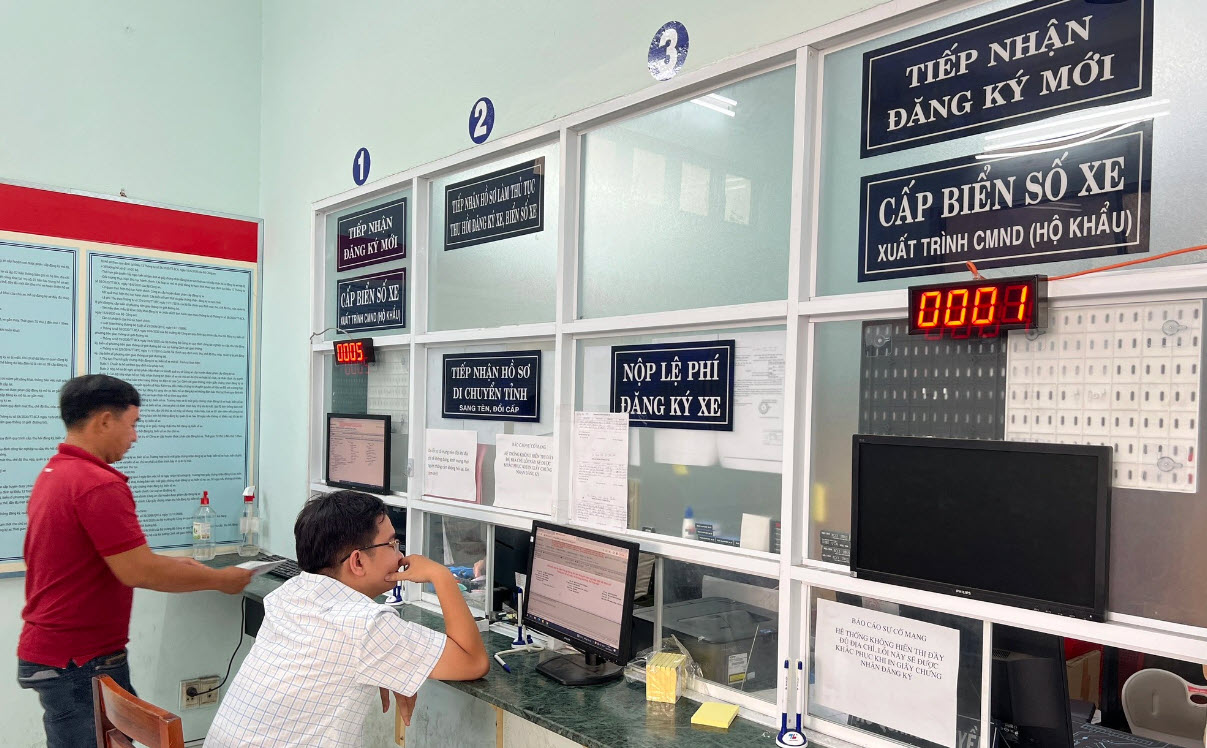
Illustrative image.
The 2008 Road Traffic Law, amended and supplemented in 2018, laid the foundation for the issuance of vehicle identification plates. Accordingly, all vehicles must be registered and issued valid license plates to ensure transparency in traffic flow. The responsibilities of the authorities in issuing and managing license plates are also clearly defined, thereby enhancing accuracy and transparency in vehicle control.
Decree No. 100/2019/ND-CP is a document regulating penalties for violations related to license plates. This regulation includes handling cases of vehicles without license plates or with invalid license plates, protecting the legitimate rights of citizens, and enhancing awareness of traffic law compliance.
In addition, Circular 24/2023/TT-BCA details the procedures related to the issuance and revocation of license plates. This circular provides detailed guidance on processes from initial registration, vehicle ownership transfer, license plate replacement or reissuance, to temporary vehicle registration. These regulations help make license plate registration transparent and quick, while also creating favorable conditions for citizens.
2. Documents required for obtaining identification license plates for motorcycles and cars.
To obtain a vehicle identification plate, the vehicle owner needs to prepare some important documents such as:
- Identity card or citizen's identification card (original and copy).
- Vehicle registration certificate: for new vehicles, a certificate of ownership is required; for used vehicles, the previous registration certificate is needed.
- Vehicle purchase invoice (for new vehicles) or documents related to the transfer of ownership of a used vehicle.
- Vehicle origin declaration form.
- Technical safety and environmental protection inspection certificate (for used vehicles).
Having all the necessary documents ready will help the license plate registration process run smoothly and avoid the need to submit additional documents later.
3. Procedures for obtaining a unique license plate.
The current procedures for registering vehicle identification plates have undergone many changes, making it more convenient for citizens. Vehicle owners can register their license plates at their place of residence, including both permanent and temporary residences. In addition, online registration through the Public Service Portal is also available, saving time and improving management efficiency.
The specific process includes the following steps:
Step 1: Log in and fill out your information.
The vehicle owner logs into the Public Service Portal, fills out the information, and digitally signs the vehicle registration form. Afterward, the owner receives an online registration code and notification of the appointment via email or text message.
Step 2: Submit documents to the registration office.
The vehicle owner brings the vehicle to the registration office, provides the online registration code and relevant documents. If a digital signature is not used, the vehicle owner must sign the vehicle registration form.
Step 3: Check the documents and the actual vehicle.
The registration authority will check the documents and the vehicle. If the license plate has not yet been issued, a new license plate will be issued; if a registered license plate has been revoked, a new one will be issued. If the documents are incomplete, the vehicle owner will be instructed to provide additional information.
Step 4: Receive appointment slip and pay the fee.
After completion, the vehicle owner receives a receipt with a date for receiving the results and pays the registration fee.
The legal framework and procedures for issuing identification license plates have now been finalized, enhancing the efficiency of vehicle management and facilitating convenience for citizens. From improved online registration processes to clear regulations on documentation and responsibilities of relevant parties, the identification license plate system plays a crucial role in ensuring traffic safety and increasing transparency in vehicle management.
Source: https://www.congluan.vn/lam-the-nao-de-dang-ky-bien-so-dinh-danh-cho-xe-may-o-to-post314671.html































































































Comment (0)