

Performed by: Bao Trung - Du Nguyen | February 28, 2024
(To Quoc) - Lung Tam linen weaving village in the rocky plateau is a destination in Ha Giang that is loved by both domestic and foreign tourists.
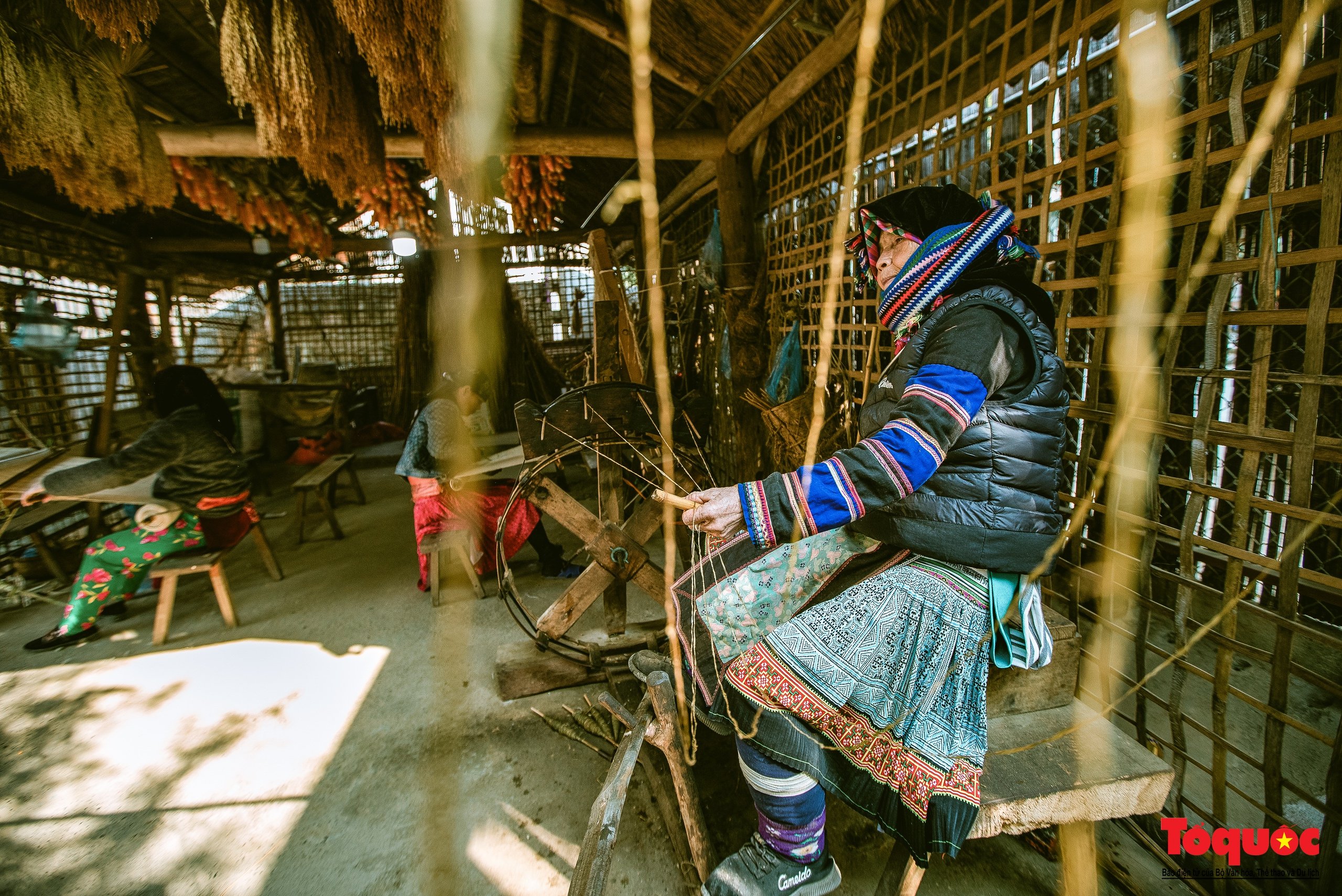
The Lung Tam brocade weaving village is located in Lung Tam commune, Quan Ba district (Ha Giang province). This is the most famous handicraft weaving village in Northwest Vietnam.
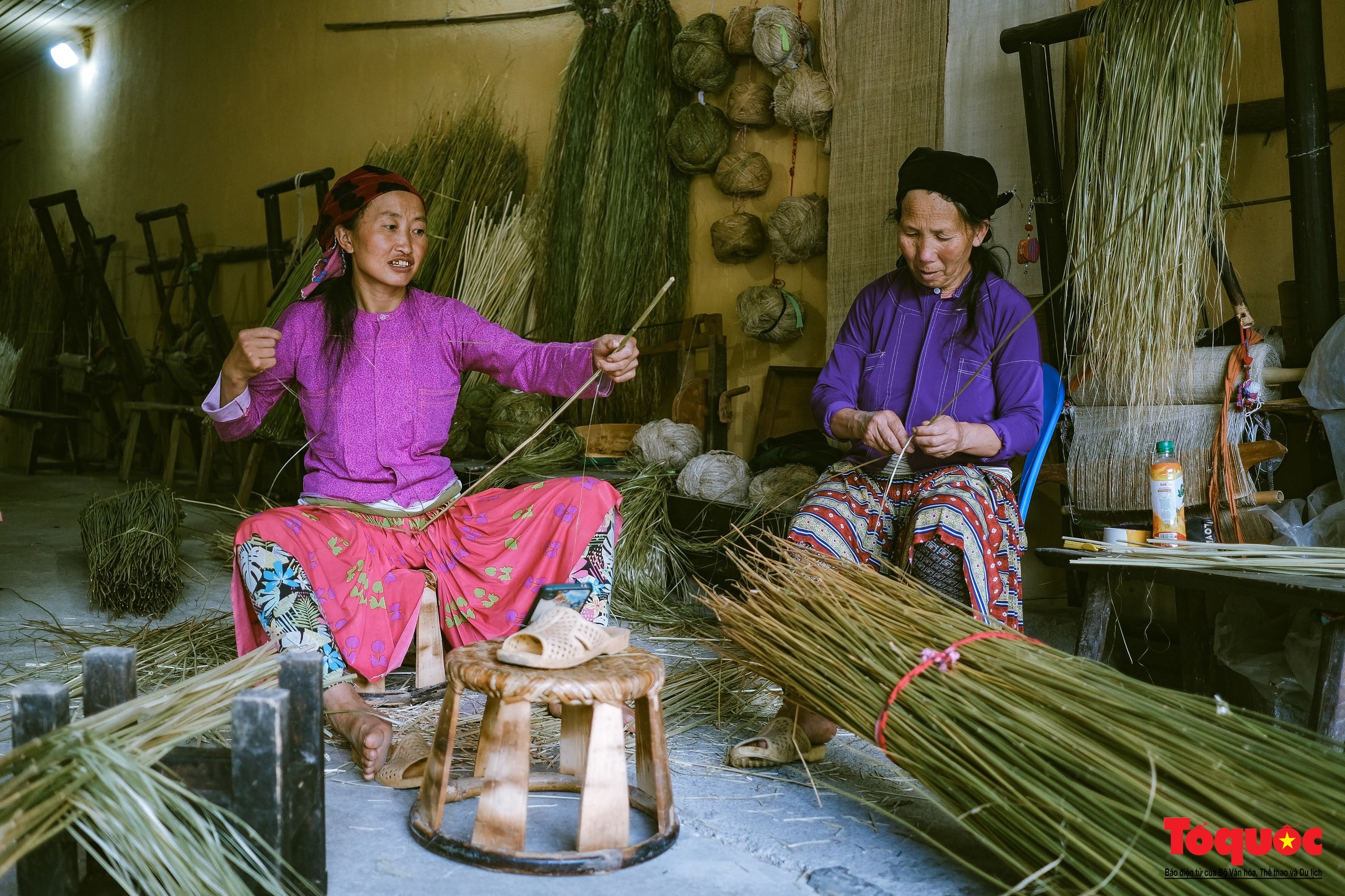
For the Hmong people living near Quan Ba - Ha Giang, flax is considered a thread that connects them to the spiritual world and their origins.
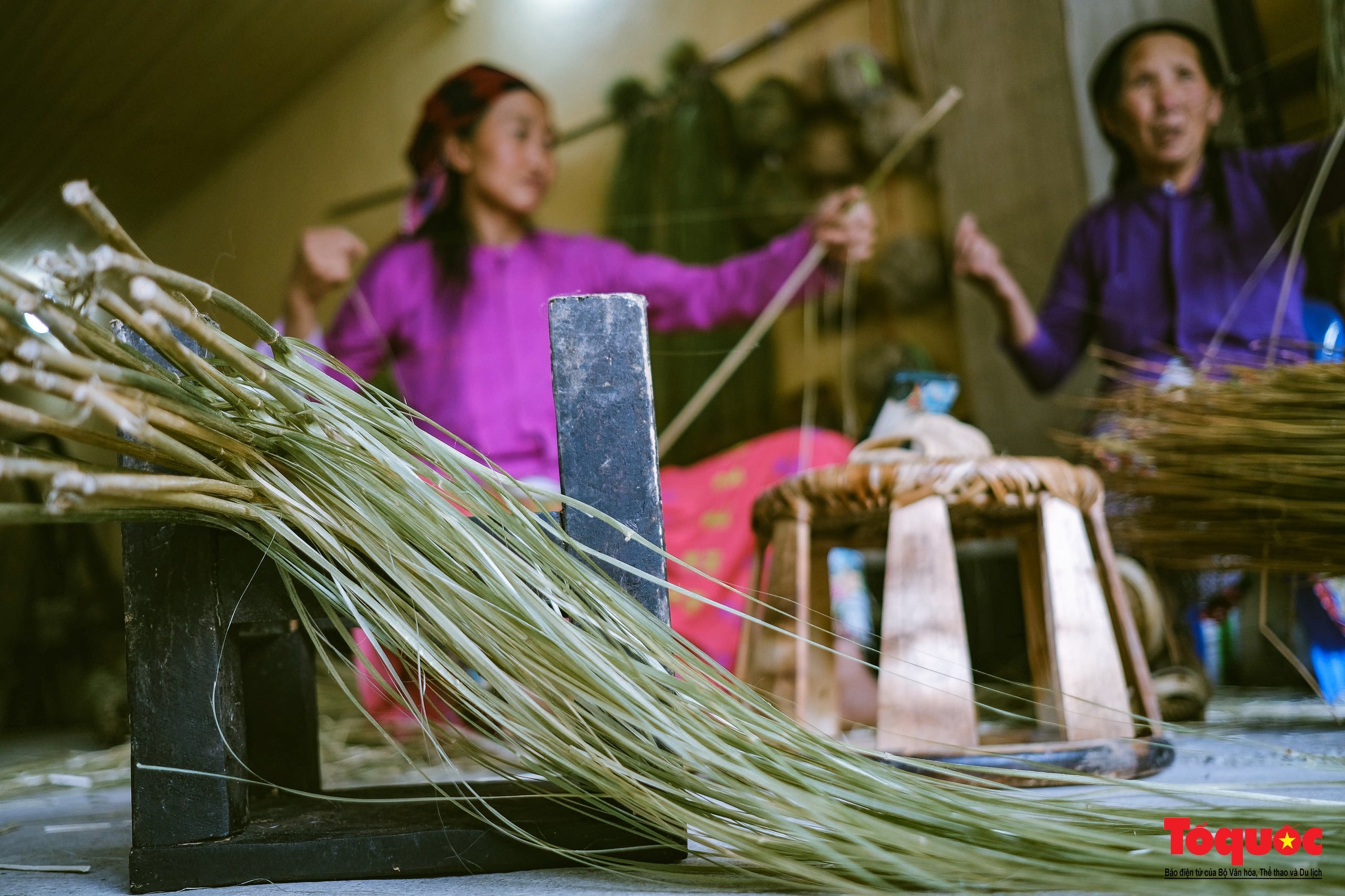
The main raw material for making linen fabric is flax. Artisan Vang Thi Mai said that the linen weaving process goes through 41 steps, including sowing seeds, harvesting flax plants, separating fibers, spinning flax, joining fibers, winding the spool, weaving the fabric, washing, drying... requiring a lot of time and effort.
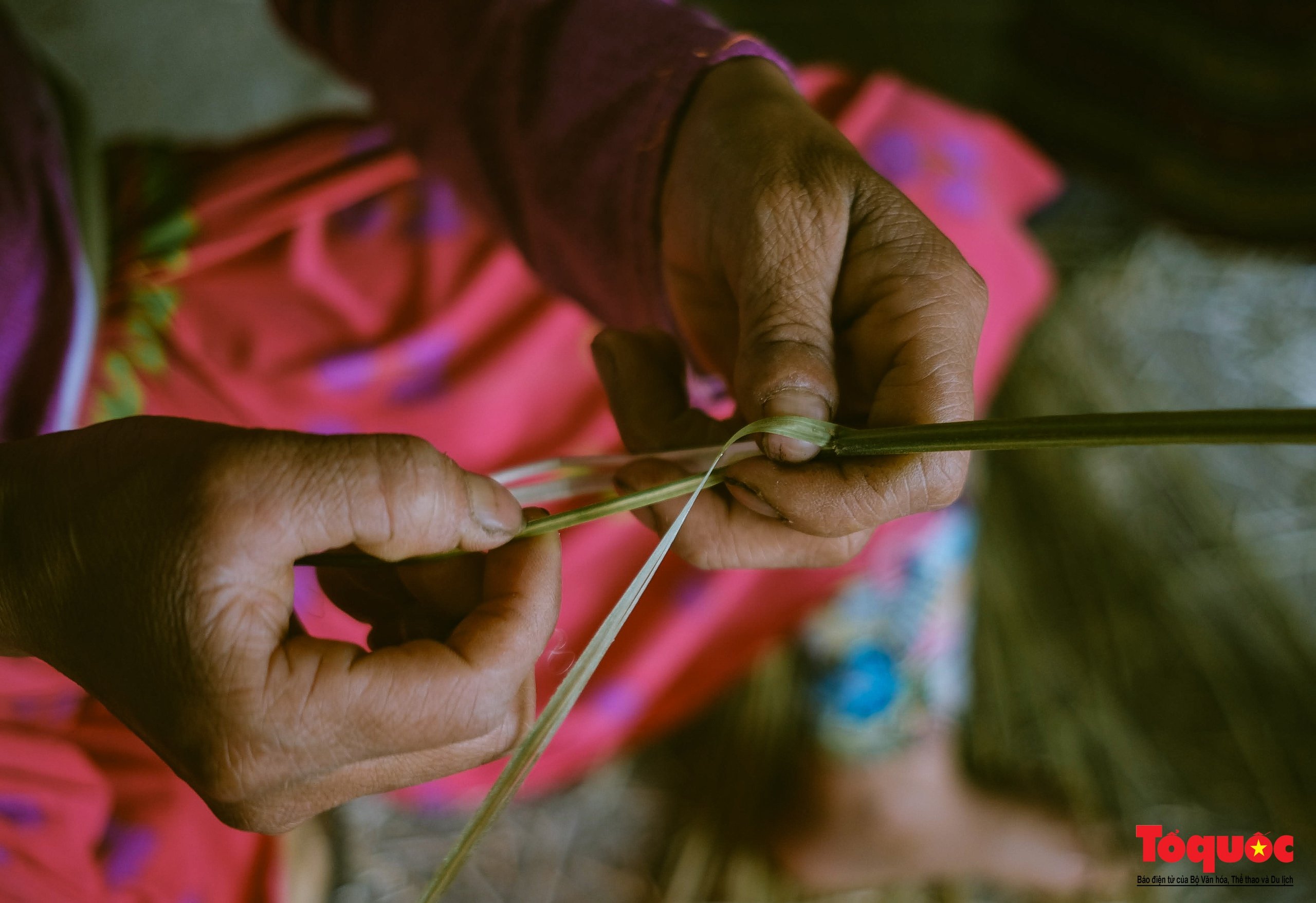
"To create beautiful fabric, the weaver must love their craft, be patient, and skillful," Ms. Mai said, further explaining that the flax fibers must be uniform from the very first step of separating them so that the woven fabric is durable and beautiful.
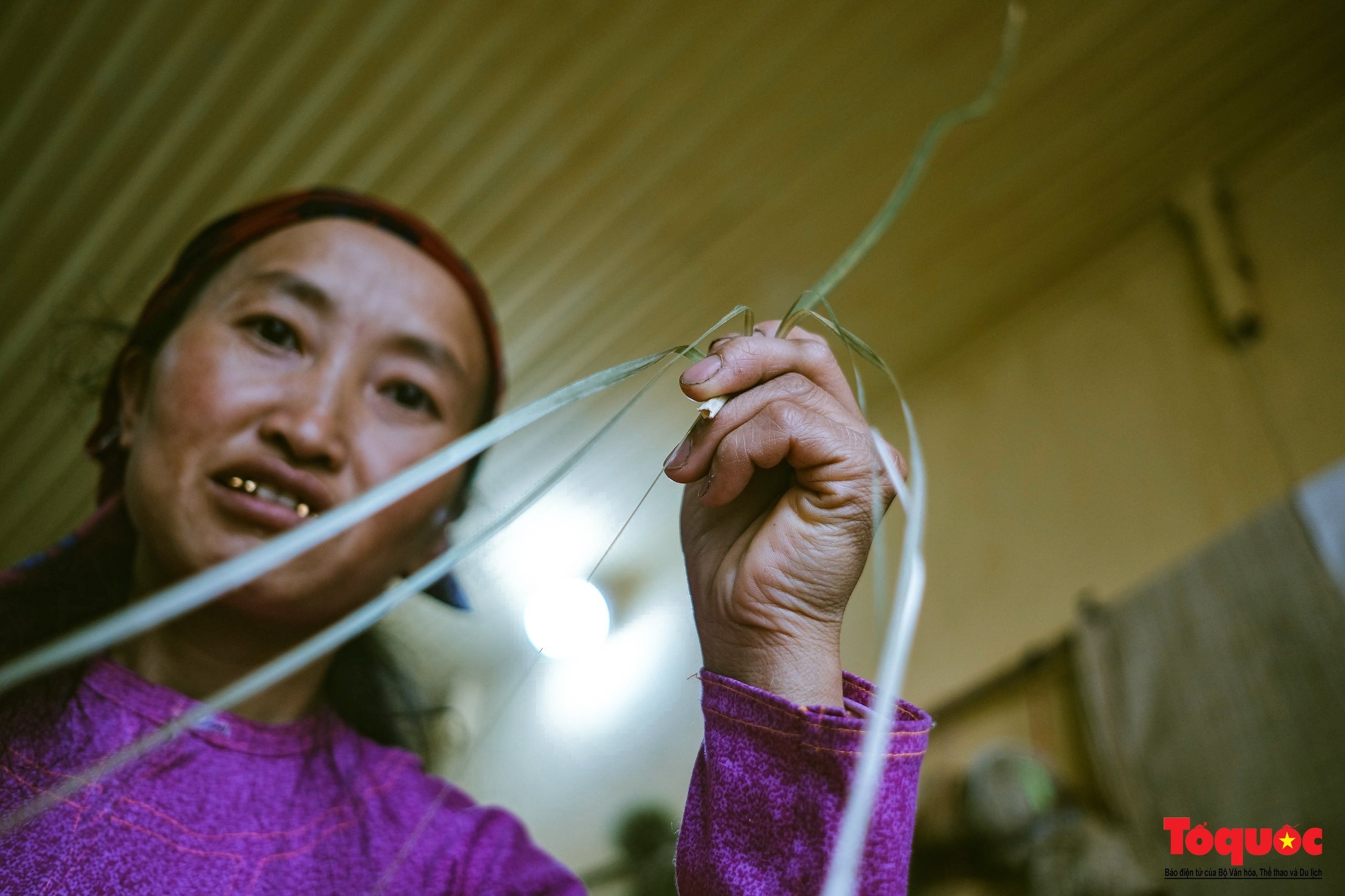
After being stripped, the flax fibers are pounded to soften them, then joined together to form long strands.
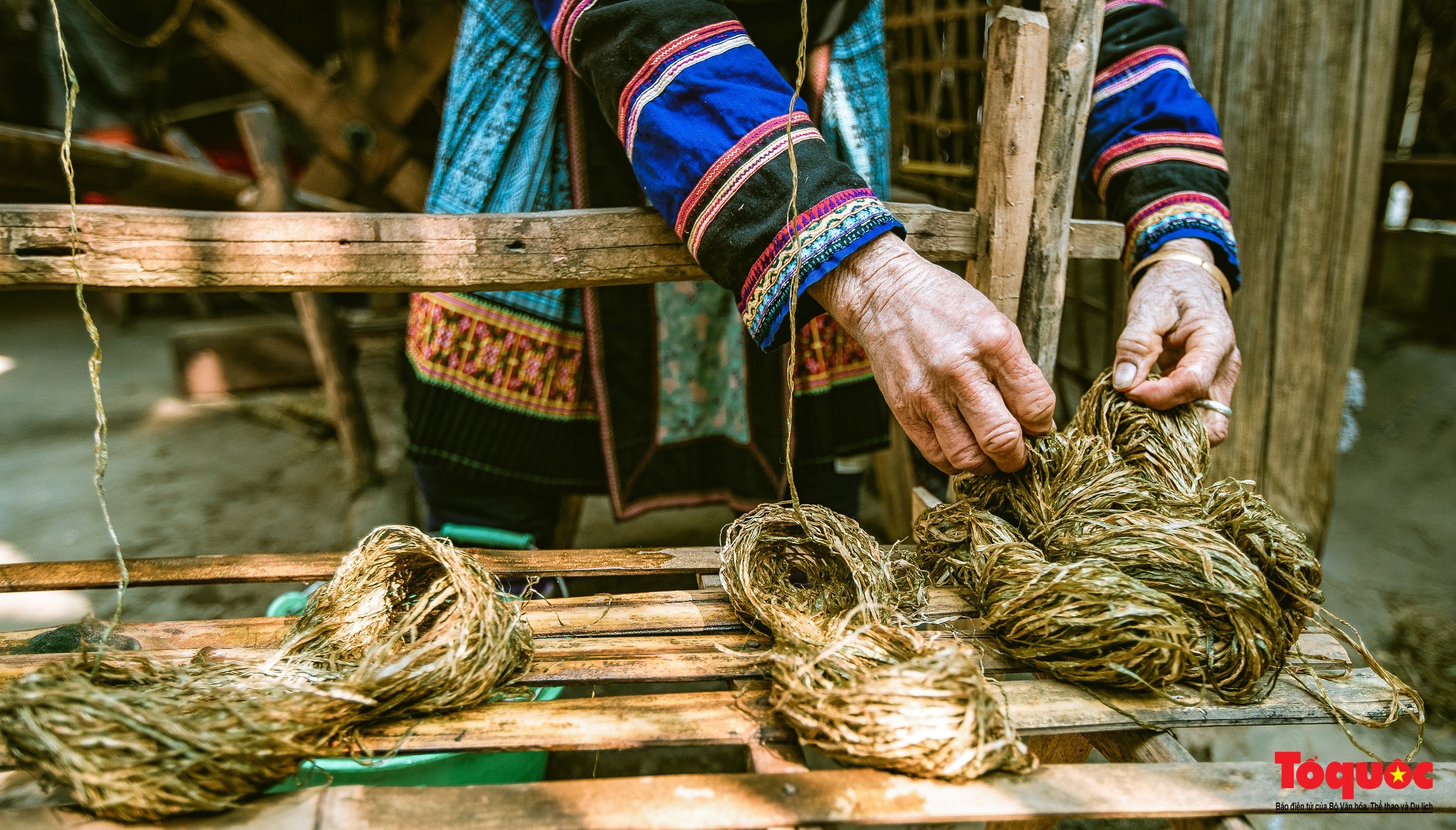
The Hmong people in Lung Tam prefer linen to cotton, believing that linen is more durable.
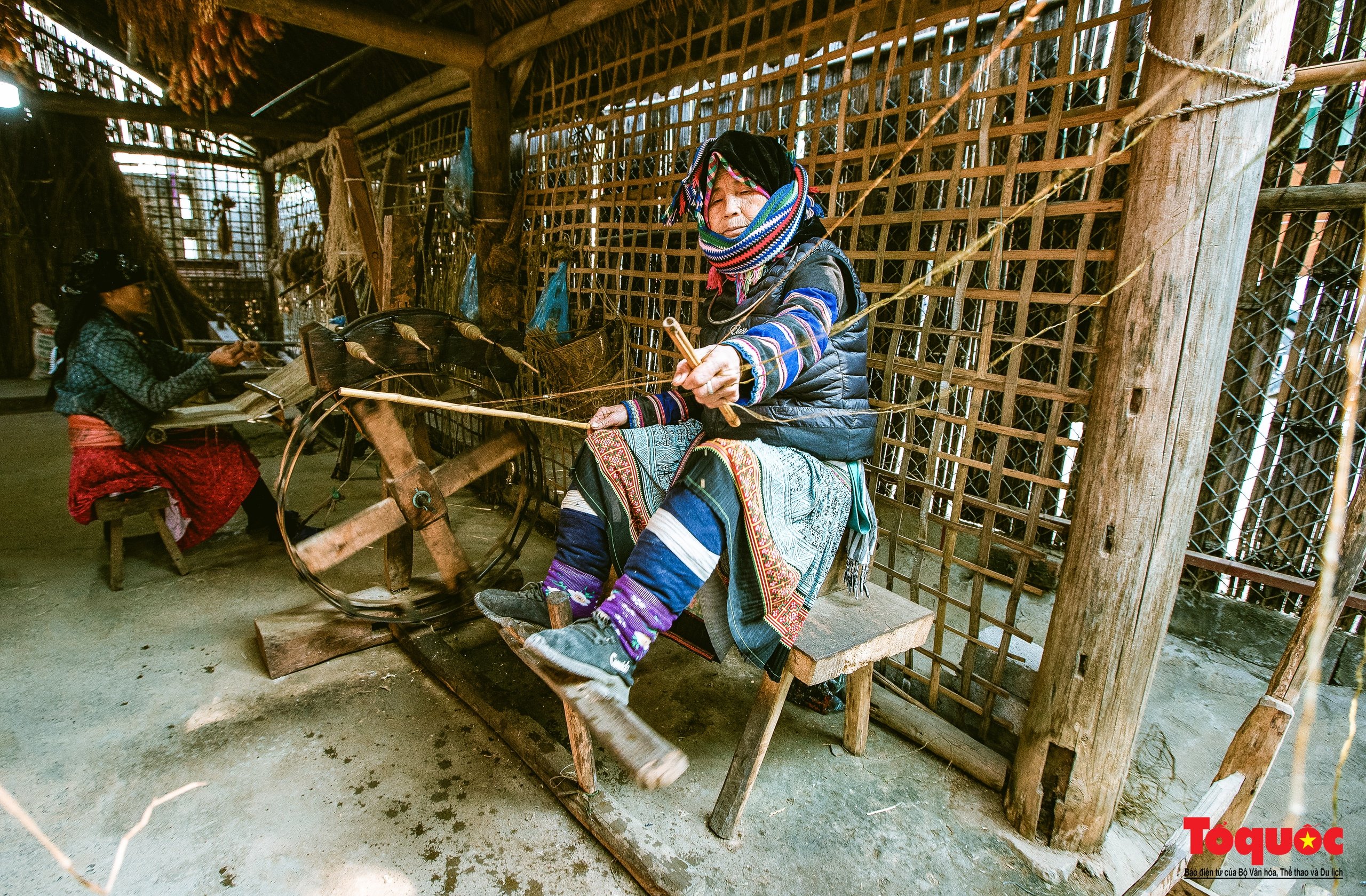
To make the yarn stronger, the Hmong people devised a tool that coordinated foot and hand movements, allowing them to spin multiple flax threads simultaneously.
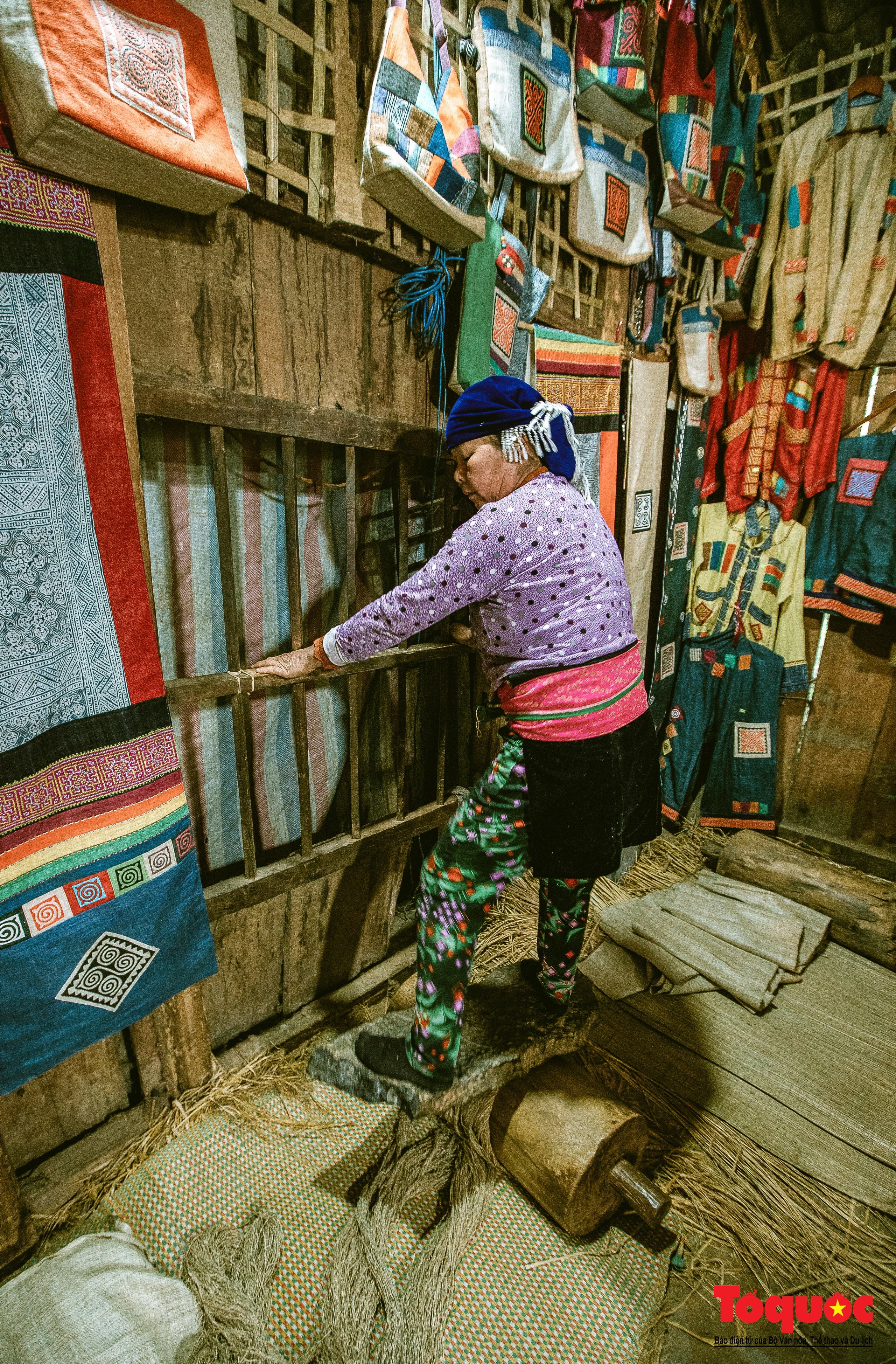
The finished woven threads are placed between a stone slab and a wooden post. The weaver stands on the stone slab and rolls it back and forth until the entire surface of the fabric is flattened, soft, and smooth. Then, it is soaked in wood ash for a week to whiten it before being dried.
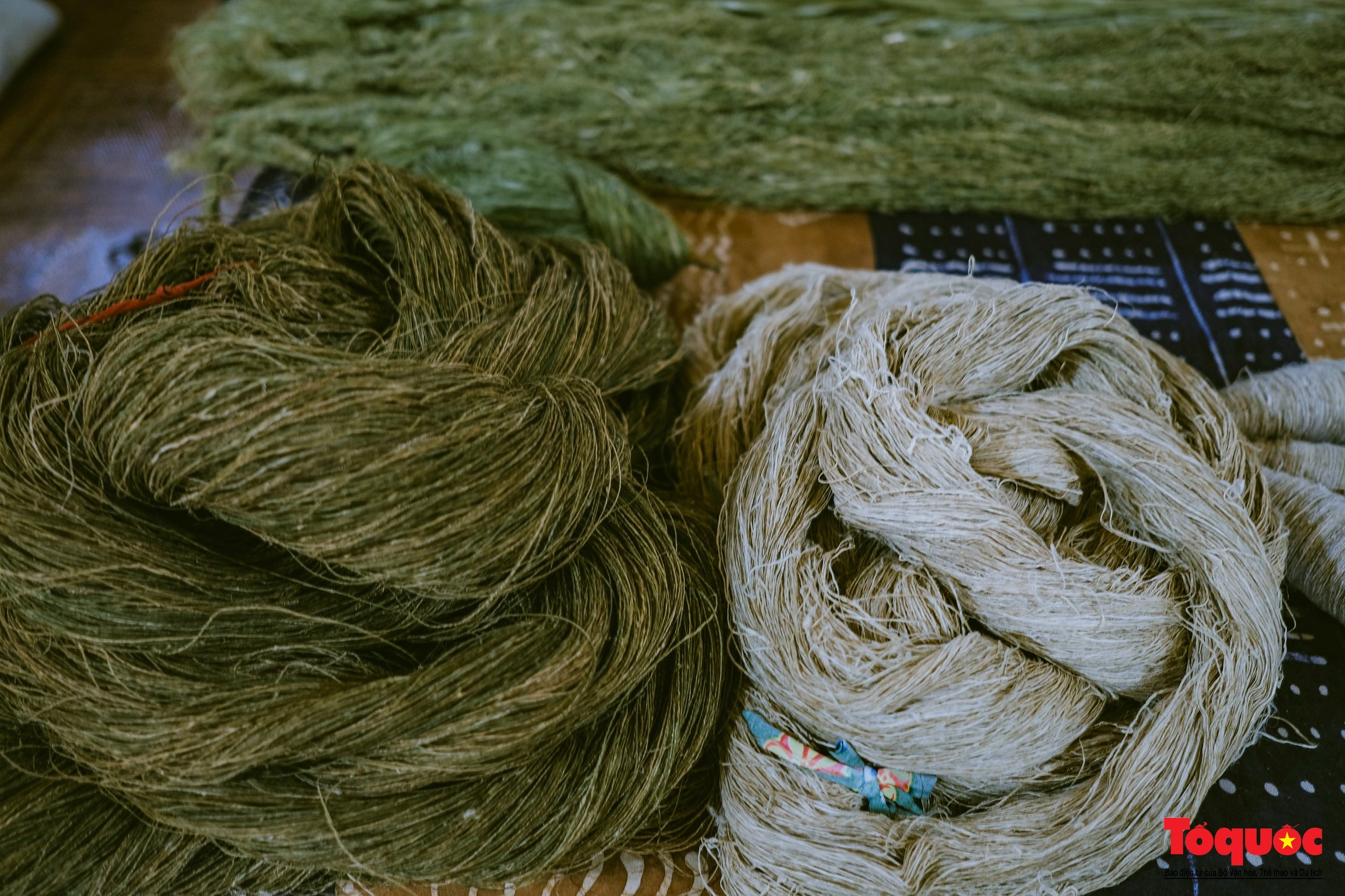
Then, the yarn is fed into a spinning frame to be unraveled and bundled into bunches, then boiled with wood ash, soaked, and washed. This process is repeated until the flax yarn is white, at which point it is dried and placed on a loom for weaving. When placing the yarn on the loom, the weaver accurately counts the number of threads depending on the width of the fabric.
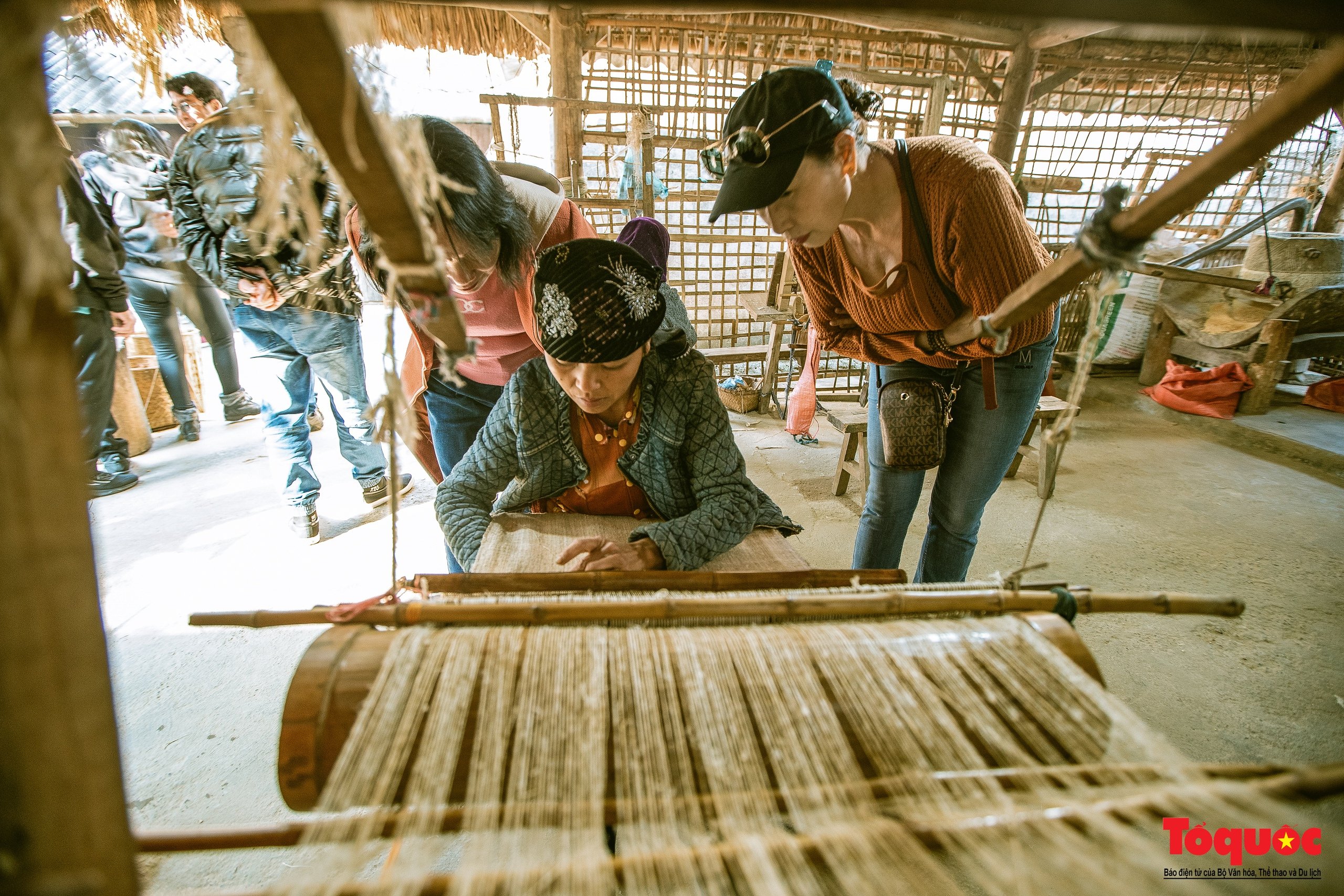
The Hmong people still weave cloth by hand using looms. The weaving process is usually undertaken by elderly artisans with extensive experience, who can handle broken or damaged threads.
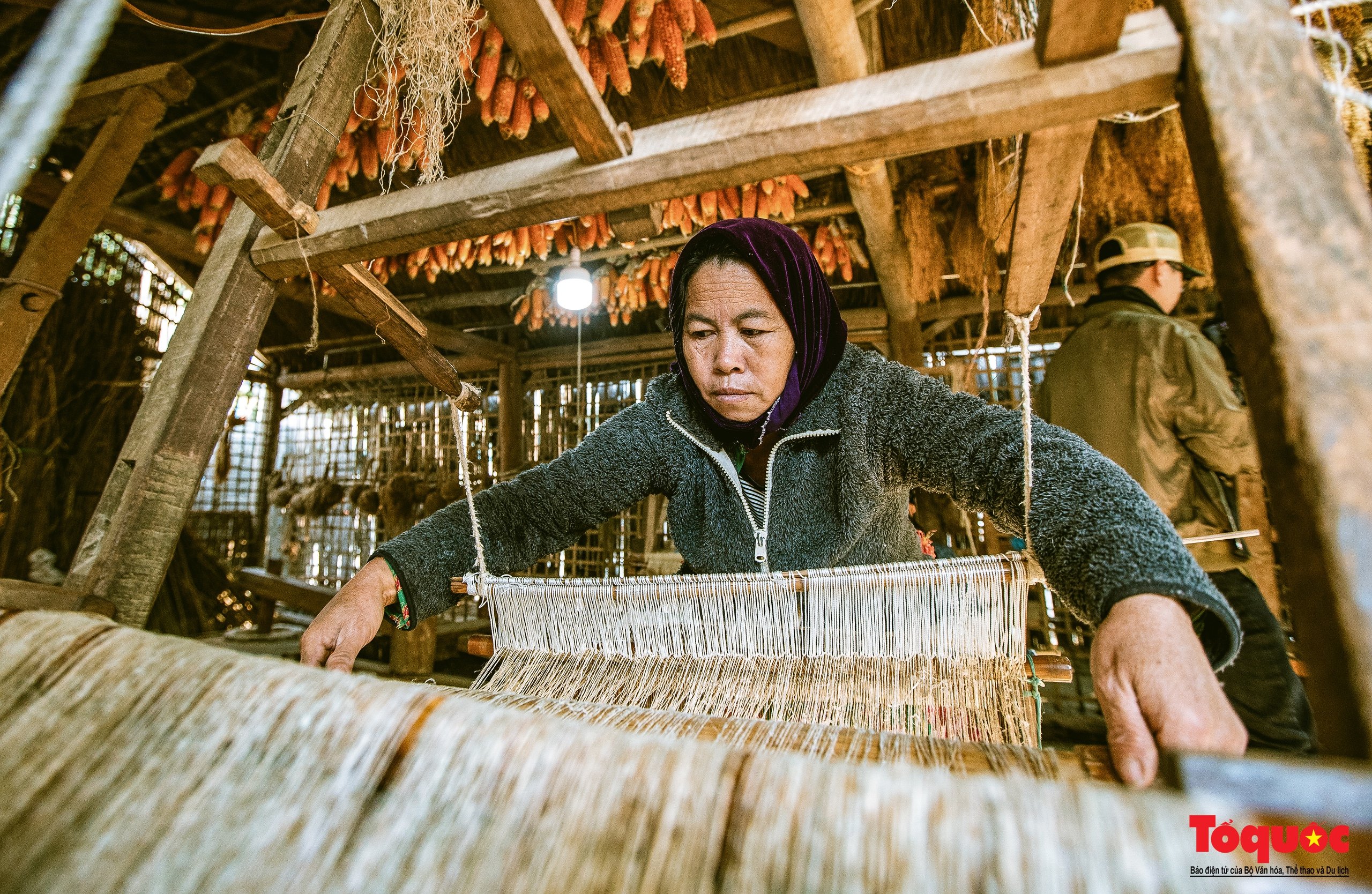
Linen weaving involves many steps, from spinning yarn to weaving fabric, all of which require a lot of time and effort.
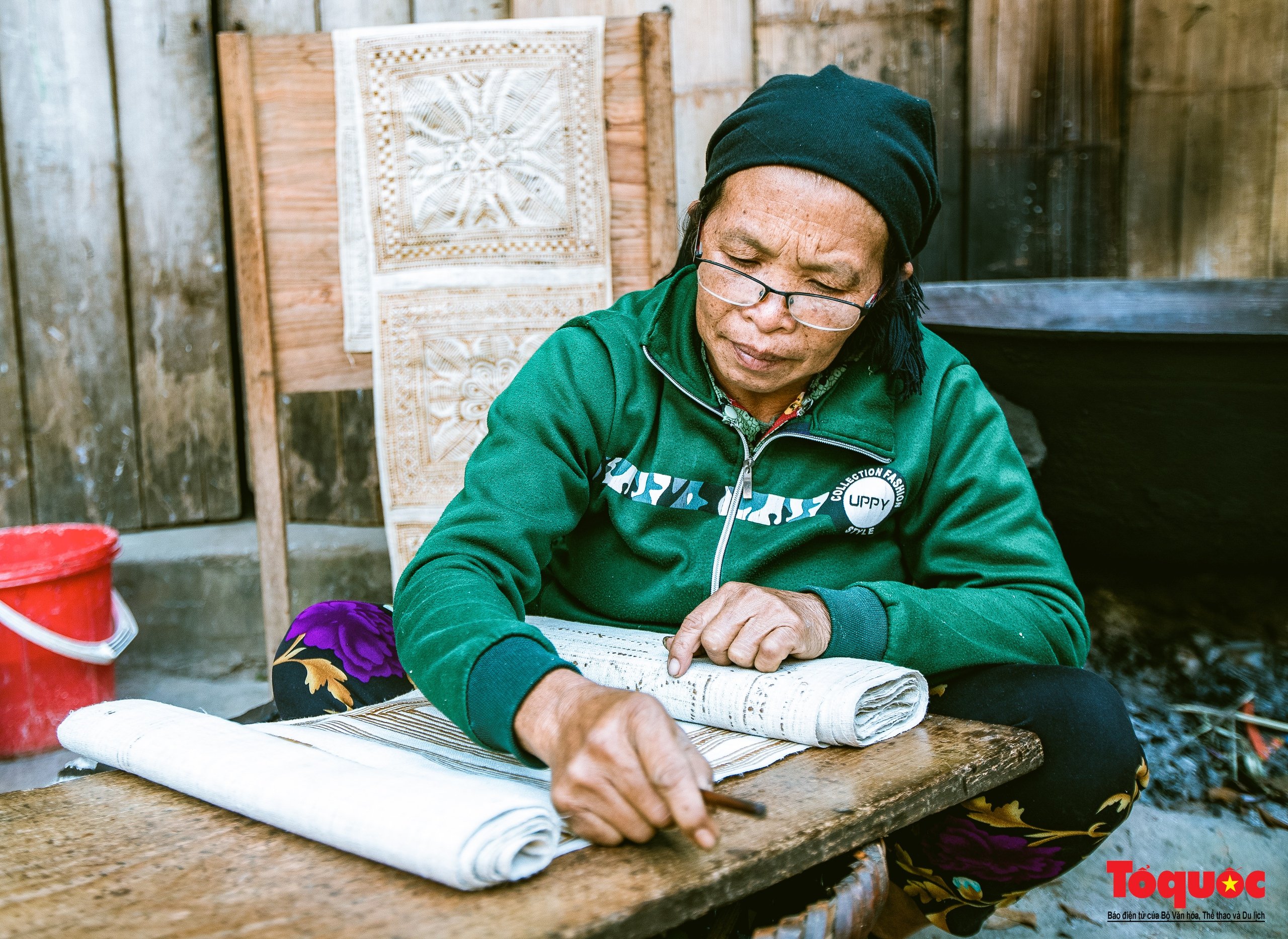
Besides weaving, Hmong women in Lung Tam also possess the techniques of beeswax painting and indigo dyeing.
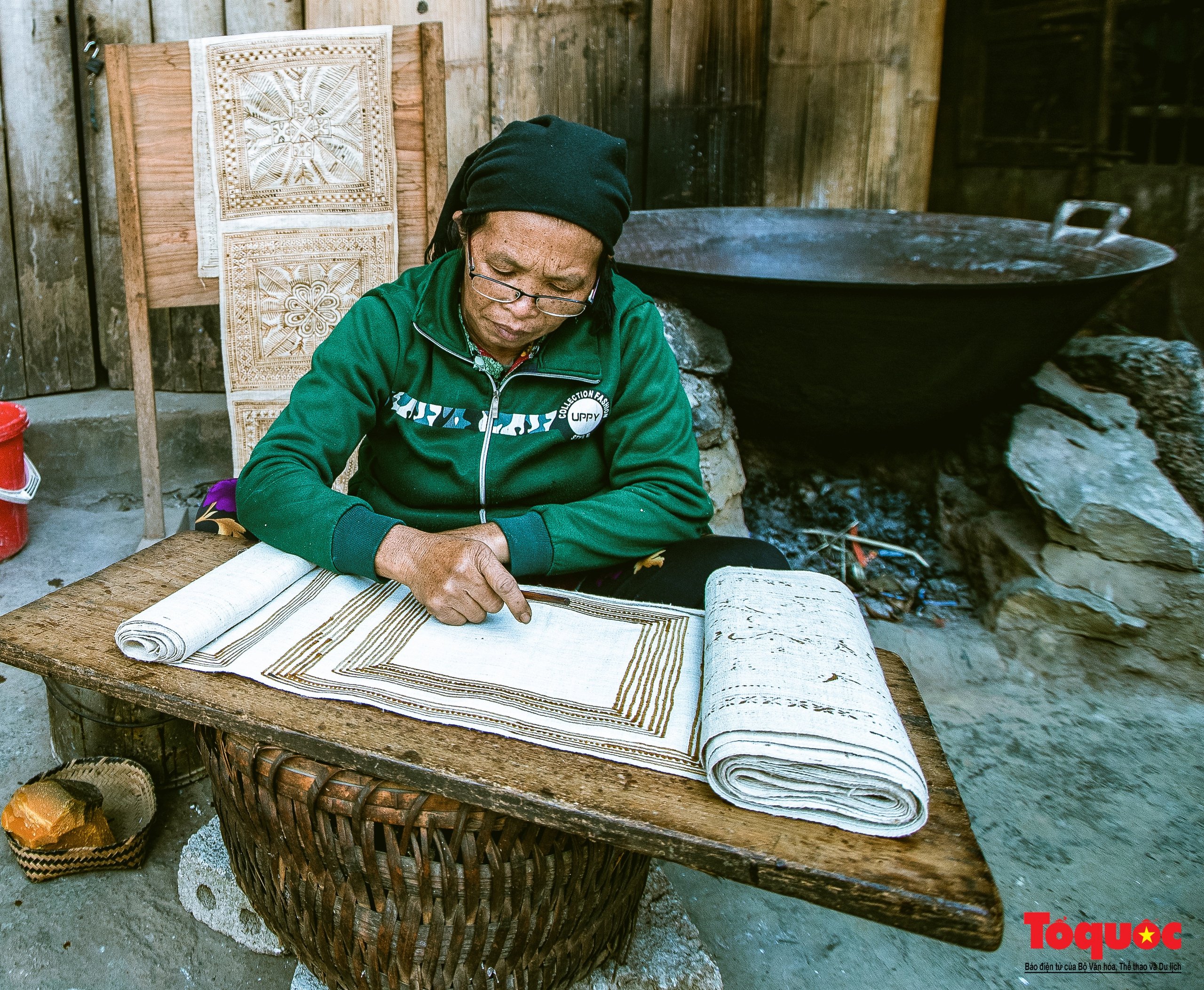
The artisan paints traditional Hmong patterns onto white fabric using heated beeswax.
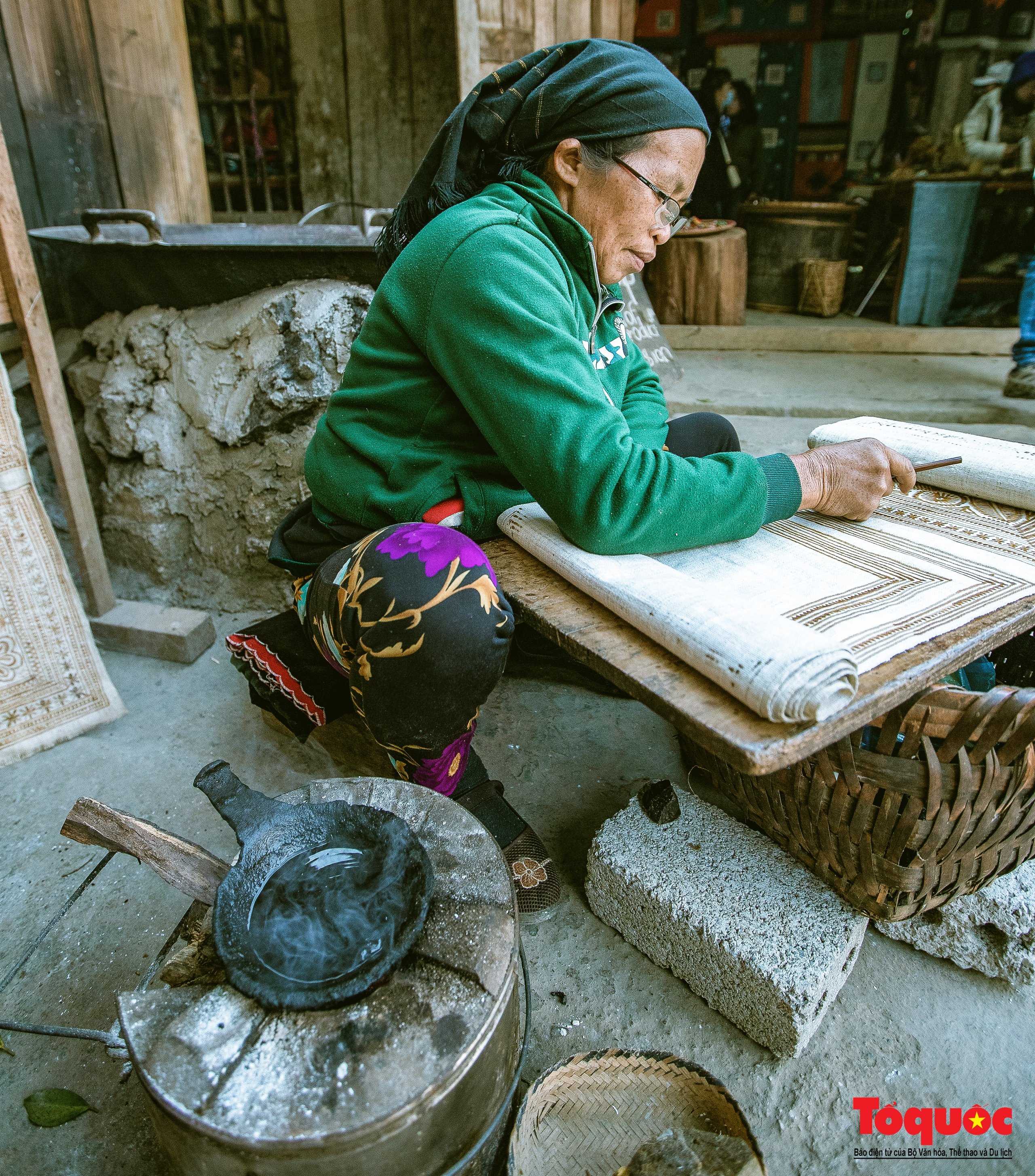
Beeswax, melted over a charcoal stove, is used to draw on linen fabric.
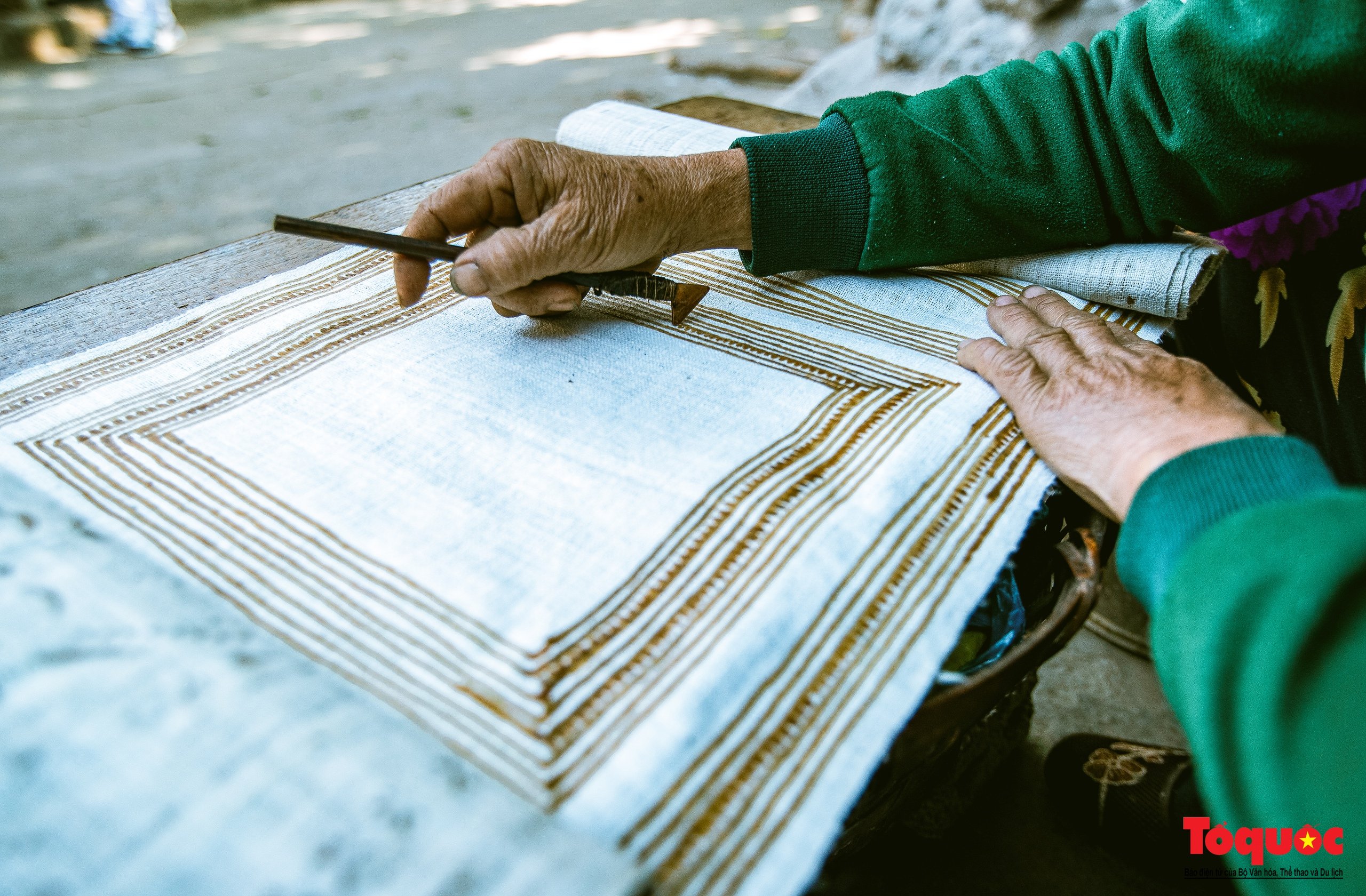
To create their unique patterns on fabric, the Hmong people use a set of handcrafted brushes dipped in melted beeswax to draw on the cloth, initially straight lines, then triangles, spirals, coin shapes, crosses, bird's feet, etc. These motifs represent the Hmong world and the universe.
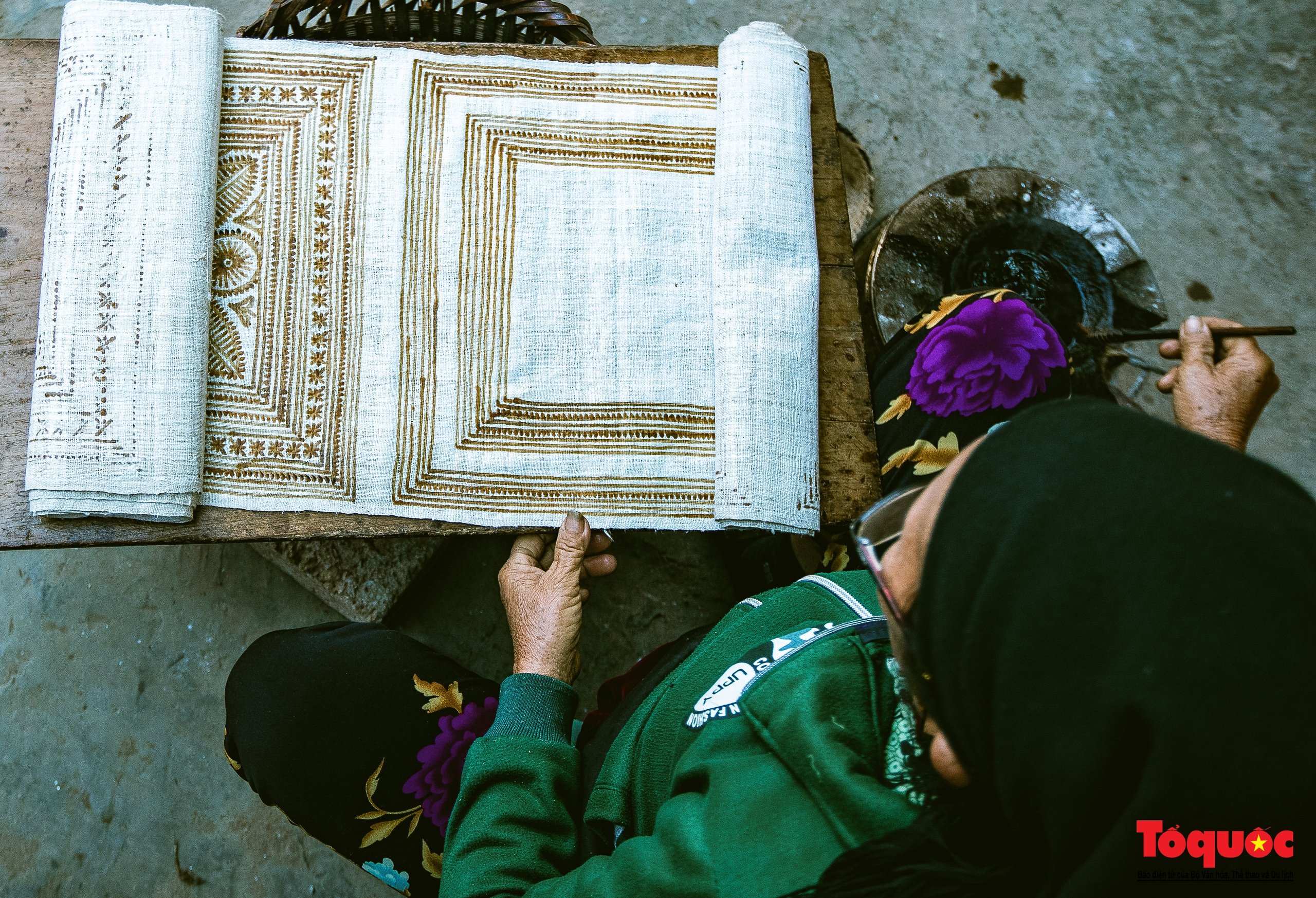
Meanwhile, the indigo dyeing technique produces fabrics in a wide range of colors. The dyes used are also entirely natural.
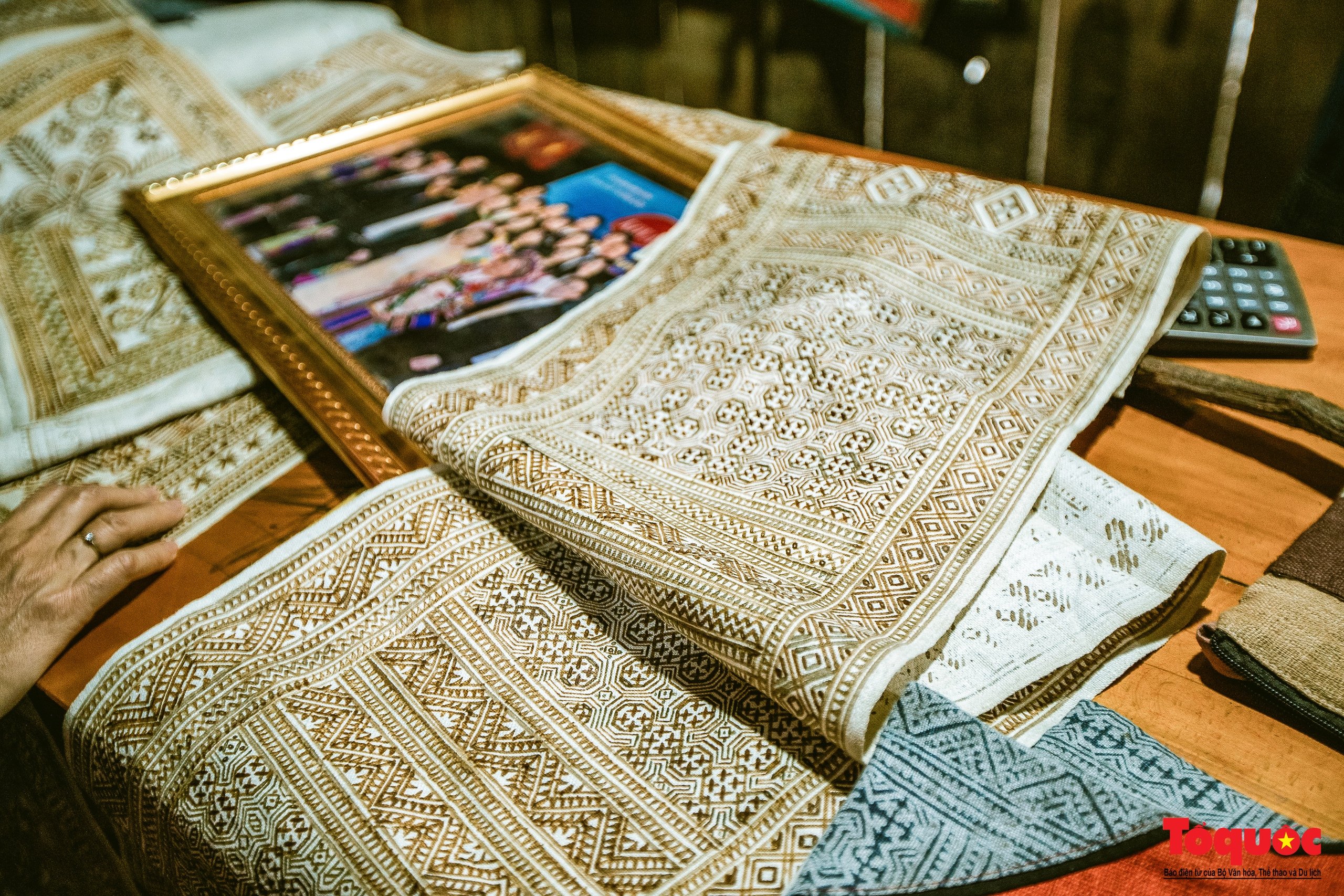
In recent years, thanks to the attention of the local government and the efforts of the people, Lung Tam linen fabric has established a brand and a foothold in the market, and was honored to be introduced and displayed at the 132nd General Assembly of the Inter-Parliamentary Union (IPU-132) held in our country in 2015.
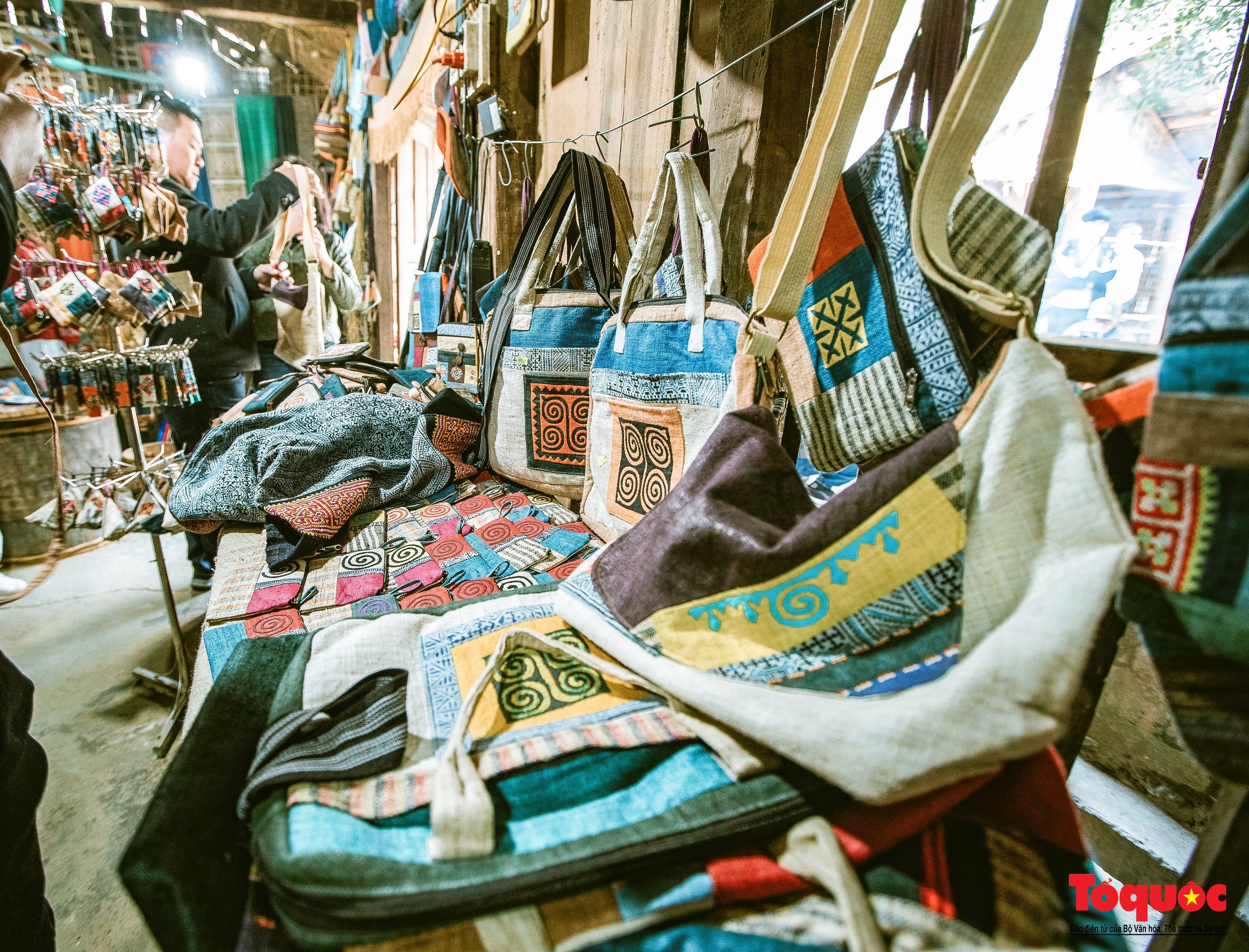
With its cultural values and practical aspects of life, the flax cultivation and weaving techniques of the Mong people in Lung Tam, Quan Ba district (Ha Giang province) were recognized as a national intangible cultural heritage by the Ministry of Culture, Sports and Tourism in January 2016.
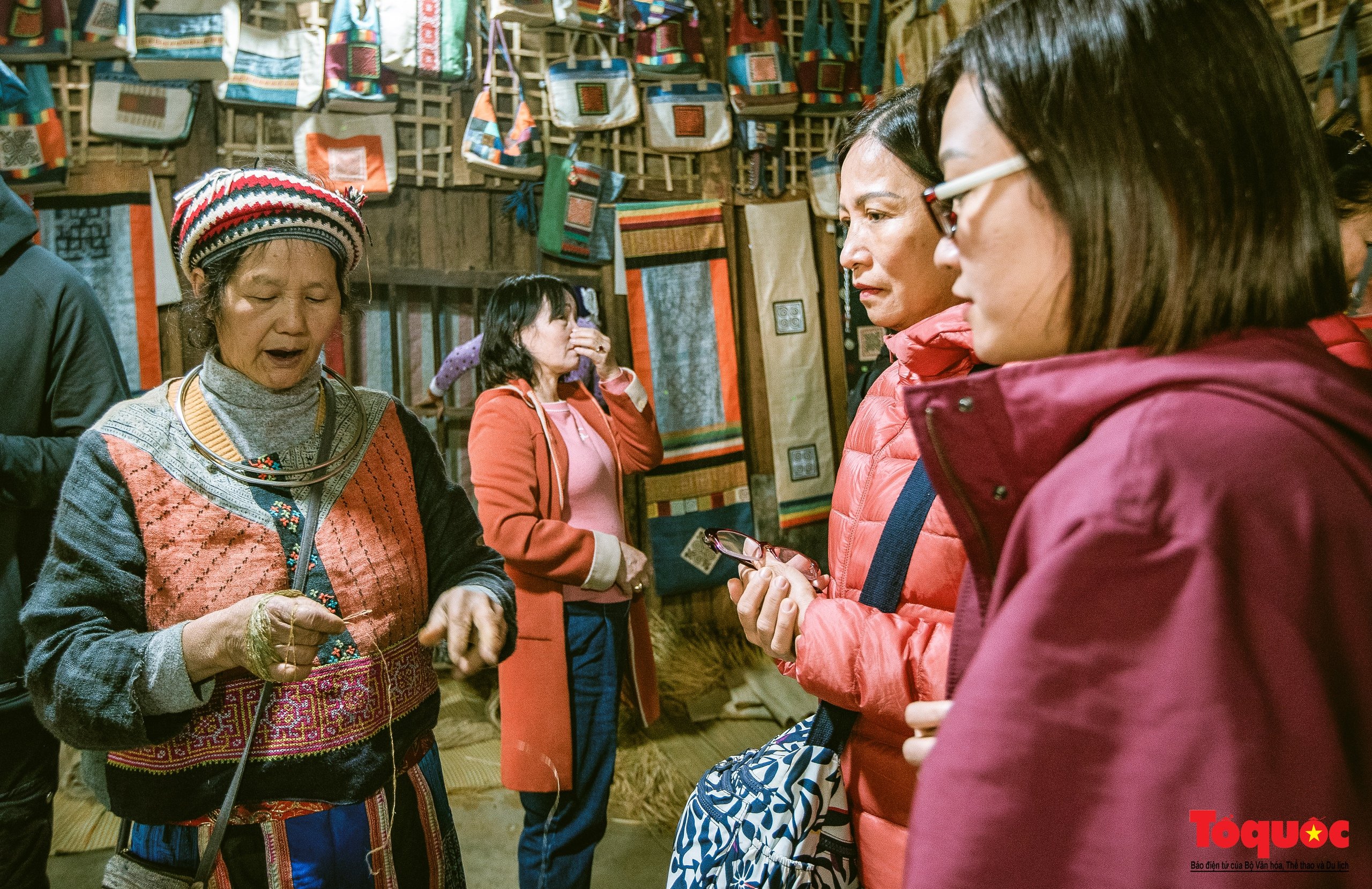
Currently, Lung Tam linen brocade products have traveled with tourists to all parts of the country and have been exported to more than 20 countries, not only bringing income but also contributing to preserving the traditional cultural values of the Hmong people.
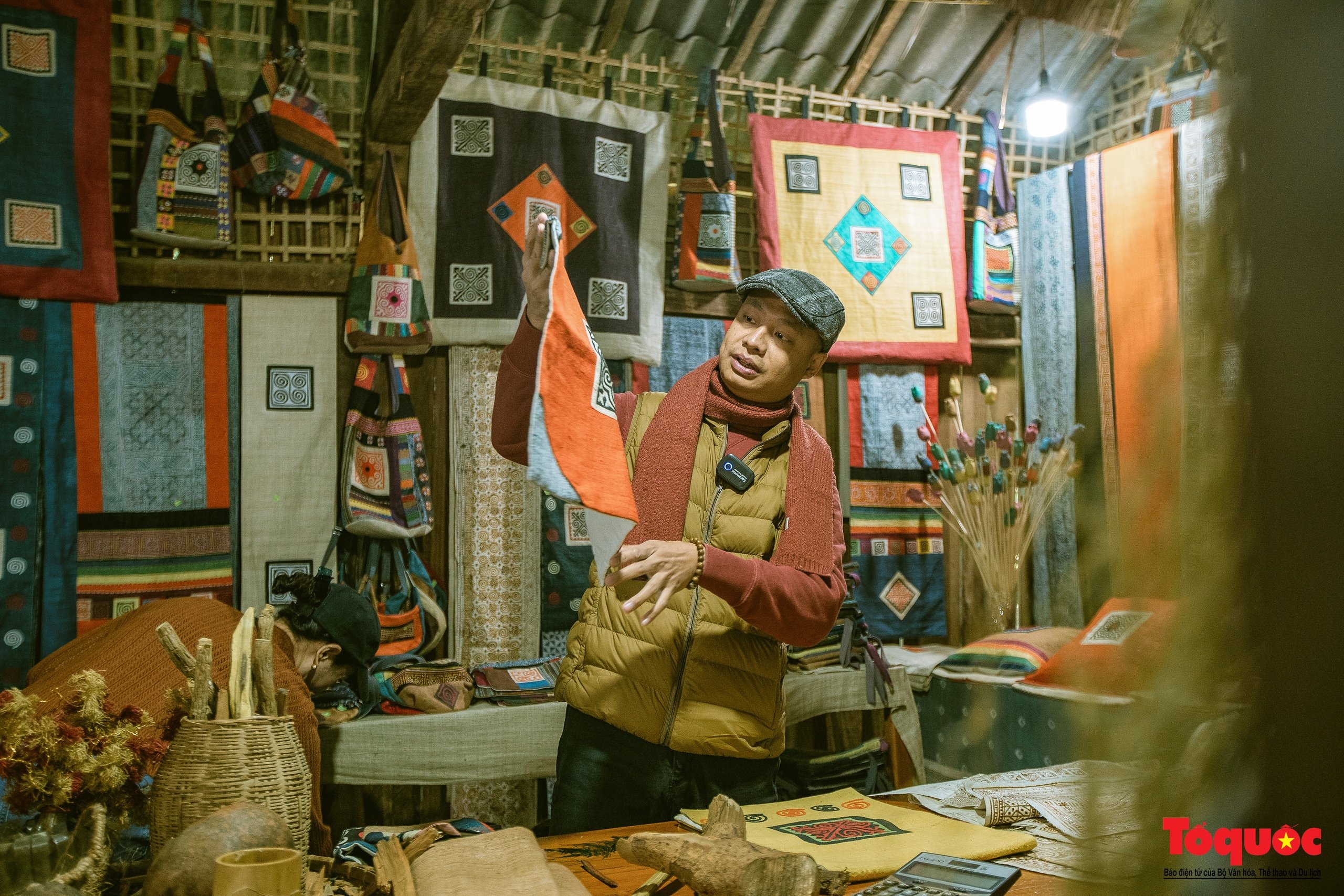
The Lung Tam brocade weaving village produces a wide variety of products such as: clothing, wallets, scarves, blankets, tablecloths, brocade bags, decorative panels, pillowcases, etc.
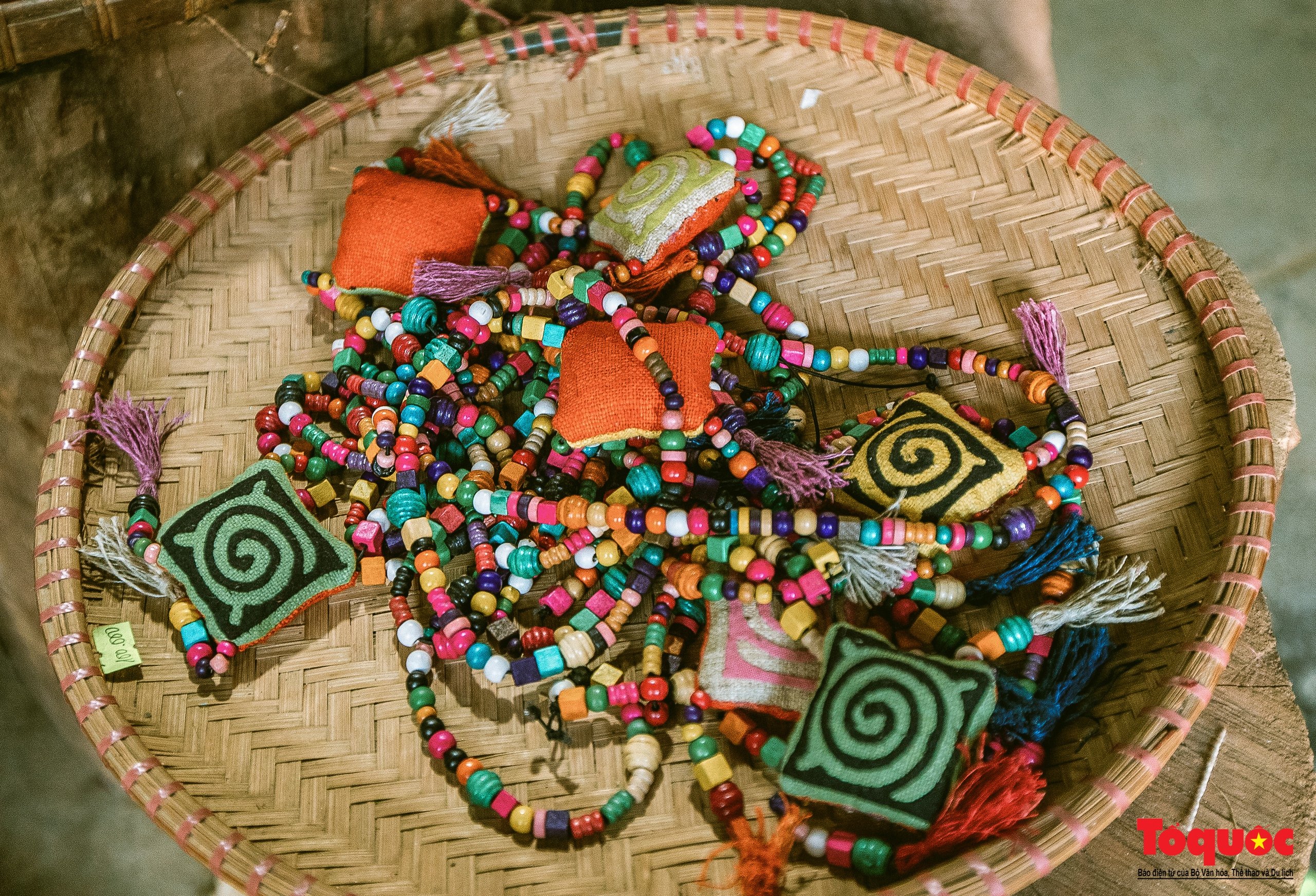
The highlight of these products is the linen material and the traditional handcrafted methods passed down from generation to generation. The products of the people of Lung Tam all bear the mark of traditional culture. The images and colors on each product reflect the unique characteristics of the Ha Giang rocky plateau. Particularly noteworthy are the cultural motifs of the Mong people depicted in the meaningful embroidery.
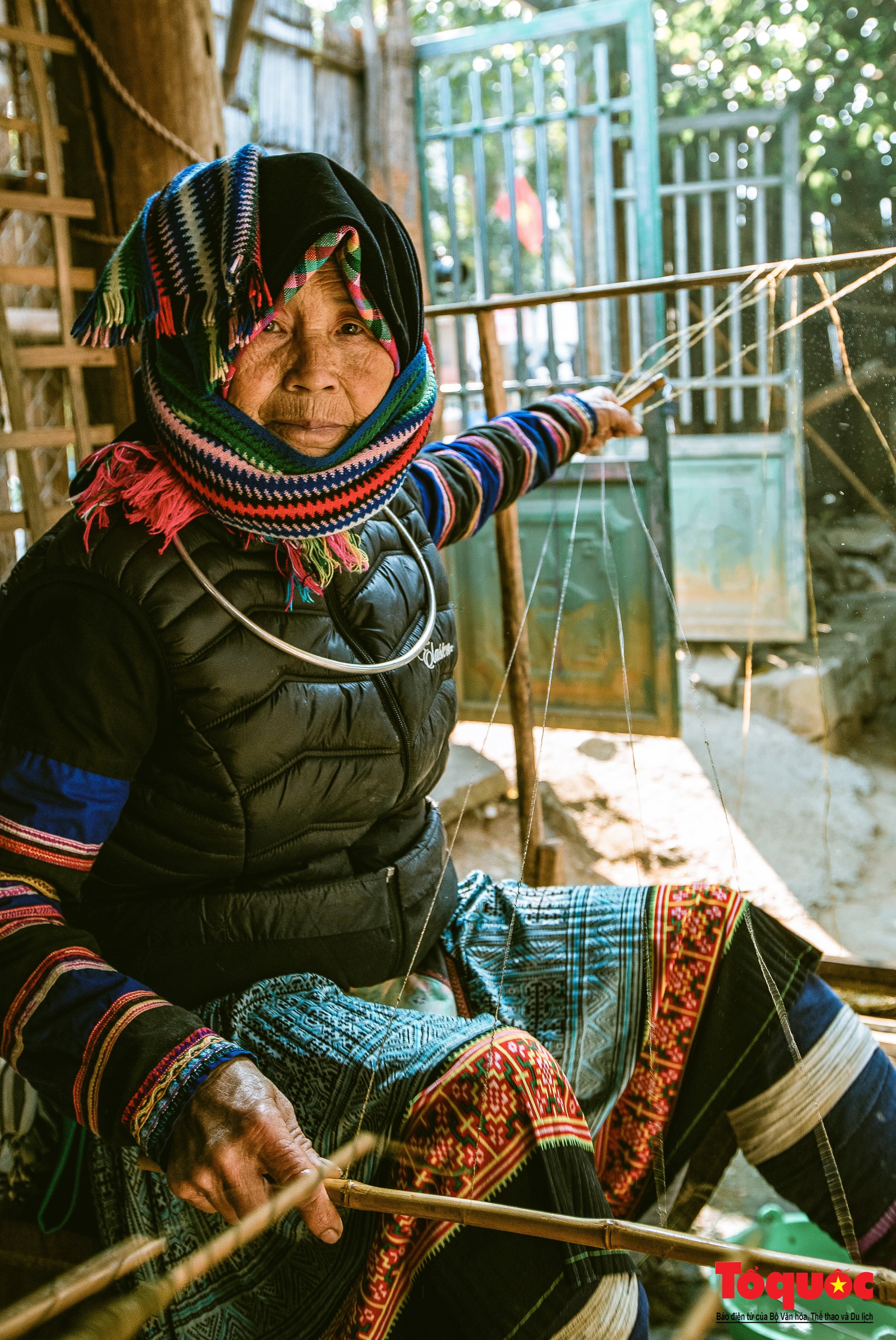
When visiting Ha Giang, be sure to stop by Lung Tam brocade weaving village to learn about the local culture and discover one of the oldest traditional crafts of Vietnam in general and of the people of Lung Tam in particular, in this beloved land at the northernmost tip of our country.
Source


![[Photo] Commemorating the unwavering friendship between Vietnam and Laos](/_next/image?url=https%3A%2F%2Fvphoto.vietnam.vn%2Fthumb%2F1200x675%2Fvietnam%2Fresource%2FIMAGE%2F2026%2F01%2F27%2F1769518372051_ndo_br_1-jpg.webp&w=3840&q=75)
![[Photo] The General Secretary attends the groundbreaking ceremony for the construction of the Truong Ha Primary and Secondary Boarding School.](/_next/image?url=https%3A%2F%2Fvphoto.vietnam.vn%2Fthumb%2F1200x675%2Fvietnam%2Fresource%2FIMAGE%2F2026%2F01%2F28%2F1769604498277_vna-potal-tong-bi-thu-du-le-khoi-cong-xay-dung-cong-trinh-truong-pho-thong-noi-tru-tieu-hoc-va-trung-hoc-co-so-truong-ha-8556822-jpg.webp&w=3840&q=75)


![[Photo] National Assembly Chairman Tran Thanh Man meets with former leaders of the National Assembly from various periods.](/_next/image?url=https%3A%2F%2Fvphoto.vietnam.vn%2Fthumb%2F402x226%2Fvietnam%2Fresource%2FIMAGE%2F2026%2F01%2F28%2F1769601014034_anh-man-hinh-2026-01-28-luc-18-50-04.png&w=3840&q=75)


![OCOP during Tet season: [Part 3] Ultra-thin rice paper takes off.](/_next/image?url=https%3A%2F%2Fvphoto.vietnam.vn%2Fthumb%2F402x226%2Fvietnam%2Fresource%2FIMAGE%2F2026%2F01%2F28%2F1769562783429_004-194121_651-081010.jpeg&w=3840&q=75)


![OCOP during Tet season: [Part 2] Hoa Thanh incense village glows red.](/_next/image?url=https%3A%2F%2Fvphoto.vietnam.vn%2Fthumb%2F402x226%2Fvietnam%2Fresource%2FIMAGE%2F2026%2F01%2F27%2F1769480573807_505139049_683408031333867_2820052735775418136_n-180643_808-092229.jpeg&w=3840&q=75)
![OCOP during Tet season: [Part 1] Ba Den custard apples in their 'golden season'](/_next/image?url=https%3A%2F%2Fvphoto.vietnam.vn%2Fthumb%2F402x226%2Fvietnam%2Fresource%2FIMAGE%2F2026%2F01%2F26%2F1769417540049_03-174213_554-154843.jpeg&w=3840&q=75)





Comment (0)