

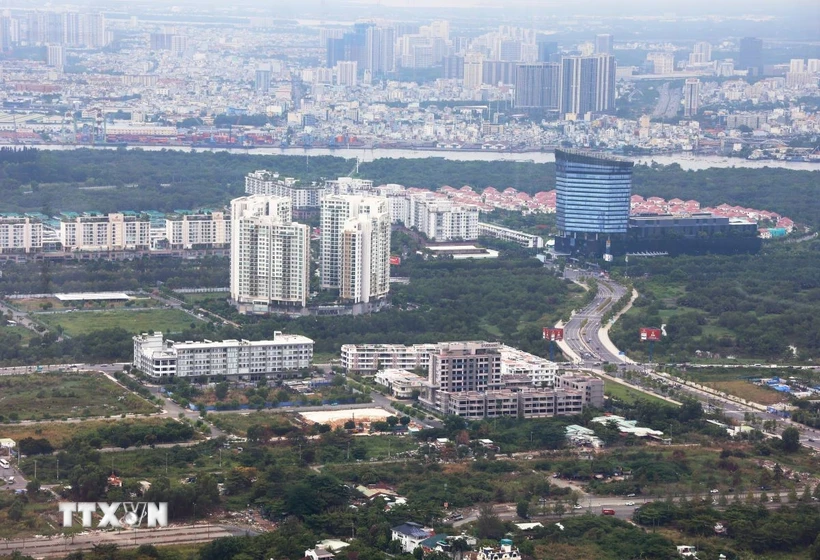
Illustrative image. (Photo: Hong Dat/VNA)
Reducing the time required to complete legal procedures from 3-4 years to 2-3 years, minimizing costs and waste for businesses, and increasing access to land and production space for businesses... are crucial "boosts" for the recovery and sustainable development of Vietnam's real estate market.
Many real estate businesses generally agree that Resolution 68 is a comprehensive document that meets market expectations. This is because Resolution 68 not only resolves legal obstacles for projects that are behind schedule but also opens up opportunities to exploit wasted land resources, including unused public land and land currently under dispute.
Mr. Nguyen Van Khoi, Chairman of the Vietnam Real Estate Association, assessed that Resolution 68 will create a strong breakthrough for the land sector.
Specific tasks such as building a unified land database and connecting it with national systems will increase transparency, expedite compensation and land clearance, and resolve issues for thousands of stalled projects.
Notably, Resolution 68 sets a target for 2025 to review and eliminate unnecessary business regulations, reduce administrative procedure processing time by at least 30%, legal compliance costs by 30%, and business conditions by 30%.
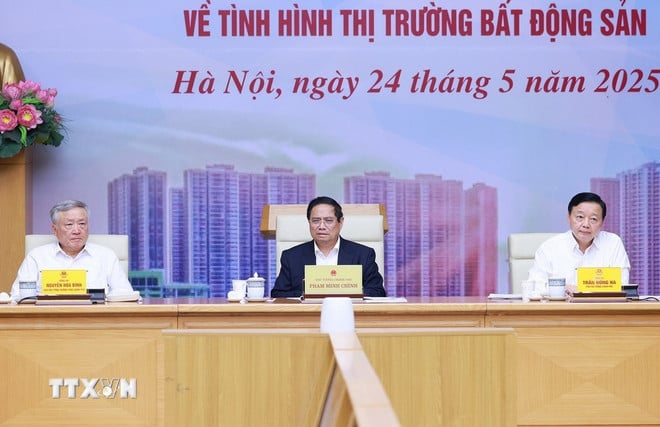
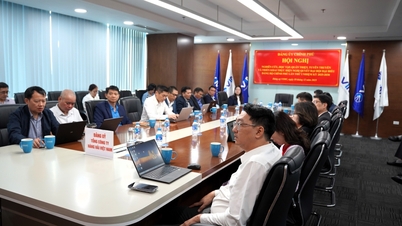
Prime Minister Pham Minh Chinh chaired a meeting of the Government Standing Committee on the real estate market situation. (Photo: Duong Giang/VNA)
This is an important step towards improving the investment environment and promoting the development of private enterprises. In addition, Resolution 68 also requires the establishment of a mechanism to control fluctuations in land prices, especially the price of land for non- agricultural production and business.
"This aims to curb speculation, the creation of artificial scarcity, and price manipulation, contributing to stabilizing investor and public confidence and attracting capital back into the market," Mr. Khoi commented.
One of the highlights of Resolution 68 that has attracted attention is the provision allowing localities to use their budgets to support infrastructure investors in industrial zones and clusters, instead of having businesses bear all the costs themselves as before.
In return, infrastructure developers are required to allocate a portion of the land with completed infrastructure to serve target business groups, including high-tech companies, small and medium-sized enterprises, and innovative startups.
The proportion of land reserved must be at least 20 hectares or 5% of the total land area after infrastructure investment, depending on the actual conditions of each locality, but it must not be lower than this minimum threshold.
Therefore, the developer no longer has the freedom to lease the entire plot of land to parties with higher payment capabilities, but is forced to "reserve" space for the target group of businesses that urgently need production space.
In addition, the government also reduces land lease fees by at least 30% for the first 5 years for these entities, while supporting essential infrastructure such as clean land, electricity, water, transportation, information, and administrative procedures, in order to reduce informal costs and help businesses focus on production and research.
Statistics from the Institute of Strategy, Policy and Resources and Environment clearly show that the percentage of businesses with access to land in industrial zones and clusters is currently very low, only about 3% for micro-enterprises, 8% for small enterprises, and nearly 19% for medium-sized enterprises, significantly lower than the 35% for large enterprises. Meanwhile, the demand for land leases in industrial zones and clusters from these groups of businesses is very high.
The majority of small and medium-sized enterprises (SMEs) are still utilizing land in residential areas, renting houses as premises for production and business.
In reality, leasing within industrial parks and clusters is limited for small and medium-sized enterprises (SMEs) because the size of the land plots available for lease, as outlined in the detailed planning of these parks and clusters, is often unsuitable for the affordability of SMEs.
Dr. Tran Xuan Luong (National Economics University) believes that if Resolution 68 is implemented comprehensively and effectively, it will not only be a lever to remove bottlenecks in production facilities, but also contribute to the formation of a sustainable and resilient industrial ecosystem.
The resolution will create favorable conditions for nurturing domestic businesses, especially small businesses and technology startups. With support in terms of land, infrastructure, and initial costs, these businesses will have the opportunity to overcome barriers to market entry, thereby forming a new productive force for the digital economy.
According to Mr. Truong Khac Nguyen Minh, Deputy General Director of Prodezi Long An Joint Stock Company, one of the highlights of Resolution 68 is the incentives for eco-industrial parks - a model that is gradually becoming the standard in the process of transitioning to green growth.
Financial and tax incentives, policies supporting digital transformation, R&D (research and development), and infrastructure development for eco-industrial parks are key levers.
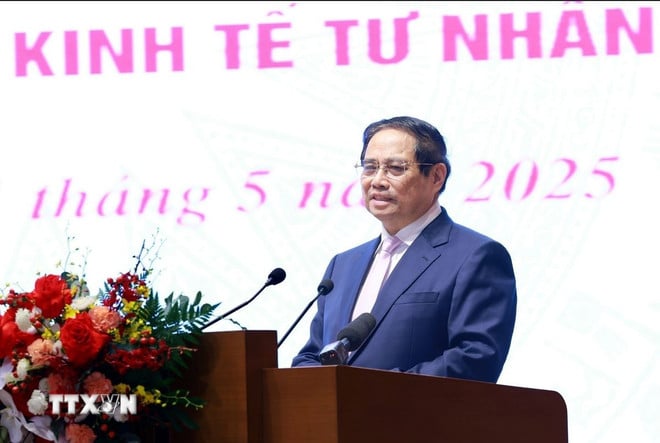
Prime Minister Pham Minh Chinh speaks at a roundtable discussion with businesses on the development of the private economy. (Photo: Duong Giang/VNA)
“Businesses investing in eco-industrial parks can receive a minimum 30% reduction in land rent for the first five years, along with priority access to credit and R&D cost deductions of up to 200%. Resolution 68 contributes to creating a ‘double impetus’ by both encouraging investors to transform their business models and creating favorable conditions to attract international green businesses,” Mr. Minh analyzed.
As Prodezi Long An Joint Stock Company is moving towards a multi-functional industrial park model, prioritizing the use of renewable energy, water recycling, green building construction, and the application of emission reduction technologies, this is not only a policy-driven measure but also a vital need in the global supply chain.
Meanwhile, Mr. Nguyen Quoc Hiep - Chairman of the Board of Directors of GP Invest Company - assessed that Resolution 68 is a "medicine" that brings confidence to businesses.
Problems encountered during project implementation will not be criminalized if businesses comply with regulations. The resolution mechanism focuses on supporting businesses rather than requiring "favors," helping to shorten the time needed to complete procedures.
Institutionalizing Resolution 68 is becoming an urgent requirement, both to concretize the Party's policies and to meet the practical expectations of the business community.
The goal is to essentially complete all institutionalization work by the end of 2025. The period from 2026 to 2030 will be a phase of leveraging resources and achieving growth targets of 8% or higher.
According to VNA
Source: https://baothanhhoa.vn/nghi-quyet-68-nq-tw-don-bay-the-che-cho-thi-truong-bat-dong-san-250602.htm

























![[Video] The craft of making Dong Ho folk paintings has been inscribed by UNESCO on the List of Crafts in Need of Urgent Safeguarding.](https://vphoto.vietnam.vn/thumb/402x226/vietnam/resource/IMAGE/2025/12/10/1765350246533_tranh-dong-ho-734-jpg.webp)

























































Comment (0)