

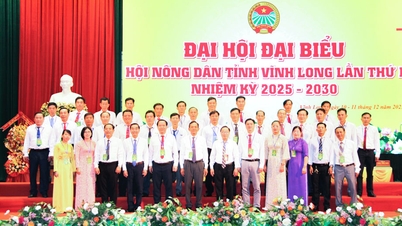
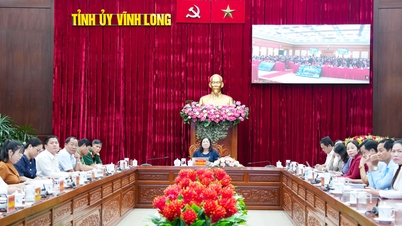
At the preparatory session of the First Provincial Congress of the Farmers' Association, term 2025-2030, delegates discussed and shared best practices and innovative models from local experiences in supporting farmers' economic development. The opinions not only reflected intelligence, responsibility, and proposed solutions but also voiced the realities of the province's rural areas.
Improving income and achieving sustainable poverty reduction for farmers' association members.
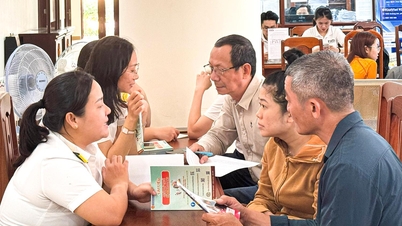
According to Ms. Ngo Thi Thanh Tam, Deputy Director of the Vietnam Bank for Social Policies (VBSP) Vinh Long branch, the branch is currently implementing 20 policy credit programs, including those entrusted to four social organizations. The outstanding loan balance entrusted to the Farmers' Association for management reached VND 4,695 billion, accounting for 32.8% of the total outstanding loan balance, with 112,277 customers still having outstanding loans through 2,492 Savings and Loan Groups.
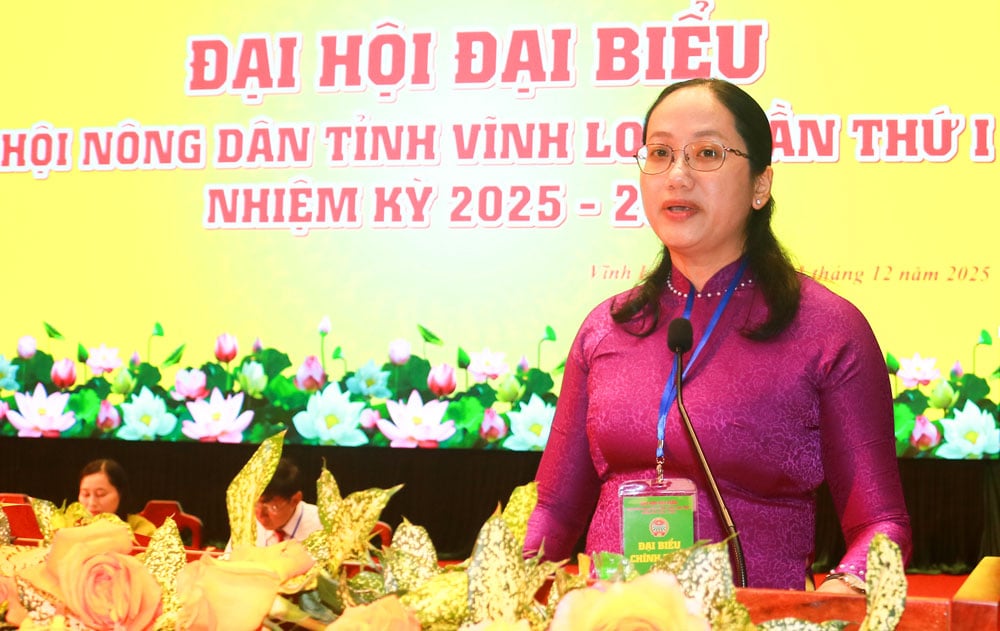 |
Loan programs supporting job creation, newly lifted-out-of-poverty households, clean water and sanitation, and students have helped thousands of households overcome poverty, created jobs for over 130,000 workers, supported over 15,000 disadvantaged students, and built over 73,000 clean water and sanitation facilities in rural areas.
According to Ms. Tam, the effective coordination between the Social Policy Bank and the Provincial Farmers' Association has improved income and achieved sustainable poverty reduction for its members. In the future, it is necessary to strengthen inspection and supervision of capital usage to ensure it is used for the intended purpose, guide members in developing production, and integrate policy credit with support for production, development of OCOP product chains, businesses, cooperatives, and rural development.
Maximizing the effectiveness of the Farmers' Support Fund.
Ms. Ho Thi Hieu Thuan, Chairwoman of the Farmers' Association of Phuoc My Trung commune, said that the Farmers' Support Fund has become a lever to activate the agricultural production ecosystem in the locality. The Association seriously implements the process of selecting the right beneficiaries, guiding the use of capital, managing it strictly, and monitoring it regularly.
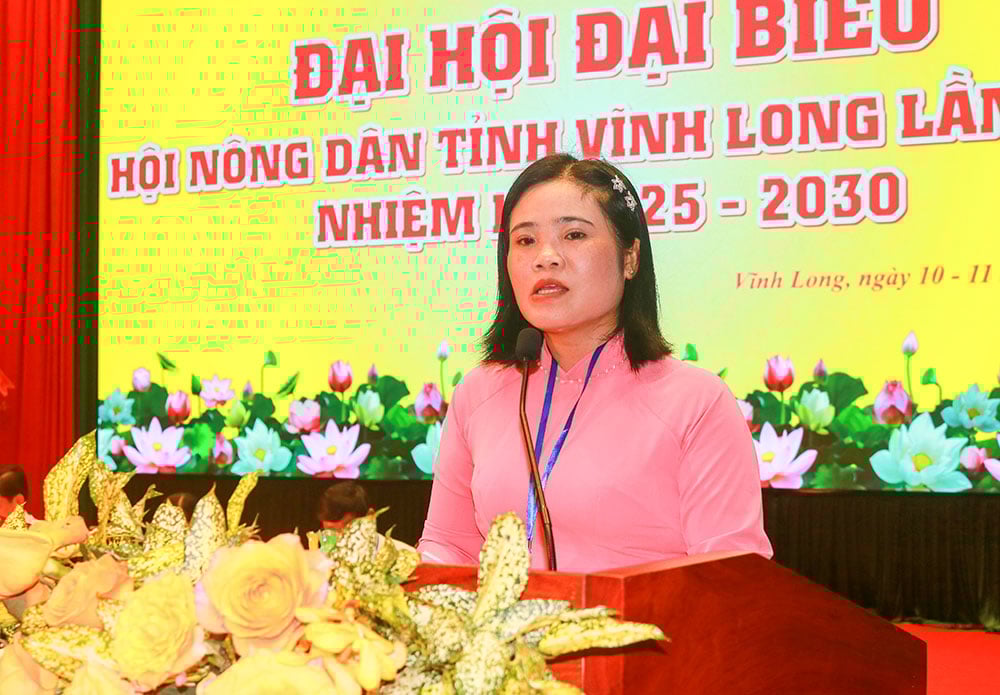 |
To date, the commune is managing 8 projects with a total capital of 1.8 billion VND, supporting 62 households with loans. These projects help members expand production, apply advanced techniques, and form many effective economic models. From this capital, the Association has supported the establishment of 1 cooperative, 2 professional farmers' associations, 5 professional farmers' groups, and attracted an additional 266 new members (2023-2025).
The commune's Farmers' Association has proposed solutions for strict capital management, improved efficiency in use, expanded market linkages, developed a team of fund management officials, and enhanced the responsibility of branch leaders in supporting members to develop sustainable economic activities.
Cooperative develops high-quality rice production linked to green growth.
Mr. Tran Van Trung, Director of Phat Tai Agricultural Cooperative, shared that the cooperative is linking farmers to build a high-quality rice production area according to the "1 million hectares of high-quality and low-emission rice in the Mekong Delta" project. The 48.4-hectare model, involving 48 households, uses the OM5451 rice variety, applies sparse sowing techniques, reduces fertilizer use by 20%, limits pesticide use, and manages alternating flooding and drying.
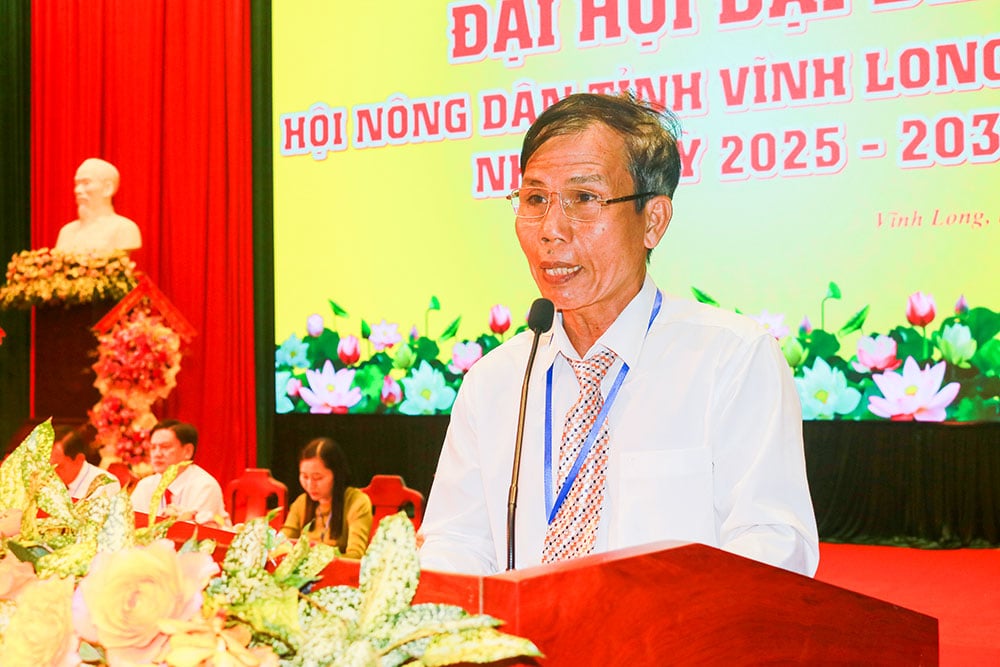 |
The model helps reduce greenhouse gas emissions, increase productivity to 6.3 tons/ha, reduce production costs by over 3 million VND/ha, and simultaneously support product output, straw collection, and increase farmers' income. The average per capita income in the hamlet reaches 72 million VND/year.
Mr. Trung proposed continuing to coordinate and support policies for production transformation models, increasing investment in infrastructure, machinery, warehouses, and processing facilities, expanding production areas, and linking businesses to stabilize output. He also suggested organizing training, sharing experiences, developing large-scale raw material areas linked to emission reduction, and developing a carbon credit market.
THUY QUYEN – TUYET NGA (summary)
Source: https://baovinhlong.com.vn/tin-moi/202512/diem-tua-dong-hanh-ho-tro-nong-dan-phat-trien-kinh-te-7564722/



















![[Video] The craft of making Dong Ho folk paintings has been inscribed by UNESCO on the List of Crafts in Need of Urgent Safeguarding.](https://vphoto.vietnam.vn/thumb/402x226/vietnam/resource/IMAGE/2025/12/10/1765350246533_tranh-dong-ho-734-jpg.webp)















































Comment (0)