

Knitting – the lifeblood of Mrs. Che.
From the center of Sa Phin commune, following a winding road along the mountainside, we arrived at Ma Che village – home to 91 households, of which more than half are Co Lao people, and the rest are Mong people. Amidst the vast expanse of jagged rocks, golden bamboo strips drying on the verandas of the houses resembled soft rays of sunlight, softening the harshness of the rocky plateau.
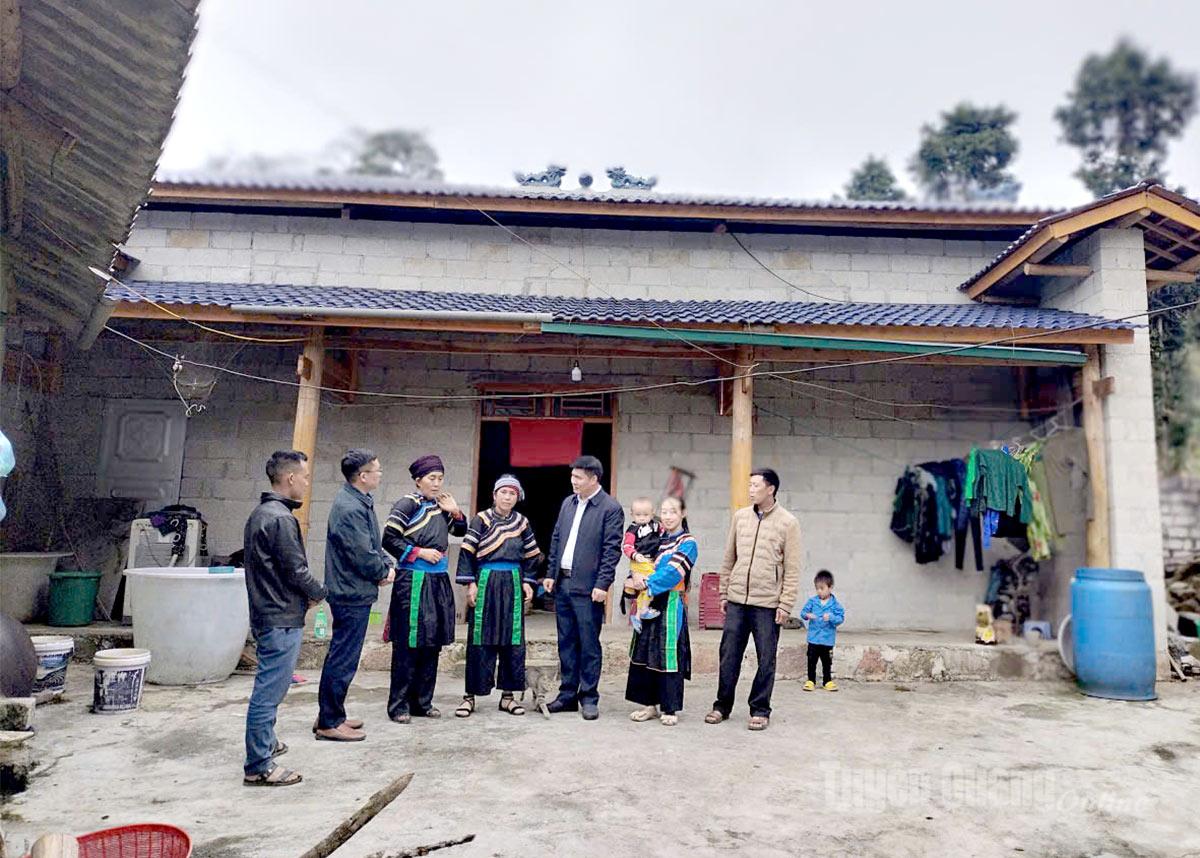 |
| The Cờ Lao people of Má Chề village, Sà Phìn commune, still preserve their traditional clothing alongside their old houses. |
Few people know that the Co Lao people are one of the 16 ethnic minority groups in Vietnam, with a population of less than 3,000, mainly living in the highland communes of Tuyen Quang province . Amidst the changes of modern life, Ma Che village still preserves its traditional weaving craft, considering it a "thread" connecting the past and the present.
Here, the traditional craft of weaving has been associated with the Co Lao people for generations. Since 2013, recognizing the value of this traditional craft, the People's Committee of Ha Giang province (formerly) issued a decision to establish the "Co Lao Ethnic Weaving Village in Ma Che Hamlet". Currently, despite many changes in life, the 8 households in the hamlet still maintain the weaving craft regularly. Each person can weave about 50 products a month, earning approximately 500,000 VND. The products are diverse: baskets, trays, sieves, carrying baskets, and other similar items, with prices ranging from 50,000 to 400,000 VND – all handmade, without chemicals or machinery.
Mr. Van Phong Sai, now over 90 years old, is one of the oldest artisans in the village. His gnarled hands still nimbly shape the bamboo strips and skillfully weave each section. According to him, weaving requires choosing bamboo of the right age, neither too old nor too young. The bamboo must be woven immediately after splitting; if left for too long, it will dry out, harden, and break easily. This craft requires passion and love to endure.
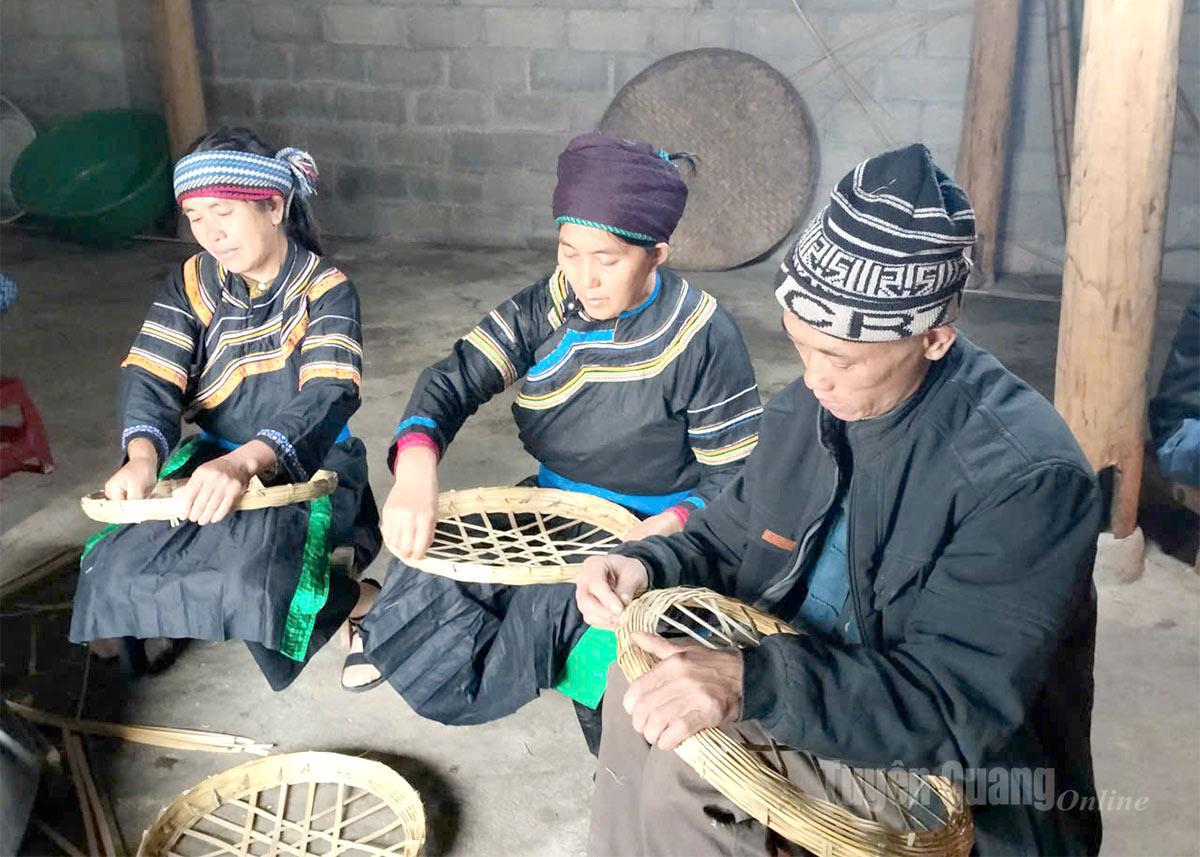 |
| In Ma Che village, there are currently 8 households that maintain the traditional craft of weaving. |
Currently, traders come to each household to buy the products, and some are displayed at local markets and product showcases. During Tet (Lunar New Year), the old town of Dong Van used to hang bamboo lanterns made by the Co Lao people – as a way to honor the skillful hands and simple souls of the artisans of this stone-making region.
Preserving the spirit amidst a new life.
Besides weaving, the Cờ Lao people in Má Chề also preserve a sacred ritual: the Forest Worship Ceremony – a long-standing religious practice associated with the concept of heaven, earth, and water, reflecting a philosophy of living in harmony with nature. In 2023, the "Forest Worship Ceremony of the Cờ Lao People" in Sính Lủng commune was recognized by the Ministry of Culture, Sports and Tourism as a National Intangible Cultural Heritage. The ceremony is held annually on the 3rd, 9th, or 29th of the 12th lunar month in the sacred Lùng phàng mí sính forest.
The villagers pool their money, prepare offerings, and invite a shaman to perform a ritual praying for a good harvest. Following the ceremony, a lively festival takes place with weaving competitions, tug-of-war, stick pushing, and cultural performances. These sounds and colors blend together in the mountain forest, becoming a symbol of community cohesion and faith in the divine.
Mr. Van Mi Sa, head of Ma Che village, shared: "The forest worship ceremony teaches our children and grandchildren to be grateful to nature, to protect the forest and water. Every year, the ceremony unites the village, the young people learn the customs again, and the elderly hear old stories – that's also the best way to preserve our cultural identity."
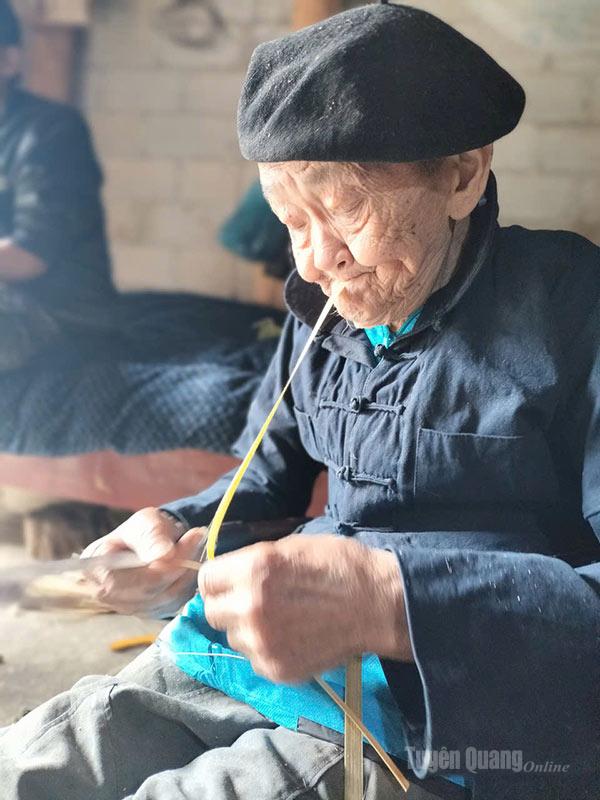 |
| Even at over 90 years old, artisan Van Phong Sai is still diligently preserving the traditional craft of weaving. |
Preserving their craft, their customs, their traditional clothing – the Cờ Lao people in Má Chề not only preserve their identity but also their future. Amidst the rocky plateau, this cultural flame continues to burn persistently – smoldering but warm, shining brightly through time. Along with their unique forest worship rituals, the Cờ Lao people also preserve their traditional clothing with its distinctive indigo color. Men typically wear simple yet robust indigo or black shirts with high collars and wide-legged trousers. Women stand out with their headscarves, long indigo blouses, belts, aprons, and leggings; in some areas, they also wear aprons similar to those worn by the Hmong.
Traditional clothing is not only a way to identify an ethnic group, but also reflects polytheistic beliefs and animism – the idea that all things have souls and deserve respect. Today, even though modern life has permeated the villages, during festivals, holidays, and weddings, Co Lao women still wear traditional clothing – as a way to "preserve the soul" of their ethnic identity.
In the flow of integration, the Co Lao culture still faces many challenges: the number of people practicing the weaving craft is dwindling, outdated customs persist, the younger generation is gradually distancing itself from tradition, and in many places, there is a lack of space for the culture to "breathe." However, amidst the gray rocky landscape, there are still people like Mr. Van Phong Sai and Mr. Van Mi Sa – the silent "keepers of the flame." There are still children passionately practicing weaving baskets on the porch, and the forest worship rituals still resonate with the smoke of incense. All of these contribute to nurturing the enduring vitality of Co Lao culture – an inexhaustible source of inspiration.
Text and photos: Hoang Anh
Source: https://baotuyenquang.com.vn/van-hoa/du-lich/202510/nguoi-co-lao-o-sa-phin-2d44186/


![[Photo] Enchanted by the deciduous forest during the leaf-changing season.](/_next/image?url=https%3A%2F%2Fvphoto.vietnam.vn%2Fthumb%2F1200x675%2Fvietnam%2Fresource%2FIMAGE%2F2026%2F02%2F04%2F1770196861704_2066642_8ffd5f25c3c9433be0e644abe71613ae.jpeg&w=3840&q=75)




Comment (0)