

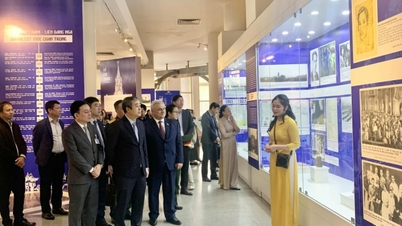
First, the exhibition " Hanoi and its Gates" opened on the morning of October 7th at the Thang Long Imperial Citadel heritage site. The exhibition, themed "Hanoi and its Gates," aims to introduce the history of Hanoi's gates, closely linked to the history of Thang Long - Hanoi.
Through historical sources, images, maps, drawings, and documents written in Sino-Vietnamese and French, stored at the French Far East Institute in Hanoi (EFEO), the Vietnam Library of Social Sciences , and especially the National Archives Center I and the Hanoi City Historical Archives Center, the exhibition recreates the history of Hanoi's city gates; providing the most vivid and intuitive view of social life around the city gates and the disappearance of most of them in the late 19th and early 20th centuries. In addition, the exhibition introduces the process of taking over Hanoi (October 10, 1954) and the development of the capital city since national reunification to the present day.
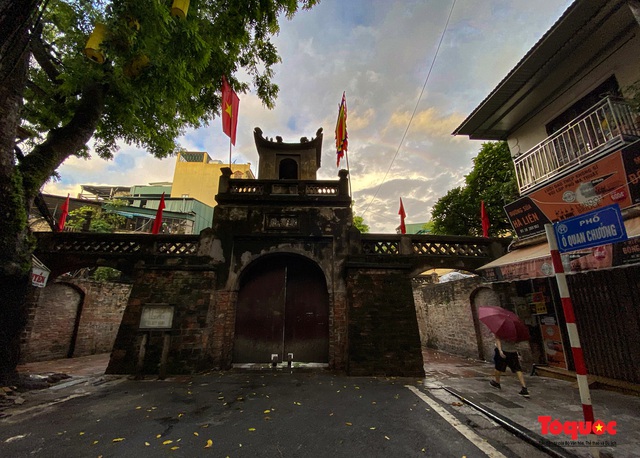
The exhibition "Hanoi and its City Gates" opened on the morning of October 7th at the Thang Long Imperial Citadel heritage site (illustrative photo).
The archival exhibition "Hanoi and its City Gates" presents approximately 170 documents and images covering three themes: Ancient city gates; Victorious city gates; and Hanoi's city gates today.
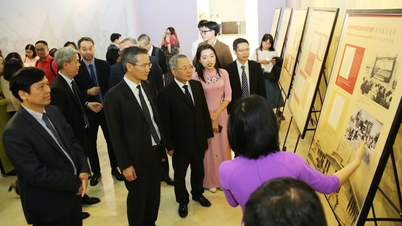
The exhibition "Ho Chi Minh - A Journey for National Independence and Socialism Through Stamp and Postcard Collections" showcases historical milestones in the life and glorious revolutionary career of President Ho Chi Minh, closely linked to the heroic history of the Vietnamese nation and becoming a decisive part of world history in the 20th century.
The journey of national salvation and the great career of President Ho Chi Minh are showcased through a collection of over 400 stamps and postcards, displayed alongside the original collection of stamps and postcards issued from 1911 to the present day.
The exhibition is divided into six parts: Part 1: The patriotic young man Nguyen Tat Thanh's determination to leave the country to find a way to save the nation and liberate the people; Part 2: Revolutionary activist Nguyen Ai Quoc's participation in the international communist and workers' movement, the founding of the Communist Party, and the leadership of the Vietnamese revolutionary movement; Part 3: President Ho Chi Minh's founding of the Democratic Republic of Vietnam and his leadership of the victorious resistance and nation-building; Part 4: President Ho Chi Minh's leadership in building and defending the socialist North, fighting for the liberation of the South, and unifying the Fatherland; Part 5: Forever following the path of the great President Ho Chi Minh; The affection of the Vietnamese people and the world for President Ho Chi Minh; Part 6: Hanoi's determination to follow Uncle Ho's teachings to become a "peaceful, beautiful, and healthy capital, both materially and spiritually".
The exhibition of paintings about the Imperial Citadel and the landscapes and cultural heritage of Hanoi, titled "Sacred Traces," by artist Chu Nhat Quang, showcases 52 traditional lacquer paintings depicting the homeland's landscapes and national heritage sites, with an artistic style that combines traditional and modern elements.
The exhibition is divided into four themes: "Beginning"; "Root"; "Spirit"; and "Cradle". The exhibition of paintings depicting the Imperial Citadel and the landscapes of Hanoi's cultural heritage, titled "Sacred Traces," by artist Chu Nhat Quang, is not merely an artistic performance but also a journey back to our roots, a reminder of the importance of preserving and promoting the lacquer craft and traditional cultural values in the modern world.
To promote the value of the Hau Lau relic site, the Thang Long Hanoi Heritage Conservation Center has conducted research, interpreted information about the relic, and restored, preserved, and promoted the value of the Le Dynasty well unearthed in the Hau Lau area.
Information presented through a system of visual panels helps visitors learn more about the significance of the structure, the unique features of its architecture and decorative art, and the aspirations for peace and happiness expressed by the Nguyen dynasty kings.
On this occasion, the Thang Long-Hanoi Heritage Conservation Center also renovated the thematic exhibition hall "Thang Long - Hanoi, a thousand years of history from the earth." The content and exhibition space were modernized and made more attractive, contributing to honoring and highlighting the valuable artifacts unearthed from the Thang Long Imperial Citadel heritage site. In particular, 3D mapping technology, interactive screens, and specialized display cabinets with OLED touch screens were added, allowing visitors to interact with and appreciate the unique value of the artifacts.
Exhibitions and displays will be open to visitors from October 5, 2024, at the Thang Long Imperial Citadel World Heritage Site, 19 Hoang Dieu Street, Ba Dinh District, Hanoi.
Source: https://toquoc.vn/nhieu-hoat-dong-dac-sac-chao-mung-ky-niem-70-nam-ngay-giai-phong-thu-do-tai-khu-di-san-hoang-thanh-thang-long-20241002164019839.htm



























































Comment (0)