

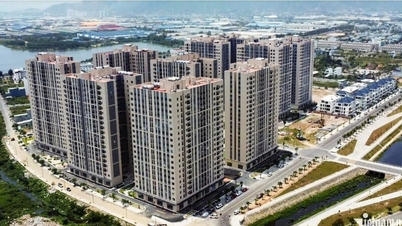
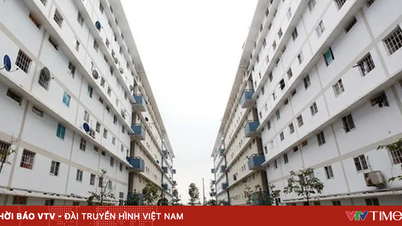
Social housing is an important part of social welfare policy, helping to address the housing needs of low-income individuals who do not qualify to buy, rent-to-own, or rent housing at market prices. With preferential selling prices and bank loan interest rates, social housing projects always attract the attention of those in need of buying a home.
However, not everyone is eligible to buy social housing. So, according to the law, who are the eligible individuals for purchasing social housing?
According to Article 49 of the 2014 Housing Law, eligible individuals who meet the conditions in Article 51 of the 2014 Housing Law include:
- Persons who have rendered meritorious services to the revolution as stipulated by the law on preferential treatment for persons who have rendered meritorious services to the revolution;
- Poor and near-poor households in rural areas;
- Households in rural areas frequently affected by natural disasters and climate change;
- Low-income individuals, poor households, and near-poor households in urban areas;
- Workers employed at businesses inside and outside industrial zones;
- Officers, non-commissioned officers, technical specialists, professional soldiers, and workers in agencies and units of the People's Public Security and the People's Army;
- Officials, civil servants, and public employees as defined by the law on officials, civil servants, and public employees;
- Individuals who have returned public housing according to regulations are those who rented public housing when they no longer meet the eligibility requirements, or moved elsewhere, or committed violations of regulations on housing management and use that result in the housing being reclaimed, and therefore must return the public housing to the State.
- Households and individuals whose land is subject to expropriation and whose houses must be demolished according to the law, but who have not yet received compensation from the State in the form of housing or land.
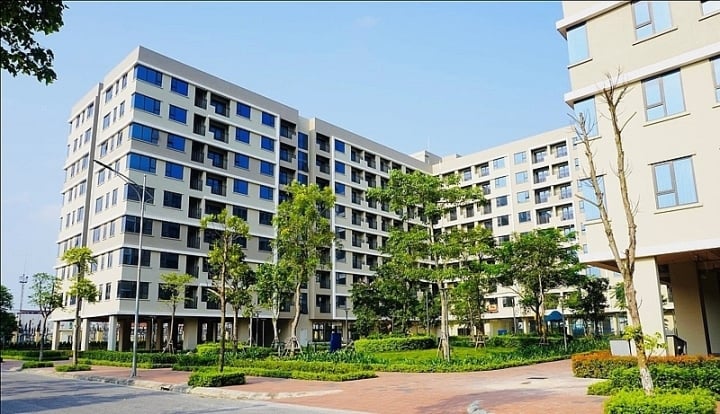
There are 10 groups of people eligible to buy social housing. (Illustrative image: Government newspaper)
In addition to being eligible to purchase social housing as mentioned above, buyers must also meet the conditions stipulated in Article 51 of the 2014 Housing Law, including:
Housing conditions : Individuals who do not own a home, have not purchased, rented, or leased social housing, have not received any form of housing or land support policy in their place of residence or study, or who own a home but the average living space per person in their household is lower than the minimum living space stipulated by the Government for each period and region.
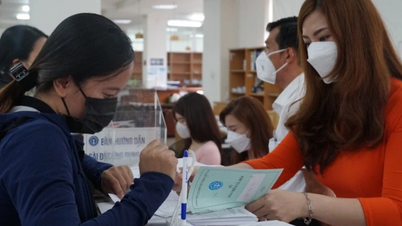
Residency requirements : Buyers of social housing must have permanent residence registration or temporary residence registration with social insurance contributions for at least one year in the provinces and cities where social housing development projects are located.
Income requirements: Homebuyers must not be subject to regular income tax under personal income tax regulations; they must belong to a poor household that meets the poverty line as defined by the Government. For civil servants, they must be exempt from regular income tax according to the law on personal income tax. If they are beneficiaries of social welfare programs and wish to purchase social housing, they must have confirmation from the People's Committee of the commune/ward/town where they reside. Students are only eligible to rent, not to purchase, social housing.
Those who meet the above conditions must register to purchase social housing with the project developer. After the application is approved, the developer and the buyer will discuss and agree on the signing of a sales contract, with the detailed process following the regulations of Decree 100/2015/ND-CP.
Furthermore, buyers of social housing should note the regulations regarding the sale of social housing (if they wish to sell), such as: a minimum period of 5 (five) years from the date the buyer has fully paid for the purchase or lease-purchase of the housing before they can proceed with the sale. The sale must comply with the regulations in Article 62 of the 2014 Housing Law.
If, within 5 years from the date the buyer or lessee has fully paid for the purchase or lease of the housing unit, they wish to sell the housing unit, they may only sell it back to the social housing management unit or to an eligible buyer of social housing if that unit is eligible.
Recently, during discussions on the draft amended Housing Law, National Assembly deputies argued that social housing for rent should be developed to reduce the financial burden on low-income earners. The reason is that, in reality, low-income earners are mainly workers and newly employed laborers, for whom housing is an excessively large and unaffordable asset. Furthermore, there are instances of income falsification to qualify for housing or speculators using workers' names to register for purchases.
Currently, in many countries, developers only execute the project, while the management and operation are handled by professional public or private organizations. These organizations work alongside developers from the project development stage, committing to purchasing homes at reasonable prices for long-term rental and addressing concerns about cash flow for the developers. As a result, low-income individuals may not necessarily own a home, but they have the right to live in it.
Lagerstroemia (compilation)
Beneficial
Emotion
Creative
Unique
Source



![[Photo] Two flights successfully landed and took off at Long Thanh Airport.](/_next/image?url=https%3A%2F%2Fvphoto.vietnam.vn%2Fthumb%2F1200x675%2Fvietnam%2Fresource%2FIMAGE%2F2025%2F12%2F15%2F1765808718882_ndo_br_img-8897-resize-5807-jpg.webp&w=3840&q=75)






















































































Comment (0)