

The rural areas in the northeastern region of Vietnam are undergoing a miraculous transformation thanks to the New Rural Development program and Resolution No. 06-NQ/TU dated May 17, 2021, of the Provincial Party Committee. Village roads and alleys are being widened, paved with asphalt and concrete, becoming clean and beautiful; high-voltage lighting is installed; and security cameras contribute to maintaining peaceful villages. People's lives are improving, becoming more prosperous and affluent... The rural areas of Quang Ninh are now not only beautiful in scenery but also prosperous and thriving, an ideal place for people to build a peaceful and happy life.
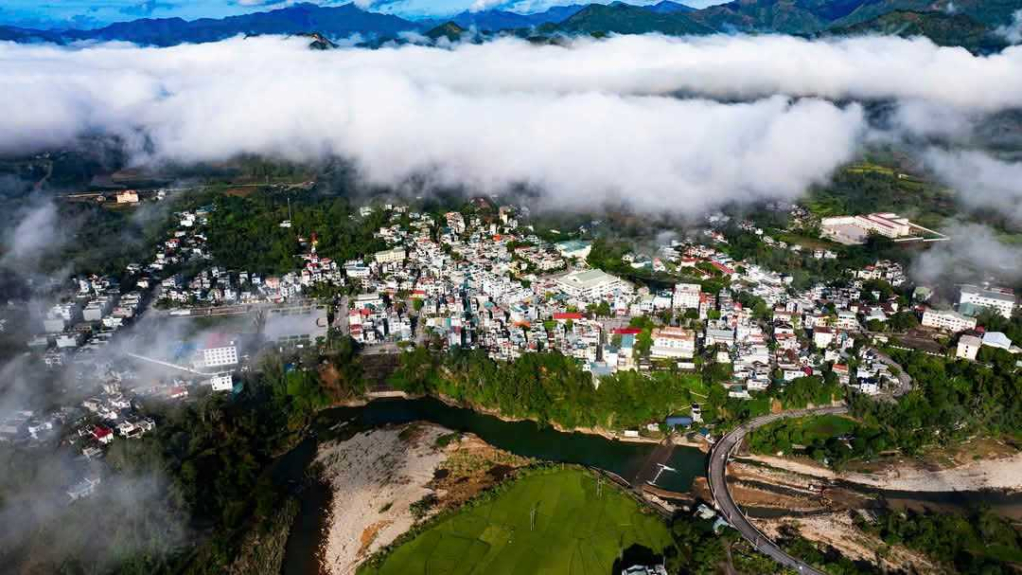
The countryside is undergoing a transformation.
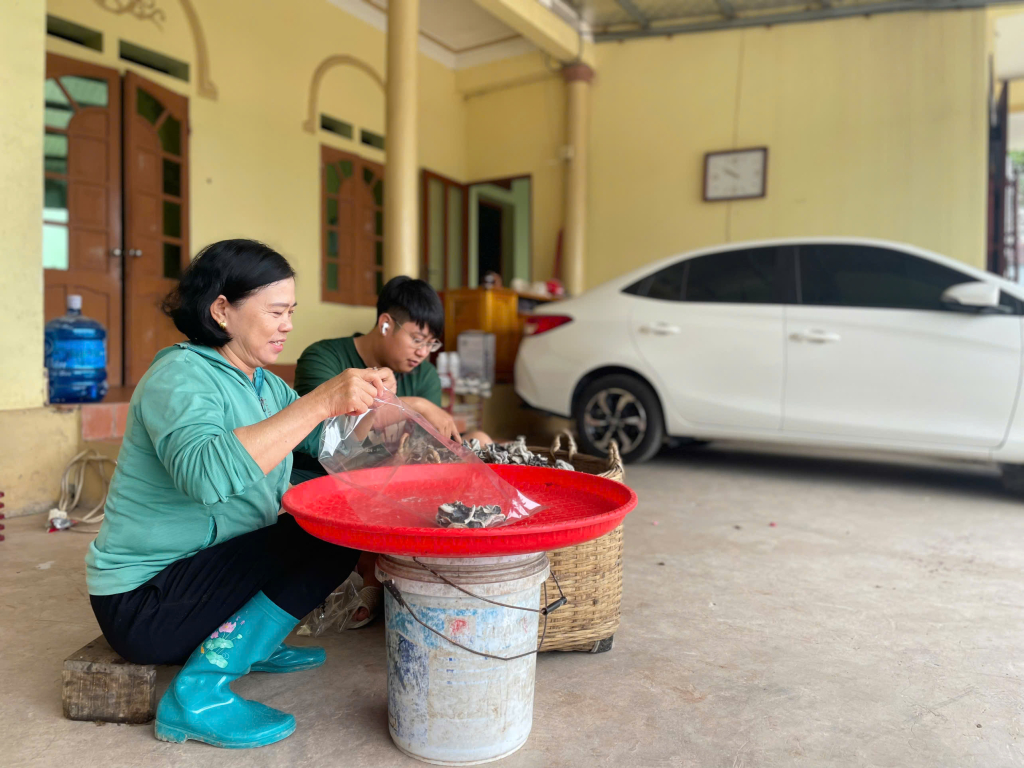
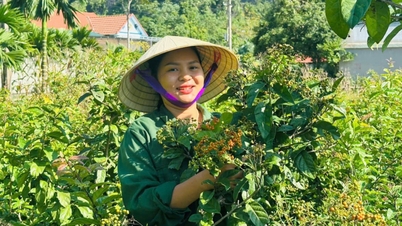
A typical day for farmer Duong Thi Lua (Duc Yen commune, Dam Ha district) begins with checking the mushroom growing area and watering the mushroom substrates. In 2024, Ms. Lua's family built another building to expand the area for growing mushrooms and wood ear mushrooms to nearly 10,000 substrates. Ms. Lua said: "The mushrooms grow for about a week before being harvested. Every day I pick and sell about 100 kg of mushrooms to the market, earning 5-6 million VND. My family also maintains a flock of over 10,000 chickens each year. The income from mushroom farming and chicken farming is nearly 1 billion VND per year."
Family-based economic models generating hundreds of millions to billions of dong in income are increasingly common throughout rural Quang Ninh province. Particularly, with the implementation of the New Rural Development program, and with the support and assistance of the government, many farming households have boldly developed crops and livestock with strong potential, combining farming and livestock raising in an organic and safe manner, resulting in high economic efficiency.
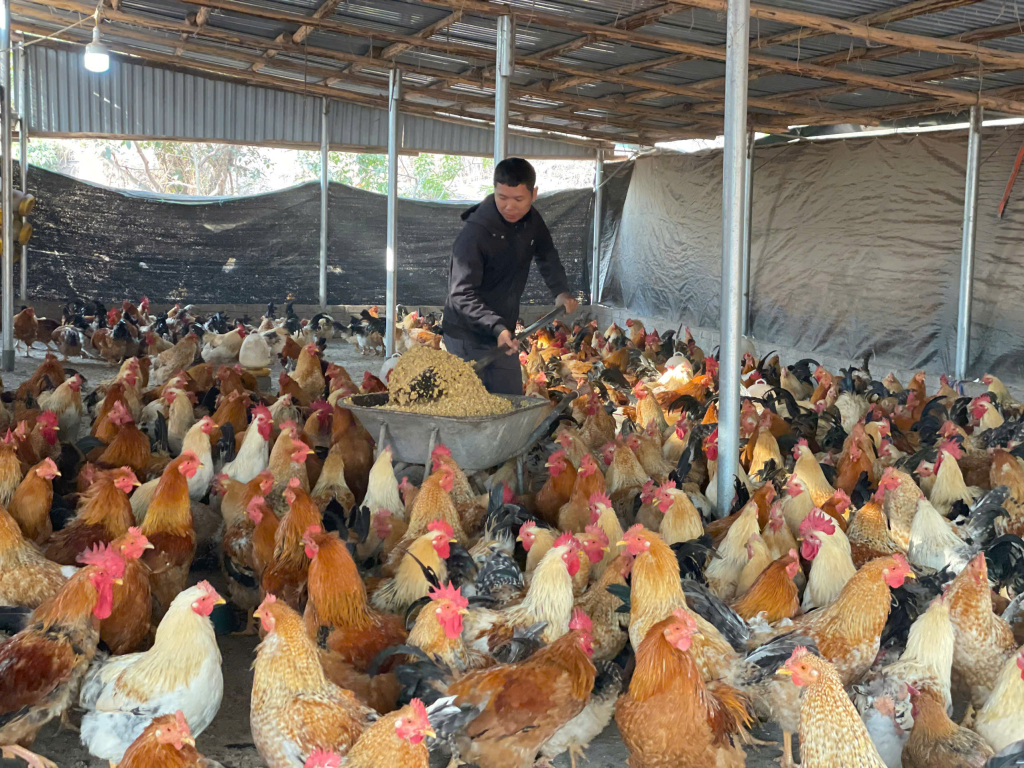
Mr. Trinh Kim Bao's household (Thong Nhat village, Hai Lang commune, Tien Yen district) currently has a Tien Yen chicken farm with a scale of approximately 15,000 chickens per year. When the district's policy on building the Tien Yen herbal chicken brand was implemented, he was a pioneer in participating. Under the guidance of the commune and district, he sourced ingredients such as cinnamon leaves, star anise fragments, cloves, and cardamom, grinding them into powder and mixing them with corn and bran to make feed for the chickens. After more than a year of implementation, the chickens from his family's farm have received positive feedback from traders and consumers regarding their quality. Each year, after deducting expenses, Mr. Bao earns about 500-600 million VND. Under the guidance of the commune, Mr. Bao joined the Tien Yen Herbal Chicken Farming Club in Hai Lang commune to share experiences on brand development and market access for Tien Yen chicken products. Mr. Bao said: "Tien Yen chickens already have a brand name, and they are raised on herbs, resulting in meat that is more fragrant and delicious. My family is continuing to expand the scale of our farming. We are confident about the market demand; in addition to our family's proactive efforts, the local government regularly pays attention to connecting us with consumers."
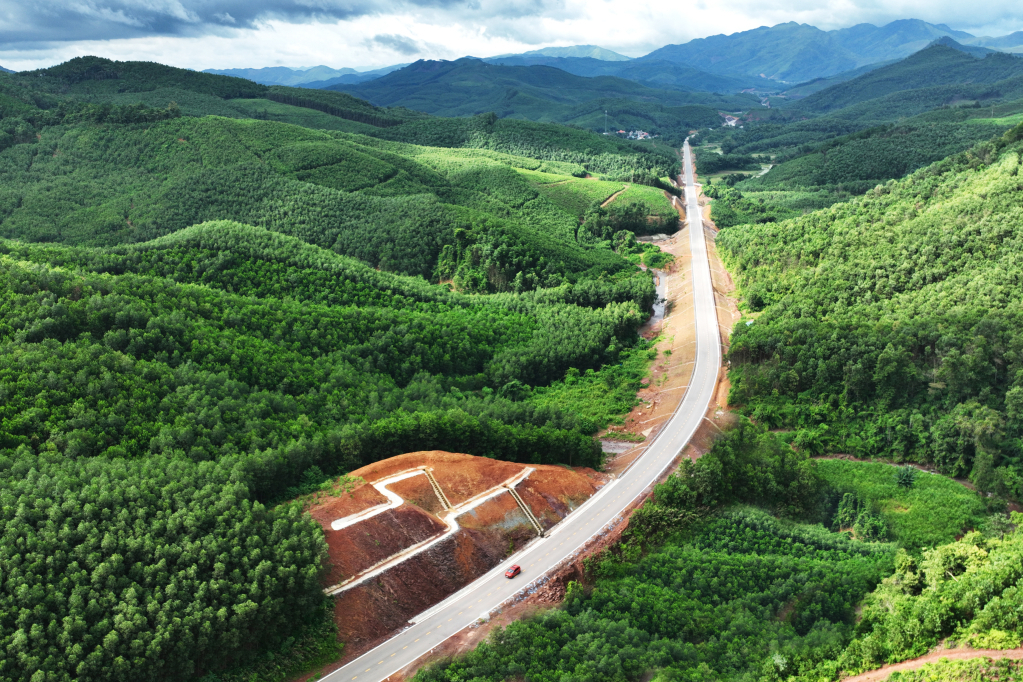
The abundance from each farm and field brings a more prosperous life to the rural people of Quang Ninh. Alongside fostering a spirit of self-reliance and overcoming difficulties to become wealthy, various sectors and levels of government are focusing on transforming the appearance of rural and mountainous areas through investment in infrastructure such as transportation, electricity, water, and telecommunications.
At the end of July 2024, Provincial Road 342, a 20km route connecting Ha Long City - Ba Che District (Quang Ninh) with Dinh Lap District (Lang Son), was completed. The project had a total investment of over 800 billion VND from the provincial budget. The road has become a new driving force for the mountainous areas of the province, making a significant contribution to promoting regional connectivity, gradually narrowing the gap between regions, and aiming for a more equitable distribution of resources across all areas… Mr. Ly Tai Ngan (Khe Phuong Hamlet, Ky Thuong Commune, Ha Long City) excitedly said: "With the new road, our people can travel more conveniently, opening up many opportunities for trade and economic development. We, who run tourism businesses, also hope the road will bring more tourists from other provinces to Ky Thuong."
Notably, based on the synchronously invested telecommunications infrastructure, many ethnic minority areas have successfully applied information technology and the Internet in their lives and production, becoming true "digital citizens". Through this, people quickly grasp information and directives from the district and province, and learn a lot of knowledge that can be used in daily life. Many IT applications have been promoted, such as the installation of the Electronic Health Book application, the use of a remote medical consultation platform; the application of digital social insurance (VssID); and increased interaction between the government and the community through social media groups like Facebook and Zalo.
Mr. Hoang Van San (Hoanh Mo commune, Binh Lieu district) is one of the local "digital citizens" who pioneered the use of technology and the internet in tourism. Thanks to his access to and adaptation to the digital transformation trend of the 4.0 era, Hoang San Homestay has become a popular search term on tourism forums and search engines like Google, Facebook, and Zalo for many tourists visiting Binh Lieu. Mr. San excitedly said: "With telecommunications infrastructure reaching even the most remote villages, our people are guided on digital transformation, learning how to access information and use social media to promote and introduce the beauty and unique aspects of our community to all regions. Technology also opens the way for tourists to visit our people, bringing income and cultural exchange."

Thanks to investment resources from the province through the New Rural Development program and Resolution No. 06-NQ/TU of the Provincial Party Committee "On sustainable socio-economic development associated with ensuring national defense and security in communes, villages, and hamlets in ethnic minority, mountainous, border, and island areas in the period 2021-2025, with orientation to 2030", hundreds of rural infrastructure projects have been invested in and put into operation, creating momentum for rural and mountainous areas. Rural people are leveraging their internal strengths and taking advantage of state investment to rise up and become wealthy; working together to build increasingly prosperous and modern rural areas.
A great resource from the people.
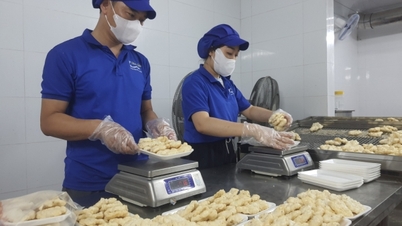
Tien Yen is one of the first two districts nationwide to achieve advanced new rural area standards according to the criteria set for the 2021-2025 period. Building on this foundation, the district Party Committee is focusing on implementing numerous solutions, striving to achieve Type III urban status, becoming a cultural center rich in the ethnic identities of the Northeast region, and meeting the roadmap for re-establishing Tien Yen town before 2027. These policies and solutions, driven by the strong determination of the Party committees and authorities, have been actively supported and participated in by the people. Notably, many households have proactively shifted from agricultural production to business, service, and small-scale handicraft industries; many companies, enterprises, and cooperatives have been established, boldly applying modern technology and production lines to improve product quality and expand markets.
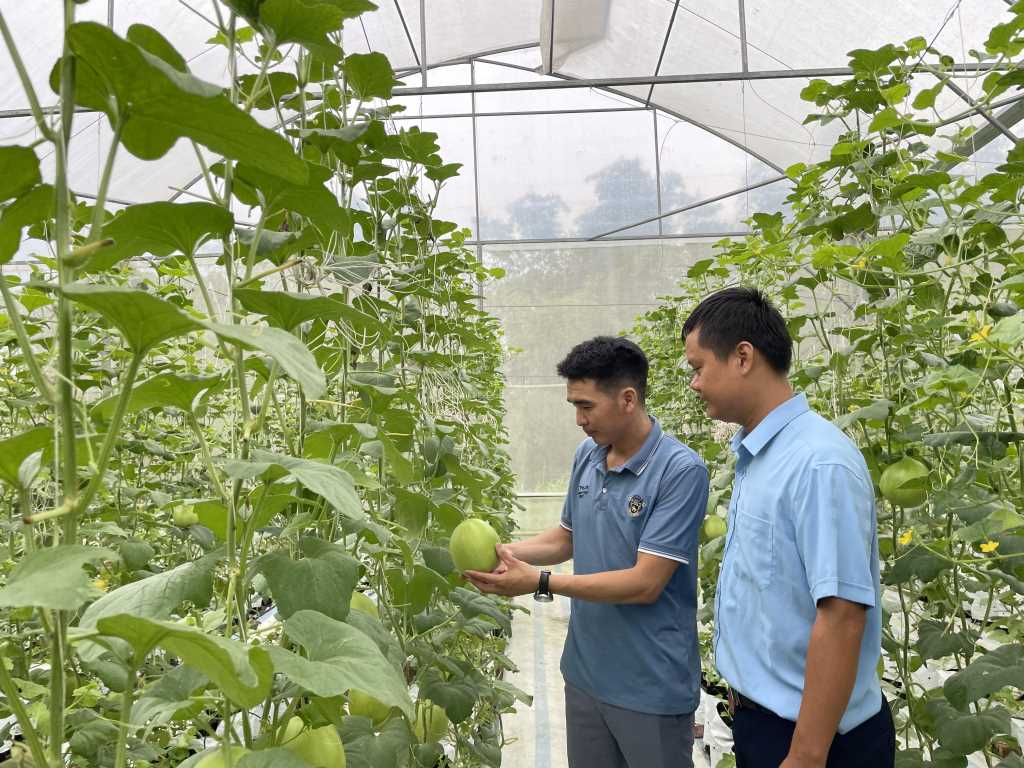
The district's fundamental solutions have created a new impetus and spirit in building new rural areas. A highlight is the average income in the district's rural areas reaching nearly 74 million VND per person, 5.4 times higher than when the new rural area construction began in 2010. The district also no longer has any poor households according to the central government's criteria. With improved economic conditions, people have more opportunities to participate in building a new cultural life, creating a clean and beautiful environment, and contributing funds and land to upgrade infrastructure serving the people.
The sweet fruits of building new rural areas lie not only in tangible values such as electricity, roads, schools, health stations, environmental landscapes, and increased income, but also in the significant changes in the thinking and awareness of rural people. Instead of passively waiting, superficially participating in emulation campaigns, or avoiding responsibility for common tasks, the majority of people now truly understand and effectively play their role as key stakeholders. In many localities, the motto "The people know, the people discuss, the people do, the people inspect, the people supervise, and the people benefit" in building new rural areas has become a vivid and clear reality in many specific models, projects, and tasks. The proactive and creative spirit of local communities has been strongly encouraged, contributing to helping even the most remote rural areas achieve significant progress and innovation in all aspects.
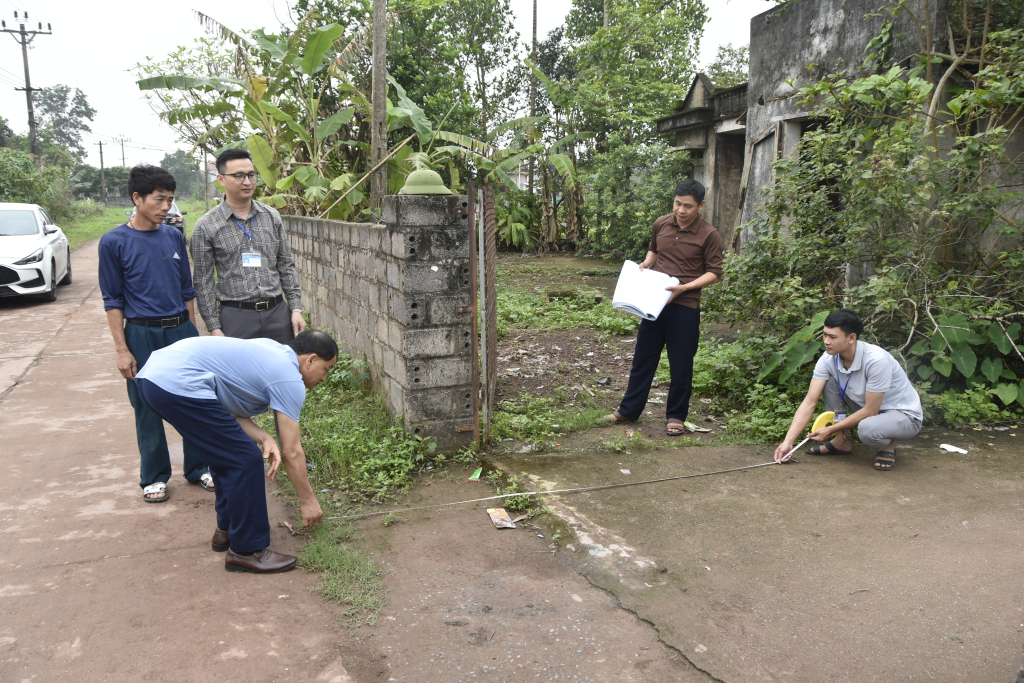
The people's internal strength is the decisive factor in the New Rural Development program. From 2011 to the present, the people and communities in the province have contributed nearly 18,000 billion VND, accounting for 8.1% of the total New Rural Development budget of the province during this period. People not only take ownership in building new rural areas and achieving sustainable poverty alleviation, but also enthusiastically participate by contributing money, effort, and intellect to build and develop their homeland; using their own hands, minds, the strength of community solidarity, along with the advantages of modern science and technology and comprehensive digital transformation... to rise up and achieve legitimate wealth. The efforts of each individual have combined to create the overall picture of New Rural Development in the province. After nearly 14 years of effort, Quang Ninh is being considered and recognized by the central government as a province that has completed the New Rural Development task.
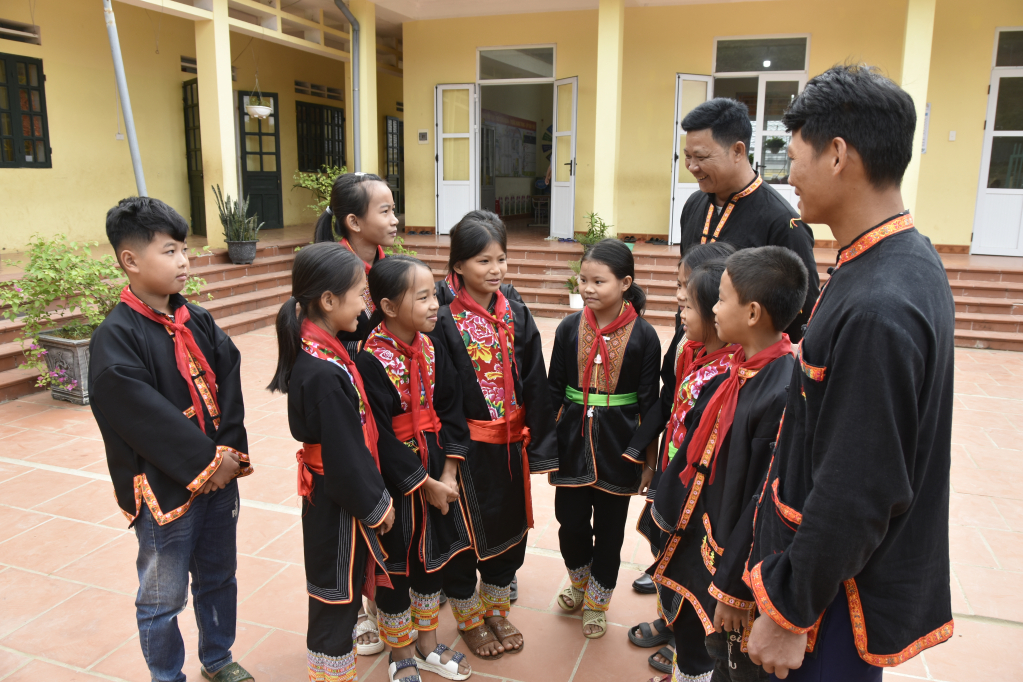
The enthusiastic and responsible participation of a large number of people also shows positive changes in the new phase. This involves linking the construction of new rural areas with the preservation and promotion of the rich cultural values of Quang Ninh. Looking at the approach of Ba Che district, the movement of all people uniting to build a cultured life has continuously developed and innovated over the years. Models and exemplary examples of building a cultured life at the grassroots level are constantly being replicated and positively received by ethnic communities. For example, in Don Dac commune, the Club for Preserving and Promoting the Cultural Identity of the Dao Thanh Phan ethnic group has maintained its activities and grown stronger over the past four years. Its members have become a link between tradition and modernity, helping to restore the ancestral turtle dance and fire dance rituals and preserving Dao Nôm script books, which are original records of local customs and beliefs.
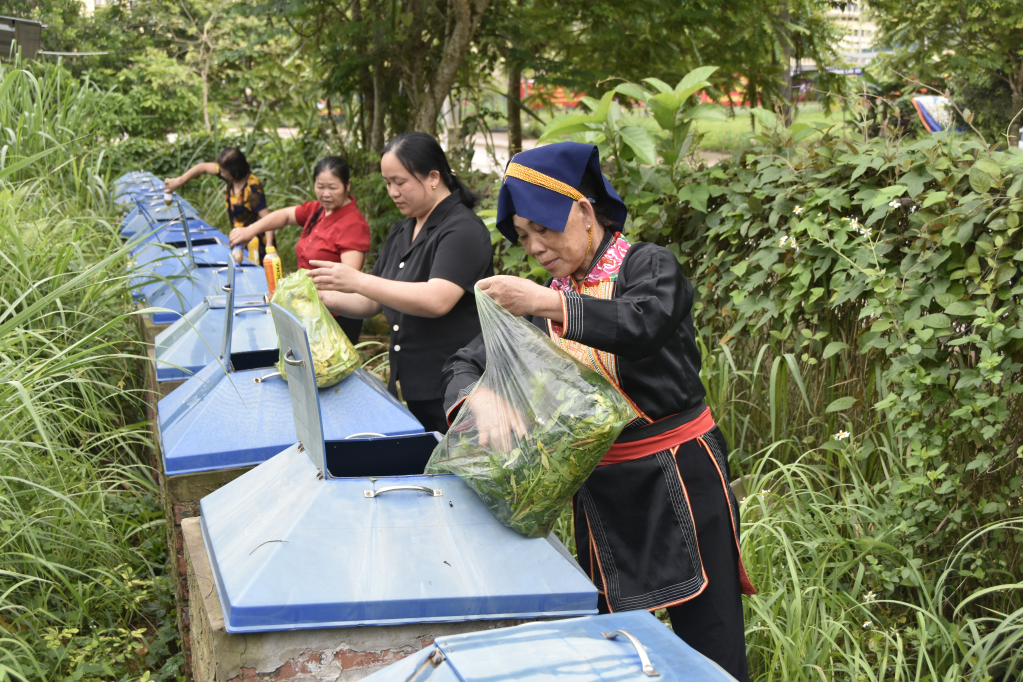
Previously, the rapid pace of rural urbanization brought mixed feelings of joy and concern, as people felt the spirit of their homeland was gradually being lost. Now, however, cultural elements and spiritual life are receiving more attention and emphasis. Specifically, more flower-lined roads, gardens, and public green spaces are being built in residential areas; and grassroots cultural institutions are being utilized to their fullest potential as places for meetings, activities, recreation, and events, enriching the spiritual life of the community.
Every rural resident is a direct participant in the process of building new rural areas, and also a beneficiary of the achievements brought about by this program. Amidst the joy of welcoming the new year 2025 with new opportunities, we are even more proud to see the image of prosperous and thriving rural areas continuing to extend across the potential-rich land of Quang Ninh in this new era.
Source



































































Comment (0)