

Here are the details:
Closing of the 10th Session of the 15th National Assembly
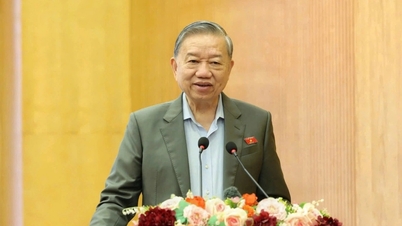
This week, on December 11th at the National Assembly building, the 15th National Assembly concluded its 10th session. This was the longest session ever, lasting 40 consecutive days, and involved the largest volume of legislative work to date. The National Assembly reviewed, discussed, and voted to pass 51 laws and 39 resolutions, including 8 normative legal resolutions. This volume of legislation accounted for nearly 30% of the total number of laws and normative resolutions enacted during the entire term.
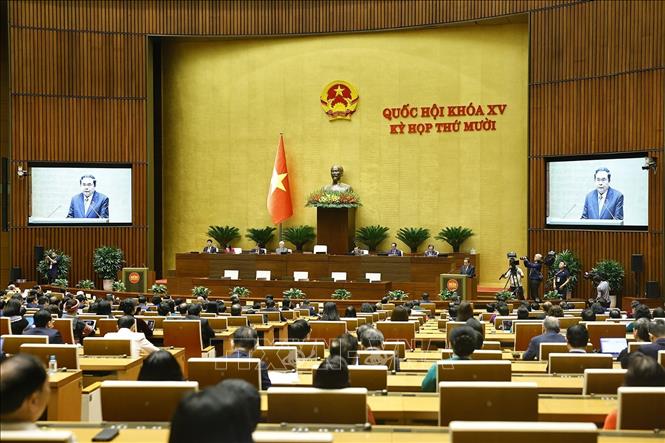
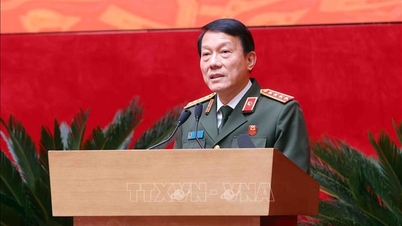
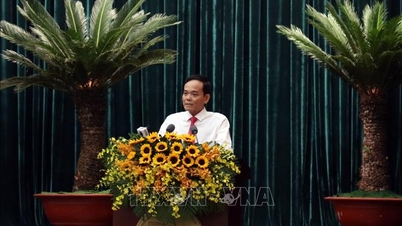
National Assembly Chairman Tran Thanh Man delivers the closing remarks at the session. Photo: Doan Tan/TTXVN
In addition, the National Assembly discussed 21 issues and groups of issues of concern to National Assembly deputies and voters. This demonstrates the National Assembly's urgent and highly responsible work ethic in accompanying the Government and promptly concretizing the Party and State's policies. The most prominent aspects of the 15th National Assembly's term were the innovative thinking on legislative work; the promotion of a digital National Assembly and increased application of science and technology in the National Assembly's activities; and the important role of parliamentary diplomacy in the overall state foreign policy… The laws and resolutions passed by the National Assembly both promptly met practical requirements and created a legal framework for the new era.
National Assembly Chairman Tran Thanh Man affirmed: Along with legislative and supervisory work, the National Assembly has considered and decided on many important strategic issues. In particular, at this session, the National Assembly has thoroughly and comprehensively reviewed the work of the 2021-2026 term of the agencies within the State apparatus; considered and decided on personnel matters ensuring compliance with Party regulations and State laws; and at the same time, carefully discussed the draft documents to be submitted to the 14th National Congress of the Party, contributing intellect, dedication, and ideas for the country's development towards the goal of becoming a developing country with modern industry and high middle income by 2030, when the Party celebrates its 100th anniversary; and becoming a developed country with high income by 2045, the 100th anniversary of the nation's founding.
Conference summarizing the work on combating corruption, waste, and negative phenomena during the term of the 13th Party Congress.
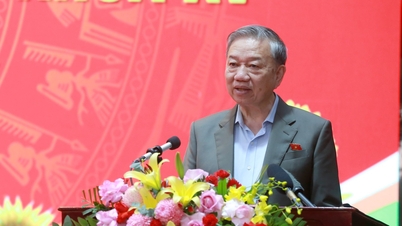
Last week, at the Party Central Headquarters, the Central Steering Committee on Anti-Corruption, Waste, and Negative Phenomena (Central Steering Committee) held a national conference to summarize the work on combating corruption, waste, and negative phenomena during the 13th Party Congress term. General Secretary To Lam, Head of the Central Steering Committee on Anti-Corruption, Waste, and Negative Phenomena, chaired the conference.
This is a significant conference, assessing the situation and results during the 13th Party Congress term, summarizing 20 years of implementing Central Resolution 3 (10th Party Congress) on strengthening the Party's leadership in the fight against corruption, waste, and negative phenomena – one of the four dangers affecting the survival of the Party, the regime, and the country; and unifying the direction of the fight against corruption, waste, and negative phenomena in the coming period.
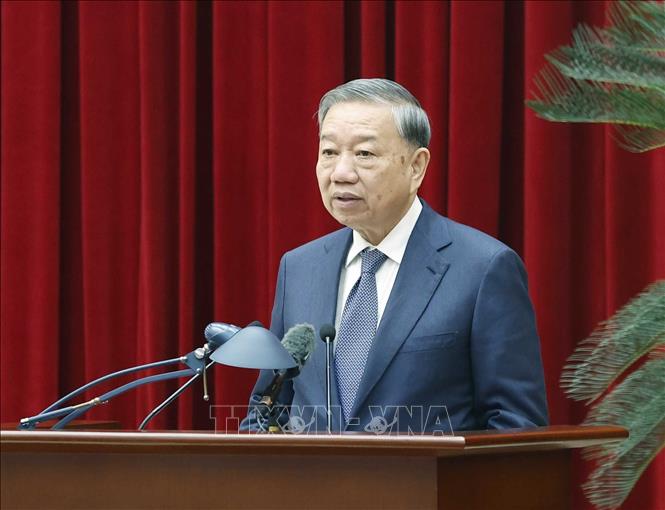
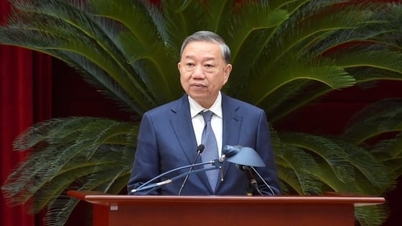
General Secretary To Lam delivers a directive speech. Photo: Thong Nhat/TTXVN
Therefore, General Secretary To Lam clearly stated three requirements: The fight against corruption, waste, and negative phenomena must prioritize national interests and the interests of the people; the fight against corruption, waste, and negative phenomena must be resolute, persistent, regular, and continuous, with strict but humane handling, without any forbidden areas or exceptions, protecting innovative and creative officials who dare to think and act for the common good, and who are not afraid of making mistakes or taking responsibility that hinders development; and a strong shift towards prevention as the primary focus, promoting the role and fighting spirit of Party organizations and grassroots units, and the supervision of the people to uphold the responsibility and exemplary conduct of leaders.
At the same time, the General Secretary outlined five key tasks: Implementing comprehensive preventive measures early, from afar, and from the root to make corruption, waste, and negative phenomena "impossible"; persistently promoting education and the practice of integrity and fostering conditions that ensure cadres and Party members "do not need" or "do not want" to engage in corruption, waste, and negative phenomena; continuing the proactive approach to detecting and comprehensively handling acts of corruption, waste, and negative phenomena according to the principle of "no forbidden zones, no exceptions," "impartiality," and ensuring no one is allowed to cross the "red line"; strengthening the fight against corruption, waste, and negative phenomena at the local level; building a truly honest and people-oriented two-level local government apparatus that serves the people; and continuing to improve the organizational structure and enhance the effectiveness of coordination among functional agencies in preventing and combating corruption, waste, and negative phenomena.
The General Secretary also pointed out three breakthroughs: in institutions, in personnel work, and in the application of science and technology and digital transformation, so that every Party member and official should set an example of self-reflection and self-correction to cultivate integrity; every agency should build a transparent and disciplined working environment; and every citizen should continue to accompany, monitor, and contribute to this important endeavor…
The 7th Conference of the Prime Minister on Dialogue with Farmers in 2025
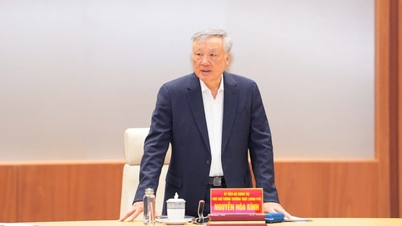
Last week, Prime Minister Pham Minh Chinh chaired the 7th Prime Minister's Dialogue with Farmers Conference 2025, themed: Application of science and technology, innovation and digital transformation among farmers.
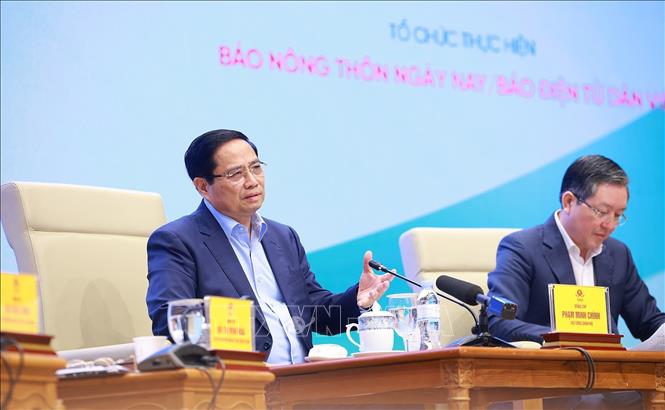
Prime Minister Pham Minh Chinh holds a dialogue with farmers in 2025. Photo: Duong Giang/TTXVN
During the dialogue, Prime Minister Pham Minh Chinh emphasized nine important points, including reaffirming the role, position, and importance of agriculture, farmers, and rural areas in the country's development in any period. Continuing breakthroughs in science and technology development, innovation, and digital transformation in accordance with resolutions of the Politburo, the National Assembly, and the Government. Focusing on developing strategic infrastructure, especially transportation infrastructure. Along with domestic consumption, expanding export markets, diversifying markets, products, and supply chains, not only exporting agricultural products but also the entire agricultural sector. In addition, promoting green production, ensuring food safety and product origin; and continuing to train human resources by strengthening the linkage between the three stakeholders: the State, schools, and businesses. In particular, to respond to climate change and mitigate the consequences of natural disasters, it is necessary to focus on effectively implementing the "Quang Trung Campaign" to rapidly build and repair houses for households in the Central region so they can have homes to celebrate Tet.
The Prime Minister also had five important requests for farmers, including: promoting the application and transfer of science and technology, innovation in agricultural production and technical improvements, and developing the agricultural economy; actively participating in providing suggestions, perfecting institutions, improving the investment and business environment, and promoting entrepreneurship; boldly starting innovative businesses in agriculture; enhancing smart management capacity in production organization, value chain management, and business operations; and proactively accessing capital, land, expanding markets, and building product brands.
The Prime Minister requested that ministries, sectors, and localities continue to recognize that agriculture, farmers, and rural areas hold a long-term strategic position as an important foundation for ensuring macroeconomic stability and sustainable growth, and to build a mechanism for collaboration between scientists, businesses, cooperatives, and farmers.
Hanoi's air quality has been among the worst in the world for several days.
Over the past week, Hanoi has experienced several consecutive days of severe air pollution, with air quality index consistently at poor levels and ranking among the world's most polluted cities according to IQAir. According to the Hanoi Department of Agriculture and Environment, the capital's air quality is influenced by five main sources of emissions: traffic, industry, agriculture, domestic activities, and dust spreading from surrounding areas.
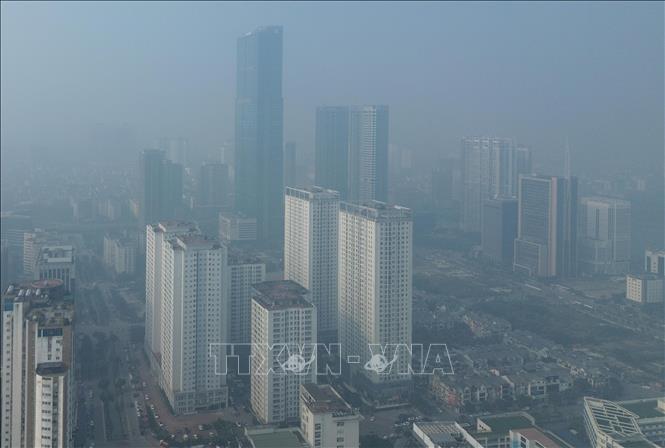
A view of the Keangnam building on Pham Hung Street, Hanoi, on the morning of December 10, 2025, shows Hanoi shrouded in fine dust and thick fog. Photo: Phan Phuong/TTXVN
Furthermore, Hanoi is still affected by a weakening cold air mass and calm winds, causing a temperature inversion. This traps the cold air at lower altitudes, preventing dust from traffic, daily life, and construction from dispersing upwards. Combined with early morning fog, this causes fine dust particles to remain suspended for longer periods, creating a hazy, unpleasant atmosphere and reducing visibility… significantly impacting people's lives.
To address pollution, the Chairman of the Hanoi People's Committee signed Directive 19, requiring departments, agencies, and localities to immediately implement emergency measures to control inter-regional and inter-provincial air pollution; inspect all solid waste treatment areas to prevent dust and odor dispersion; inspect and handle construction and transportation activities that pose a high risk of dust dispersion; and not grant permits for roadbed and sidewalk excavation during the end of the year. The city has imported many specialized vehicles for spraying water to wash roads and suppress dust every morning, and has instructed traffic police to extract AI camera footage from vehicles transporting materials that spill onto the road for subsequent penalties. In the long term, the Hanoi Department of Agriculture and Environment is developing a roadmap to implement low-emission zones, piloting a ban on gasoline-powered motorcycles in some areas within Ring Road 1 according to time slots or streets, effective from July 1, 2026, aiming to develop green transportation and minimize pollution from various sources…
The Vietnamese sports delegation achieved many successes at the 33rd SEA Games.
Last week, the 33rd Southeast Asian Games (SEA Games 33), the region's largest sporting event, opened at the Rajamangala National Stadium in Bangkok, Thailand on December 9th.

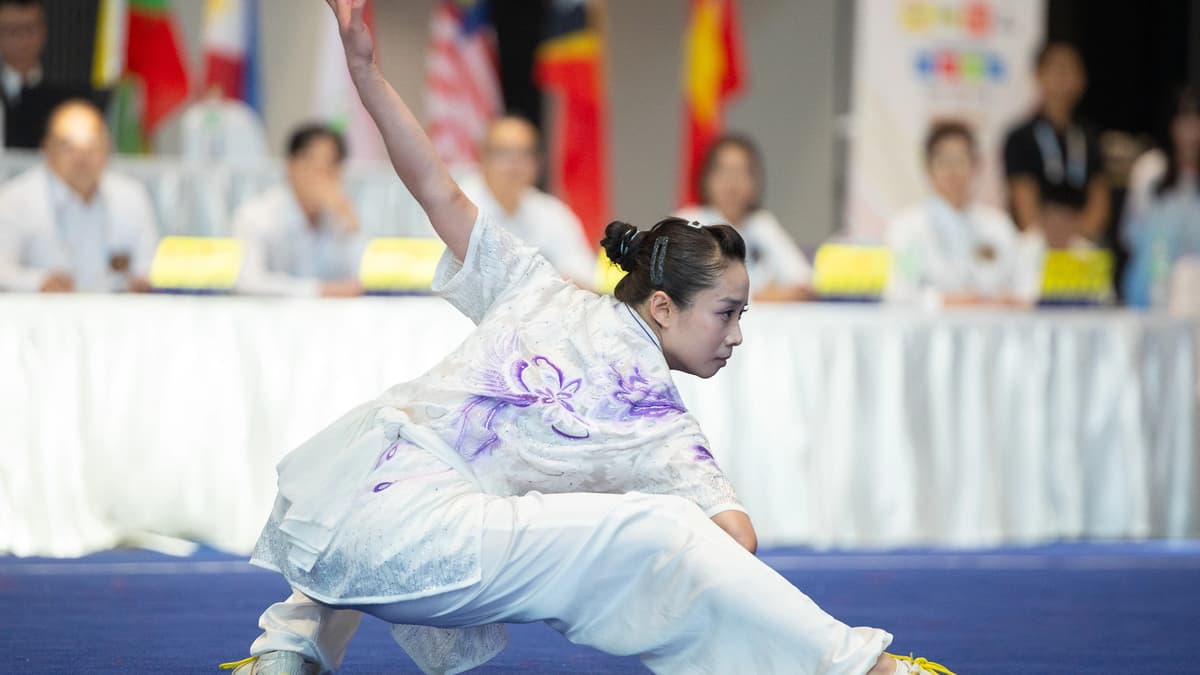
Trinh Thu Vinh (right) won the gold medal and Nguyen Thuy Trang won the silver medal in the women's 10m air pistol individual event. Photo: Minh Quyet/VNA correspondent in Thailand.
The Vietnamese sports delegation participating in the 33rd SEA Games consists of 1,165 members, including 841 athletes competing in 47 sports and disciplines. This is one of the largest SEA Games in terms of the number of athletes for Vietnam, reflecting strong investment and high expectations for achievements and the maturity of national sports. The delegation's goal is to win between 90 and 110 gold medals, ranking among the top 3 leading sports delegations, which is considered appropriate given the current strength and competitive landscape. Key sports such as athletics, swimming, rowing, canoeing, wrestling, shooting, archery, and martial arts remain the main focus.
As of December 14th, the Vietnamese sports delegation has made a breakthrough, temporarily reclaiming second place in the overall medal standings of the SEA Games 33.
On December 14th, the Vietnamese sports delegation won four more gold medals in shooting, including the women's 10m air pistol team event, and Trinh Thu Vinh winning the individual gold medal in the women's 10m air pistol with a score of 242.7 points, breaking the SEA Games record.
In the men's singles bowling final, 16-year-old Tran Hoang Khoi defeated Thai athlete Napat with a score of 235-210. This marks the first time in history that Vietnam has won a gold medal in bowling at the SEA Games.
Earlier, on December 13th, the Vietnamese sports delegation made its most outstanding mark in Athletics with victories and record-breaking achievements, alongside a brilliant day for Karate and Taekwondo - traditional martial arts that have always been strengths of Vietnamese sports, bringing home the most valuable medals of the day.
Notably, the Vietnam U22 men's football team concluded the SEA Games 33 group stage with two consecutive wins. Coach Kim Sang-sik's team defeated Laos U22 2-1 and Malaysia U22 2-0. Finishing first in Group B, Vietnam U22 will face the runner-up of Group A, the Philippines U22, in the SEA Games 33 semi-finals. The semi-final match between Vietnam U22 and the Philippines U22 will take place at 3:30 PM on December 15th…
Source: https://baotintuc.vn/thoi-su/noi-bat-tuan-qua-be-mac-ky-hop-thu-10-quoc-hoi-khoa-xv-the-thao-viet-nam-dat-nhieu-thanh-tich-tai-sea-games-33-20251214195740552.htm
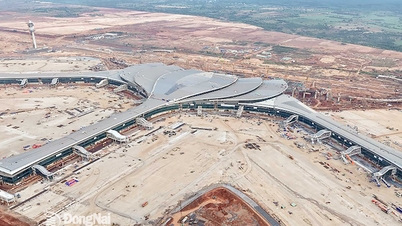
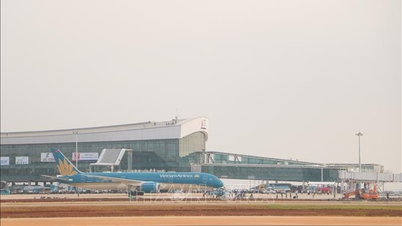
![[Photo] Two flights successfully landed and took off at Long Thanh Airport.](/_next/image?url=https%3A%2F%2Fvphoto.vietnam.vn%2Fthumb%2F1200x675%2Fvietnam%2Fresource%2FIMAGE%2F2025%2F12%2F15%2F1765808718882_ndo_br_img-8897-resize-5807-jpg.webp&w=3840&q=75)





























































Comment (0)