

 |
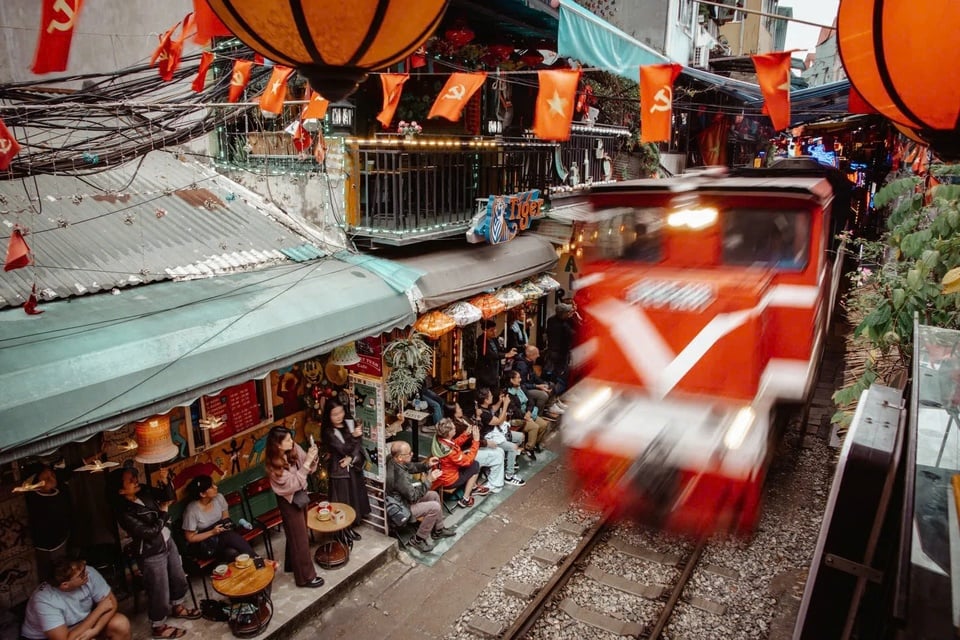
The train crosses the coffee street on Hanoi railway. |
At 11:39, the crowd held their breath. From a distance, the train whistle sounded. Plastic chairs were hastily packed away, and iced coffee cups were lifted off the tracks.
Everyone, from locals and tourists to stray cats and curious onlookers, pressed themselves against the walls in preparation for the capital's signature "show," as described by the renowned international travel magazine CN Traveller .
The train sped forward, tearing through the air. It was so close it felt like it could peel the paint off the doors, so close anyone daring could touch them. The whistle echoed through the cafes nestled in the alleyway barely wider than the train itself.
For about 30 seconds, the whole neighborhood seemed to turn into a tunnel of wind, iron, and heat. Then the train disappeared as quickly as it appeared.
Attracting tourists in "danger zones"
This is one of Hanoi's two famous "railway coffee streets," alleyways where the railway runs so close to people's homes that daily life has to pause whenever a train passes.
The most well-known area is near Phung Hung - Tran Phu in the city center, while the second area is further away, near Le Duan. Both, once ordinary railway tracks, have become some of the city's most dangerous tourist spots.
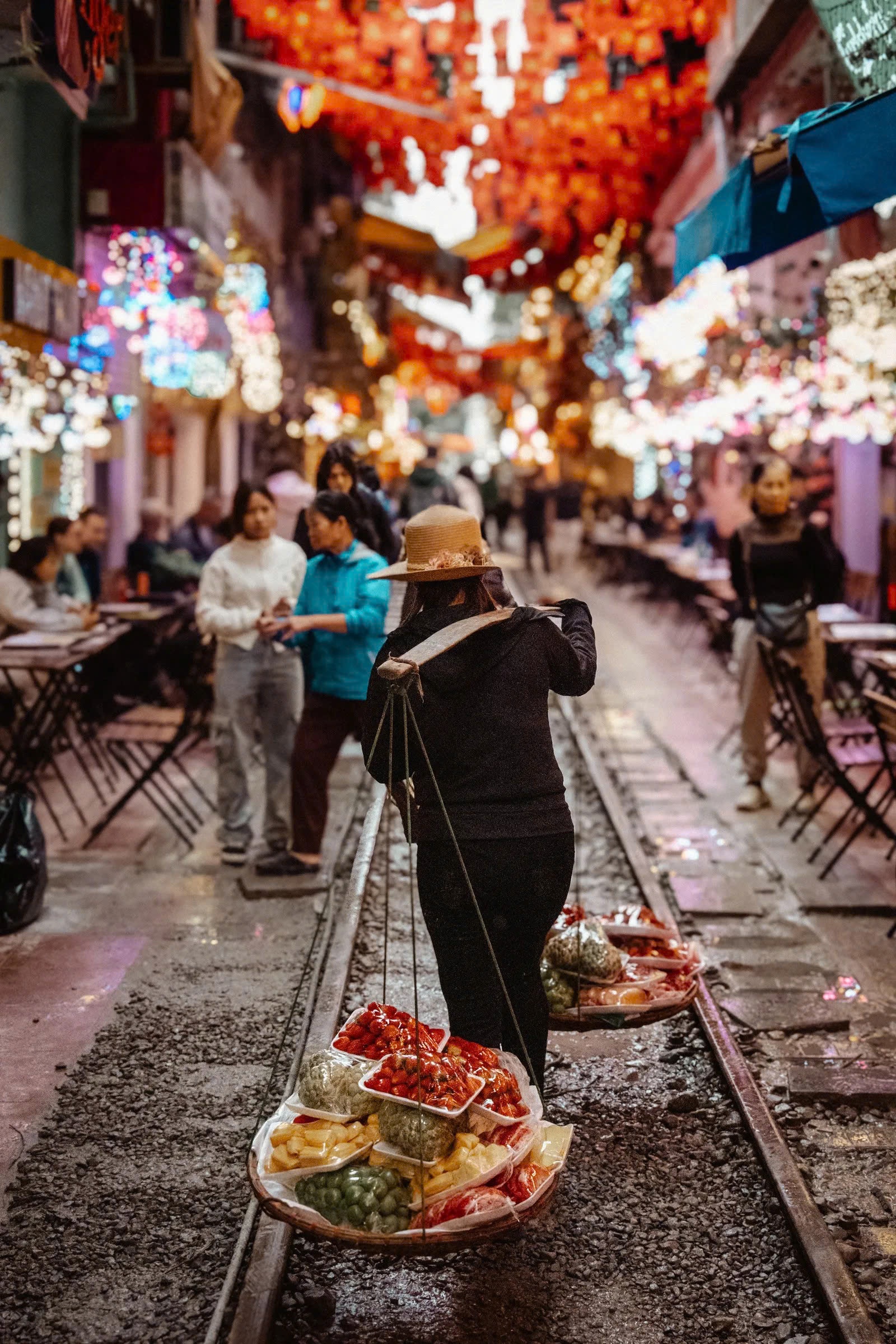 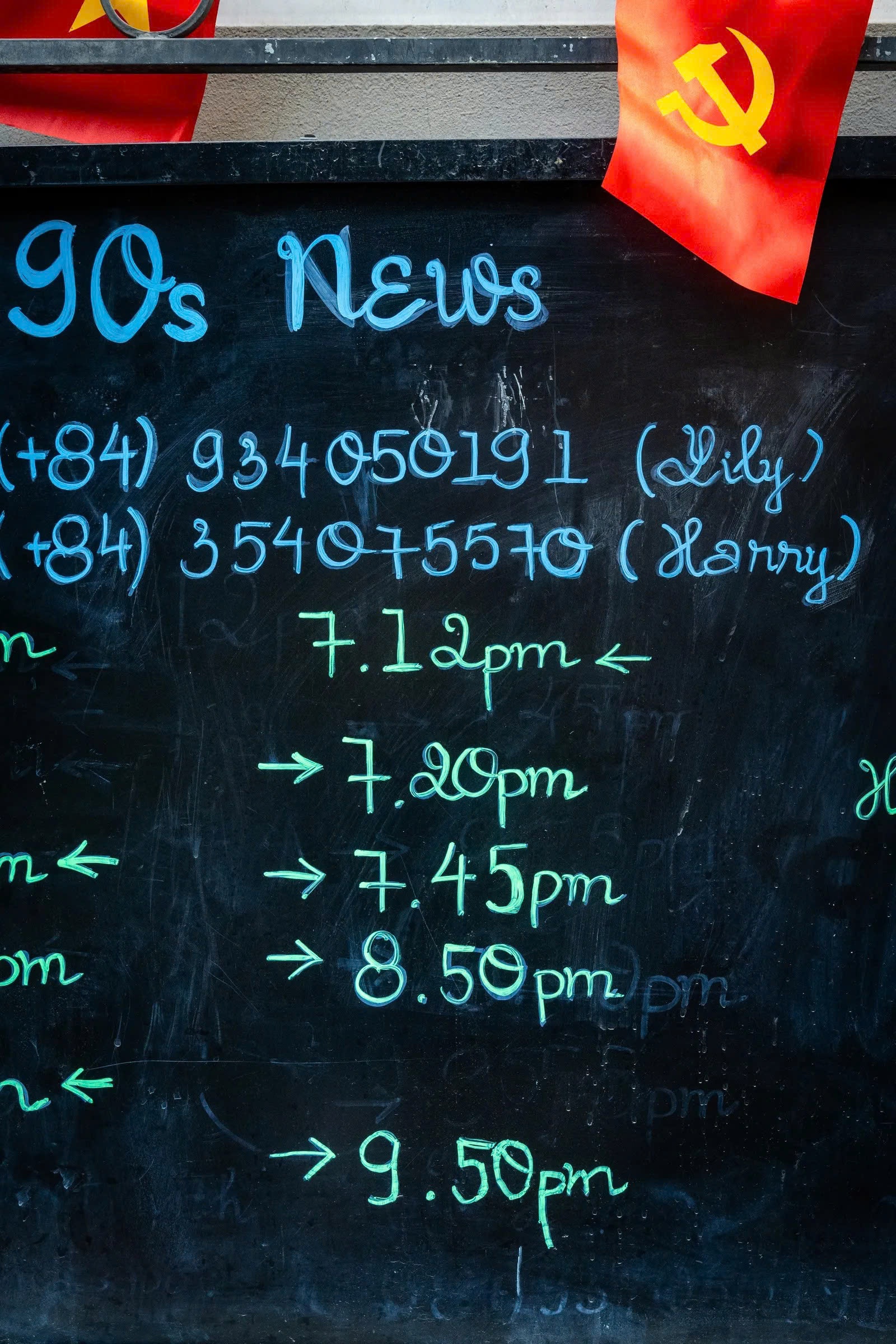 |
Street vendors walk along the railway tracks and every shop has a board announcing train times. |
For visitors like Kathryn Frazer, a content creator from the US who visited in 2023, the train track coffee street is an "unbelievable" place, and that's precisely what makes it so appealing.
“The street looks like something that shouldn’t be allowed to exist anywhere else. But it’s that orderly chaos that captivates me,” she said.
Frazer spent six weeks traveling across Vietnam, from the Mekong Delta to Ha Giang, before arriving in Hanoi, with the railway-side coffee street at the top of her list. However, the familiar Phung Hung section she visited was blocked off, with shops sealed off by iron fences following recent tightening of regulations.
"Some tourists ignored the warnings, stood too close, and didn't follow instructions, so the authorities closed that area. The shop owner looks to be struggling because they depend entirely on the number of pedestrians," she said.
 |
Tourists pose for photos on the train tracks. |
Tourists choose to get off near Le Duan Street, where the train still glides close to the narrow alley. This area is fenced off whenever the train arrives, and staff direct passengers to designated standing spots. Outside of those times, the atmosphere is quite peaceful, much like its rustic version before it became a famous "check-in" spot.
Frazer and his companion arrived an hour early, ordered bun cha (Vietnamese noodle dish) and iced coffee, and waited for the train. At that time, it was just them, a few cats, and the deserted railway tracks. Tourists could walk around and take photos freely until the owner suddenly announced that the train was approaching.
In an instant, the scene changed. The owner swiftly rotated the tables and chairs to avoid collisions, a maneuver performed with the skill of someone who had repeated it hundreds of times. There was no panic, just a clear control of the situation.
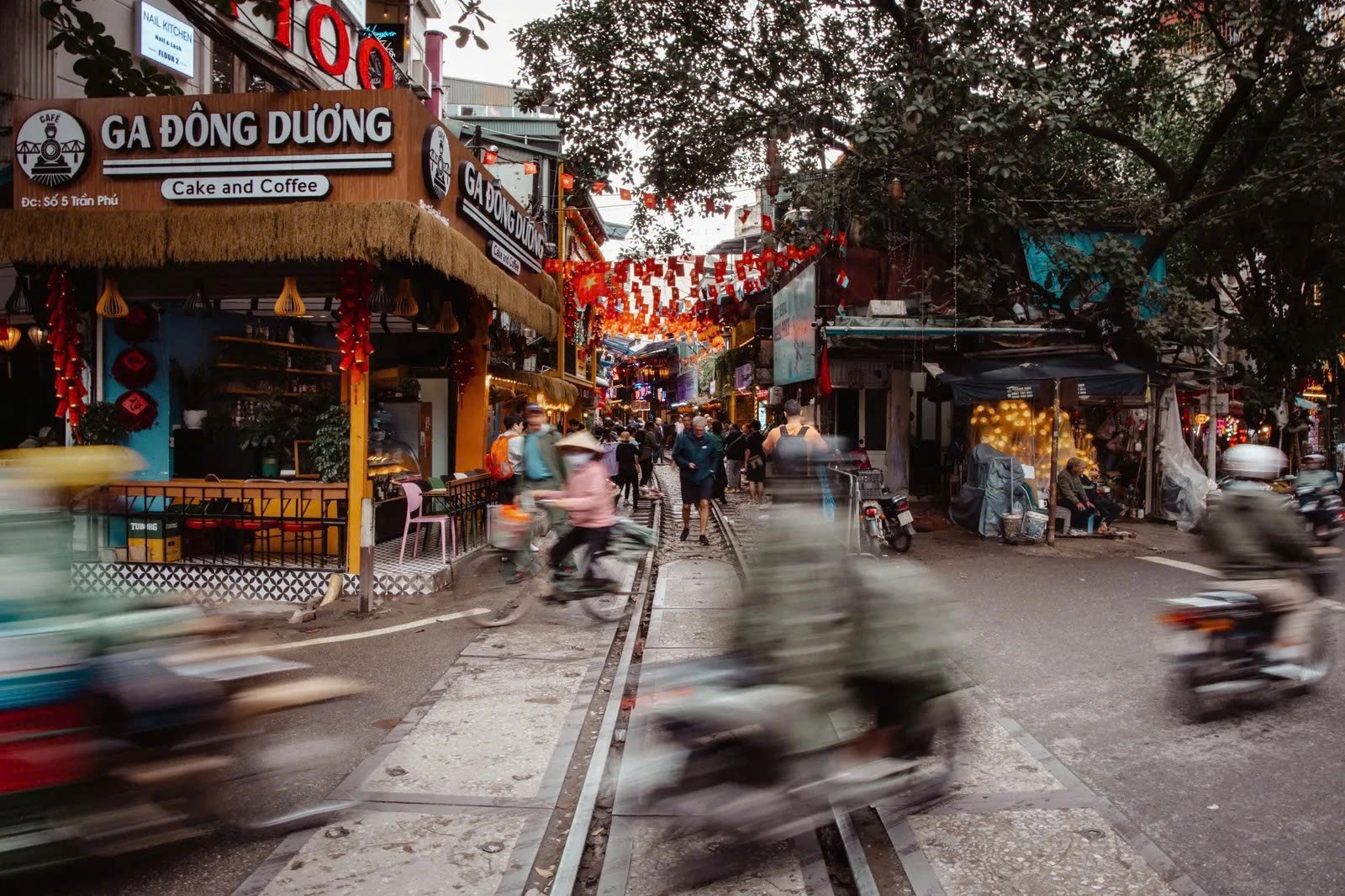 |
Phung Hung train street coffee street is always crowded with tourists and locals. |
When the train rushed past, about a meter from the tourists' knees, the speed was not too great but enough to create the feeling of a hurricane coming.
"I screamed the whole time the train went by. It was an exciting feeling, a kind of controlled danger," she laughed.
Paradox
The railway tracks here belong to a network that was established more than a century ago, once cutting only through fields, small workshops, and railway yards before the city's development spread.
As land became scarce, many railway workers' families and low-income households built houses right next to the tracks. From corrugated iron roofs to balconies encroaching on the road, people became accustomed to waiting for train schedules to cook, do laundry, or let their children play.
For decades, the alley next to the railway has quietly existed, where life flows alongside steel, no different from any other street.
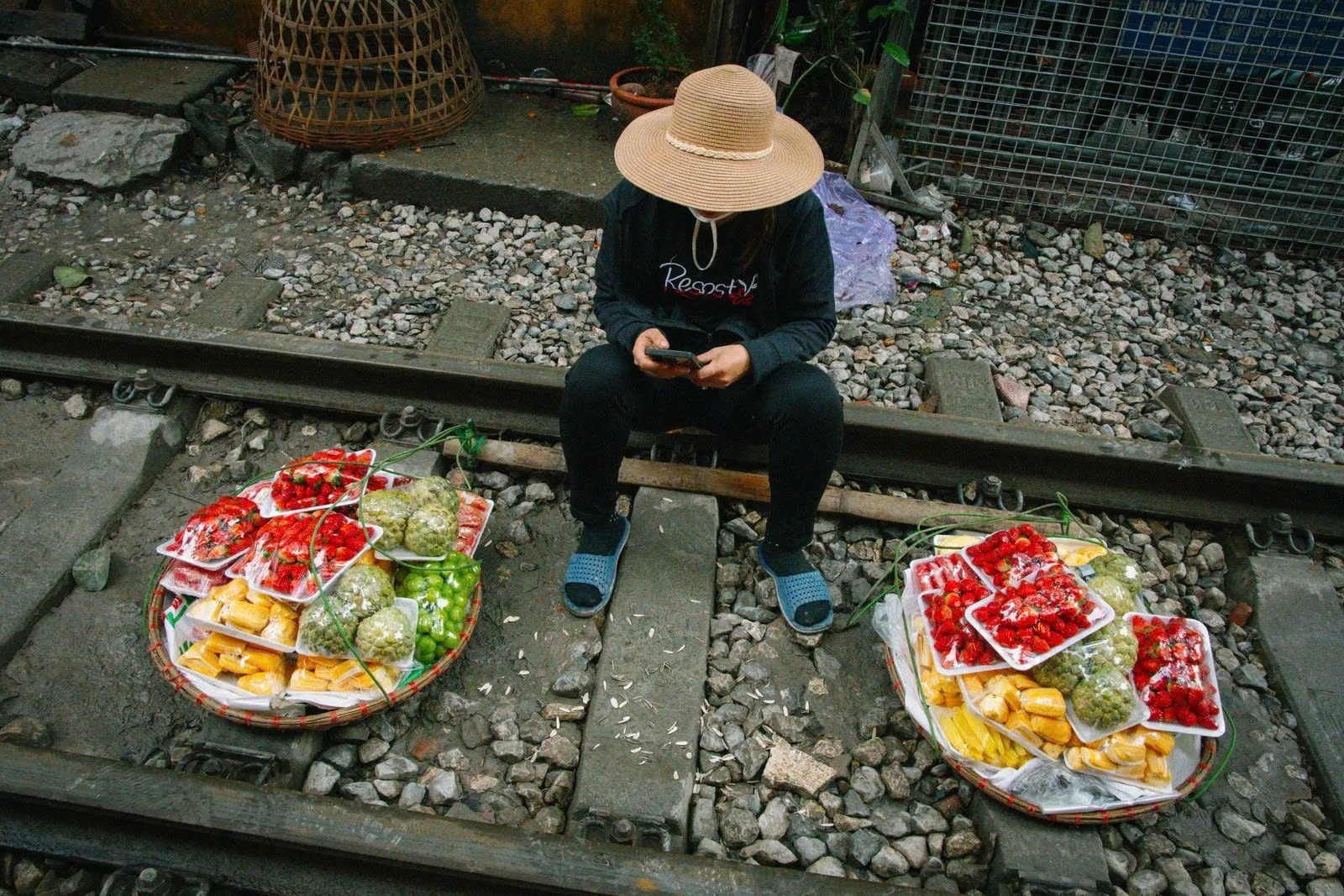 |
Woman selling fruit along the train street coffee shop. |
The first person to see the tourism opportunity here was "Shark Drung," 43, who lives just steps from the railway tracks. She recalls a time when the area was poor, with hardly any businesses or stable residents, until tourists started coming.
The images in her memory were very ordinary: the sound of trains rolling every day, children playing marbles on the stone pavement between the tracks, and neighbors quietly shrinking back whenever the train whistle sounded.
The advent of the Internet quickly changed everything. Photo tours take visitors into narrow alleys, across level crossings, and videos capture trains maneuvering past clotheslines.
By 2017, the first small cafes appeared, serving iced coffee and banana bread between train journeys. Just a few years later, dozens more had sprung up, vying for prime locations.
"Drung" opened her shop in early 2018, then added another one. "There are a lot of trains a day," she said, holding up four fingers and smiling. "But it's safe because we know when the trains arrive and get the customers inside."
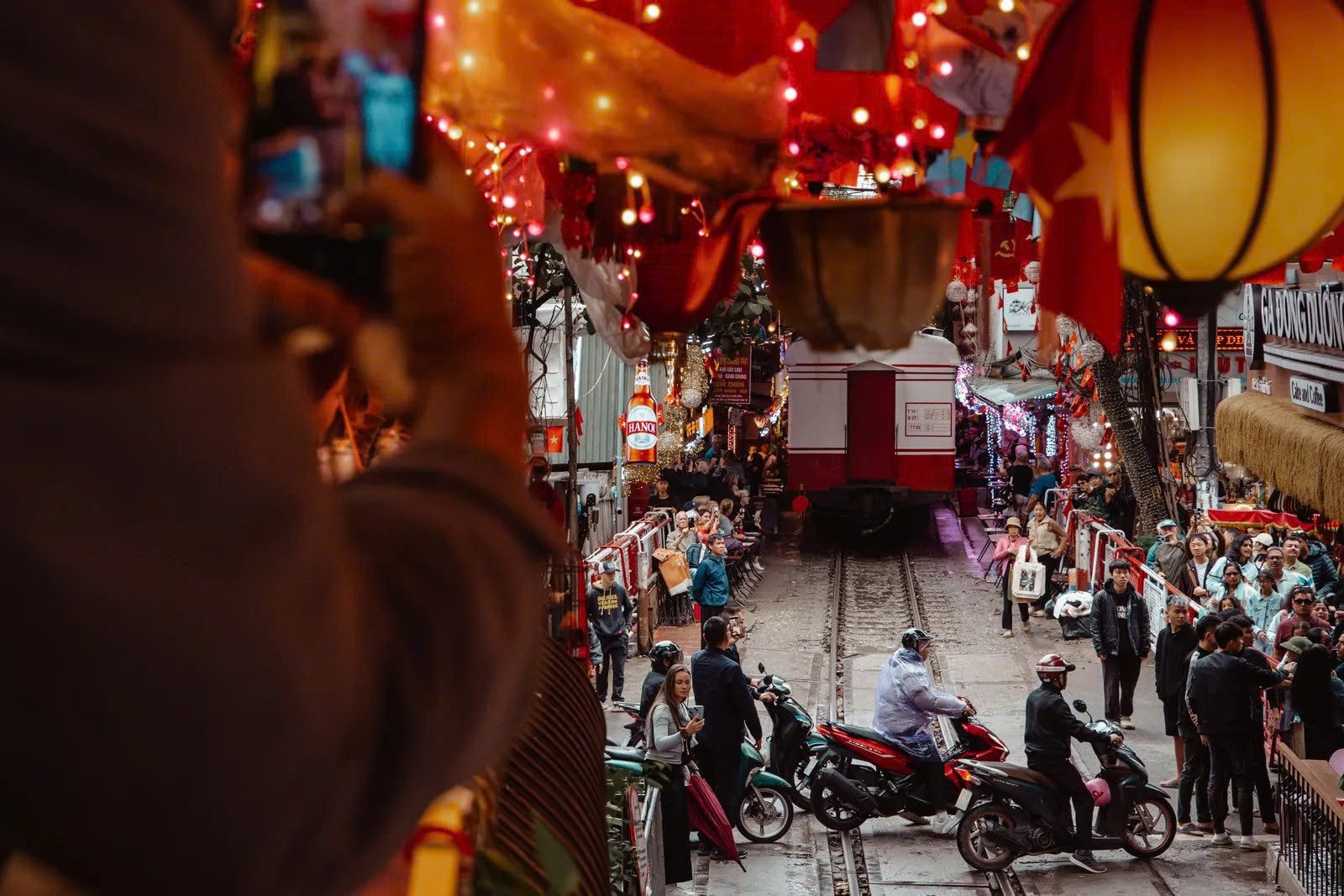 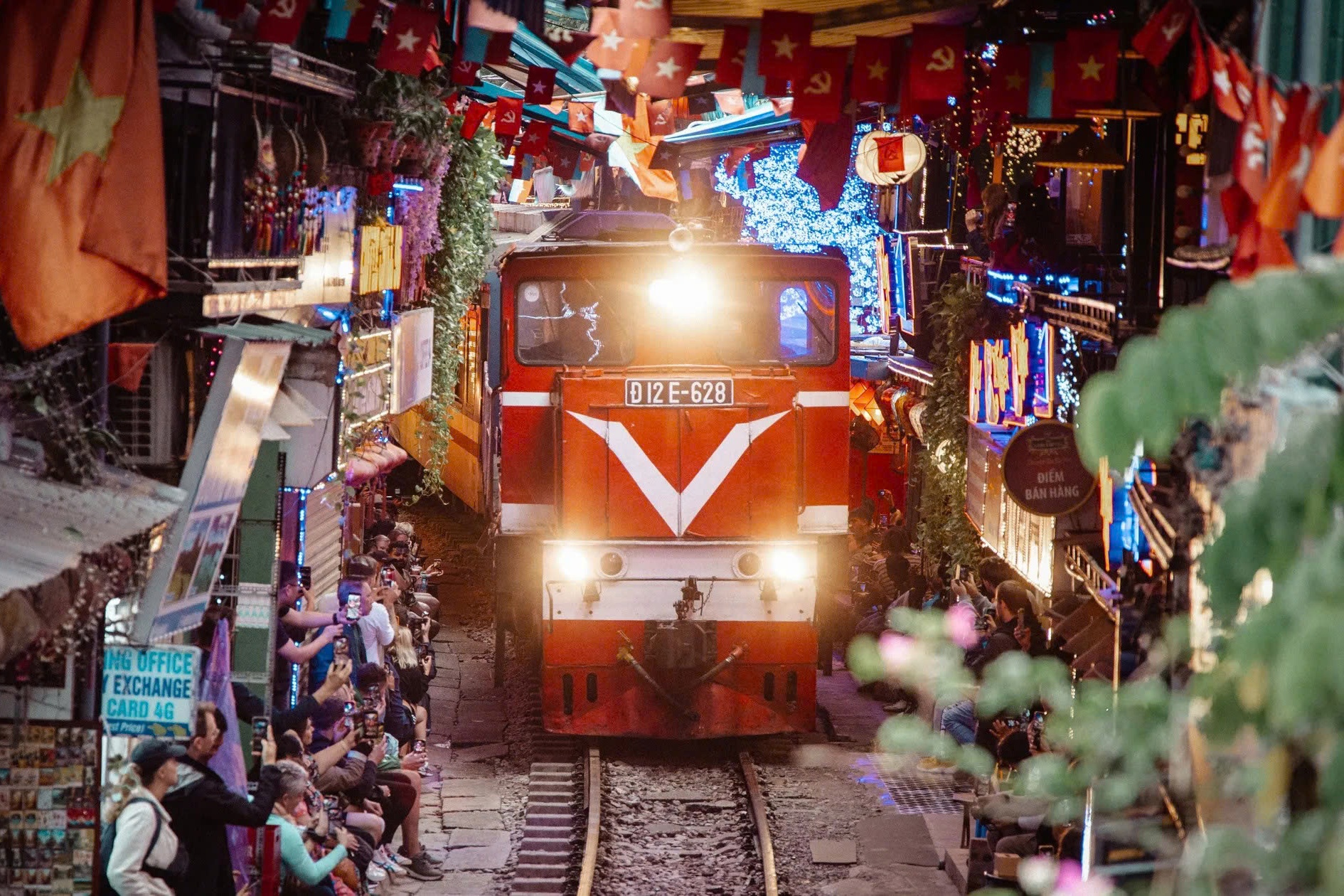 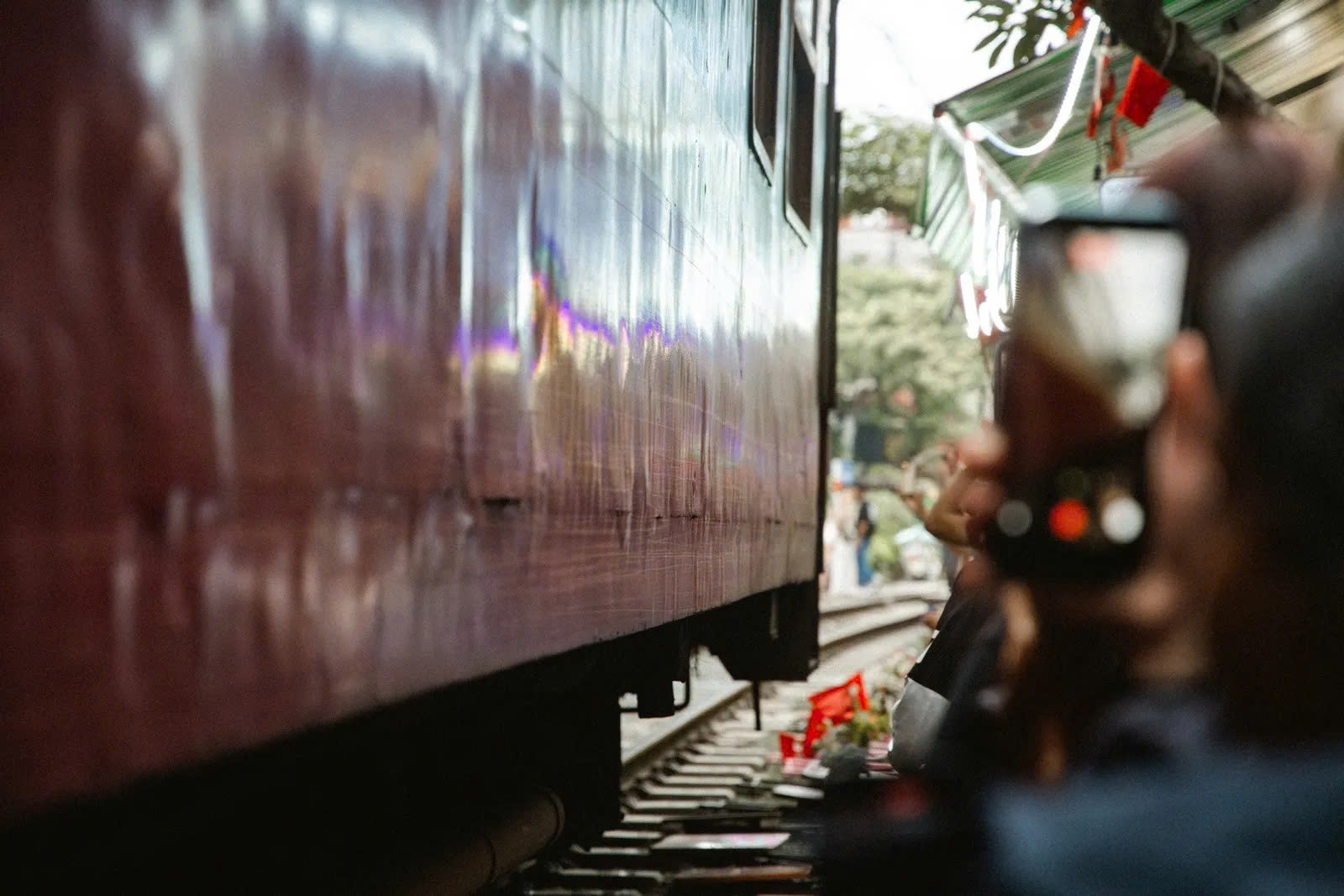 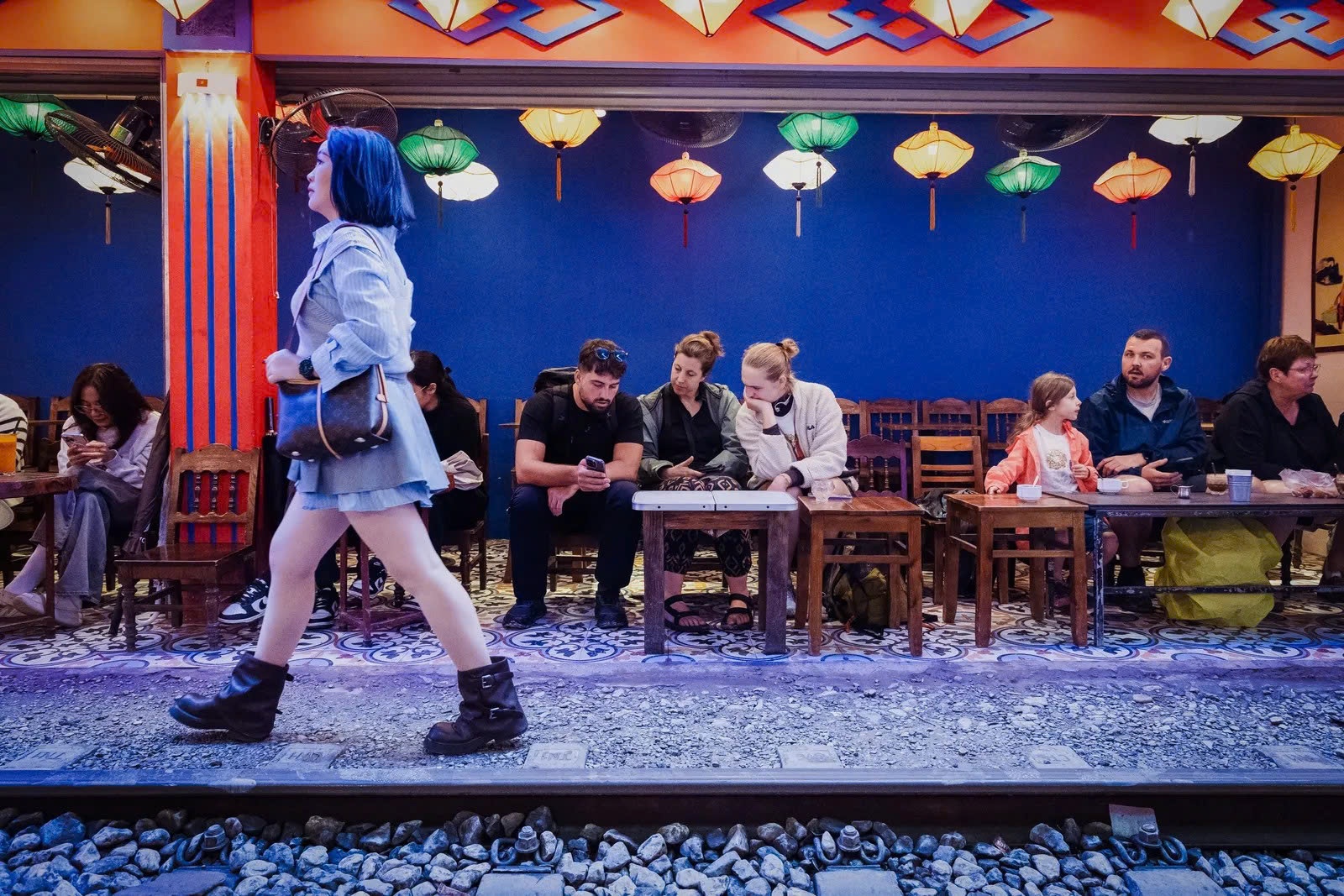 |
Train street coffee is crowded with domestic and foreign tourists. |
This attraction quickly raised concerns among authorities. In 2019, Hanoi ordered the closure of shops and erected barriers, and in 2022 tightened controls in the Phung Hung area due to safety concerns. The controls vary from time to time.
Vietnamese railway law stipulates that the safety corridors on both sides of the railway tracks must be kept clear. In practice, shops and crowds often encroach on the restricted area, leading to enforcement actions.
The tourism agency also advised tour operators not to take tourists to the train street and asked tour guides to warn about the risks.
However, just two years after the first "Drung" shop, there were more than 30 shops along the Tran Phu - Phung Hung section, each trying to find the best view of the train's arrival.
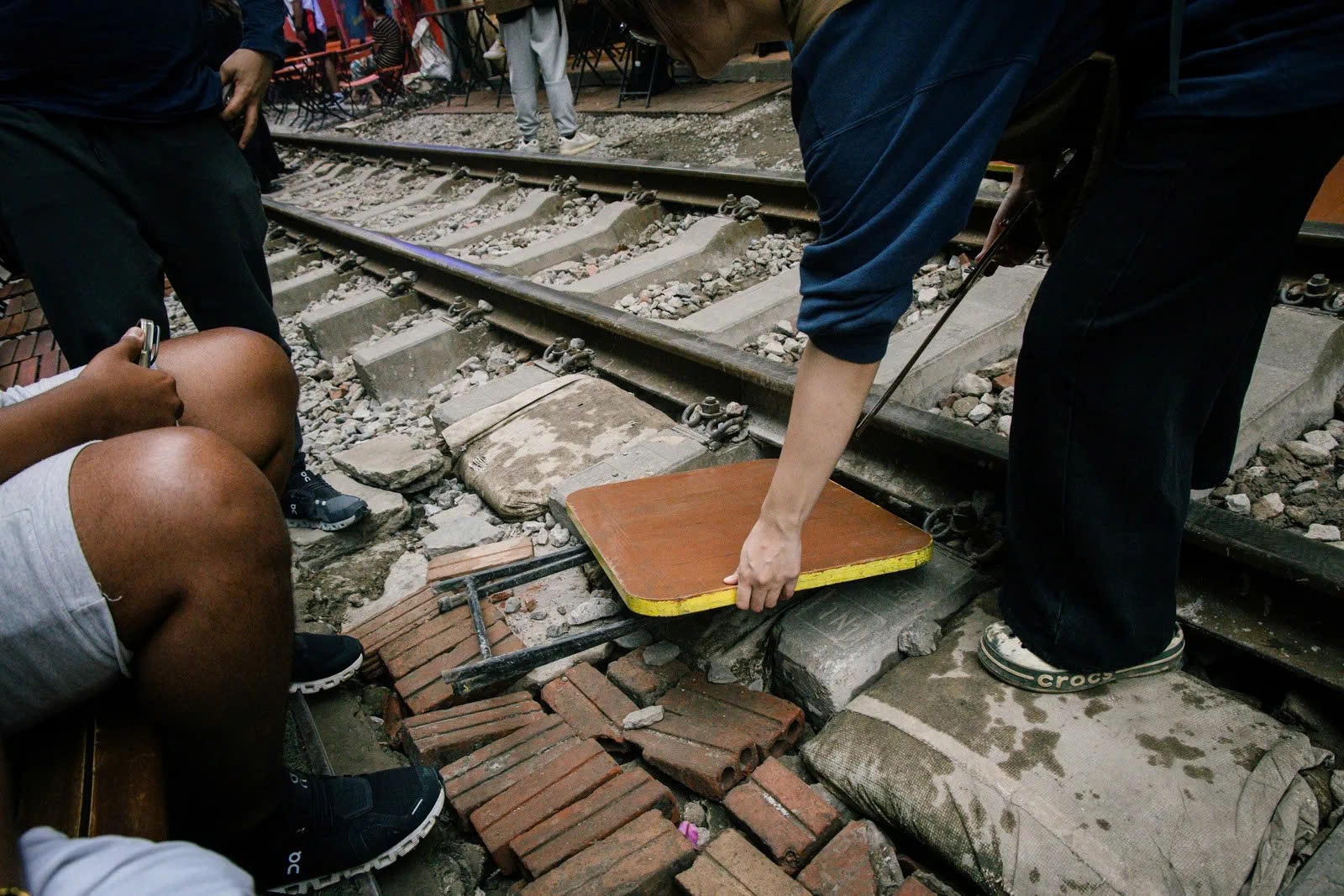 |
The tables were placed close to the railway tracks. |
But safety messages aren't always effective. Some videos, showing passengers being hit by trains or trains knocking over tables and chairs, have led people to call for a new ban on the railway street.
"That's the paradox of the railway-side coffee street: the more it's targeted for closure, the more popular it becomes. Each warning only attracts more curious visitors because of the feeling that it 'cannot last long'," observes Scott Campbell, a travel writer for CN Traveller .
Source: https://znews.vn/pho-ca-phe-duong-tau-ha-noi-hon-loan-phan-khich-tren-bao-ngoai-post1609920.html




















![[Photo] Urgently help people soon have a place to live and stabilize their lives](/_next/image?url=https%3A%2F%2Fvphoto.vietnam.vn%2Fthumb%2F1200x675%2Fvietnam%2Fresource%2FIMAGE%2F2025%2F12%2F09%2F1765248230297_c-jpg.webp&w=3840&q=75)
































































Comment (0)