

The semiconductor industry is being compared to a new kind of "oil" that could transform the global economy . Despite being at the heart of the global chip manufacturing supply chain, Malaysia has been unable to accelerate its growth due to the "chicken and egg" dilemma surrounding wages.
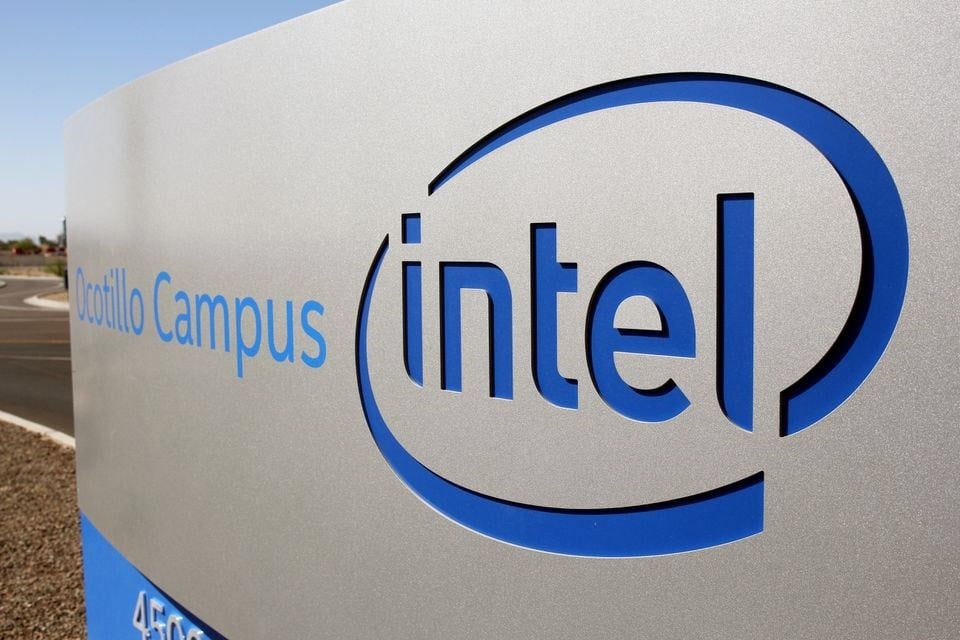 |
| Intel, the world's largest semiconductor manufacturer in 2023, has announced a $6.8 billion investment over 10 years to expand its chip testing and packaging operations in Malaysia. (Source: Reuters) |
The world's sixth-largest semiconductor producer.
Semiconductors are rapidly becoming a new kind of “oil” and a new source of conflicting global interests. Today, everything that requires computing power is equipped with chips, from weapons to watches and cars. The era of artificial intelligence (AI) is only just beginning, which will undoubtedly lead to even greater use of semiconductor chips.
Malaysia is situated right in the middle of the global chip manufacturing supply chain. The electrical and electronics sector accounts for approximately 7% of GDP, with semiconductors and integrated circuits alone accounting for a quarter of total exports, reaching a total export value of 387 billion Ringgit (US$83.5 billion) in 2022.
As the world's sixth-largest semiconductor exporter, Malaysia holds 7% of the global market share and contributed 23% of US semiconductor trade in 2022.
This Southeast Asian nation is welcoming more investment into its semiconductor value chain. It has a strong foundation in chip assembly, packaging, and testing, as well as electronics manufacturing services, producing 13% of global "back-end" semiconductor output ("back-end" refers to the stage after the basic components of a semiconductor chip have been created through the "front-end" circuit fabrication process).
Malaysia's New Industrial Master Plan (NIMP) 2030 anticipates the inclusion of more "front-end" activities, such as integrated circuit design, wafer fabrication, and semiconductor machinery and equipment manufacturing.
Recent announcements of investments from Intel ($7 billion), Infineon ($5.5 billion), and Texas Instruments ($3.1 billion) suggest that Malaysia is well-positioned to scale up and engage in more complex operations.
The challenge for Malaysia right now is that many companies, especially small and medium-sized enterprises, still rely on unskilled foreign labor and are hesitant to switch to automation. Few believe that Malaysia has the capability to produce automated machinery at the same level as Germany or Japan.
The story of "the chicken and the egg"
Malaysia lacks a sufficient supply of high-quality human resources to develop its semiconductor industry. However, the reality is that Malaysia faces a wage problem, not a labor shortage. Many skilled Malaysians, such as engineers and technicians, choose to work in Singapore, where salaries are higher.
Low wages are a systemic problem in the Malaysian economy, leading to a vicious cycle where the market creates jobs but there isn't enough skilled labor. Malaysia is a rare case where the average monthly wage in the manufacturing sector (2,205 Ringgit, equivalent to US$476) is lower than the average monthly wage (2,424 Ringgit, equivalent to US$523).
A 2022 report by the Engineers Council of Malaysia revealed that over one-third of engineering graduates had starting salaries below 2,000 Ringgit per month (US$432 per month) as of 2021, and 90% of engineering graduates earned less than 3,000 Ringgit per month (US$648 per month). For a single adult in Kuala Lumpur, this amount is barely enough to cover living expenses.
This situation has resulted in Malaysian students being reluctant to pursue full-time higher education or work in STEM (science, technology, engineering, and mathematics) fields. By the end of 2022, the ratio of engineers to population in Malaysia was 1:170, lower than the desired target of 1:100.
Admittedly, this is a "chicken and egg" problem. Malaysia needs to invest more in STEM education in high schools and universities, as well as in technical and vocational training, to prepare a more abundant talent pool. But most importantly, Malaysia needs to pay skilled workers better wages to address long-standing problems in this sector, including brain drain and labor shortages.
The NIMP 2030 strategy anticipates that the average salary in the manufacturing sector will double from 2,205 Ringgit/month (US$476/month) in 2022 to 4,510 Ringgit/month (US$974/month) in 2030. Besides efforts to upgrade the value chain in the back-end and front-end stages of semiconductor manufacturing, Malaysia may be even more ambitious and aim to further increase the salaries of engineers in the electrical and electronics sector.
In 2022, Malaysia and the United States signed a Memorandum of Understanding on Semiconductor Supply Chain Resilience. This memorandum outlines guiding principles to enhance cooperation, transparency, and trust between the two governments.
Beyond viewing the semiconductor industry as an investment, experts suggest that Malaysia should gradually build a stronger policy leadership role. With robust collaboration among key stakeholders, including industry entities, policymakers, and the government, Malaysia can begin to think more strategically about this important and exciting industry of the future.
Source

![[Image] Vietnam's colorful journey of innovation](/_next/image?url=https%3A%2F%2Fvphoto.vietnam.vn%2Fthumb%2F1200x675%2Fvietnam%2Fresource%2FIMAGE%2F2025%2F12%2F14%2F1765703036409_image-1.jpeg&w=3840&q=75)



























































![[Image] Vietnam's colorful journey of innovation](https://vphoto.vietnam.vn/thumb/402x226/vietnam/resource/IMAGE/2025/12/14/1765703036409_image-1.jpeg)

























Comment (0)