

Major tax rates significantly impact the business operations of many industries, so tax reforms aimed at boosting business activity are highly anticipated.
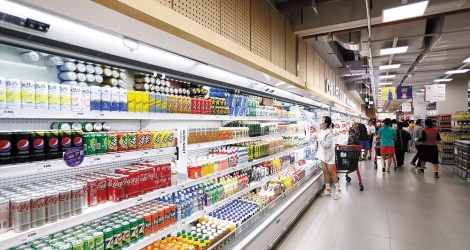 |
| According to the draft Law on Special Consumption Tax (amended) currently being prepared, sugary soft drinks are subject to special consumption tax (Photo: D.T). |
Tax policy needs to harmonize various objectives.
The draft Law on Special Consumption Tax (amended) is being prepared by the Ministry of Finance and is expected to be submitted to the National Assembly for comments at the eighth session (October 2024) and passed at the ninth session (May 2025). It includes several important changes, such as a proposal to increase the special consumption tax rate on alcoholic beverages and beer, and to add sugary soft drinks to the list of products subject to special consumption tax.
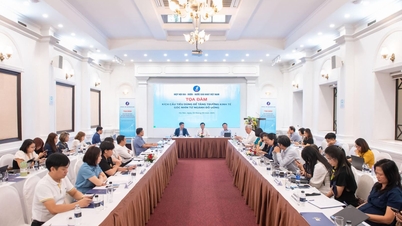
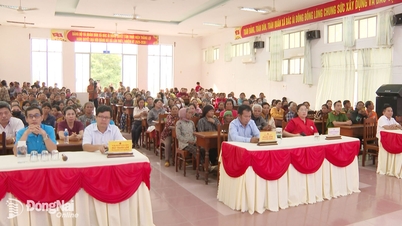
Related to this topic of great interest to many businesses, on August 14th, Investment Newspaper organized a seminar titled "Tax Reform to Promote Business Activities - World Experiences".
According to business associations such as the Vietnam Chamber of Commerce and Industry (VCCI), the Vietnam Beer, Wine and Beverage Association (VBA), and many experts and businesses, the proposed tax increase needs to be studied in practice, with a feasible roadmap, considering the capacity of businesses and industries to bear the tax while balancing its benefits, and ensuring harmony with regulations and practices in other countries around the world.
 The amended Special Consumption Tax Law may increase state budget revenue in the short term, but in the medium to long term, it will reduce consumer demand, decrease business revenue and profits, and consequently reduce value-added tax and corporate income tax revenue. Therefore, the overall effect of increasing or decreasing tax revenue is unclear. A thorough and comprehensive assessment of the impact is needed to choose the most appropriate amendments in Vietnam's economic context.
- Dr. Can Van Luc, Chief Economist of BIDV, and Director of the BIDV Training and Research Institute.
Regarding the current state of the beer, wine, and soft drink industry, amidst the unstable and volatile socio-economic context both domestically and globally, alcoholic beverage businesses face numerous difficulties. The Covid-19 pandemic, followed by conflicts in Europe, the Middle East, and elsewhere, has disrupted supply chains and broken raw material sources; economic sanctions, especially on energy and transportation, have led to unusually high raw material prices. Businesses in the beer and wine industry, in particular, are still in the recovery phase and continue to face many disadvantages.
The policy on preventing and combating the harmful effects of alcohol and beer, as stipulated in Decree 100/2018/ND-CP, has led to a significant decline in beer consumption. Consumers are changing their habits, reducing their consumption of alcoholic products, partly to avoid heavy penalties under Decree 100/2018/ND-CP.
Given the aforementioned difficulties, businesses in the industry recorded a significant decline in revenue and profits in 2023 and early 2024. Several breweries had to temporarily suspend operations to find optimal solutions for their assets and optimize production and business operations.
Many economic experts suggest that policies need careful consideration to avoid "more harm than good," implying that policies for the alcoholic beverage industry should be adjusted, including the idea that the excise tax should not be increased at this time.
Associate Professor Ngo Tri Long, an economic expert, believes that the principle of taxation is to ensure a balance and harmony of interests between the State and taxpayers. According to experts, this important principle ensures revenue for the state budget, but should not leave taxpayers in dire straits. Implementing this principle will prevent the State from creating tax shocks for businesses, society, and workers. If the total amount of taxes payable is too large, and the lives of working people are not guaranteed, the economy will indirectly stagnate, and the risk of tax evasion is very high…
With the excessively high increase rates and the continuous annual tax hikes proposed by the Ministry of Finance, the current proposals will inevitably lead to a significant decline in production and consequently, a loss of tax revenue. Therefore, careful consideration is needed regarding tax increases in the current economic context of Vietnam, in order to avoid shocking businesses while still ensuring state budget revenue.
Dr. Can Van Luc, Chief Economist of BIDV Bank and Director of the BIDV Training and Research Institute, analyzed that the global economic downturn and slow recovery after the Covid-19 pandemic, along with the numerous risks and uncertainties in the international business environment, have significantly impacted the Vietnamese economy due to its open and deeply integrated nature. The economic and business situation in Vietnam from 2020-2024 shows uneven recovery, changing consumer behavior and lifestyles, and many difficulties faced by businesses. Average profits across the beverage industry have continuously decreased (down 12% in 2021, 6% in 2022, and 10-12% in 2023 compared to the previous year).
According to Dr. Can Van Luc, the amended Special Consumption Tax Law may increase state budget revenue in the short term, but in the medium to long term, it will reduce consumer demand, decrease business revenue and profits, and consequently reduce value-added tax and corporate income tax revenue. Therefore, the overall effect of increasing or decreasing tax revenue is unclear. A thorough and comprehensive assessment of the impact is needed to choose the most appropriate amendment direction for Vietnam's economic context.
Ms. Nguyen Thi Cuc, President of the Vietnam Tax Consulting Association (VTCA), believes that adjusting and increasing the tax rates on alcoholic beverages in the near future is necessary and consistent with the Party and State's policy. However, it is necessary to aim for a special consumption tax policy that harmonizes with the objectives and is appropriate to the specific context. Continuously increasing the special consumption tax at high levels may not yield the high effectiveness intended by the special consumption tax.
Accordingly, while increasing taxes may raise prices and limit the production of alcoholic beverages, it may not necessarily achieve the goal of reducing consumption. In reality, high tax increases could lead to an increase in smuggled goods. High-income consumers might switch to smuggled alcohol. Consumers in rural areas with lower incomes are more likely to resort to self-sufficiency and profit-making by brewing and mixing their own alcohol. This practice avoids paying excise tax and compromises product quality, potentially harming public health.
Thus, the goal of limiting consumption and ensuring public health is difficult to achieve. Therefore, further consideration and research are needed on the impact of rapid and high tax increases under the Bill on the market, production and business activities, consumers, and public health.
"We should consider a phased approach to increase excise tax rates, allowing businesses time to develop plans and adapt their production and business operations without significant disruption. For example, a 5% increase in the first year could be implemented, with subsequent increases following a phased approach over several years, rather than just one year. A well-planned policy would better harmonize the objectives of excise tax, preventing abrupt increases and providing a roadmap for businesses to adapt, minimizing the impact on manufacturing, trading, and food service businesses, as well as on the market and workers in this interconnected supply chain," Ms. Nguyen Thi Cuc stated.
Assess the full impact.
Representatives from market management agencies also stated that the significant difference in tax rates and compliance costs between legal and illegal alcoholic beverages leads to an excessively high price difference between legal and illegal products. This incentivizes those seeking illegal profits, while consumers will choose cheaper, more convenient products without regard to quality. In that case, the situation with cheap, unregulated beer and liquor sold with banana leaf stoppers, as seen in the past, could recur.
On the business side, Saigon Beer, Wine and Beverage Joint Stock Company (Sabeco) proposed postponing the adjustment of excise tax on beer, wine, and sugary soft drinks until 2027 to give businesses more time to adapt and prepare for this new tax policy.
The study should review and reconsider the excise tax rate, ensuring it is reasonable given the actual situation, based on a comprehensive assessment of all impacts (consumer consumption, public health protection goals, budget impact, impact on directly affected businesses, socio-economic impact, etc.), as well as the World Health Organization (WHO) recommendation to increase the price of alcoholic beverages by 10%.
Furthermore, according to Sabeco, to avoid shocking the market while still ensuring overall objectives, Sabeco proposes reducing the increase in excise tax and extending the tax increase schedule as in previous increases (at a rate of 5% compared to the current rate) as follows: for spirits with an alcohol content of 20 degrees or higher and beer, the rate will be 70% from January 1, 2017 to December 31, 2028, 75% from January 1, 2029 to December 31, 2030, and 80% from January 1, 2031; for spirits with an alcohol content below 20 degrees, the rate will be 40% from January 1, 2027 to December 31, 2028, 45% from January 1, 2029 to December 31, 2030, and 50% from January 1, 2031.
“As Vietnam’s leading beer company, with over 149 years of establishment and development in Vietnam, a system of 26 breweries operating nationwide, and a positive contribution to local budgets, Sabeco affirms its unwavering support for the policies and laws of the State, Government, Ministry of Finance, and other ministries and agencies regarding the use of excise tax as a tool to increase budget revenue and mitigate the harmful effects of alcoholic beverages, as well as maintaining the current relative tax calculation method,” a Sabeco representative shared.
Ms. Trinh Thi Van Giang, representative of the Wine and Spirits Subcommittee (under the European Chamber of Commerce in Vietnam - EuroCham), analyzed that the tax increase forces businesses to cut many operating costs, while the wine and spirits industry has been contributing significantly to the Vietnamese economy. In addition, businesses in the wine and spirits industry also face proposals and regulations in the future, such as an increase in the global minimum tax rate...
Source: https://baodautu.vn/sua-thue-de-thuc-day-hoat-dong-doanh-nghiep-d222345.html

























































































Comment (0)