

Recently, news of a young actress being diagnosed with end-stage kidney failure before the age of 30 has shocked many people.
The statistics are alarming.
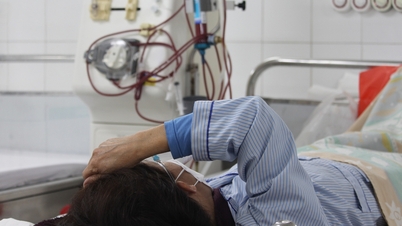
The actress was diagnosed with stage 3 kidney failure in May 2023, and by 2024 the disease had rapidly progressed to the end stage. Currently, the patient's health is deteriorating, with edema, high blood pressure, hyponatremia, and requires daily dialysis. Her doctor stated that a kidney transplant is the only solution to prolong her life.

According to statistics, Vietnam has approximately 8,000 new cases of kidney failure each year, many of which are among people under 30 years old. Currently, hundreds of thousands of patients are dependent on regular dialysis. Worryingly, many young people discover the disease at a late stage, facing lifelong dialysis or waiting for a kidney transplant.
Dr. Vu Thi Minh Hoa, Head of the Nephrology and Dialysis Department at Nguyen Tri Phuong Hospital (Ho Chi Minh City), said that previously, kidney failure cases in young people mainly stemmed from congenital causes, genetic diseases such as polycystic kidney disease, or silent immune disorders that damage the kidneys. However, in recent years, the hospital has recorded a significant number of young patients with acute kidney failure due to lifestyle-related causes such as self-medication with drugs of unknown origin, prolonged use of medication without professional prescription, or maintaining a poor and unscientific diet. These factors cause acute damage to the kidneys, leading to acute kidney failure.
According to Dr. Hoa, although kidney function may partially recover after emergency treatment, most patients still fall into stage 2, 3, or 4 chronic kidney disease. Some cases progress severely, requiring regular dialysis because they have entered the end-stage of the disease.
According to Dr. Nguyen Thi Diem Huong, a specialist at the University Medical Center of Ho Chi Minh City (Branch 3), based on in-depth reports from domestic medical facilities, in the period 2020-2025, medical facilities recorded that the percentage of people aged 18 to 30 with kidney disease accounted for approximately 20%-30% of the total number of kidney disease cases. This is an alarming figure, reflecting the rapid younger onset of a disease once considered "of old age".
Unhealthy eating habits
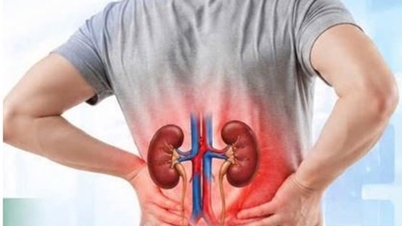
Chronic kidney disease is a condition characterized by prolonged and irreversible decline in kidney function, progressing through five stages based on the glomerular filtration rate (GFR).
In the early stages, the disease often has no obvious symptoms. From stage 3 onwards, patients may experience fatigue, anemia, high blood pressure, and electrolyte imbalances. Stages 4-5 are when kidney function is severely impaired, requiring preparation for dialysis or kidney transplantation.
According to Dr. Huong, the causes of kidney failure in young people are related to a range of factors, from lifestyle to habits. Specifically: Unhealthy eating habits, such as increased consumption of fast food, processed foods, sugary drinks, and foods high in salt, saturated fats, and refined sugar, put pressure on the kidneys.
In addition, a sedentary lifestyle, frequent late nights, and high stress levels increase the risk of chronic diseases such as obesity, hypertension, diabetes, and other dangerous underlying conditions that can damage the kidneys.
In addition, some habits such as holding back urine and drinking too little water – seemingly harmless behaviors – can impair kidney function and easily lead to urinary tract infections and kidney stones.
In particular, the unauthorized and misuse of medications, dietary supplements of unknown origin, or "kidney-boosting" products widely advertised can cause interstitial nephritis, renal tubular necrosis, and even acute kidney failure.
Notably, several underlying conditions such as glomerulonephritis, diabetes, and metabolic disorders are increasingly being diagnosed in people under 35 years old – with chronic glomerulonephritis being the leading cause of end-stage renal failure.
To prevent early kidney failure, doctors recommend changing health behaviors, from healthy drinking habits, reducing salt intake, limiting processed foods, and drinking enough water to exercising for at least 150 minutes per week.
In addition, urine tests, blood creatinine levels, and blood pressure measurements should be included in routine check-up packages, especially for high-risk individuals. Furthermore, health education should be enhanced by leveraging social media and key opinion leaders (KOLs) to raise public awareness about kidney care and protection.
Many consequences
Kidney failure in young people not only affects the individual but also has serious consequences for families and society, such as a heavy economic burden. Dialysis costs 12-36 million VND/month; kidney transplantation costs 300-500 million VND/case. Many young people have to drop out of school, lose their jobs, and become dependent on their families.
Furthermore, the quality of life deteriorates as patients require dialysis three times a week, facing numerous complications such as anemia, edema, prolonged fatigue, and declining physical and mental health. Simultaneously, it places pressure on the healthcare system, as only about 30% of current dialysis needs are met. Notably, the cost of dialysis is among the largest expenses covered by health insurance.
Source: https://baolaocai.vn/suy-than-tan-cong-nguoi-tre-post403663.html
![[Photo] General Secretary and President To Lam presides over a meeting on preparations for the review of one year of operation of the three-tiered government system.](https://vphoto.vietnam.vn/thumb/1200x675/vietnam/resource/IMAGE/2026/06/02/1780391821195_a1-bnd-4595-9717-jpg.webp)



































































































Comment (0)