

Unhealthy eating and lifestyle habits are among the factors contributing to the increase in the number of people suffering from chronic kidney disease. Chronic kidney disease is becoming more common among younger people, with many developing the disease as early as 30 years old.
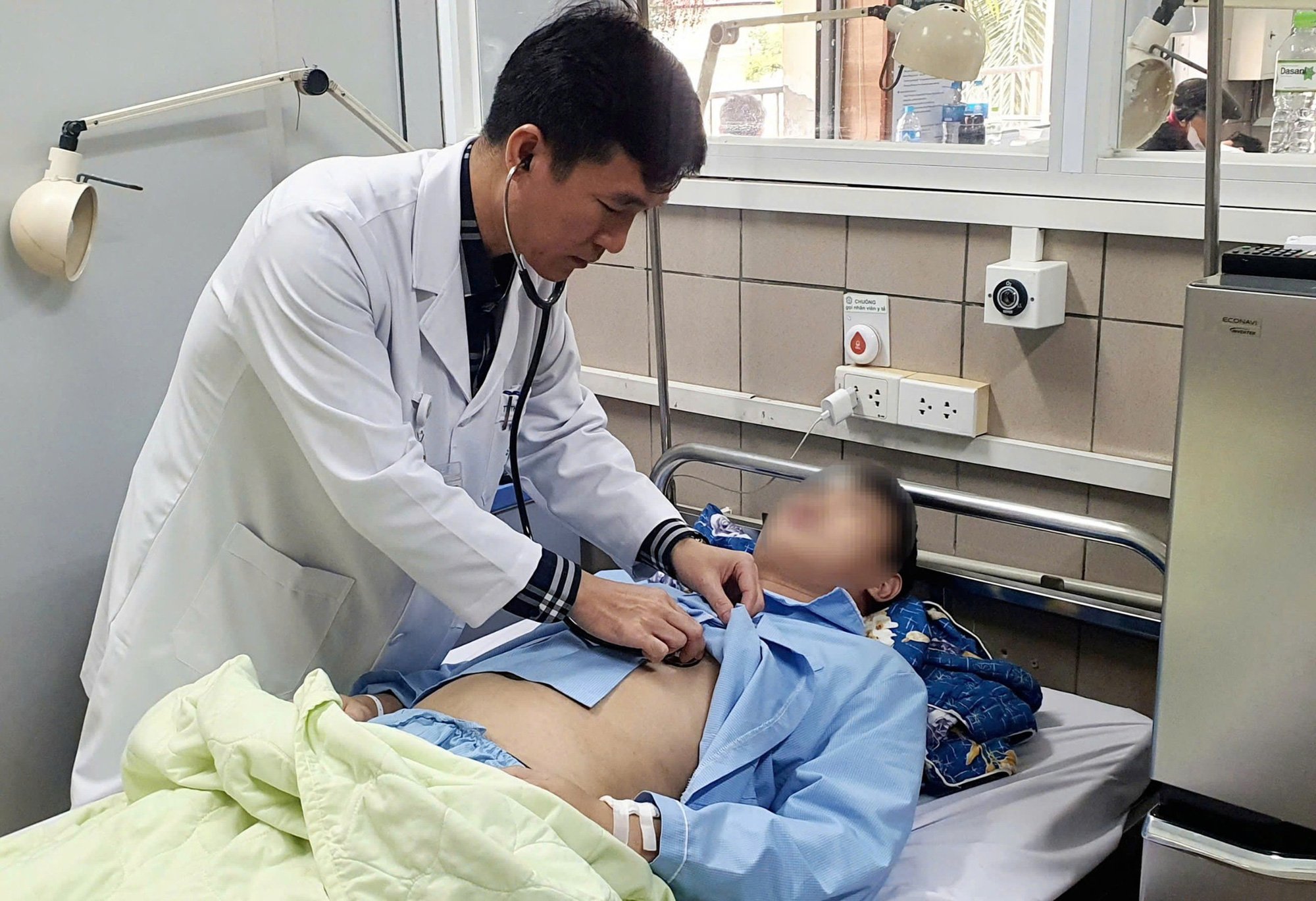
Doctors examine patients with chronic kidney disease undergoing treatment at Bach Mai Hospital - Photo: Hospital provided.
He was 30 years old and had chronic kidney disease.
Recently, the Urology and Dialysis Center at Bach Mai Hospital has been receiving 30-40 new patients per day. Notably, among the patients being admitted, there is an increasing number of people under 30 years old, an age group that is the primary breadwinner for their families.
Dr. Nghiem Trung Dung, director of the Center for Nephrology and Dialysis, said that many young people are receiving inpatient treatment at the center, most of whom are hospitalized due to chronic glomerulonephritis. Some very young people have end-stage kidney disease.
As one of the kidney failure patients, Mr. M. (30 years old, from Bac Giang ) shared that 5 years ago, while working, he experienced abdominal pain and nausea. After examination at the district hospital, he was diagnosed with end-stage kidney failure.
"When I received the diagnosis, I was very surprised because I hadn't had any symptoms before, and I was still living and working normally. Now my life has been turned upside down. I want to work, but my health doesn't allow it, and I can't even live a normal life," Mr. M shared.
Similar to Mr. M., Mr. H. (30 years old, from Hanoi ) was also alerted to the presence of proteinuria in his urine after a routine health checkup in 2020.
Mr. H. was instructed to monitor his condition and receive medication. In 2022, he went to Bach Mai Hospital for a follow-up check-up and was shocked to be diagnosed with chronic kidney failure and prescribed conservative treatment with a regular diet and medication regimen.
Recently experiencing additional symptoms such as nausea, insomnia, and changes in taste, Mr. H. went to the hospital for examination and was diagnosed with end-stage renal failure requiring replacement therapy.
"My kidney function is now below 10%, so I've chosen dialysis and am waiting for an autologous arteriovenous fistula to be created for dialysis before considering a kidney transplant," Mr. H. said.
According to Dr. Pham Tien Dung of the Center for Nephrology and Dialysis, the center frequently receives many cases like the two patients mentioned above. In some cases, patients as young as 15-16 years old are diagnosed with end-stage chronic kidney disease.
"Most patients come to us too late, when things are almost irreversible. If detected early, we can slow the progression of kidney disease," said Dr. Dung.
Dr. Dung added that if the disease is not detected in the early stages, the treatment costs will be higher and the duration of conservative treatment will also be shorter.
"Many patients arrive at the center at the stage requiring emergency dialysis, when kidney failure is very severe, accompanied by numerous complications in organs such as the cardiovascular and respiratory systems… limiting patients' choices in alternative kidney treatment methods."
"There are patients whose families are well-off and whose parents could donate a kidney, but their heart failure is too severe, making kidney transplantation impossible. In such cases, they are forced to accept the best option: peritoneal dialysis or artificial kidney," shared Dr. Trung Dung.
Risks from lifestyle and eating habits
Kidney disease often develops silently, with no obvious symptoms in the early stages. Many patients are diagnosed incidentally during routine health checkups.
According to Dr. Dung, the trend of younger people developing kidney failure is related to many issues. Besides glomerulonephritis, the unhealthy eating and lifestyle habits of young people are also risk factors that accelerate metabolic diseases, causing many illnesses, including chronic kidney disease.
"Young people nowadays consume too many drinks of unknown origin, eat a lot of convenience foods like instant noodles with high salt content, and have irregular lifestyles that don't follow their biological rhythm."
"Sleeping too late and a lack of exercise lead to obesity. These are risk factors for many diseases, including kidney disease," Dr. Trung Dung emphasized.
Early detection of chronic kidney disease offers many benefits, such as extending the duration of conservative treatment with lower costs, improved effectiveness, and less frequent follow-up visits.
However, when the disease is detected at a late stage, it leads to high treatment costs, a shorter duration of conservative treatment, and a significant impact on the patient's health and quality of life.
When end-stage kidney disease is detected, there are only three options: hemodialysis, peritoneal dialysis, and kidney transplantation. Regardless of the choice, the burden of the disease will affect the patient and their family for the rest of their lives.
"Not only kidney disease but many other diseases, the only way to detect them early is through regular health checkups. However, many people do not have this habit, and some are even lazy and reluctant to go to medical facilities for health checkups."
"People need to pay attention to regular health check-ups to detect diseases early and treat them effectively. In addition, lifestyle changes are necessary to prevent disease," Dr. Dung advised.
Source: https://tuoitre.vn/30-tuoi-da-mac-suy-than-man-canh-bao-nguy-co-tu-thoi-quen-pho-bien-nao-o-nguoi-tre-20250114090353224.htm




































































































Comment (0)