

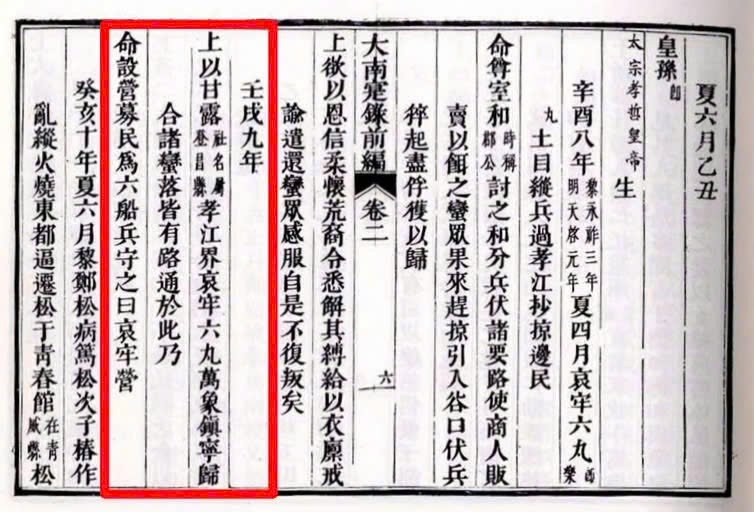
The book "Dai Nam Thuc Luc Tien Bien" records the event of Lord Nguyen Phuc Nguyen establishing the Ai Lao garrison in 1662 - Photo by KN.
Lord Nguyễn Phúc Nguyên (1563 – 1635) was the sixth son of Lord Nguyễn Hoàng and the second Nguyễn lord of the Southern Kingdom in Vietnamese history. He reigned from 1614 to 1635. During his reign, Lord Nguyễn Phúc Nguyên established an independent kingdom in the Southern Kingdom. His monumental achievements during his rule paint a portrait of an outstanding Nguyễn lord in national history. In particular, his establishment of the Ai Lao (Lao Bảo today) fortress demonstrated his foresight in managing and defending this strategically important region.
Quang Tri is a land closely associated with the development and existence of the Nguyen Lords' rule in Dang Trong (Southern Vietnam). It is also where Lord Nguyen Hoang established his first residence during his expansionist journey. This served as the foundation for developing an independent government, not dependent on Dang Ngoai (Northern Vietnam) (the Le King and Trinh Lord). Lord Nguyen Hoang laid the groundwork for subsequent lords to follow in establishing an independent government.
As the second ruler, Lord Nguyen Phuc Nguyen not only successfully inherited the achievements of his father, but also continued to implement policies that ensured the sustainable development of the Southern region of Vietnam in all aspects. Lord Nguyen Phuc Nguyen left many significant marks on the Quang Tri region. Among them, his establishment of the Ai Lao (Lao Bao) garrison demonstrated his intelligence, as he recognized the importance and strategic location of the Lao Bao area.
The process of establishing the Ai Lao palace is reflected in the book "Dai Nam Thuc Luc Tien Bien", volume 2, page 6, as follows : In the year of Nhâm Tuất, the 9th year (1622), the lord believed that the Hiếu River in Cam Lộ commune (belonging to Đăng Xương district) bordered Laos, and that the Man Lục Hoàn, Vạn Tượng, Trấn Ninh, and Quy Hợp tribes all had access routes to it. He therefore ordered the establishment of a garrison and recruited people to form 6 naval fleets to guard it, called the "Lao garrison".
Previously, this place was often a gathering point and military base for the imperial army during attacks by Siamese forces plundering the provinces of Cam Lo. Recognizing the strategic importance of Lao Bao, Lord Nguyen Phuc Nguyen immediately established a garrison to manage it. From then on, Lao Bao and the surrounding border areas received more attention from the imperial court. This was a necessary measure because, given its strategic location and position as a bulwark of the dynasty, stable administration was crucial to the governing policies of the Dang Trong government under Lord Nguyen Phuc Nguyen.
As a brilliant statesman, Lord Nguyễn Phúc Nguyên possessed foresight and a long-term vision. He was always conscious of protecting and defending the territory. He recognized problems in important areas that could affect the borders and the establishment of the government. Establishing the administrative center of Ai Lao (Lao Bảo) solved many problems. This area bordered another country and was often plagued by disturbances from various groups and tribes, causing anxiety among the people.
Perhaps Lord Nguyễn Phúc Nguyên understood better than anyone the immense difficulties his father (Lord Nguyễn Hoàng) had to overcome to conquer the South. The expansion of the territory by Duke Nguyễn Hoàng began in Quảng Trị (establishing the Ái Tử garrison in 1558). Therefore, even though he held supreme power in the South, Lord Nguyễn Phúc Nguyên never forgot his father's instructions to build a strong government to avoid dependence on the North (the Lê kings and Trịnh lords). The land and people of Quảng Trị were closely connected to and witnessed the Nguyễn lords' conquest of the South from its inception.
Lord Nguyễn Phúc Nguyên demonstrated keen insight in handling and making decisions in his affairs. The establishment of the Ai Lao (Lao Bảo) palace alleviated the concerns of the Southern government regarding territorial defense. It was also a way to protect the people in the border regions of the dynasty. Stabilizing a complex area like Lao Bảo served multiple purposes: it deterred neighboring countries from encroaching, reassured the people in the border region, and demonstrated the concern of Lord Nguyễn and the entire government.
The Ai Lao Palace served as the foundation upon which the Nguyen lords and subsequent Nguyen dynasty kings continued their administrative policies. In 1815, King Gia Long renamed the Ai Lao Palace to the Ai Lao Province. In 1833, King Minh Mang renamed it Bao Tran Lao. Regardless of the era, the Nguyen lords and kings always valued this place, as it was a crucial location influencing the policies of the dynasty.
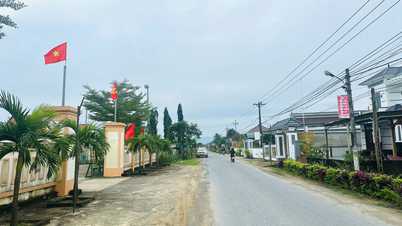
The event of Lord Nguyen Phuc Nguyen establishing the Ai Lao residence served as the foundation and premise for the historical development and formation of the place name Lao Bao. The town of Lao Bao (Huong Hoa district) today has undergone many changes in line with the overall development of the country. The economy and the people's living standards have continuously improved. The Lao Bao border gate, located on the East-West economic corridor, is one of the important border gates of our country for economic trade with other countries. More than 400 years ago, the vision of this wise ruler contributed to creating one of the most promising regions, one that future generations will admire.
Khac Nien
Source: https://baoquangtri.vn/tam-nhin-cua-chua-nguyen-phuc-nguyen-voi-viec-cho-lap-dinh-tran-tai-lao-bao-192377.htm

![[Photo] Prime Minister Pham Minh Chinh receives Lao Minister of Education and Sports Thongsalith Mangnormek](/_next/image?url=https%3A%2F%2Fvphoto.vietnam.vn%2Fthumb%2F1200x675%2Fvietnam%2Fresource%2FIMAGE%2F2025%2F12%2F16%2F1765876834721_dsc-7519-jpg.webp&w=3840&q=75)
![[Live] 2025 Community Action Awards Gala](/_next/image?url=https%3A%2F%2Fvphoto.vietnam.vn%2Fthumb%2F1200x675%2Fvietnam%2Fresource%2FIMAGE%2F2025%2F12%2F16%2F1765899631650_ndo_tr_z7334013144784-9f9fe10a6d63584c85aff40f2957c250-jpg.webp&w=3840&q=75)

![[Image] Leaked images ahead of the 2025 Community Action Awards gala.](/_next/image?url=https%3A%2F%2Fvphoto.vietnam.vn%2Fthumb%2F1200x675%2Fvietnam%2Fresource%2FIMAGE%2F2025%2F12%2F16%2F1765882828720_ndo_br_thiet-ke-chua-co-ten-45-png.webp&w=3840&q=75)
![[Photo] Prime Minister Pham Minh Chinh receives the Governor of Tochigi Province (Japan)](/_next/image?url=https%3A%2F%2Fvphoto.vietnam.vn%2Fthumb%2F1200x675%2Fvietnam%2Fresource%2FIMAGE%2F2025%2F12%2F16%2F1765892133176_dsc-8082-6425-jpg.webp&w=3840&q=75)


























































Comment (0)