

The Yanko Pass in early October was unpredictable, with alternating rain and sunshine. I stopped my car at a roadside shop when a sudden downpour caught up behind me.
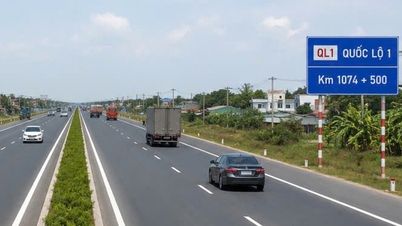
The owner of the coffee shop complained about the significant drop in customers as the highway diverted most traffic to the new route, leaving the section of National Highway 1 "deserted." "There are two sides to every coin; you have to accept the small losses when you gain a big advantage," I thought, but I just nodded in agreement, saying nothing. The foot of the Yanko Pass, once bustling with shops and traffic, is now part of Tan Nghia town, Ham Tan district, a developing fifth-class urban area. Tan Nghia is the administrative and economic center of Ham Tan district today. Objectively speaking, what this town has achieved is something to be proud of; it's the result of the great efforts of the Party Committee and the people here. Yet, stories of the past and present keep flooding back, intertwined with emotions difficult to express in words.
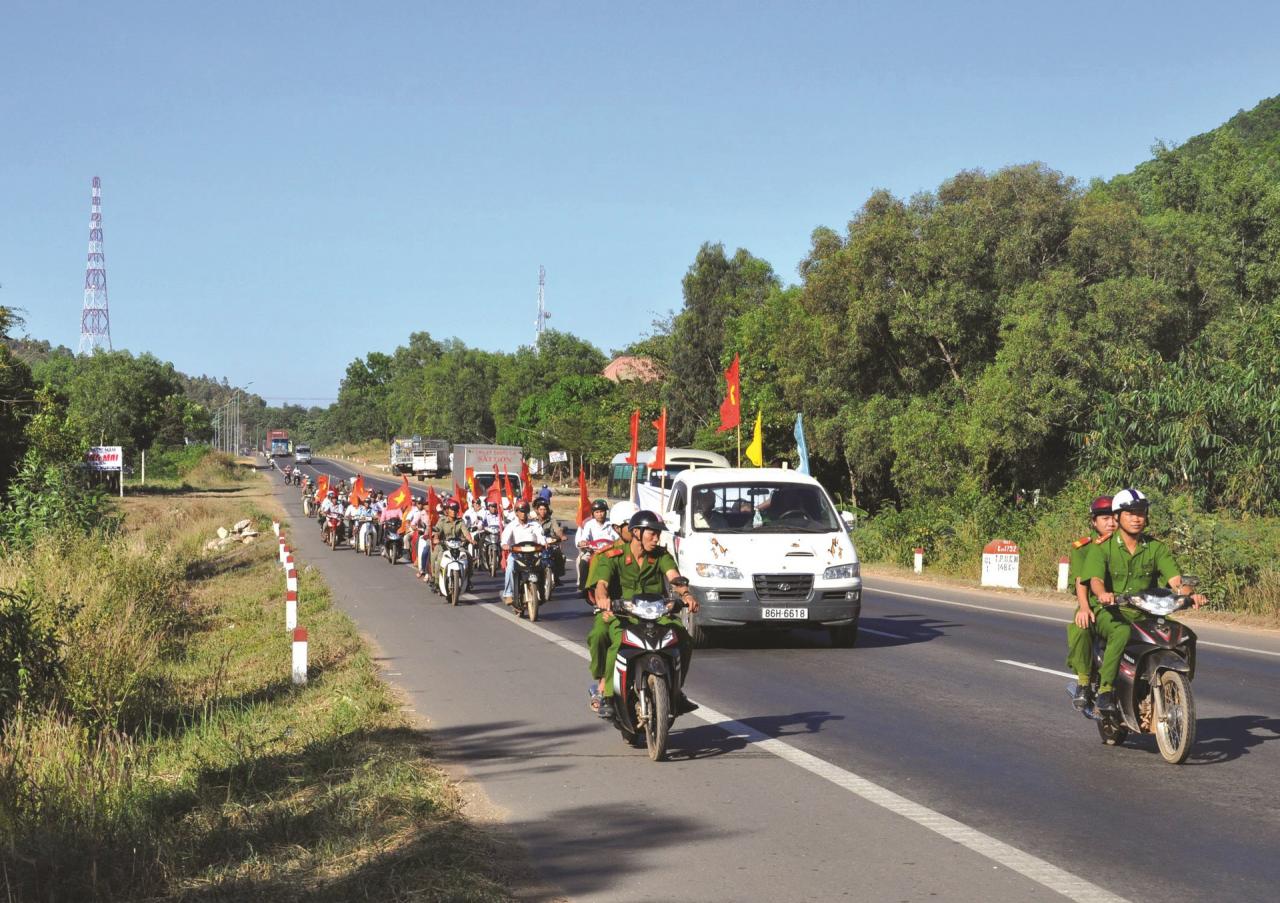
I. In the past:
Tan Nghia was formerly part of Ba Gieng commune, a sparsely populated and impoverished area encompassing a vast region from Tan Duc, Tan Minh, Tan Phuc to Song Phan, Tan Ha, and Tan Xuan. This was a hotbed of conflict because it served as the gateway to the provincial capital of Binh Tuy and as a corridor connecting the two liberated zones of Tanh Linh and Ham Tan. I suddenly remembered a veteran revolutionary cadre recounting the famous battles fought in this area. (If we consider the geographical scope of those battles, one can imagine them stretching from Suoi Van train station, Song Phan to Yanko Pass; of course, back then, this area was a rugged, densely forested hilly region). The most memorable event for me was the battle involving four armored military train cars, also in October, but sixty years ago. At that time, every move in this area was under the direction of the Southern Armed Forces Task Force - Ham Tan District, so the ambush plan for the train was meticulously and carefully planned, with the coordination of Company 486, Company 489, Special Forces Team 481, and the provincial engineering platoon. According to reports, the four armored military train cars of the enemy were all equipped with Canon Beaufot 37mm and 12.7mm machine guns, many heavy machine guns, 81mm mortars, etc. Meanwhile, the entire firepower of the resistance army only consisted of 60mm and 80mm mortars, one 30mm heavy machine gun, and the rest were machine guns and submachine guns. Therefore, the battle command decided to take advantage of the proactive ambush to win. When the first armored train car entered the ambush position and approached the target, we detonated four mines for the four train cars. Unexpectedly, a comrade in charge of detonating the fourth mine failed. The first three carriages were immediately paralyzed, but from the fourth carriage onwards, soldiers fanned out and fiercely resisted, resulting in one soldier killed and three seriously wounded in the ambush. Faced with this situation, the third detachment cleverly positioned itself on either side of the railway to launch a coordinated attack, thus ensuring the ambush's success and cutting off the enemy's vital railway line for a considerable period…
An acquaintance, also a writer, entered the cafe and interrupted my reverie about the old days with a greeting. He always arrives like a gust of wind, quickly striking up a conversation, and immediately launching into a lengthy account of a battle during the anti-American war…
It was 1974, and the Nghia Lo District Party Committee directed the Song Phan Party Branch to coordinate with the armed task force to welcome officers from the VI Military Region's Staff Department who were conducting a "reconnaissance" of the battlefield for a strategic battle. Subsequently, taking advantage of the mountainous terrain and dense vegetation, our forces set up an ambush from kilometer 42 to kilometer 37. This was an ambush battle involving a battalion-level force (Battalion 600). A convoy of 20 enemy GMC trucks, full of local troops, moved in a line stretching over 5 kilometers along the highway towards Phan Thiet. Before the lead GMC truck had crossed the Ong Hanh bridge, the entire convoy entered the ambush zone, and our forces received orders to attack simultaneously. Some soldiers retreated to the roadside to fight back, while others fled in panic. After two hours of fighting, an enemy company was wiped out on the spot; the wounded were carried on stretchers and helped onto vehicles to retreat. The victorious battle in the morning caused the enemy soldiers to panic and huddle together in fear…
My friend's story reminded me of those April days of 1975, when the Four-Six Crossroads was filled with the uniforms of the defeated soldiers. In fact, the enemy's local militia and militia posts at the Four-Six Crossroads and Song Phan had already disintegrated before our forces attacked. On April 19, 1975, the Revolution, seizing the victory, liberated the Bình Ngãi and Nghĩa Tân resettlement areas… It's been 48 years since then; time, like waves, washes over a lifetime. Is there any eternity in each moment?! All I know is that it is history, the history of a land and also of each individual. From another, poignant perspective, the list of martyrs from Tân Nghĩa - Song Phan in this war now numbers 74. That's incredibly significant! Didn't someone once say, "Time flows forward, and life flows backward"?!
II. And now:
Even the current strength of the Tan Nghia Town Party Committee is the result of a difficult journey, filled with sacrifices and the dedication of its predecessors. The predecessor of the Tan Nghia Town and Song Phan Commune Party Committee today was the Song Phan Party Branch, established by the Ham Tan District Party Committee in early 1963, consisting of six Ra Glai (Rai) ethnic minority comrades. Operating conditions at that time were extremely difficult and dangerous, yet these comrades maintained their revolutionary stance and integrity. Today, the Party Committee has 124 members with 14 subordinate branches. Of course, the challenges of modern times and of a large organization are complex and different; the issuance of the Party Committee's working regulations, and the regular review, revision, and supplementation to suit the local situation, is a major issue with many difficulties, requiring leaders with sufficient dedication and vision. Recently, Comrade Luong Thi Sang, Deputy Secretary of the Party Committee of Tan Nghia town, reported on the improved qualifications of Party members: There are 8 members with university degrees, 14 members currently studying at university, 2 members studying at college, and 7 members studying at vocational schools. Regarding political theory, there are 14 members with intermediate-level qualifications, 3 members currently studying at intermediate-level, and 1 member studying at advanced-level. High-level qualifications among leaders and those within the government system are a prerequisite for the strong and proper development of the locality.
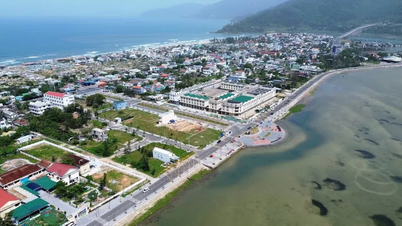
In reality, Tan Nghia town today is no longer the impoverished rural area it once was; its transformation is evident day by day. The happiness index of the people has improved. Synchronized development in all areas and aspects of life is given special attention. The town's socio-economic situation is gradually developing in a positive direction. In my eyes, the Nghia Hoa Industrial Cluster project, the roads in the district's administrative center, the inner-city roads, the Song Dinh 3 irrigation canal system, Tan Nghia market, and several other projects are clearly visible, impressive and vibrant. All of these have been and are being implemented, along with many advantages in land potential and labor resources, creating momentum to promote the development of a central town in the district.
Several projects were undertaken, including: roads leading to the high school, roads leading to the kindergarten, the Community Hall of Ward 3, repairs to the People's Committee office building and renovation of the courtyard, equipping the meeting hall with tables and chairs, concreting the kindergarten courtyard, and renovating the toilets in the neighborhoods... These joint projects between the State and the people have contributed to changing the face of the locality, such as the inner-city transportation project, which has paved 10.277 km of roads with a total cost of over 13.6 billion VND, of which the people contributed over 5.4 billion VND. The people were mobilized to participate in repairing nearly 10 km of roads, one bridge, and installing four drainage culverts, with a total cost of over 521 million VND.
Furthermore, as the central town of the district, it has received attention from higher authorities in the construction of many projects, such as: the bypass section of National Highway 55; roads leading to the hospital, the administrative center, and other facilities.
Today, walking along main roads like Hung Vuong, Cach Mang Thang Tam, and other streets in Tan Nghia, one can get a sense of the town's economic structure. Nearly a thousand permanent businesses, a market in Ward 6, a temporary market in Ward 1, and many smaller, non-permanent establishments create a vibrant and bustling atmosphere, accounting for over 40% of the overall economic structure.
Many public welfare projects in the town have been invested in and constructed by higher authorities, such as paving some main roads, public street lighting systems, green spaces, sidewalks, drainage systems, and a sports arena. The criteria for a type 5 urban area are gradually being completed; state management in the fields of construction order and urban order is given attention and directed effectively.
Another sudden downpour swept over the Yanko Pass, but deep down, I felt a warmth in my heart. Although there are still some things that haven't been fully resolved, I'm truly happy for my homeland as it transforms day by day! Happy that Ham Tan district has chosen such a grand and fitting location for its district capital! Happy that the happiness index of its people has significantly improved!
Source

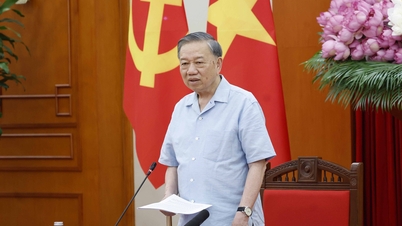
![[Photo] General Secretary and President To Lam presides over a meeting on preparations for the review of one year of operation of the three-tiered government system.](https://vphoto.vietnam.vn/thumb/1200x675/vietnam/resource/IMAGE/2026/06/02/1780391821195_a1-bnd-4595-9717-jpg.webp)































































Comment (0)