

Gifting or bequeathing a savings account can raise concerns for many due to its legal nature and related procedures. Gifting a savings account involves transferring ownership from one person to another without requiring any financial benefit from the recipient. To ensure a smooth gifting process, the following points should be noted:
Check the conditions for increasing the account: First, you need to ensure that the savings account is not frozen or tied to a loan agreement.
Drafting a gift contract: A gift contract for a savings account should be clearly drawn up, specifying the information of the donor and recipient, the amount in the savings account, and the transfer conditions, if any.
Notarization and authentication: Gift contracts must be notarized or authenticated by a competent authority to ensure their legal validity.
Notify the bank: After notarization, you need to contact the bank to inform them of the transfer and complete the procedures to update the new owner's information.
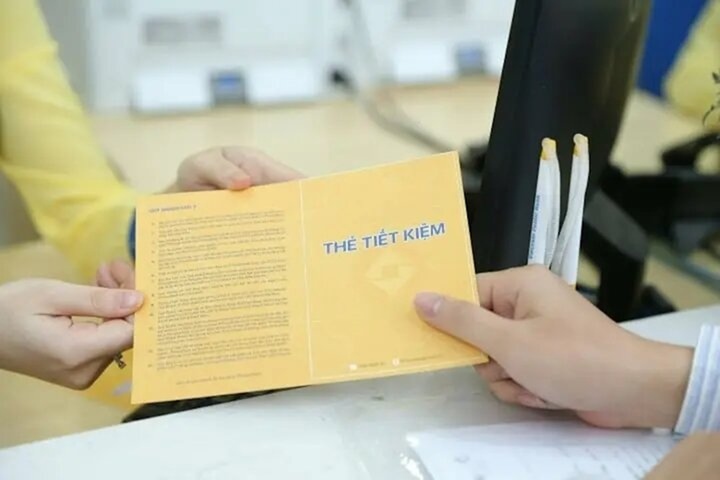
Gifting or bequeathing a savings account requires careful consideration and adherence to the law to ensure the legitimate rights and interests of all parties involved.
Here are some things to keep in mind when gifting money from a savings account:
Firstly, the transfer of ownership of a savings deposit must be carried out at the bank where the savings account was opened.
Secondly, both the donor and the recipient of the money in the savings account/card need to go directly to the bank to complete the procedure.
Thirdly, the deposit transfer document must bear the full signatures of both the donor and the recipient.
Fourth, the donor's signature must match the signature sample registered with the bank. The recipient's signature will be used for verification upon maturity of this savings account…
A will is an important document in which the testator specifies how assets, including savings accounts, will be distributed after death. The necessary steps to create a will for a savings account include:
Drafting a will: A will should be clearly drafted, including details of the savings account, beneficiaries, and any accompanying clauses. Note that the testator's intentions must be expressed transparently and without coercion.
Authenticating a will: A will should be authenticated by a notary public or local authority to ensure its legal validity and avoid future disputes.
Storing the will: After the will has been drawn up and notarized, it is crucial to store it carefully in a safe place. You can store the original at a bank, a notary office, or a secure personal location.
Source: https://vtcnews.vn/tang-cho-hoac-di-chuc-so-tiet-kiem-sao-cho-dung-ar904839.html

![[Image] Leaked images ahead of the 2025 Community Action Awards gala.](/_next/image?url=https%3A%2F%2Fvphoto.vietnam.vn%2Fthumb%2F1200x675%2Fvietnam%2Fresource%2FIMAGE%2F2025%2F12%2F16%2F1765882828720_ndo_br_thiet-ke-chua-co-ten-45-png.webp&w=3840&q=75)

![[Photo] Prime Minister Pham Minh Chinh receives Lao Minister of Education and Sports Thongsalith Mangnormek](/_next/image?url=https%3A%2F%2Fvphoto.vietnam.vn%2Fthumb%2F1200x675%2Fvietnam%2Fresource%2FIMAGE%2F2025%2F12%2F16%2F1765876834721_dsc-7519-jpg.webp&w=3840&q=75)
![[Live] 2025 Community Action Awards Gala](/_next/image?url=https%3A%2F%2Fvphoto.vietnam.vn%2Fthumb%2F1200x675%2Fvietnam%2Fresource%2FIMAGE%2F2025%2F12%2F16%2F1765899631650_ndo_tr_z7334013144784-9f9fe10a6d63584c85aff40f2957c250-jpg.webp&w=3840&q=75)
![[Photo] Prime Minister Pham Minh Chinh receives the Governor of Tochigi Province (Japan)](/_next/image?url=https%3A%2F%2Fvphoto.vietnam.vn%2Fthumb%2F1200x675%2Fvietnam%2Fresource%2FIMAGE%2F2025%2F12%2F16%2F1765892133176_dsc-8082-6425-jpg.webp&w=3840&q=75)














































































Comment (0)