

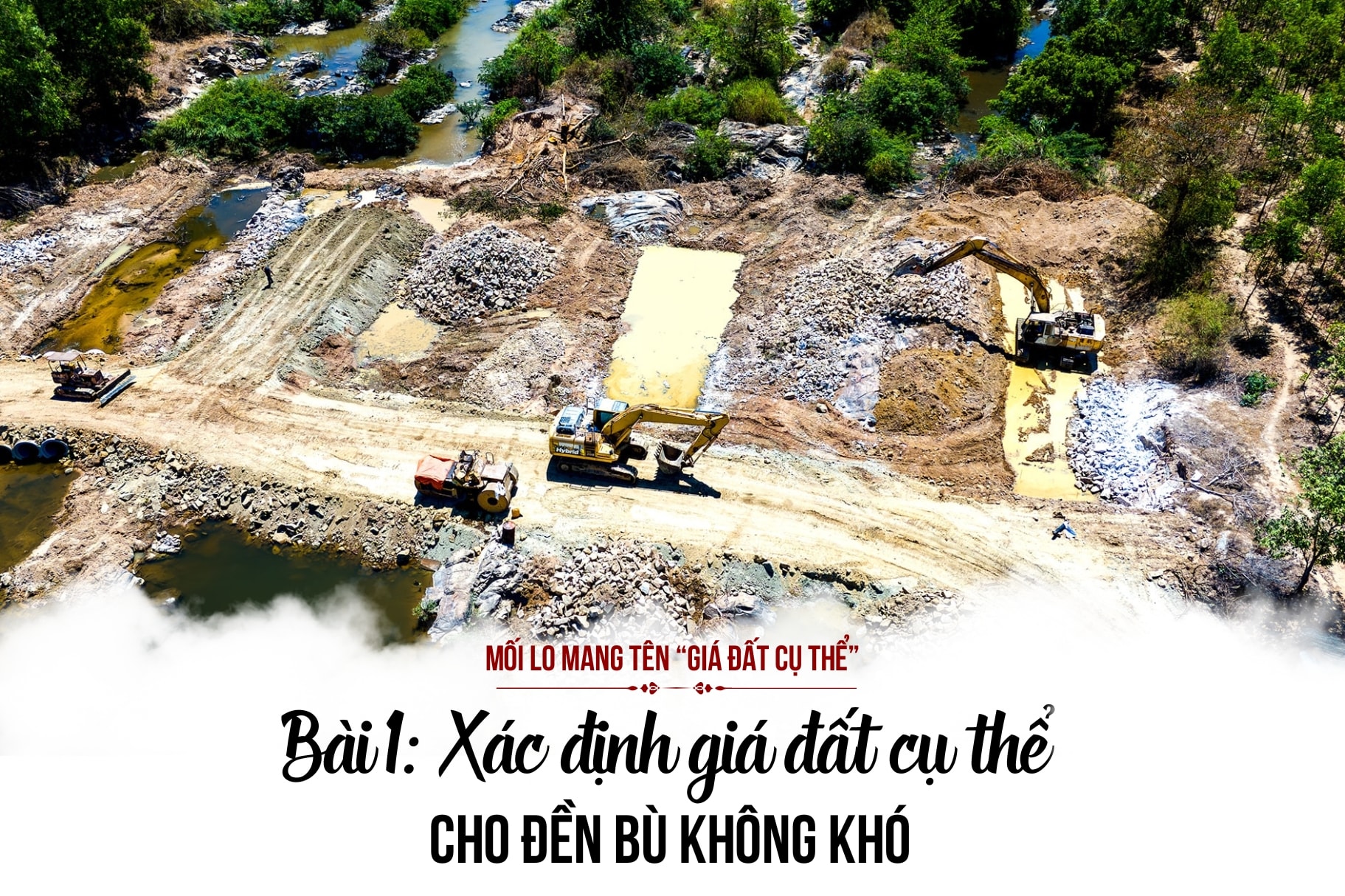
After numerous trips and revisions, the consulting firm found it unprofitable and decided not to proceed, even though finding a specific land price for compensation would have been simpler, just multiplying the land price by a coefficient K.
Compensation follows land allocation.
On October 27th, the consulting unit submitted a certificate detailing specific land prices for calculating compensation when the State acquires land for the project: the bypass road of DT 719 and the bridge over the Dinh River in La Gi ward. According to the plan, the council previously established by the ward will provide feedback and make revisions before submitting it to the Ham Tan Land Fund Development Board for further steps prior to public posting in the ward for 30 days. The land prices are expected to be approved around December 10th to begin compensation payments to residents. This timeframe is appropriate, not too far from the date when 29 out of 88 households agreed to hand over their land for 2,300/6,820.4 meters of the road passing through the ward, before and after July 2025, even though the compensation amount is still unknown. This has helped to secure land for the construction unit. The ward continues to persuade the remaining households while simultaneously working on the land prices for compensation. To achieve this result, the La Gi Ward People's Committee had previously implemented a series of procedures in a smooth and orderly manner.
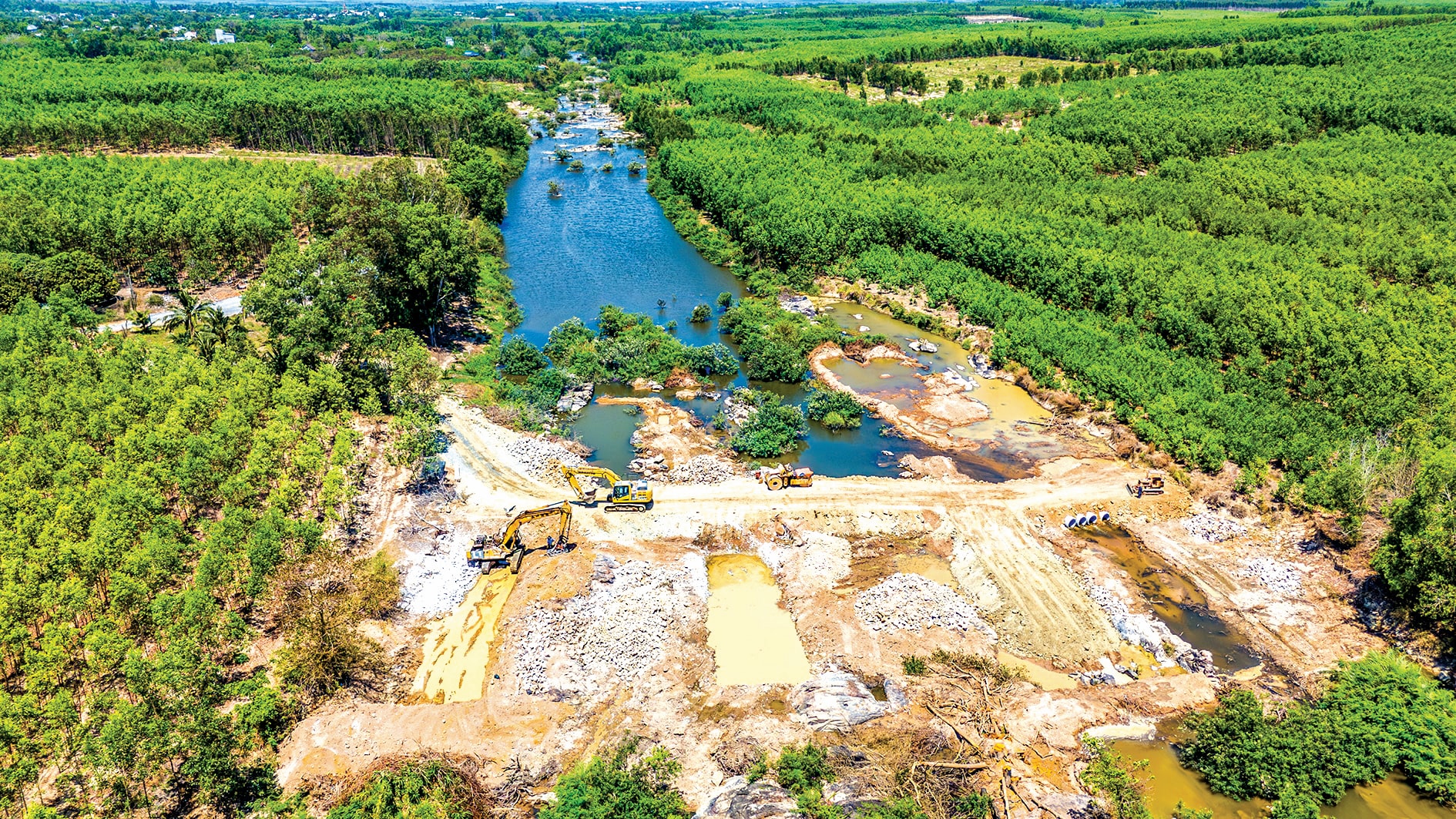
Specifically, in early July 2025, a decision was made to establish the Land Valuation Council for La Gi Ward. Following this, the council issued a decision to establish a working group to assist the Land Valuation Council for La Gi Ward. In September 2025, the Compensation, Support, and Resettlement Council for the DT 719 Bypass and Dinh River Bridge project in La Gi Ward was established. In early October 2025, a decision was made approving the estimated cost for determining specific land prices to calculate compensation when the State acquires land for the project. Simultaneously, a plan for selecting a contractor for the project to determine specific land prices for calculating compensation when the State acquires land for the project was issued… Then, on October 10, 2025, the ward signed a consulting contract for land valuation with Vietnam Construction and Environmental Resources Consulting Joint Stock Company.
Meanwhile, the neighboring Phuoc Hoi ward, which also has the DT 719 bypass road and bridge over the Dinh River (0.72 km long) project passing through it, has signed a contract with the same consulting unit as La Gi ward. At this point, Phuoc Hoi ward has the specific results of the land valuation process, coinciding with the timeline of La Gi ward. Also on October 27th, the consulting unit submitted the certificate and the procedures, from establishing a specific land valuation council; the compensation, support, and resettlement committee; the project contractor selection plan; and signing the contract with the consulting unit, were all carried out by Phuoc Hoi ward in accordance with regulations. The only difference is that in Phuoc Hoi ward, the total land area to be acquired for the project is 14,517.4 m² , of which 4,317.9 m² is land managed by the ward, and 10,199.5 m² belongs to 11 households and individuals. The People's Committee of Phuoc Hoi ward is urging households and individuals to hand over the land to the construction unit in advance, while simultaneously implementing compensation for residents on the day the land price is approved.
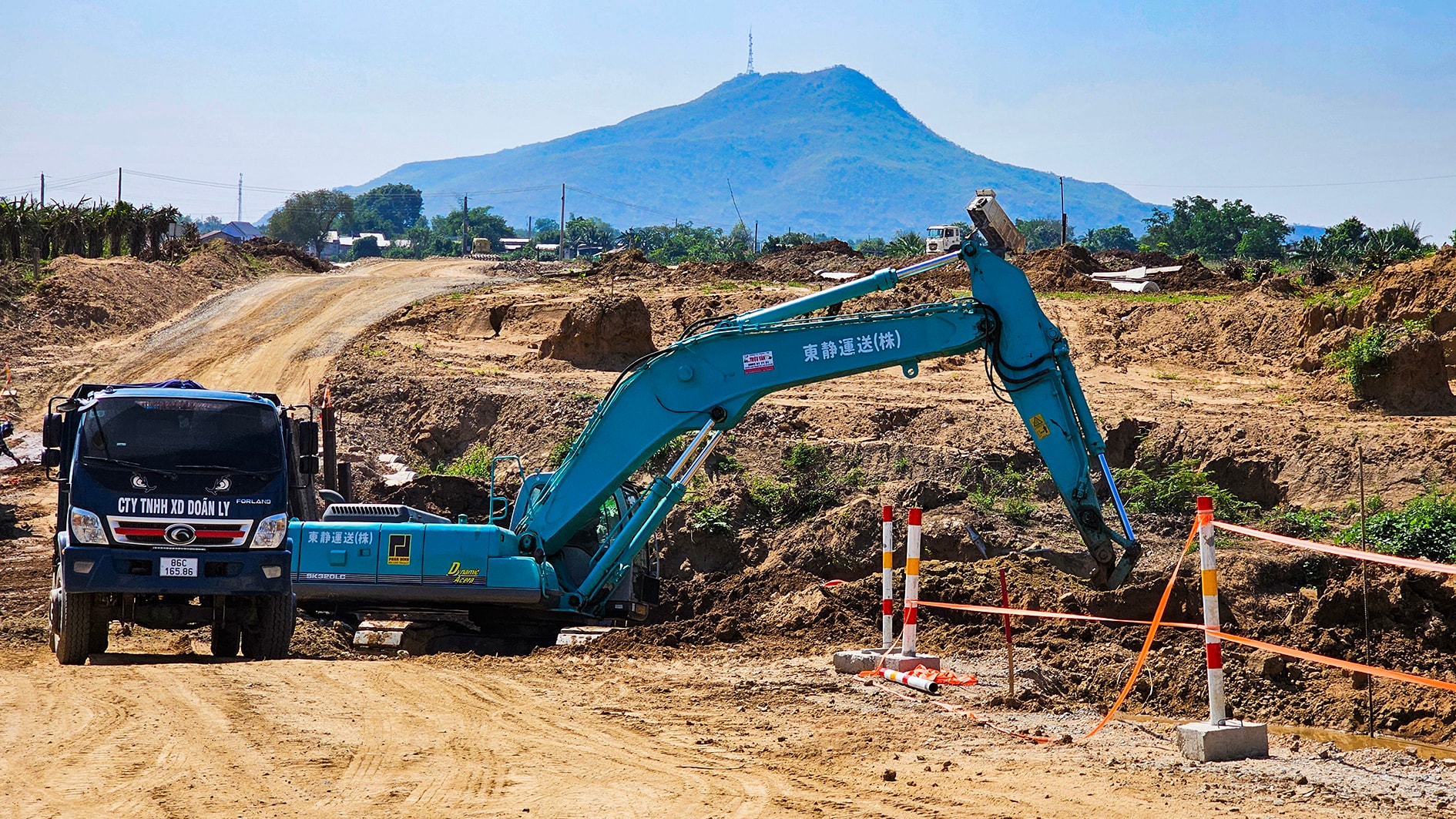
Not as difficult as you might think?
The fact that the two wards of La Gi and Phuoc Hoi have determined the specific land price for the project passing through their areas is considered a bright spot, given that many communes and wards in the province have construction projects but have not yet found specific land prices for compensation. Therefore, there is no land available for construction, which will lead to the consequence of not being able to disburse 100% of public investment funds as required. If this can be overcome, the only way is to encourage residents to hand over the land in a phased manner, while simultaneously determining the specific land price, especially since the consulting unit is tasked with calculating the specific land price within 90 days. However, depending on the situation, the consulting unit may expedite the process, as long as the requirements are met.
This is the approach taken by the two wards of La Gi and Phuoc Hoi, and it's noteworthy that the implementation process shows that both wards established specific land valuation councils in July, immediately after the merger. These initial complexities are one of the reasons why many communes and wards in the province are under time pressure and unable to arrange the implementation of tasks such as finding specific land prices for compensation to implement projects in their areas. Furthermore, there is added confusion as the general land price for Lam Dong province after the merger is still unavailable. While the land prices of each former province are available, the question remains whether applying them would comply with regulations.
In reality, according to the wards that have already determined land prices, the legal regulations are already in place; they just need to be implemented. The main thing is to be bold in doing it. Looking back, it seems that this is a new task, and many commune and ward officials are unfamiliar with it, especially given the lack of consulting firms to determine specific land prices—meaning demand exceeds supply. Therefore, communes and wards are in a wait-and-see mode, creating delays and driving up the demand for consulting firms to determine specific land prices for compensation. Meanwhile, this work, while requiring high responsibility, does not offer the profit to attract consulting firms.
Leaders of several communes and wards said that finding a consulting firm to determine specific land prices for compensation is now very difficult, requiring negotiations involving pleading and exchanging other benefits. In reality, the cost of determining specific land prices for compensation, according to regulations for a single project, sometimes spanning several wards and communes, is only around 50 million to under 500 million VND. Meanwhile, the numerous trips and revisions mean that consulting firms find it unprofitable and therefore unwilling to undertake the work, even though determining specific land prices for compensation is simpler, simply by multiplying the land price by the land price adjustment coefficient (K coefficient). Therefore, it's not as difficult as imagined, but it's necessary to be clear about this when determining specific land prices for non-budgetary investment projects, which have been noted as risky and potentially leading to legal consequences, as even the calculation methods for land prices, such as comparison and surplus, are vague and not yet implemented in practice.
(To be continued)
Source: https://baolamdong.vn/moi-lo-mang-ten-gia-dat-cu-the-400550.html

![[Image] Close-up view of the interchange connecting the two expressways and Long Thanh Airport.](https://vphoto.vietnam.vn/thumb/1200x675/vietnam/resource/IMAGE/2026/05/25/1779703378210_ndo_br_z7863716673926-224453a31600126cce10622af6290afd-4549-jpg.webp)
![[Image] Hanoi's urban life under the challenge of a "scorching hot" environment](https://vphoto.vietnam.vn/thumb/1200x675/vietnam/resource/IMAGE/2026/05/25/1779706979265_nang-nong-t5-2026-minh-duy-7-4636-jpg.webp)





























































































Comment (0)