

On April 13th, the Ho Chi Minh City Department of Health announced that, given the increasing number of new cancer cases and deaths, coupled with deteriorating hospital facilities, uneven treatment capacity, and low public participation in cancer screening, the Department has implemented a cancer prevention strategy in the city.
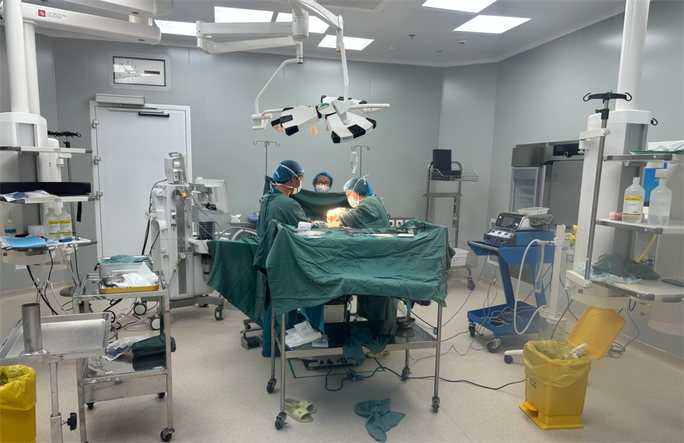
Surgery for cancer patients at Ho Chi Minh City Oncology Hospital (Facility 2)
Cancer prevention efforts in Ho Chi Minh City are not yet effective.
The Department of Health believes it would be a mistake to assume that the second facility of the Ho Chi Minh City Oncology Hospital will solve the problem of cancer patient overload. However, while this is necessary, it is not sufficient. Therefore, continuing to mobilize social resources to effectively implement the new cancer prevention strategy is truly the solution that is both comprehensive, scientific , and practical.
According to the Department of Health, in addition to the increasing patient overload at the Ho Chi Minh City Oncology Hospital due to dilapidated infrastructure (old facilities), cancer prevention and control efforts in the area have not been effectively implemented in recent times due to numerous difficulties.
Late-stage cancer detection remains common due to the fragmented nature of early cancer screening and the lack of concentrated investment in resources. Diagnostic and treatment capabilities vary significantly across different levels of healthcare. Insufficient investment in applying the latest diagnostic and treatment technologies and methods has led to patients concentrating at tertiary hospitals, causing overcrowding and prolonged waiting times for treatment. Furthermore, palliative care for end-stage cancer patients is primarily provided at higher-level healthcare facilities. The supply of medications and medical supplies for palliative care at primary healthcare levels, especially morphine for pain relief in cancer treatment, remains challenging.
6 strategies for cancer prevention
In response to this situation, the Ho Chi Minh City health sector has implemented a cancer prevention strategy comprising the following six specific solutions:
Firstly, effectively implement communication, health education , and vaccination solutions in cancer prevention.
Secondly, implement a comprehensive set of solutions to increase the rate of early cancer screening and detection in the community, including the World Health Organization (WHO) non-communicable disease management program at the primary healthcare level (WHO PEN program) and research and development of high-tech cancer screening and early detection centers (the Ningen Dock model from Japan);
Thirdly, to build and strengthen a comprehensive healthcare network for cancer diagnosis and treatment, from primary healthcare facilities to general and specialized hospitals throughout the city; to develop and improve infrastructure and equipment to advance advanced techniques in cancer treatment at tertiary general and specialized hospitals;
Fourth, build and improve the palliative care network for cancer patients in the community.
Fifth, digitally transform the reporting and monitoring of disease cases to manage cancer patient data, gradually forming a cancer treatment map in the city.
Sixth, strengthen scientific research and international cooperation in the field of cancer prevention and control.
According to statistics from the Global Cancer Organization (GLOBOCAN) in 2020, the incidence and mortality rates of cancer worldwide are on the rise. Vietnam is one of the countries with a high incidence rate (97.3 – 111.9/100,000 population). In 2020, an estimated 182,563 new cases and 122,690 deaths from cancer were recorded in Vietnam. For every 100,000 people, 159 were newly diagnosed with cancer and 106 died from cancer. The incidence rate of new cancer cases in Vietnam increased by 9 ranks (90th out of 185 countries), while the mortality rate increased by 6 ranks (50th out of 185 countries) compared to 2018.
In Ho Chi Minh City alone, according to population cancer statistics (led by the Oncology Hospital), the number of cancer cases in 2017 reached over 11,000 people (11,292 individuals), including 5,014 men and 6,278 women.
Source


![[Photo] General Secretary To Lam visits the exhibition space showcasing books, photo exhibitions, and achievements of digital transformation in journalism.](/_next/image?url=https%3A%2F%2Fvphoto.vietnam.vn%2Fthumb%2F1200x675%2Fvietnam%2Fresource%2FIMAGE%2F2025%2F12%2F19%2F1766110879215_1766110240024-jpg.webp&w=3840&q=75)
![[Photo] Enchanting ancient rose garden on the mountainside in Nghe An](/_next/image?url=https%3A%2F%2Fvphoto.vietnam.vn%2Fthumb%2F1200x675%2Fvietnam%2Fresource%2FIMAGE%2F2025%2F12%2F19%2F1766109900916_vuon-hong-chin-do-thu-hut-du-khach-toi-check-in-o-ha-noi-3-20162778-1671624890024-1671624890104198100259.jpeg&w=3840&q=75)




















































































Comment (0)