

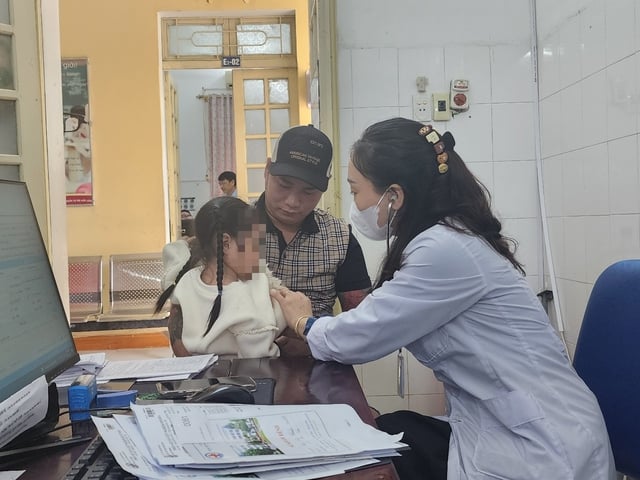
Deploying electronic medical records to improve the quality of medical examination and treatment
Digital transformation in healthcare , focusing on the implementation of electronic medical records (EMR), is an inevitable trend to improve the quality of medical examination and treatment, increase management efficiency and rational use of resources. EMR allows standardization of information, reduces dependence on paper medical records, and forms an electronic health data warehouse to serve the care, monitoring and management of children's health continuously and comprehensively.
Thanh Hoa Children's Hospital is the province's final-level pediatric hospital, with a planned scale of about 900 beds, 22 clinical departments, 7 paraclinical departments and many functional rooms, with an annual outpatient examination volume of over 200,000 visits and inpatient treatment of over 60,000 visits. In that context, the implementation of HSBAĐT not only meets the digital transformation roadmap under the direction of the Ministry of Health but is also an important solution to improve the quality of services at the hospital.
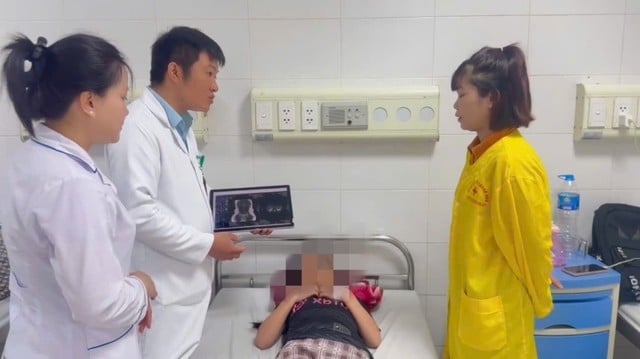
Each patient is managed by a unified identification code throughout the hospital. Examinations, treatments, and paraclinical tests are linked to the same record, forming a complete medical record lifecycle at Thanh Hoa Children's Hospital.
The hospital has deployed the hospital management software system (HIS) early and was selected as one of the pilot units of the Ministry of Health's HSBAĐT. In recent times, the hospital has focused on upgrading its IT infrastructure, including server systems, storage devices, internal networks, Wifi, firewalls, security devices, and workstations in departments, to meet the requirements of operating HSBAĐT across the entire hospital.
From the above careful preparation, the group of criteria on IT infrastructure has reached a high level (level 7), ensuring stable operation, meeting the storage capacity and processing of HSBAĐT data. Along with that, the HIS system manages the entire process of medical examination, inpatient treatment, drug dispensing, hospital fee payment, health insurance management, queuing, appointment scheduling, and supporting cashless payment.
The LIS (testing) and RIS/PACS (imaging diagnostics) systems are deployed synchronously, connecting two-way with HIS and integrating data into HSBAĐT, allowing doctors to look up test results and images directly on medical records.
The management software systems (finance - accounting, assets - equipment, management documents, human resources, quality management, training, scientific research, etc.) are highly computerized, effectively supporting hospital management.
The criteria for information security, data backup and recovery are ensured through role-based access authorization, periodic data backup and recovery plan in case of incidents... On that basis, the hospital's information system platform is technically qualified to deploy HSBAĐT on a hospital-wide scale.
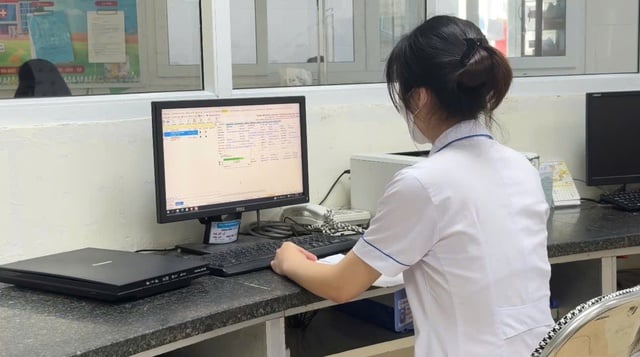
Thanh Hoa Children's Hospital said that HSBAĐT is deployed in 100% of the hospital's clinical and paraclinical departments, applied to both inpatients and outpatients.
Dr. Nguyen Huu Thanh, Head of the General Planning Department, Thanh Hoa Children's Hospital, said that the HSBAĐT system is deployed in 100% of the hospital's clinical and paraclinical departments, applicable to both inpatients and outpatients. The HSBAĐT system is integrated into the hospital software platform (EMR/EHC), closely linked with HIS, LIS and PACS, ensuring that data is entered once and used multiple times.
Each patient is managed by a unified identification code throughout the hospital. Examinations, treatments, and paraclinical tests are linked to the same record, forming a complete medical record lifecycle.
HSBAĐT helps eliminate the difficulty of reading handwriting, reduces the risk of mistakes due to copying information, clinical and paraclinical information is centralized on one platform, supporting doctors to make decisions faster and more accurately. The system allows warnings of drug interactions, allergies, and duplicate indications, contributing to improving treatment safety.
"Thanh Hoa Children's Hospital has deployed HSBAĐT across the entire hospital, achieving a high level of IT application according to regulations. HSBAĐT has initially affirmed its important role in standardizing and digitizing medical examination and treatment processes, improving professional quality, increasing management efficiency and improving patient experience. In the coming time, the hospital needs to continue to improve and optimize data entry processes, simplify operations on software to reduce the workload for medical staff. Strengthen training, support and supervision of compliance with the use of HSBAĐT in departments. Along with that, promote communication and guide patients and families to use digital utilities to maximize the benefits of the system. Gradually connect and link HSBAĐT data with upper-level medical information systems and other health platforms, contributing to building a digital medical data ecosystem serving children's health care in the whole province," Dr. Thanh emphasized.
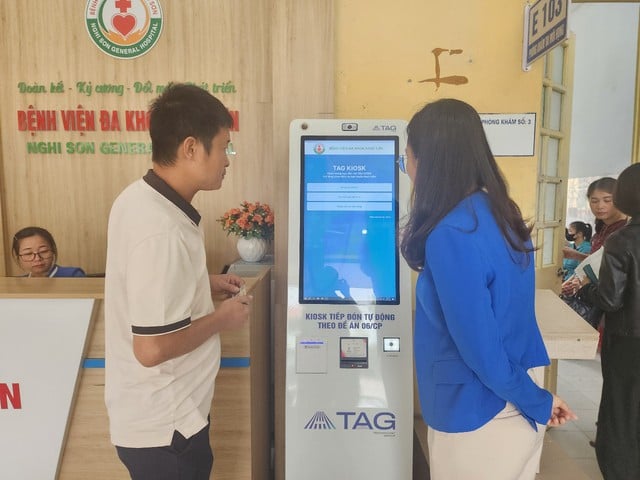
Nghi Son General Hospital's use of HSBAĐT is an important step in the digital transformation roadmap of the health sector.
At Nghi Son General Hospital, the use of HSBAĐT at the hospital is an important step in the digital transformation roadmap of the health sector. After a period of implementation, the hospital has achieved many outstanding results, contributing to innovation in management methods, improving professional efficiency and bringing practical benefits to patients.
The hospital has deployed electronic medical records since May 2025. Officially evaluated electronic medical records from September 19, 2025. Aiming to implement paperless electronic medical records by March 31, 2026.
First of all, the hospital has invested in a synchronous information technology infrastructure, including server systems, network lines, HIS, image storage and transmission systems, and data entry and digital signature devices for medical staff. Thanks to that, the entire medical examination and treatment process is digitized, helping information between departments and rooms to be connected and shared quickly and accurately. The information technology infrastructure reaches level 6. Completing level 2 information security criteria. 100% of administrative documents are digitally signed and processed through ioffice software, helping to reduce paperwork, increase productivity and data security.
The hospital rearranged the reception area, the social work team guided patients to register using the smart kiosk. Ensuring transparency in the medical examination and treatment registration process.
HSBAĐT helps significantly reduce the time for recording, storing and searching for medical records. Information on examination, treatment, test results, diagnostic imaging, etc. is automatically updated and synchronized in real time, helping doctors easily look up, compare and make more accurate treatment decisions. Data connection with Vietnam Social Security also takes place smoothly, reducing errors and shortening the time for payment of medical examination and treatment costs.
Using HSBAĐT helps save waiting time, reduce administrative procedures and ensure transparency in the treatment process. Patients can easily track personal medical information, test results and appointment schedules via the electronic portal or mobile application.
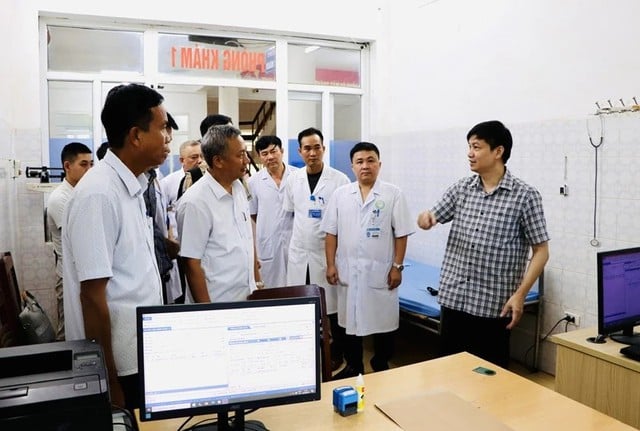
Director of Thanh Hoa Department of Health Mr. Le Van Cuong inspected the implementation of HSBAĐT.
In addition to the achievements, the hospital also recorded some difficulties such as: limited information technology level of a part of the staff, large amount of data need to be standardized and strictly secured. However, thanks to the close direction of Thanh Hoa Department of Health and the efforts of all staff, the HSBAĐT system at Nghi Son General Hospital is increasingly perfected, contributing to improving the quality of health care and moving towards the goal of a paperless hospital in the future.
According to information from the Thanh Hoa Department of Health, currently 92% of hospitals in the province (100% public and 75% private) have completed the implementation of HSBAĐT, making Thanh Hoa one of the leading localities in the country in digital transformation of healthcare.
The results achieved show the strong determination of Thanh Hoa's health sector to digitalize, demonstrating the cooperation of the government, medical facilities and technology enterprises. In the coming time, the Department of Health will continue to require hospitals to complete operational procedures, ensure data security and legality of HSBAĐT, and move towards the model of "paperless hospital".
Orient hospitals to apply the lean management model (LEAN), install queue display screens in crowded patient areas, apply technology to predict waiting times and standardize the process of recording, updating and encoding nursing care information in medical records to ensure consistency and uniformity throughout the province.
Ngoc Hung
Source: https://suckhoedoisong.vn/thanh-hoa-dot-pha-trien-khai-ho-so-benh-an-dien-tu-nham-nang-cao-chat-luong-kham-chua-benh-169251107153944808.htm



![[Photo] Da Nang: Hundreds of people join hands to clean up a vital tourist route after storm No. 13](https://vphoto.vietnam.vn/thumb/1200x675/vietnam/resource/IMAGE/2025/11/07/1762491638903_image-3-1353-jpg.webp)




























































































Comment (0)