

One June afternoon in 2024 in the suburbs of Corsicana, Texas, a scene that symbolized the changing landscape of the cryptocurrency industry unfolded. Inside the sprawling Riot Platforms industrial complex, bright yellow excavators were still diligently digging, building what was once envisioned as the world's largest bitcoin mining operation. But just over a year later, the reality there had completely changed.
Instead of becoming a "sanctuary" for noisy ASIC mining rigs dedicated to decoding algorithms, two-thirds of this massive facility's area has been redeveloped to serve a new "king": artificial intelligence (AI) and high-performance computing (HPC).
Rows of gleaming white-roofed buildings, hundreds of meters long and resembling aircraft hangars, are no longer the exclusive home of the king of cryptocurrencies. They are on their way to transforming into super-data factories, serving the computing power needs of global technology corporations.

The story at Corsicana is not unique. Across the United States, a similar scenario is being rewritten at numerous mining operations of industry giants. In the past 18 months, at least eight top-listed mining companies, including big names like Bitfarms, Core Scientific, TeraWulf, and CleanSpark, have announced ambitious plans to pivot entirely or partially to the AI sector.
This shift reflects a paradoxical yet strategically significant reality: the very companies that mined bitcoin, who once spent billions of dollars building massive energy infrastructure and inadvertently laid the foundation for the computing boom, are now forced to undergo self-surgery to adapt.
Meltem Demirors, a managing partner at venture capital firm Crucible Capital, likened this process to the bitcoin mining industry "creating the blueprint" for the modern data center. Miners realized they held what the AI world craved most: "factory shells" with readily available high-power electricity. Their job was simply to dismantle their outdated mining rigs and roll out the red carpet for customers to bring in GPUs to fill them.
"The perfect storm" and an unprecedented profit crisis.
To understand why miners are turning their backs on bitcoin – a source of income that once helped them rake in profits with margins as high as 90% in 2021 – one must look at the bleak financial picture they face at the end of this year. The industry is experiencing a "perfect storm" created by three opposing forces: the halving event, soaring mining difficulty, and escalating energy costs.
2024 marks the milestone of the Bitcoin block reward being halved cyclically, down to just 3,125 bitcoins per decrypted block. At the same time, although the price of Bitcoin fluctuates around $85,000 (down about 30% from this year's peak), this price is still not enough to offset the increasingly expensive operating costs.
Intense competition on the network has pushed mining difficulty to record levels, meaning miners have to burn more electricity and operate more machinery just to compete for an increasingly smaller slice of the pie.
The "Hashprice" index – considered the heartbeat of the mining industry, measuring the revenue miners earn per unit of computing power (Petahash) – has collapsed to its lowest level in history. Data recorded at the end of November shows that the Hashprice fell below $35/PH/s.
This is a telling figure, signaling that miners' profit margins have almost completely evaporated. Charles Chong, an industry strategist, exclaimed that the economics of bitcoin mining are currently "terrible," to the point that investing in a new rig today raises serious questions about the possibility of recouping the investment.
This immense financial pressure has forced miners to take drastic survival measures. On-chain data shows a wave of selling off reserve assets, with approximately 30,000 bitcoins being dumped onto the market by miners in just 48 hours. These once-powerful "money-printing machines" have now become a burden, and shutting them down or repurposing them has become the only option to avoid being phased out.

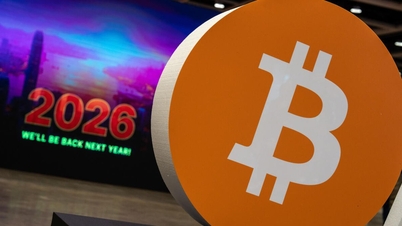
Bitcoin miners are facing one of the most severe economic downturns in the industry's history (Illustration: Token Metrics).
AI: A lifeline or a new "gold mine"?
Amidst dwindling Bitcoin profits, the AI sector emerges as a promised land with staggering profit figures. While Bitcoin mining is a game of chance dependent on volatile price fluctuations, the AI market offers stability and significantly higher profit margins.
Economic calculations reveal a stark contrast: Revenue from AI and high-performance computing (HPC) tasks can be 2 to 5 times, and in some cases up to 25 times, higher per kilowatt-hour than using that energy to mine bitcoin.
Ben Gagnon, CEO of Bitfarms, has frankly admitted that while bitcoin mining can still be profitable, the value that HPC (High-Performance Computing) generates per unit of energy is superior and stable over many years. This makes it difficult for companies to find a compelling reason to continue investing in traditional mining operations.
In just the past few months, the market has witnessed a flurry of contracts worth over $43 billion signed between bitcoin mining companies and tech giants. Examples include Core Scientific, which signed a $3.5 billion contract to operate an AI data center, and Bitfarms, which announced a strong shift towards HPC (High-Performance Computing) by 2027. The stock market also reacted immediately, rewarding these companies for their quick adaptation.
It's safe to say that Bitcoin miners are reshaping the landscape for the AI era. They've spent years building large-scale power infrastructure, industrial cooling systems, and operational networks in areas with cheap electricity. Now, those assets have become a significant competitive advantage. Instead of taking years to build a data center from scratch, AI companies can take over and transform existing mining operations in less than a year.
Nicholas Gregory, an industry expert, believes that Bitcoin has fulfilled its historical mission of paving the way and preparing the ground for the explosion of AI data centers.
The "martyrs" and the barriers to transformation.
However, the picture of the shift to AI is not entirely rosy. Fred Thiel, CEO of MARA Holdings, has expressed skepticism about the ease of this process. He likened Bitcoin mining data centers to the "simplest" type, while the needs of AI systems are far more complex.
Unlike Bitcoin mining rigs that can be switched on and off flexibly to support the power grid, AI training models require almost constant uptime (99.999%), demanding a much more stringent backup power and cooling system.
The initial capital expenditure (CAPEX) for AI infrastructure is also a huge barrier. While a Bitcoin mining farm can be built for around $300,000-$800,000 per megawatt, AI infrastructure requires significantly more capital to equip advanced liquid cooling systems and expensive GPU clusters. Therefore, not every miner has the financial and technical resources to participate in this race.
Amidst the wave of migration to AI, there are still those "stubborn" individuals clinging to the pure Bitcoin mining model, most notably American Bitcoin - a company founded by Eric Trump. Their strategy is to optimize costs to an extreme degree.
By owning the mining rigs but not the data center, and taking advantage of preferential electricity sources, they claim they can mine each bitcoin for only about $50,000. For this group, operational efficiency is the "money," and they believe that the withdrawal of other competitors will leave a larger market share for those who remain.

For bitcoin miners, the shift towards AI is both a survival strategy and a new opportunity (Illustration: CryptoSlate).
The biggest question now is: If all the whales switch to AI, who will protect the Bitcoin network? Experts warn that a decline in industrial-scale mining capacity could have long-term consequences for network security. The risk of "51% attacks" (where a single entity controls a large portion of computing power to manipulate transactions), while currently remote due to high costs, will theoretically increase as hashrate declines.
One plausible scenario being painted is that bitcoin mining will be pushed to energy-scarce regions of the world. Miners will have to migrate to places with the cheapest and most abundant electricity globally, such as Paraguay or Bhutan. Some even suggest that bitcoin mining will gradually shift from a private business to a national "privilege."
Countries that have accumulated large bitcoin reserves, such as Bhutan, El Salvador, or even the United States, will not be able to accept the risk of their networks being attacked. In that case, bitcoin mining will no longer be simply a matter of profit and loss for businesses, but a national security issue. "People might even mine bitcoin at a loss," Meltem Demirrors commented, because maintaining the network now means protecting national assets.
The great "migration" from bitcoin to AI is not just a story about profit-seeking; it's reshaping both of these cutting-edge industries of the 21st century. Bitcoin mining operations, once considered electricity-guzzling "culprits," are now becoming indispensable building blocks for the rise of artificial intelligence.
Conversely, Bitcoin is perhaps entering a new, more challenging phase of maturity, where only the strongest, or the most powerful nations, will have the right to wield the digital gold pickaxe.
Source: https://dantri.com.vn/kinh-doanh/tho-dao-dong-loat-tat-may-con-dia-chan-dinh-doat-so-phan-bitcoin-20251209210916484.htm


![[Image] Vietnam's colorful journey of innovation](/_next/image?url=https%3A%2F%2Fvphoto.vietnam.vn%2Fthumb%2F1200x675%2Fvietnam%2Fresource%2FIMAGE%2F2025%2F12%2F14%2F1765703036409_image-1.jpeg&w=3840&q=75)



























































![[Image] Vietnam's colorful journey of innovation](https://vphoto.vietnam.vn/thumb/402x226/vietnam/resource/IMAGE/2025/12/14/1765703036409_image-1.jpeg)



































Comment (0)