

Cervical disc herniation can cause many dangerous complications, recovery is not easy, and recurrence is highly likely even after successful treatment.
This article was professionally reviewed by Dr. Bui Huy Can, University Medical Center of Ho Chi Minh City - Branch 3.
Define
- Cervical disc herniation occurs when the nucleus pulposus of the intervertebral disc protrudes from its normal position due to rupture of the annulus fibrosus.
- The direction of disc herniation can be posterior, lateral, or into the intervertebral foramen, causing compression of the nerve roots and nerves in the cervical spine.
Reason
- Cervical disc herniation can develop due to various factors, such as:
* Disc degeneration occurs over time.
* Injuries that directly affect the spine.
* Incorrect posture while sitting, lying down, or working.
* Sudden movement of the cervical spine.
* Genetics.
* Unhealthy lifestyles, such as lack of physical exercise, poor nutrition, smoking habits, etc.
- In addition, sometimes connective tissue disorders or spinal deformities can also contribute to cervical disc herniation.
Who is most likely to get the disease?
- The disease tends to be more common in men.
- It commonly occurs in people aged 35-55.
Symptom
- Sudden neck pain and stiffness on the right, left, or back side. The pain may be mild, moderate, or severe.
- Surrounding areas can also be quickly affected, such as the shoulders, arms, head, especially the back of the head and eye sockets.
- Accompanied by a feeling of pain and numbness in the extremities, usually in the arms, hands, and fingers.
- In cases where the spinal cord is compressed by a herniated disc, the pain and numbness originate in the neck and quickly spread to the limbs. The entire body may even be affected.
Diagnose
Based on the results of an MRI scan of the cervical spine, the radiologist will be able to accurately determine the location, nature, extent, and prognosis of the injury the patient has.
Complications
Patients' negligence often leads to delayed treatment, risking a series of serious complications. The most obvious is cervical spinal stenosis, which can cause cerebral ischemia and spinal cord compression syndrome. Severe spinal cord compression can lead to permanent quadriplegia.
Treatment
- Modern medicine
* Common anti-inflammatory and pain-relieving medications can provide immediate relief, but the limitation is that they cannot be used long-term and can cause some side effects on the digestive system.
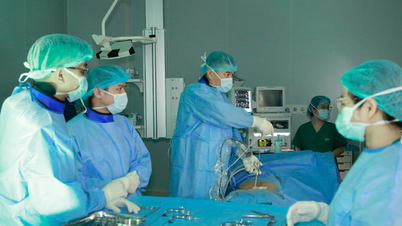
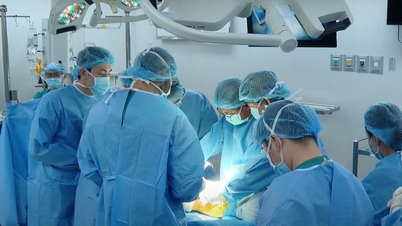
* If the condition progresses severely, surgery may be necessary to resolve it. However, statistics show that only 5% of patients actually require surgery.
- Traditional medicine
* Commonly used herbs have the effect of warming the meridians and clearing the collaterals, promoting qi circulation and blood flow, dispelling wind and cold, eliminating dampness, and nourishing the liver and kidneys, such as Piper betle leaves, cinnamon twigs, Bidens pilosa, Vernonia anthelmintica, Rehmannia glutinosa, Solanum nigrum, Angelica sinensis, Smilax glabra, Polygonum multiflorum...
* Acupuncture and other treatments such as thread embedding, laser acupuncture, auricular acupuncture, hydroacupuncture, massage and acupressure, physiotherapy (infrared, herbal compresses)... combined with herbal medicine increase the effectiveness of disease treatment.
Prevent
- When doing manual labor, be careful not to carry heavy objects on your head or heavy loads on your shoulders.
- Prompt treatment of degenerative diseases of the cervical spine.
- Change bad habits in daily life, work, studies, and sports activities.
- Avoid sudden or excessively prolonged movements such as bending, extending, or rotating the neck.
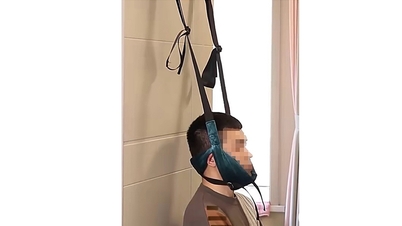
- Perform appropriate cervical spine exercises to improve flexibility.
America and Italy
Source link






























































































Comment (0)