

This was the assertion made by South Korean President Yoon Suk-yeol at a recent healthcare reform conference in Seoul. President Yoon Suk-yeol emphasized that the government would not back down simply because of a few obstacles or opposition.
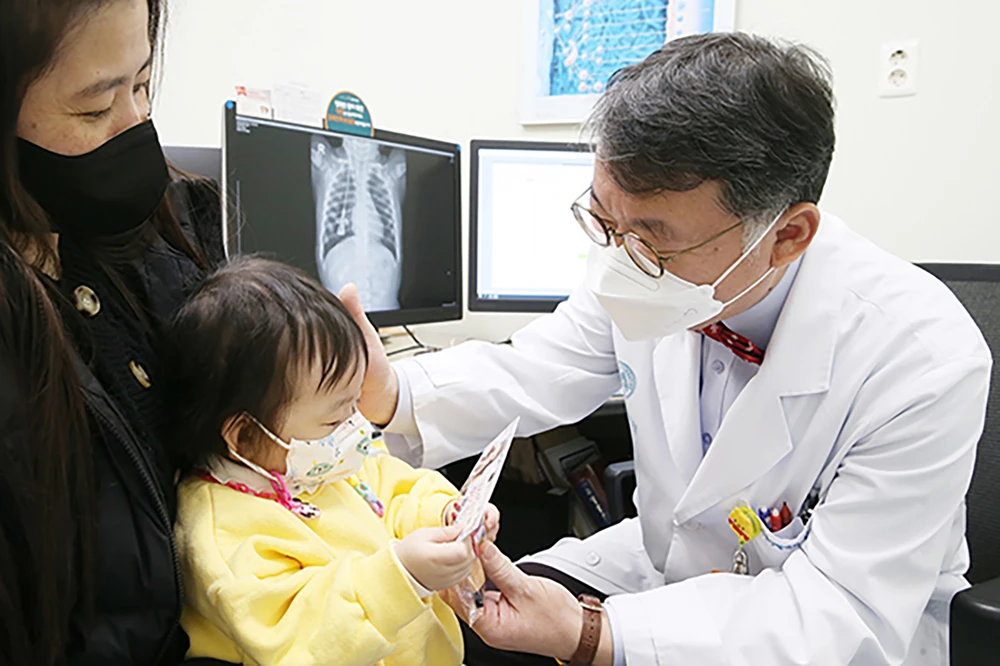
According to the South Korean Ministry of Health , the new healthcare reform package includes plans to strengthen medical staff, enhance local healthcare services, build a safety net to prevent medical accidents, and improve fairness in compensation. A special presidential committee on healthcare reform will be established. The Ministry of Health reports that the doctor-to-population ratio in South Korea is 5.6 per 1,000 people, significantly lower than the average for member countries of the Organization for Economic Cooperation and Development (OECD).
At the conference, President Yoon Suk-yeol pledged to ensure sufficient medical personnel, expand regional talent recruitment, and strengthen the medical workforce and build a healthcare network in local areas. Furthermore, the government will minimize legal risks caused by medical accidents and introduce a new plan to provide fair compensation for doctors, improving the system related to medical incidents so that doctors can focus on treating patients while victims of medical incidents receive full compensation. The government will also establish a fair salary and bonus system for essential medical personnel, especially those in high-risk or frequently on-call departments. In addition, President Yoon Suk-yeol committed to drastic reforms to the medical insurance guarantee system and regulations regarding expenses not covered by health insurance, which are fueling medical abuse and disrupting the market.
The South Korean government is pushing ahead with plans to increase the annual enrollment quota for medical schools by at least 1,000 from the current 3,058, starting in 2025. This move comes as the number of South Korean doctors graduating each year fails to meet current healthcare needs, leading to shortages in suburban and remote areas, as well as in essential fields including pediatrics and emergency care. The Korea Institute for Health and Social Services (KIHASA) recently predicted that South Korea will face a shortage of 27,232 doctors by 2035.
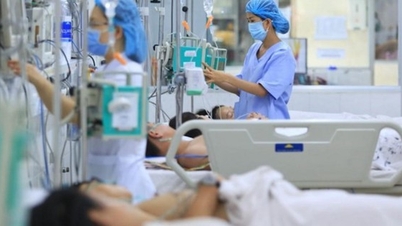
Healthcare reform became a hot topic in South Korea following a major strike last July. Tens of thousands of South Korean healthcare workers went on strike, demanding improved working conditions and increased support for public healthcare facilities. This disrupted operations at numerous hospitals nationwide. Among those striking were staff from major general hospitals such as Anam and Guro Hospitals affiliated with Korea University, Kyunghee University Hospital, Hanyang University Hospital, and Pusan National University Hospital (PNUH). The striking workers made several demands, including increased integration of nursing and healthcare services, and legislation stipulating a ratio of one nurse caring for only five patients.
SOUTHERN
Source

































![[Photo] Reception to welcome General Secretary and President To Lam and his wife on their State visit to the Philippines](https://vphoto.vietnam.vn/thumb/1200x675/vietnam/resource/IMAGE/2026/06/01/1780295488620_vna-potal-chieu-dai-chao-mung-tong-bi-thu-chu-tich-nuoc-to-lam-va-phu-nhan-tham-cap-nha-nuoc-toi-philippines-8798060-7855-jpg.webp)

































































Comment (0)