

"Each working dog has its own personality, so the process of approaching, training, and using them requires a methodical approach, building closeness and trust, and treating the dog like a close friend for successful training," Lieutenant Nguyen Hoang Quan shared.
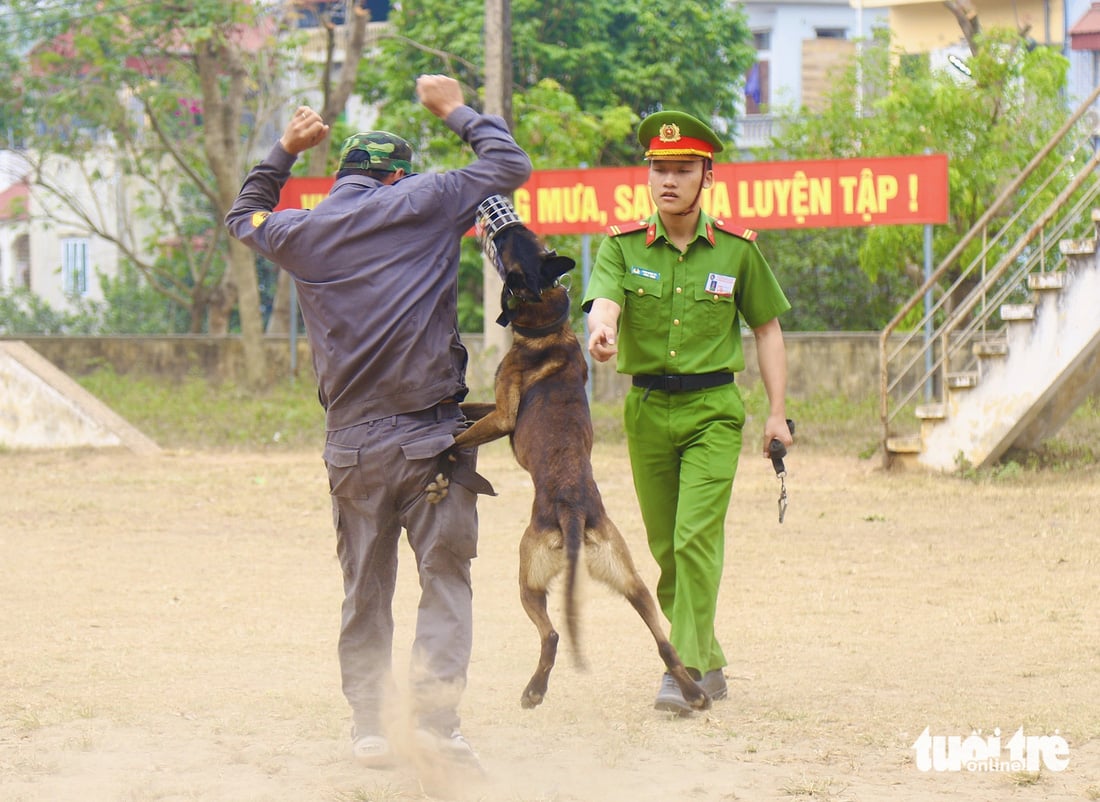
Officers and soldiers train working dogs on the training ground - Photo: DANH TRỌNG
On a winter morning, the northeast monsoon wind accompanied by drizzle made the atmosphere at the Training and Utilization Center for Service Animals (under the Mobile Police Command, Ministry of Public Security ) even colder.
At 5 a.m., Lieutenant Nguyen Hoang Quan (31 years old, from Vinh Phuc province) wakes up, freshens up, puts on his military uniform, and quickly brings food to Max's kennel – the police dog he is caring for and training. He and his "four-legged friend" prepare together for a long day of training.
From fear to love of working dogs
First Lieutenant Nguyen Hoang Quan is an officer in the Service Animal Team, specializing in explosive detection. He began training and using service dogs in early 2021.
The 27-year-old police officer had never worked with police dogs before. He recalled being bitten by a dog as a child, which left him "tragic and very scared."
The first working dog he was assigned was a German Shepherd, black and tan, weighing 40kg, named Tom. According to regulations, each soldier was assigned one dog to care for, train, and perform duties with until the dog "ended its life."
On the first day he received the dog, Tom was aggressive, often growling and barking loudly when his owner approached. Tom's ferocious appearance and foul smell made the young officer "frown with apprehension." But the mission required soldiers, regardless of whether the dog was aggressive or docile, to get used to it within two days of receiving it.
Based on his experience, Quân initially starved Tôm. He then bought pork and liver, boiled them, brought them to the kennel, stood nearby, and softly called out, "Tôm, Tôm…" to build rapport. He gradually fed the dog small pieces of meat.
On the second day, Tom sensed the genuine affection from his owner. The animal became familiar with his scent and voice, wagging its tail and lying down in a friendly manner. In the following days, whenever it saw Quan, Tom would happily jump up, hug his shoulders and neck, and lick his cheeks repeatedly.
Besides feeding and bathing him, in his free time Quân often takes Tôm for walks around the training center to "nurture their friendship".
"Building a close relationship with a working dog is not easy; it's a meticulous process. The more impatient the owner is to befriend the dog, the more aggressive and wary it becomes, sometimes leading to unexpected attacks," Lieutenant Quân shared.
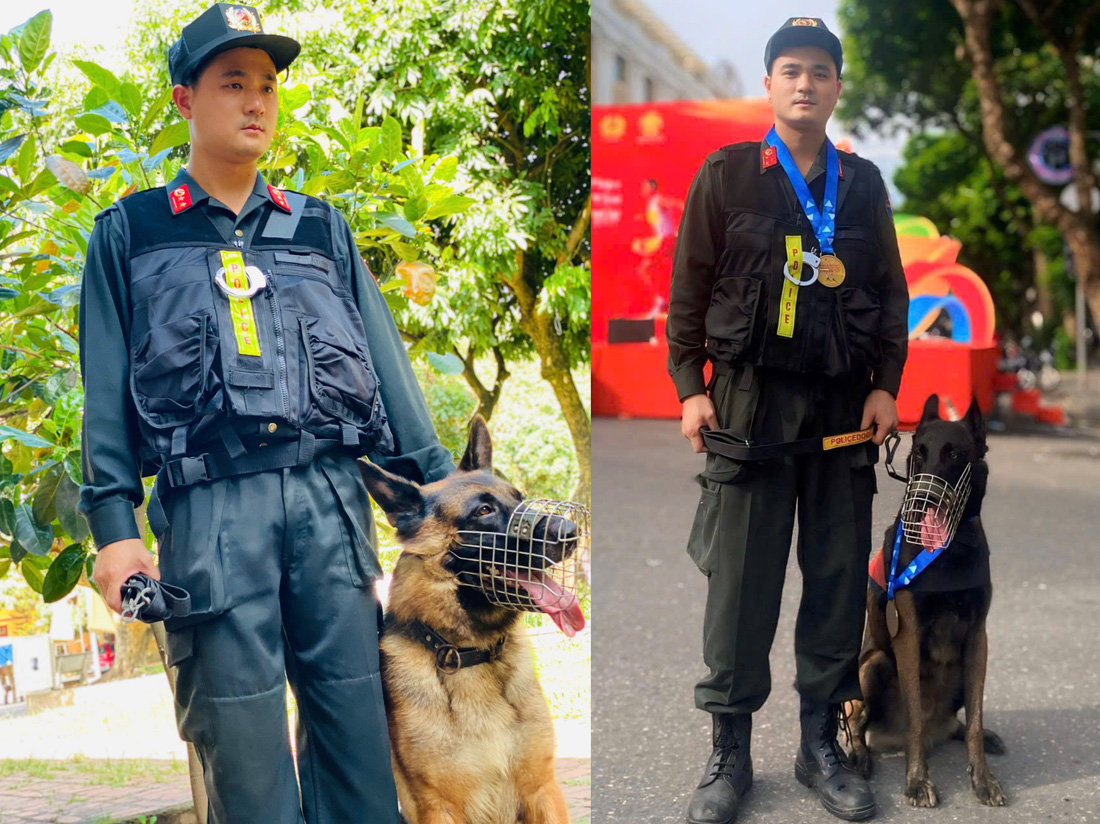
First Lieutenant Nguyen Hoang Quan with his two police dogs, Tom (left) and Max - Photo: Provided by the interviewee.
Treat working dogs like family.
In the early stages of training, Tom was sometimes "slow to understand." Many movements were taught repeatedly for months without him being able to do them, making him feel exhausted and stressed. Quan lost 3kg after many sleepless nights of worry.
Lieutenant Quân recalled that around this time, his wife gave birth to their first child back home. Due to the COVID-19 pandemic and his duties training working dogs, he was unable to return home to visit his wife and child.
During his time at the training center, he would often wake up early to take Tom to the training ground, using various methods and techniques to train him. Tom seemed to understand his owner's feelings, and therefore focused on completing the training exercises better.
After six months of effort, Tom became a "soldier" with all the necessary qualities and combat skills. Tom naturally followed his owner on missions.
"Each working dog has its own temperament, so the process of approaching, training, and using them requires methodical skills, creativity, perseverance, and patience. The soldier must build closeness and trust, treating the dog like a close friend to successfully train it," Lieutenant Quân said.
In the autumn of 2023, the weather turned humid and damp. Tom showed signs of losing his appetite and reduced enthusiasm during training and missions.
The shrimp are getting sick.
Officer Quân worried day and night, caring for Tôm as if he were family. He frequently stayed by the kennel, monitoring the situation, buying extra milk, and cooking porridge for the dog. His unit was several tens of kilometers from home, but he still stayed to care for the dog on his days off.
To this day, Lieutenant Quân still vividly remembers the moment Tôm, with teary eyes, looked up at him for the last time. Gently stroking the dog's head, he sobbed as he bid farewell to his "four-legged friend." Tôm had "completed his life" as a "special soldier."
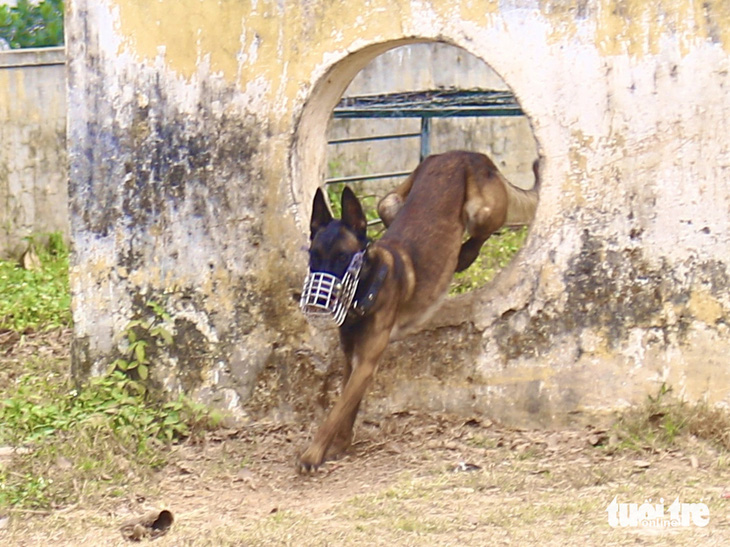
The basic daily exercises of a working dog - Photo: DANH TRỌNG
"If you don't love animals, it's hard to stick with both dogs and the profession."
After the shock of losing Tom, Lieutenant Quân is now accompanied by Max, a Belgian Malinois dog weighing over 30kg. He describes Max as "playful and adventurous , but very careful and responsible when working."
He grew increasingly fond of his new friend because "he's intelligent, quick-witted, and always gets good marks on difficult exercises." Max was always ready to plunge into rubble, dangerous areas… to perform his duties.
On the training ground in mid-December, Lieutenant Quan practiced hiding explosive samples in a car, only retrieving them after several days. However, when he was about 30-40 meters away, he gave a signal, pointing towards the car, and in an instant, Max found the explosive sample.
Max and he participated in and successfully completed tasks such as ensuring the safety of events: the visit of Chinese President and General Secretary Xi Jinping to Vietnam; the visit of Russian President Vladimir Putin to Vietnam…
According to Lieutenant Quan, to train a good working dog, a soldier must not only have professional skills but also love animals, be patient, and be responsible. When training dogs, their clothes and hair always carry the distinctive smell of dogs. "Without loving animals, police officers find it difficult to bond with working dogs and their profession."
After four years of training and using working dogs, Lieutenant Quân is now not only unafraid of them but also cherishes them as "close friends."
On December 15, 1959, the first training course for officers in training and using working dogs in Vietnam commenced with 44 students.
Throughout 65 years of development, combat, and growth (December 15, 1959 - December 15, 2024), the Center for Training and Utilizing Service Animals has always been a specialized professional unit making a significant contribution to the fight against crime and ensuring national security.
The center has been awarded many prestigious prizes and medals by the Party, the State, and the leaders of the Ministry of Public Security.
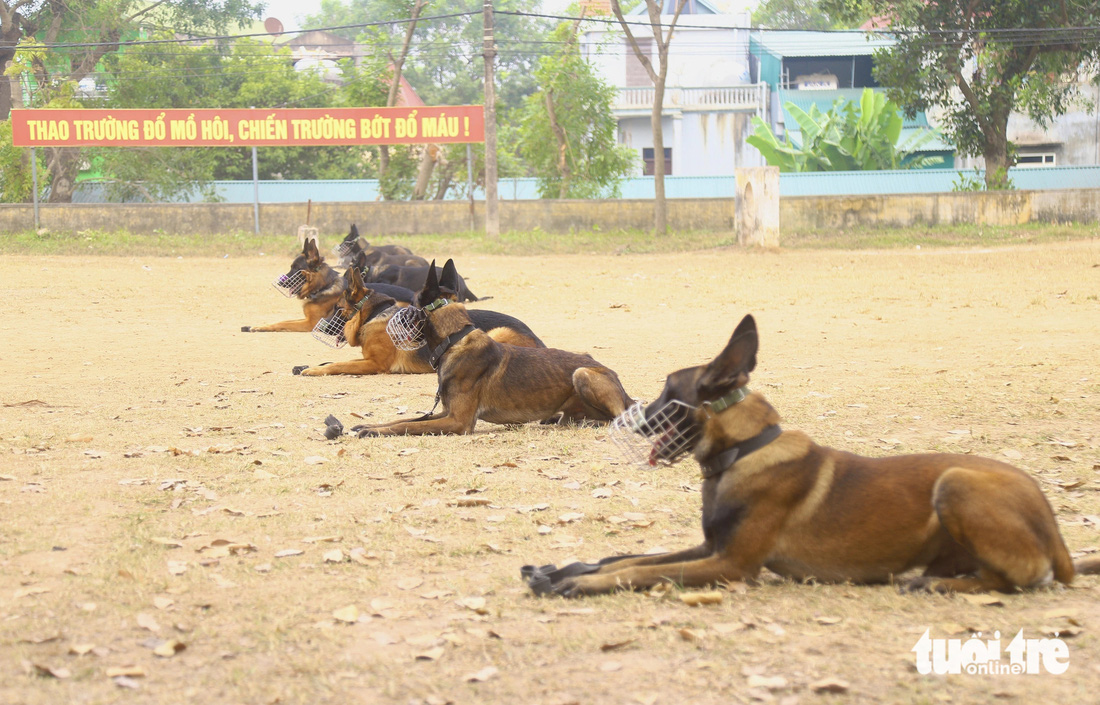
The main dog breeds used for training are German Shepherds, Belgian Shepherds, Spanish Cocker Spaniels, British Rottweilers and Labradors - Photo: DANH TRONG
Police training service dogs - Photo: DANH TRỌNG
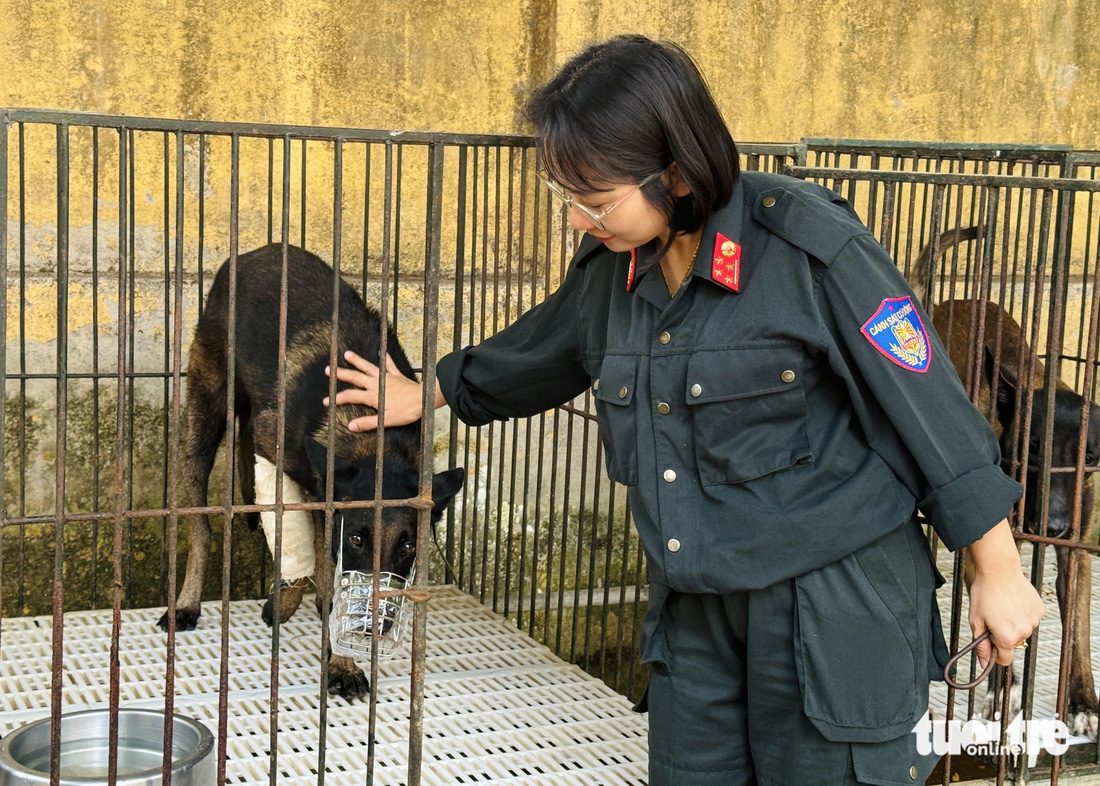
A working dog broke its leg during training - Photo: DANH TRỌNG
Source: https://tuoitre.vn/tinh-ban-dac-biet-giua-si-quan-canh-sat-va-chu-cho-nghiep-vu-2024121423245849.htm























































































Comment (0)