

According to statistics from the Vietnam Department of Seas and Islands, based on annual local reports, there are an average of 3-5 oil spills per year. The estimated amount of oil discharged into the sea in Vietnam reaches 41,000 tons per year. Monitoring in several sea areas shows that the polluted seawater contains oil, iron, zinc, organic matter, etc. This is one of the causes of serious marine environmental pollution, severely affecting the ecosystem, aquaculture, tourism , and other activities.
Working together to overcome
Oil spills are transboundary in nature, not just a problem for one locality or country, but require the responsibility and joint efforts of all relevant localities and nations. Therefore, international cooperation is essential to enhance the capacity to respond to and mitigate the consequences of oil spills.
In 2006, through the PEMSEA organization, Vietnam, Thailand, and Cambodia signed a Joint Declaration and Framework Program on cooperation in oil spill preparedness in the Gulf of Thailand. On August 14, 2009, the Prime Minister issued Decision No. 1278/QD-TTg approving the Plan for implementing the Joint Declaration and Framework Program between Vietnam, Cambodia, and Thailand on cooperation in oil spill preparedness in the Gulf of Thailand.
For the next 10 years, the Vietnamese Government issued Prime Minister's Decision No. 1278/QD-TTg approving the Plan for implementing the Joint Declaration and Framework Program between Vietnam, Cambodia, and Thailand on cooperation in oil spill response in the Gulf of Thailand, along with a series of cooperation action plans.
Simultaneously, focal units were assigned to implement the Joint Declaration and framework program, such as establishing a coordinated response mechanism – the National Oil Spill Response Center (NOSPC) – in the three countries. In Vietnam, the National Search and Rescue Committee is the agency directing and implementing oil spill response activities. The Ministry of Natural Resources and Environment is the national focal agency for implementing the Joint Declaration and framework program.
And Vietnam's efforts
With the signing, cooperation, and implementation of tasks, the work of addressing oil spills in the Gulf of Thailand has recorded many positive results. Regarding training, drills, exercises, and public awareness campaigns: The National Search and Rescue Committee and the Southern Oil Spill Response Center of the Vietnam Oil and Gas Group have organized training on coordination in responding to oil spills at sea according to the provisions of the Framework Program and the Joint Declaration. In particular, the National Search and Rescue Committee and the Ministry of Natural Resources and Environment have organized training courses to raise awareness among local officials about oil spill response activities; the General Department of Seas and Islands has implemented the project "Raising public awareness on environmental protection, response, and remediation of oil spills at sea" in all 28 coastal provinces and cities.
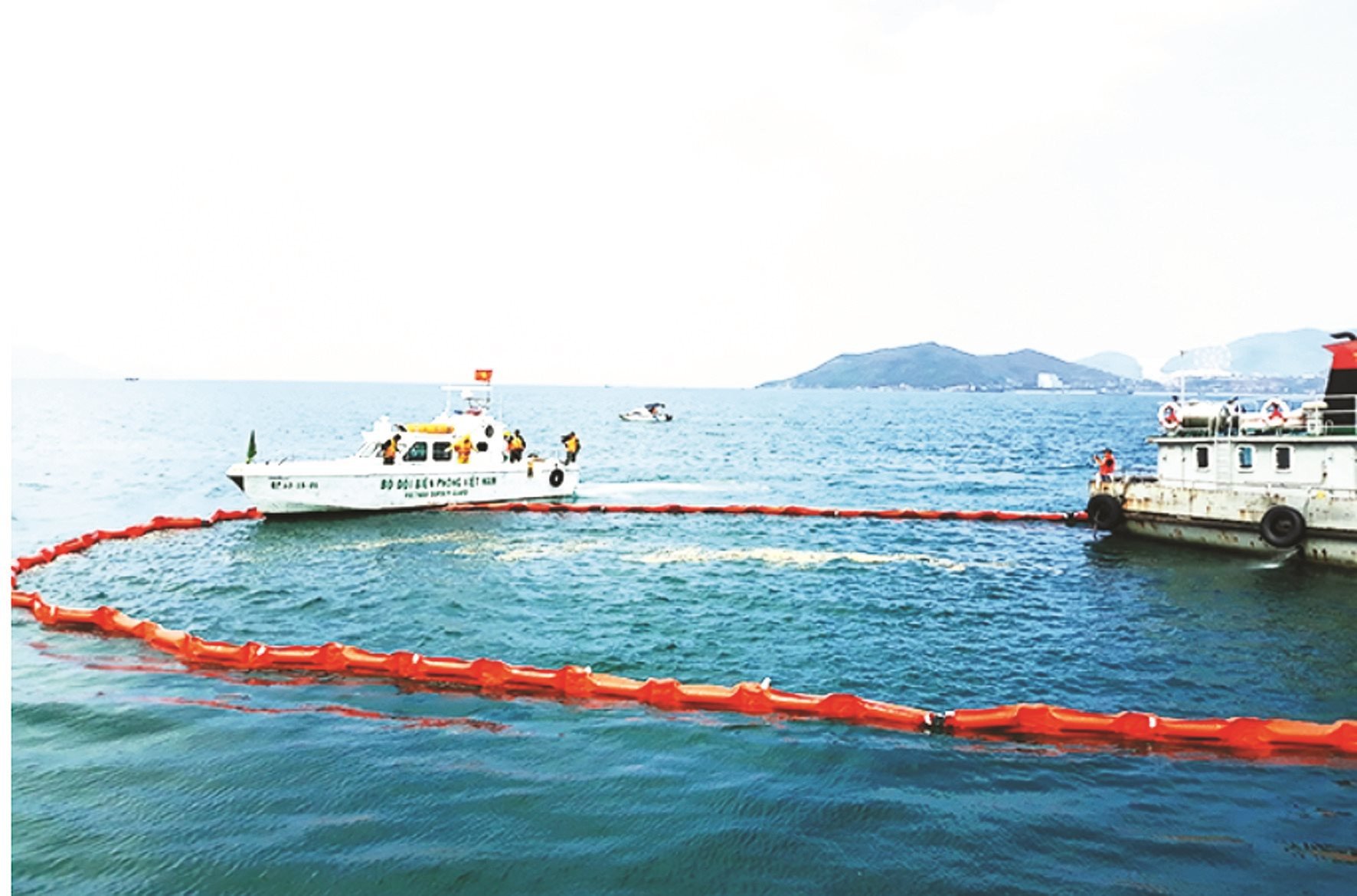
Regarding international cooperation in preventing, responding to, and mitigating oil spills: Annual conferences of the national focal agencies of Vietnam, Thailand, and Cambodia are held, with each country taking turns as the host. These conferences have contributed to the improvement of the legal framework for monitoring, risk assessment, response, remediation, and addressing the consequences of oil spills at sea.
Specifically, with Decision No. 12/2021/QD-TTg dated March 24, 2021, Vietnam issued regulations on oil spill response activities; a national oil spill response plan; a list of dispersants permitted for use in Vietnamese waters; and guidance on the process of using dispersants in responding to oil spills at sea. This forms the basis for discussion and agreement on the joint oil spill response plan for the Gulf of Thailand region, which had been developed but remained unresolved for many years. Most recently, the annual conference on the Joint Declaration and Framework Program for cooperation on oil spill preparedness in the Gulf of Thailand region and a series of related activities on oil spill handling in the area as stipulated in the Joint Declaration and Framework Program between the three countries took place.
In particular, with the implementation of components in the Joint Declaration and Framework Program and the fulfillment of the task of "International cooperation with Cambodia, Thailand and relevant international organizations and individuals in the preparation, response, remediation and resolution of oil spills at sea"; and the fulfillment of tasks assigned by the Ministry of Natural Resources and Environment, the Vietnam Department of Seas and Islands has contributed to affirming the important position and role of the Ministry of Natural Resources and Environment in general and the Vietnam Department of Seas and Islands in particular in actively participating in the implementation and concretization of the Joint Declaration and Framework Program on cooperation in oil spill preparedness in the Gulf of Thailand that has been signed.
The implementation of this task also serves as a basis for regular evaluation, learning from experience, and proposing methods of cooperation among countries in preparing for and responding to oil spills in the most effective way, contributing to the protection of the marine environment; the results of the task will serve as documentation for international cooperation in the preparation, response, remediation, and resolution of the consequences of oil spills at sea.
Source



![[Image] Vietnam's colorful journey of innovation](/_next/image?url=https%3A%2F%2Fvphoto.vietnam.vn%2Fthumb%2F1200x675%2Fvietnam%2Fresource%2FIMAGE%2F2025%2F12%2F14%2F1765703036409_image-1.jpeg&w=3840&q=75)


























































![[Image] Vietnam's colorful journey of innovation](https://vphoto.vietnam.vn/thumb/402x226/vietnam/resource/IMAGE/2025/12/14/1765703036409_image-1.jpeg)






















Comment (0)