

 |
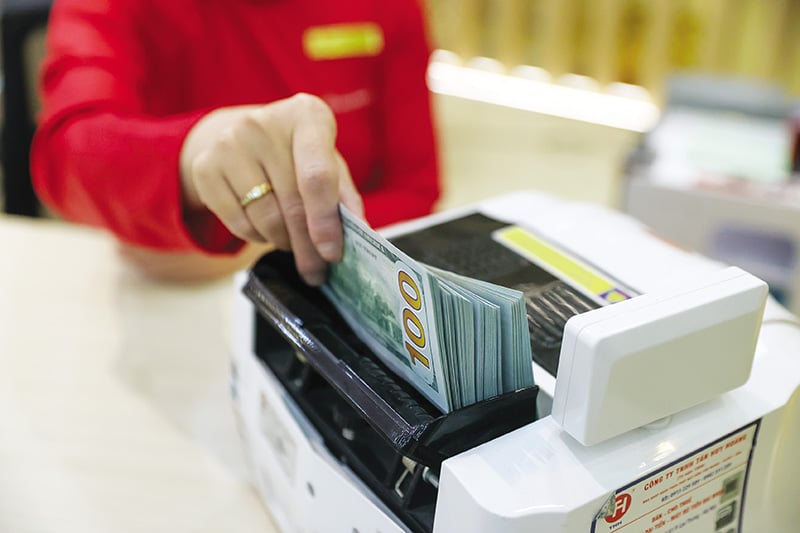
| Businesses need to proactively develop plans to respond to exchange rate fluctuations. Photo: Duc Thanh |
Exchange rates remained unchanged for the first three months of the year.
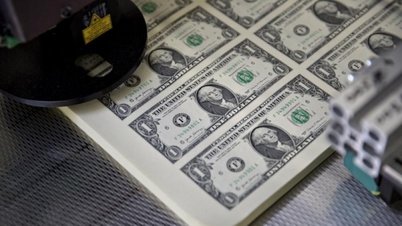
As of the end of last week, the domestic selling rate of VND/USD had only increased by about 0.6% compared to the beginning of the year. Compared to the global trend of the USD (which decreased by 4.8% since the beginning of the year), the domestic exchange rate has cooled down somewhat more slowly. However, given recent interest rate developments, keeping the exchange rate stable for the first three months of the year represents a significant effort by the central bank.
According to Dr. Can Van Luc, Chief Economist of BIDV , in 2025, the exchange rate will be supported by a trade surplus of approximately 20-25 billion USD, a 18% increase in realized foreign investment, and stable remittance growth. Therefore, the exchange rate this year will only increase by about 3%, instead of nearly 5% in 2024.
“Last year, the VND depreciated by nearly 5% mainly due to the strong appreciation of the USD in the international market, but this year the situation is different. Risks related to trade policies and tariffs have slowed down US consumption, and US macroeconomic indicators have weakened… leading to a decrease in the USD Index. In addition, this year, the US Federal Reserve (Fed) is likely to cut interest rates two more times. The domestic exchange rate this year is basically not under much pressure, and will only increase by about 3-4% for the whole year,” Dr. Luc commented.
According to analysts, the USD continues to weaken due to uncertainties related to China's growth and US tariff policies. In addition, the strong growth prospects of the Vietnamese economy and the government's commitment to maintaining exchange rate stability are also dampening expectations regarding the exchange rate.
Nevertheless, experts still recommend that businesses proactively develop plans to cope with exchange rate fluctuations. According to Mr. Dinh Duc Quang, Director of Currency Trading at UOB Vietnam, businesses should develop a tight cash flow management plan, including the judicious use of tools to hedge against exchange rate and interest rate risks, in order to minimize investment and business costs.
Support liquidity, and prevent interest rate cuts from putting pressure on the exchange rate.
To support the economic growth target of 8% or more this year, the State Bank of Vietnam is directing the banking sector to reduce lending interest rates while expanding credit more than last year. Normally, when interest rates fall, the exchange rate is put upward pressure on the exchange rate. However, recently, the exchange rate has remained stable, despite continuously declining interest rates.
- Mr. Le Duy Binh, CEO of Economica
 In 2025, the domestic exchange rate will remain under significant pressure. The Fed's interest rate reduction trajectory may be slower than expected (likely only two cuts). Lowering interest rates to support domestic growth also puts pressure on inflation. The risk of exports being affected by US tariff policies means a less substantial trade surplus than anticipated, resulting in a decrease in foreign currency supply. A slower economic recovery could impact investment flows and remittances to Vietnam…
Nevertheless, Vietnam's growth prospects this year are very bright thanks to the government's determination, especially the growth of the export sector and the foreign investment sector. In addition, the State Bank of Vietnam has also demonstrated its determination to maintain exchange rate stability. Therefore, I believe that exchange rate fluctuations this year will not be as significant as last year.

Associate Professor Dr. Nguyen Huu Huan (Ho Chi Minh City University of Economics) believes that this situation occurred because the State Bank of Vietnam had undertaken many activities to support liquidity in the open market, thereby neutralizing pressure on the exchange rate.
In fact, since March 5th, the State Bank of Vietnam (SBV) has stopped withdrawing money from the treasury bill market. Instead, the SBV has shifted to injecting more liquidity into the system, with longer maturities (up to 3 months), in order to provide a stable source of capital for commercial banks. This has caused VND interest rates to fall, but the exchange rate has not faced pressure.
Another reason why the exchange rate is not under pressure is that interbank interest rates remain high, despite the State Bank of Vietnam's net injection of funds. As of the end of last week (March 14th), the overnight interbank lending rate was 4.3%. Thus, VND and USD interest rates are approximately equal, preventing credit institutions from speculating on foreign currency.
According to Deputy Governor of the State Bank of Vietnam, Dao Minh Tu, the State Bank will soon implement additional measures to help the Big 4 banks reduce costs, thereby further cutting interest rates. Currently, this group holds nearly 50% of the deposit and lending market share; once the Big 4 significantly reduce interest rates, the overall market interest rate level will decrease accordingly.
Regarding exchange rates, Deputy Governor Dao Minh Tu affirmed that this year, with existing resources (current foreign exchange reserves and optimistic prospects for exports, foreign investment, and remittances), the State Bank of Vietnam is confident in maintaining exchange rate stability. Therefore, people should not hoard or speculate on foreign currency. "There's no need to keep foreign currency at home or in accounts; feel free to sell it to the bank," the Deputy Governor advised.
Although the exchange rate is being guaranteed by the authorities and supported by several factors, experts still warn of risks if Vietnam is considered by the US as a transit point for goods from other countries and is subject to high tariffs. Therefore, Vietnam should be cautious with its temporary import and re-export policies, and actively diversify its markets to avoid tariff risks.


![[Photo] General Secretary and President To Lam meets with National Assembly delegates from ethnic minorities.](https://vphoto.vietnam.vn/thumb/1200x675/vietnam/resource/IMAGE/2026/04/20/1776696701056_a1-bnd-8331-3342-jpg.webp)

![[Image] National Assembly discusses the implementation of the socio-economic development plan.](https://vphoto.vietnam.vn/thumb/1200x675/vietnam/resource/IMAGE/2026/04/20/1776696707422_ndo_br_img-20260420-185419-jpg.webp)












































































Comment (0)