

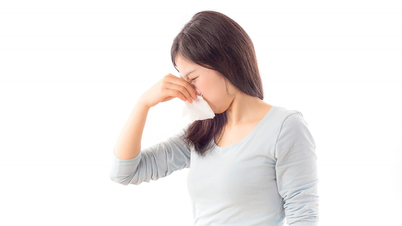
Hot, dry air can cause blood vessels to rupture, leading to nosebleeds, also known as epistaxis; this is especially true for people with weakened immune systems, such as the elderly, young children, and those with sinusitis.
Nosebleeds are a common condition, most cases are mild and can be managed at home. Associate Professor Pham Thi Bich Dao, Department of Otolaryngology, Hanoi Medical University Hospital, explains that hot, dry air from the weather, heaters, air-conditioned rooms, and stoves draws moisture out of the nasal mucosa. Small cracks form in the mucosa, causing itching and discomfort, leading to bleeding. Nosebleeds are more common in winter, due to the proliferation of viruses and bacteria, which weaken the immune system.
In the summer, swimmers may experience allergic reactions to pool cleaning chemicals, leading to irritation, congestion, and nosebleeds. Older adults with hypertension may experience a sudden increase in blood pressure when in air-conditioned rooms. The temperature difference between the indoor and outdoor environments can also easily rupture blood vessels in the nose, causing bleeding.
According to Dr. Dao, most nosebleeds only last a few minutes. The recommended course of action is to sit up, lean slightly forward, and gently pinch the sides of the nose together for 3-5 minutes. If the bleeding continues, repeat the process but hold for longer, starting with 5 minutes. If this doesn't work, try again after 10 minutes. You can also place some ice on the bridge of the nose to constrict blood vessels and reduce blood flow.
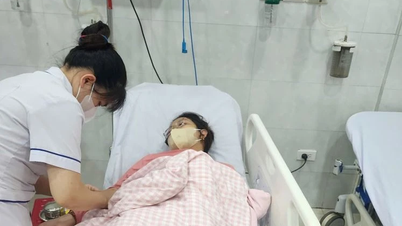
If the bleeding doesn't stop even after squeezing the nostrils three times, the patient should be taken to a medical facility. Absolutely do not blow your nose forcefully or stuff cotton into your nose.
To prevent the disease, it is necessary to keep the house clean and well-ventilated; limit going outdoors during peak hours of hot sun (from 11 am to 2 pm). When going outside, protect yourself with sun-protective clothing, sunglasses, and a hat to minimize sun exposure. Limit alcohol consumption, as it irritates the capillaries in the nasal mucosa.
For children, to prevent nosebleeds, they should drink plenty of water and fruit juice. They should avoid strenuous activity in sunny weather, playing outdoors in the sun, and going barefoot. They should increase their intake of cooling green vegetables and limit spicy and hot foods. Elderly people should avoid excessive sun exposure and should rest.
Frequent nosebleeds that don't improve with home treatment should prompt an ENT (Ear, Nose, and Throat) examination to rule out other serious conditions such as cancer, maxillofacial trauma, and sinusitis.
Minh An
Source link
![[Image] Vietnam's colorful journey of innovation](/_next/image?url=https%3A%2F%2Fvphoto.vietnam.vn%2Fthumb%2F1200x675%2Fvietnam%2Fresource%2FIMAGE%2F2025%2F12%2F14%2F1765703036409_image-1.jpeg&w=3840&q=75)























































![[Image] Vietnam's colorful journey of innovation](https://vphoto.vietnam.vn/thumb/402x226/vietnam/resource/IMAGE/2025/12/14/1765703036409_image-1.jpeg)





























Comment (0)