Final episode:
Along with protecting aquatic resources, localities are tightening management of vessels at ports, raising awareness among fishermen, and strengthening control to prevent IUU (Illegal, Unreported, and Unregulated) fishing... This is not only an immediate requirement to lift the "yellow card" warning, but also a condition for building and developing a sustainable and responsible marine industry.
Tighten controls at the port.
Early in the morning at Dong Tac fishing port (Phu Yen ward), boats line up on the pier, preparing to set sail for fishing. Amidst the hustle and bustle before departure, officers and soldiers of the Da Rang Border Guard Control Station diligently check vessel tracking devices (VMS), verify fishing licenses, register crew members and laborers, and remind fishermen to keep their logbooks. All control procedures are carried out seriously and efficiently, ensuring both safety and compliance with regulations.
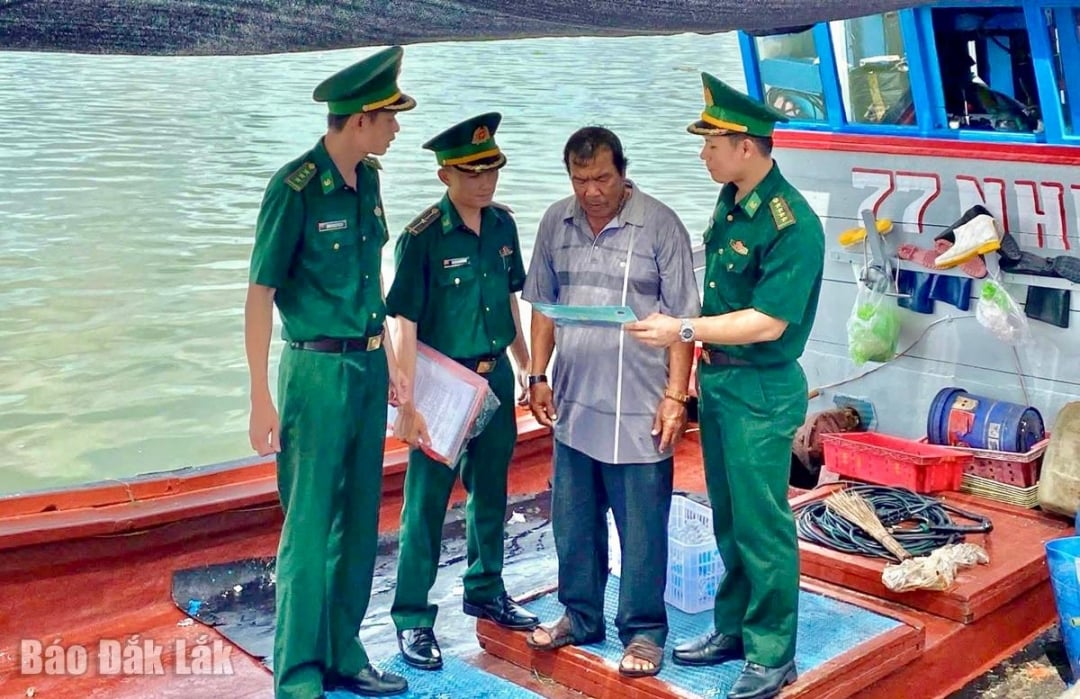 |
| Officers from the Tuy Hoa Border Guard Station are disseminating information about regulations against illegal fishing to fishermen. |
Lieutenant Phan Ngoc Duong, Head of the Da Rang Border Guard Control Station, said: "To prevent illegal, unreported, and unregulated (IUU) fishing, station officers not only educate and encourage ship owners and captains to comply with the law but also require them to sign commitments not to violate foreign waters. The station also strictly manages crew members and fishing vessels before they enter and leave ports, ensuring that fishing vessels have complete documentation and safety equipment as required."
Along with the efforts of the authorities, the fishermen themselves are also aware of their responsibilities on each fishing trip. Mr. Mai Van Tam, a fisherman from Tuy Hoa ward, shared: “Complying with regulations against IUU fishing not only protects the reputation of Vietnam's fisheries but also protects the livelihoods and rights of millions of workers in the industry. Therefore, every time we go out to sea, we are aware that we must be responsible fishermen who respect the law.”
"Removing the European Commission's 'yellow card' from Vietnamese fisheries is one of the province's most important and urgent tasks. If not effectively implemented, this issue will directly impact the province's overall growth, people's livelihoods, and social stability." Vice Chairman of the Provincial People's Committee Nguyen Thien Van |



The tuna fishing industry in Dak Lak province began in the early 1990s, making it one of the earliest origins of this industry in Vietnam. Tuy Hoa ward alone currently has 340 vessels with 1,782 workers operating in fishing grounds bordering the Philippines , Malaysia, and Indonesia – areas classified as high-risk for IUU (Illegal, Unreported, and Unregulated) fishing. Playing a key role in combating IUU fishing, since the beginning of the year, the Tuy Hoa Border Guard Station has reached out to over 7,200 fishermen, guided over 1,400 vessel owners and captains to sign commitments to comply with the law, and reminded over 1,100 vessels operating near the maritime boundary to maintain their vessel tracking devices.
Captain Nguyen Minh Hoang, Deputy Political Officer of Tuy Hoa Border Guard Station, informed: "In addition to disseminating information and encouraging fishermen to comply with the law, monitoring fishing vessels through tracking devices, checking licenses and safety equipment, we also organize patrols to detect and handle violations according to regulations. Furthermore, more than 600 captains and vessel owners have received direct education on regulations against IUU fishing, avoiding prohibited fishing activities, and protecting sustainable fisheries."
Working together to lift the IUU "yellow card"
On October 23, 2017, the European Union (EU) officially issued a "yellow card" warning to Vietnamese seafood, citing numerous violations related to IUU (Illegal, Unreported, and Unregulated) fishing practices. This created a major challenge for the country's fisheries sector, especially since the EU is one of its important export markets. Removing the "yellow card" requires decisive, coordinated, and persistent efforts from the entire political system, relevant agencies, and individual fishermen.
Currently, the province has 4 fishing ports and 11 traditional wharves. This is a great advantage for developing the marine economy but also a challenge in management. Lieutenant Colonel Do Trong Dai, Deputy Chief of Staff of the Dak Lak Border Guard Command, affirmed that combating IUU (Illegal, Unreported, and Unregulated) fishing still faces many difficulties. A segment of fishermen have a habit of departing from shallow waters, mainly going on short trips, leading to lax control. Meanwhile, the border guard force is thin, patrol vehicles are limited, and the budget for maintaining control activities is insufficient. Coordination with other sectors and localities is also not regular, mainly focusing on peak periods, so the effectiveness is not uniform.
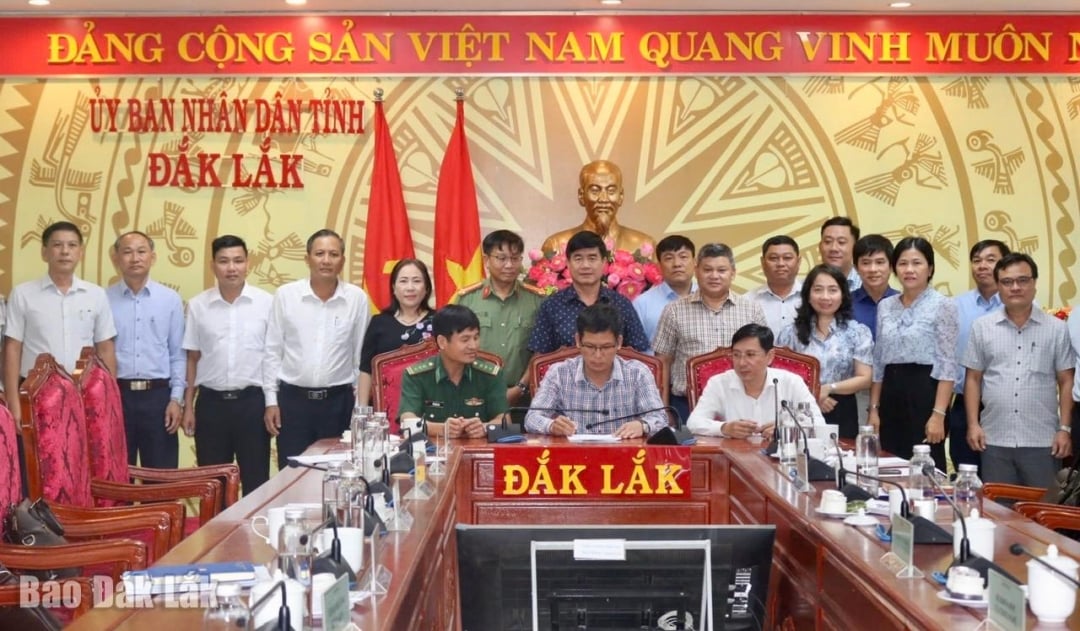 |
| Local authorities and units signed commitments to combat IUU fishing in the presence of provincial leaders and relevant departments and agencies. |
This reality shows that the efforts of the border guard alone are not enough. Effective management requires the joint efforts of specialized management agencies, the authorities of coastal communes and wards, and the awareness of each individual fisherman. Chairman of the Tuy An Dong Commune People's Committee, Tran Van Bien, stated: The commune has nearly 100 fishing vessels, of which about two-thirds operate in offshore waters. For many years, there have been no cases of illegal fishing in foreign waters in the area. To raise awareness among fishermen, the local authorities have implemented many solutions, focusing on propaganda, guidance, and support for fishermen to complete the required procedures. Recently, the local government organized a signing ceremony for fishermen, especially those with vessels at risk of violating IUU (Illegal, Unreported, and Unregulated) fishing regulations, to commit to combating IUU fishing…
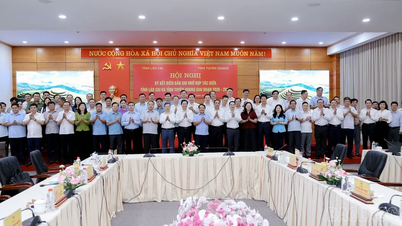
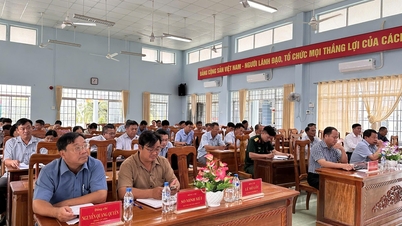
Clearly, relying solely on the individual efforts of each force will not bring about fundamental change. Therefore, unified leadership from the provincial government is considered the "key" to linking responsibilities and compelling each sector and locality to participate synchronously. At a recent meeting with representatives from various departments and 12 coastal communes and wards, Vice Chairman of the Provincial People's Committee Nguyen Thien Van demanded decisive and coordinated action from all levels; he urged heads of departments and agencies, and leaders of communes and wards to uphold their responsibilities, play their leading roles, and directly lead the fight against IUU fishing according to the motto "going to every street, knocking on every door, and reaching every fishing boat."
The Vice Chairman of the Provincial People's Committee emphasized: "Inspection and handling work should focus on clear violations such as: vessels not registered, not equipped with vessel tracking systems (VMS), not updating fishing data, or encroaching on foreign waters; strict management must be maintained from the shore and at the grassroots level, preventing any laxity in management. Local leaders at the commune and ward levels must bear direct responsibility if violations occur within their jurisdiction…".
More than ever, the concerted efforts of management forces, local authorities, and the fishermen themselves are crucial. If every boat owner and captain understands that violations not only bring short-term benefits but also hinder overall development, then the effort to lift the "yellow card" will soon yield results. And then, not only will the reputation of Vietnamese fisheries be restored, but the local marine economy will also develop sustainably, creating stable and long-term livelihoods for fishermen.



In the first six months of the year, the rate of fishing vessels granted licenses and technical safety certificates reached nearly 60%. The Fisheries and Marine Affairs Department also intensified the re-issuance of documents, ensuring the legality of fishermen participating in fishing activities. Legal awareness campaigns were conducted continuously through various forms such as distributing leaflets, broadcasting information on coastal radio systems, and directly disseminating information at ports and wharves, helping fishermen better understand the consequences of violating IUU regulations… |
Source: https://baodaklak.vn/kinh-te/202509/vuon-khoi-cung-to-quoc-ky-cuoi-8f125a6/