

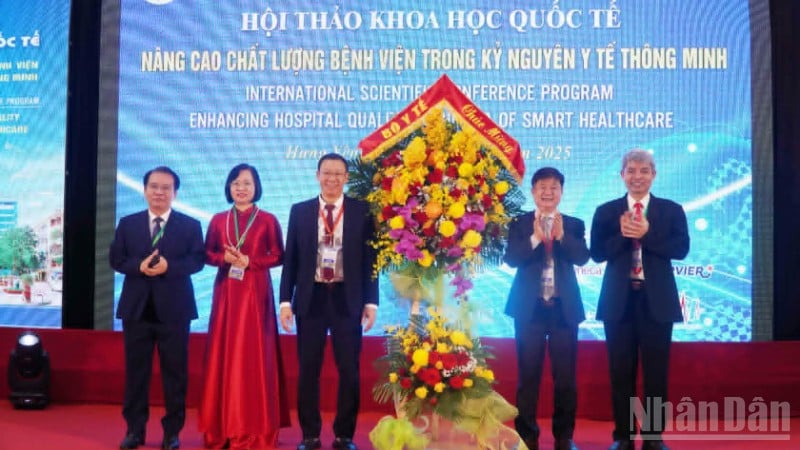
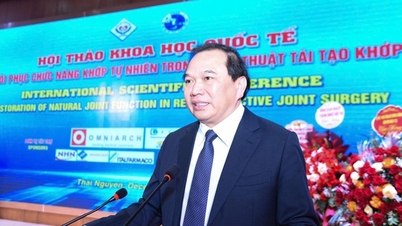
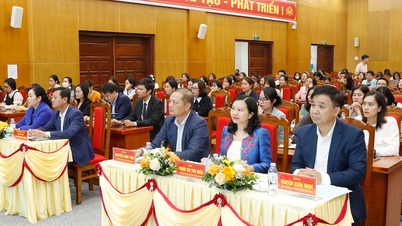
In his opening remarks, Distinguished Physician, Specialist Doctor II Ha Trung Kien, Director of the Hospital, emphasized: The international scientific conference is taking place in the context of rapidly developing digital technology. The groundbreaking advancements in artificial intelligence, big data, intelligent connected systems, and digital healthcare are profoundly transforming all aspects of social life.
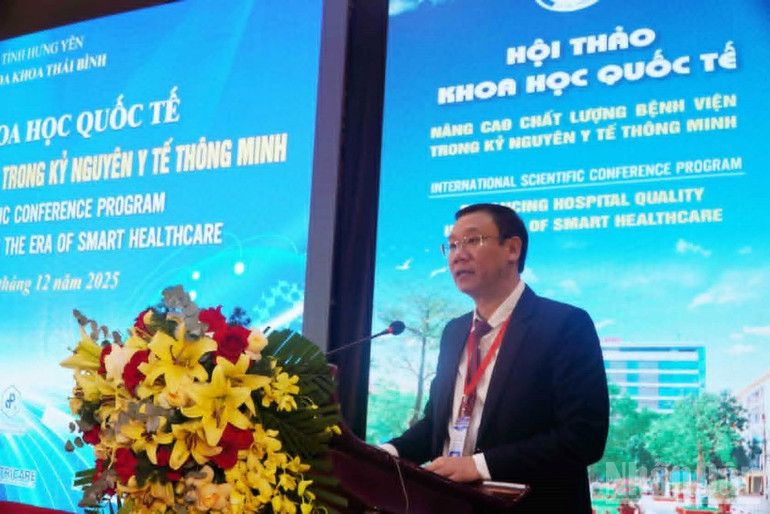
The healthcare sector, with its strong demand for innovation, is also strongly embracing this trend to improve the quality of medical examination and treatment; enhance patient safety; and optimize the operations of healthcare facilities.
The core objective of the Conference is to create a prestigious scientific forum to propose strategic solutions and specific action directions, revolving around two main pillars: Smart Healthcare - Electronic Medical Records - Application of Artificial Intelligence in Diagnosis and Treatment, and Hospital Quality Standards - Patient Safety.
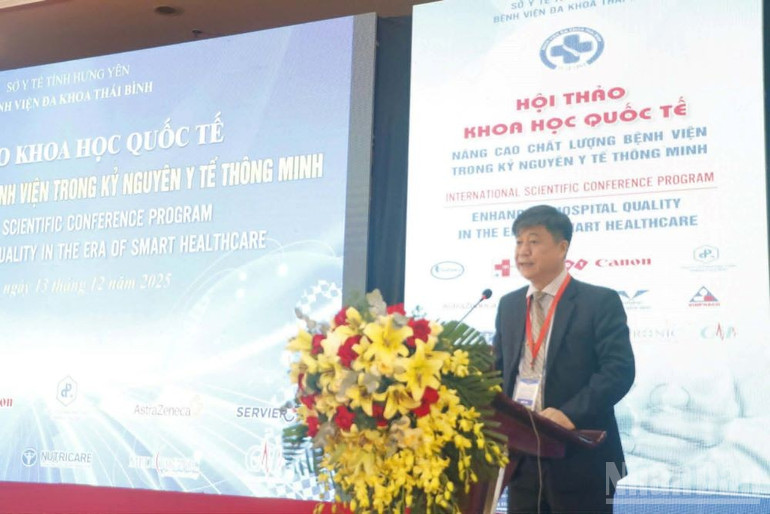
At the conference, Mr. Dinh Anh Tuan, Director of the Department of Maternal and Child Health (Ministry of Health), affirmed: “Smart healthcare is becoming a pillar of the modern healthcare system. According to the World Health Organization (WHO), more than 70% of countries have national digital transformation strategies for healthcare. In fact, digital transformation in healthcare contributes to reducing the overload on the healthcare system by 15-20%, thereby monitoring professional errors and optimizing hospital management, while increasing the accessibility of remote healthcare services.”
In Vietnam, the development of smart healthcare and digital healthcare has initially achieved certain results. Currently, about 1,200 medical facilities participate in electronic medical records, reaching nearly 70% of the national target; nearly 32 million health records have been created, accounting for one-third of the national population.
Furthermore, healthcare facilities are implementing the interoperability of paraclinical and clinical test results. Simultaneously, hospital management platforms, cashless payment systems, and healthcare data connectivity and sharing systems are beginning to prove effective, forming an increasingly complete digital healthcare ecosystem.

Around the theme of "Improving hospital quality in the era of smart healthcare," Dr. Phan Thi Ngoc Linh, Director of the Center for Healthcare Innovation Research (CHIR), shared many practical experiences at Johns Hopkins University Hospital (USA) regarding specialized patient safety.
Accordingly, hospitals need to create a safety system to protect patients and healthcare workers through steps such as: on-the-job training for staff, establishing best practices, analyzing the current work environment, and continuously improving practices through trial cycles.
On the other hand, standard patient care, regular skills assessment, patient cooperation and education, cross-checking of high-risk procedures, risk identification, and misreporting are crucial.
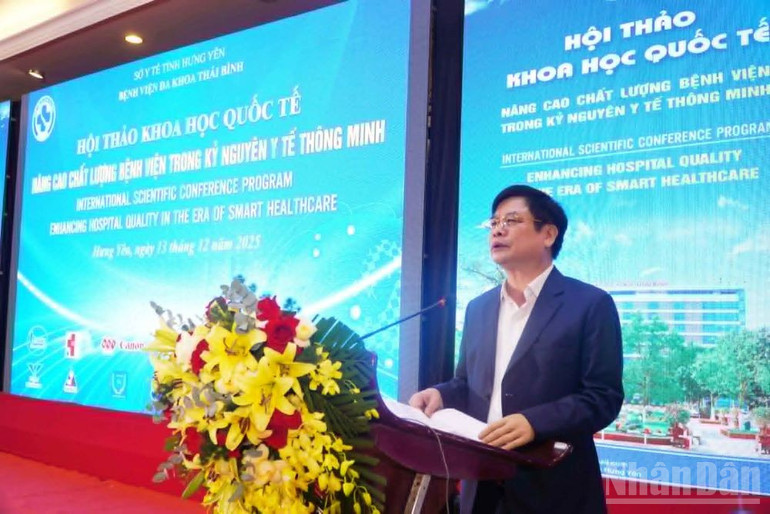
Speaking at the international scientific conference, Vice Chairman of the People's Committee of Hung Yen province Pham Van Nghiem highly appreciated the proactive approach of Thai Binh General Hospital in choosing a very practical and effective topic.
The presentations by leading experts from both within and outside the country have helped the healthcare sector in general, and hospitals in particular, to quickly access new knowledge, best practices, and highly feasible solutions to improve hospital quality; enhance patient safety; and promote the digital transformation of healthcare in the coming time.
The comrade suggested that the health sector thoroughly understand and seriously implement Resolution No. 72-NQ/TW on reforming the health system and improving the quality of medical examination and treatment services; and Resolution No. 57-NQ/TW on the development of science and technology. In addition, it is necessary to strengthen the training and development of management staff, doctors, and nurses to enable them to quickly adapt to smart healthcare models.
It is understood that the results of the international scientific conference organized by Thai Binh General Hospital will serve as an important basis for the Ministry of Health to refine policies, develop solutions, and guide the synchronized implementation of improving hospital quality and developing smart healthcare in the future.
Source: https://nhandan.vn/xay-dung-benh-vien-da-khoa-thai-binh-thanh-benh-vien-thong-minh-hien-dai-post930033.html
















![[Video] 24-hour News on December 13, 2025: Prime Minister: Eliminate the situation of "managing without knowing" and "banning if you can't manage"](https://vphoto.vietnam.vn/thumb/402x226/vietnam/resource/IMAGE/2025/12/13/1765631092985_z7323081777994-c31a9753c13724017adafe243bd77001-jpg.webp)




































































Comment (0)