

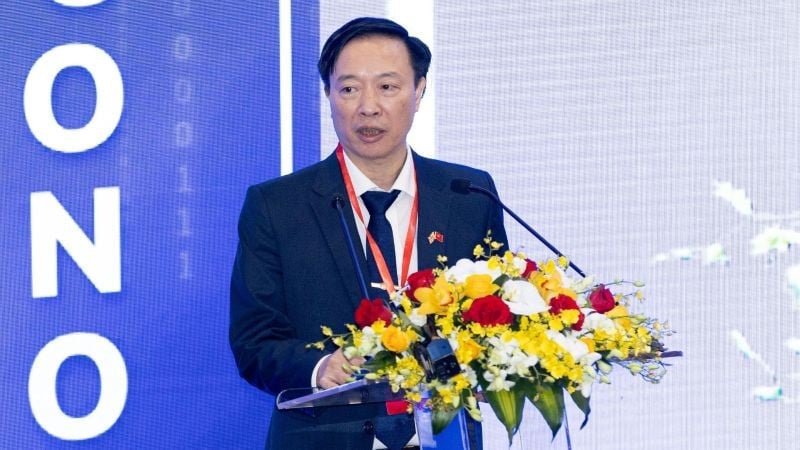
The event opened a strategic dialogue forum on the data economy in the context of the global shift towards a data-driven growth model. This contributed to shaping a new development mindset, a new governance architecture, and new growth drivers for Vietnam.
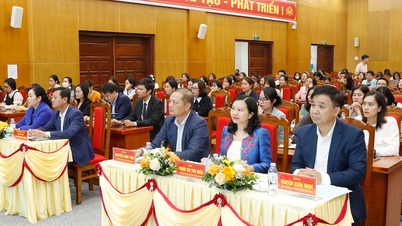
The workshop was attended by Ms. Nguyen Thi Thanh, Member of the Central Committee of the Communist Party of Vietnam and Vice Chairwoman of the National Assembly; Mr. Bui Hoang Phuong, Deputy Minister of Science and Technology; and representatives from central and local ministries and agencies, international organizations, and a large number of domestic and international experts and scientists. The workshop attracted approximately 350 delegates.
New thinking - New policies for Vietnam's data economy model.
At the conference, Major General Nguyen Ngoc Cuong, Director of the National Data Center and Vice President of the National Data Association, emphasized that in the data era, data has become a strategic resource, directly determining the competitiveness and development prospects of each nation. Vietnam has chosen to enter the data era by building a modern, secure, and interconnected national data system and assigning the Ministry of Public Security as the national data focal point – an agency with sufficient capacity, infrastructure, and responsibility to coordinate uniformly.
The workshop focused on discussing four major groups of issues: a data economy model suitable for Vietnam's conditions; mechanisms for data to generate productivity, innovation, and competitiveness; methods for measuring data assets and integrating them into the national accounts system; and the need to build a legal framework to ensure that data is exploited safely, transparently, and responsibly in the context of globalization.
These contents closely adhere to the spirit of Resolution 57-NQ/TW of the Politburo on breakthroughs in the development of science, technology, innovation, and national digital transformation, which clearly defines the requirement to "enrich and maximize the potential of data, make data the main means of production, and promote the rapid development of big data, data industry, and data economy."
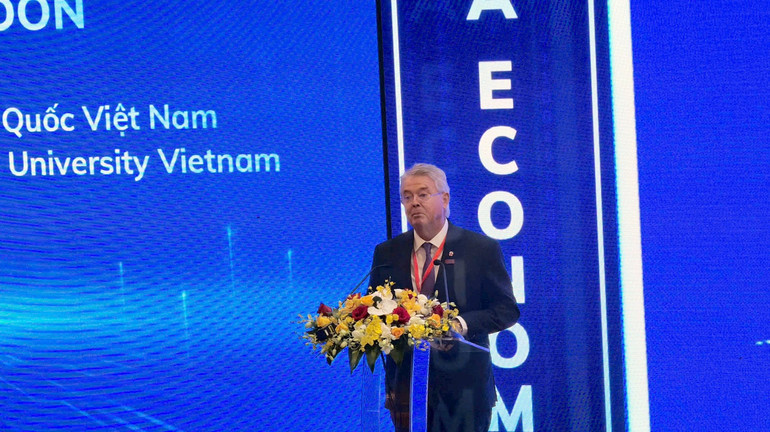
In his welcoming remarks at the conference, Raymond Gordon, President of the British University Vietnam (BUV), affirmed that the role of academics extends beyond academic research, contributing through empirical studies and international experience to policy planning and the development of a workforce capable of using data intelligently and responsibly.
As an academic bridge between Vietnam and the United Kingdom, BUV is committed to supporting Vietnam in training high-quality human resources for the data economy.
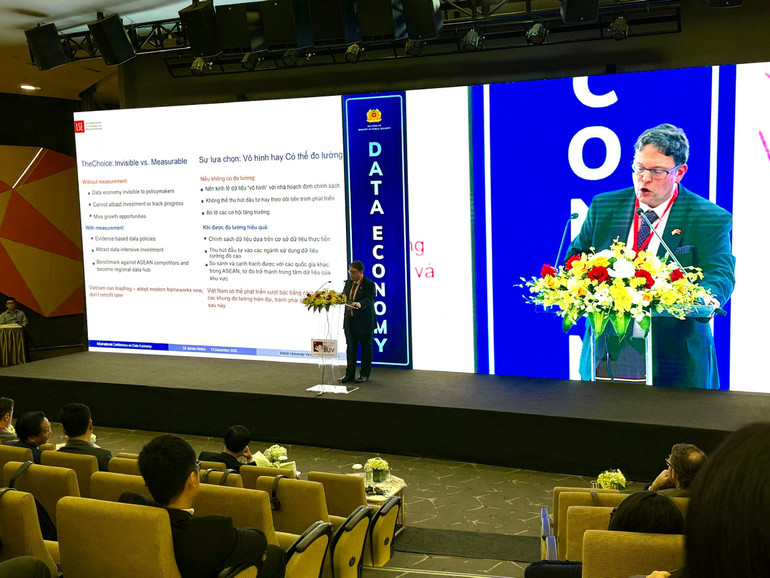
International cooperation - New opportunities
The conference acknowledged the participation, research, and collaboration of many prestigious universities worldwide, notably University College London, the London School of Economics and Political Science, City University of St George's (UK), the University of Wisconsin, Indiana University (USA), and the Australian National University. The presence of leading academic institutions demonstrates Vietnam's growing appeal in research and policy-making related to the data economy.
At the conference, international scholars unanimously emphasized five key ideological pillars of the data economy: evidence-based policymaking; designing trust-centric systems from the outset; developing shared data spaces; building modern data governance models; and creating national prosperity based on data. These are considered core foundations that enable nations to effectively leverage data as a new development resource.
The conference affirmed that the data economy is no longer just a technological trend, but has become a new infrastructure architecture, shaping the productivity, innovation, and competitiveness of nations in the next decade.
The analyses presented at the conference provided insightful perspectives on the global context, the new demands of the era, and development models suitable for Vietnam's conditions as it enters the data age.
The conference was also seen not only as an academic event, but as a milestone opening up regional and international cooperation on the data economy. The event laid the foundation for a national data strategy; established the groundwork for long-term international cooperation, particularly with partners from the UK, Australia, the US, and the European Union; and contributed to shaping a common reference framework to attract high-quality technological, financial, and human resources from around the globe.
This also presents an opportunity to promote Vietnam's image as a strategic destination for cooperation in data, artificial intelligence, and innovation.
The workshop once again affirmed the crucial role of the Ministry of Public Security in building the national data infrastructure through: constructing and operating the National Data Center; ensuring data security, safety, and sovereignty; standardizing and connecting data between ministries, sectors, and localities; and creating a reliable data platform for the Government to transition to a data-driven governance model.
Major General Nguyen Ngoc Cuong, Director of the National Data Center and Vice President of the National Data Association, delivered the concluding remarks at the workshop and emphasized: With the results achieved, today's workshop is not just about academic exchange, but also affirms Vietnam's determination to: build a modern data economy; ensure data security, safety, and sovereignty; create new growth drivers; and aim towards the goal of a strong and prosperous Vietnam by 2045.
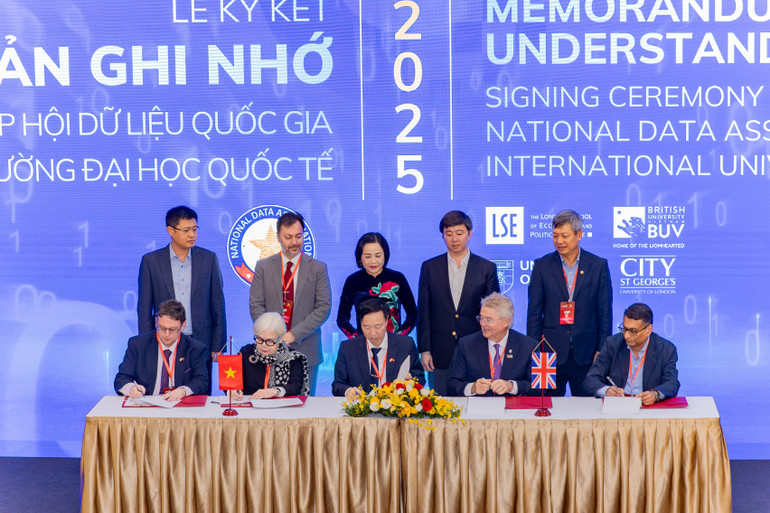
Within the framework of this conference, the National Data Association, in collaboration with BUV and prestigious universities in the United Kingdom, officially signed a Memorandum of Understanding for comprehensive cooperation. This event marks an important milestone in promoting international cooperation in the field of data economy.
Source: https://nhandan.vn/kinh-te-du-lieu-kien-truc-tang-truong-moi-cua-viet-nam-trong-ky-nguyen-so-post930076.html



















































































Comment (0)