

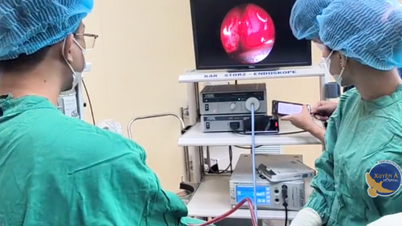
Soft nasal polyps are painless but can have long-term health consequences. Because they are located inside the nose, they can obstruct breathing, cause loss of smell, recurrent sinusitis, sleep apnea, and trigger asthma attacks. The risk of these health problems increases with the size of the polyps, according to the health website Healthline (USA).

Asthma and sinusitis increase the risk of developing nasal polyps.
Common symptoms of nasal polyps include headaches, facial pain, sinus pressure, runny nose, nasal congestion, frequent postnasal drip, decreased sense of taste and smell, nosebleeds, and snoring. Many people experience symptoms of polyps that are quite similar to those of a common cold, according to the American Asthma and Allergy Foundation (AAFA).
Anyone can develop nasal polyps, especially those with the following health conditions:
Asthma
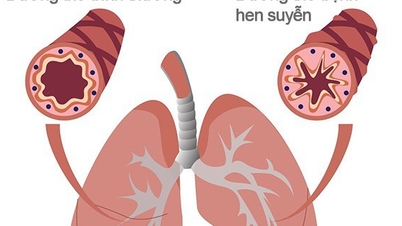
Asthma is one of the most common inflammatory respiratory diseases. When exposed to certain substances, the patient's immune system reacts, leading to swelling and narrowing of the airways, causing difficulty breathing, wheezing, coughing, and chest tightness.
Asthma is one of the leading causes of nasal polyps. Once formed, nasal polyps can worsen asthma symptoms. Therefore, doctors must treat both conditions simultaneously.
Chronic sinusitis
Chronic sinusitis is a condition characterized by prolonged inflammation in the nasal sinuses. This inflammation causes swelling of the nasal lining. Therefore, prolonged inflammation makes nasal polyps more likely to form.
While chronic sinusitis increases the risk of nasal polyp formation, conversely, nasal polyps can make the sinuses more prone to inflammation. This is because, once present, the soft polyp mass can obstruct the flow of mucus and easily lead to infection.
Approximately 20% of people with chronic sinusitis will have nasal polyps. Treatment involves a combination of medication and surgery to remove the soft tissue tumors.
Allergic sinusitis caused by fungi.
This is a condition where the nasal sinuses become inflamed due to a reaction to fungi and tiny fungal spores floating in the air. Allergic sinusitis caused by fungi significantly increases the risk of developing nasal polyps. Treatment involves medication combined with surgery to remove the polyps as well as fungal debris, spores, and mucus from the nose, according to Healthline.
Source link
![[Photo] Secretary of the National Assembly Party Committee, Chairman of the National Assembly presides over the meeting of the Standing Committee and Executive Committee of the National Assembly Party Committee.](https://vphoto.vietnam.vn/thumb/1200x675/vietnam/resource/IMAGE/2026/06/03/1780480353201_ndo_br_bnd-2585-jpg.webp)
![[Photo] General Secretary and President To Lam presides over a meeting with the Central Organizing Committee.](https://vphoto.vietnam.vn/thumb/1200x675/vietnam/resource/IMAGE/2026/06/03/1780482764658_a1-bnd-4741-3342-jpg.webp)
![[Photo] First session of the 14th Congress of the Vietnam Trade Union](https://vphoto.vietnam.vn/thumb/1200x675/vietnam/resource/IMAGE/2026/06/03/1780465947883_ndo_br_img-3852-jpg.webp)




















































![[Video] Sunset at Lap An Lagoon – Where the sun sets over the fishing nets](https://vphoto.vietnam.vn/thumb/1200x675/vietnam/resource/IMAGE/2026/05/31/1780192137701_beach-landscape-sea-water-nature-grass-745871-pxhere-com.jpeg)






































Comment (0)