

This year's Tokyo Game Show, themed "Unlimited, Neverending Playground," is not only true for software products but also reflects the expanding boundaries of technology across the entire industry.
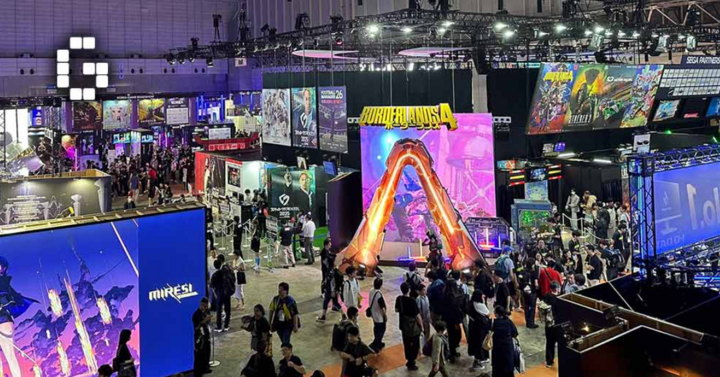
The Tokyo Game Show (September 25-28) saw a record number of exhibitors, with 521 Japanese exhibitors and 615 overseas exhibitors showcasing more than 1,200 video game titles. (Photo: Tokyo Game Show)
AI: From a new trend to a platform for game development
According to the Computer Entertainment Suppliers Association (CESA) (the organizer of the Tokyo Game Show), more than 51% of Japanese game development companies have applied AI to the production process. AI has not stopped at testing but has been widely used in many stages.
Specifically, AI can create game environments, from landscapes and characters to small details like patterns on walls or floors. It can also help write storylines and character dialogue, making the game's narrative more vivid. Furthermore, AI can automatically write control commands and help programmers detect and fix errors quickly.
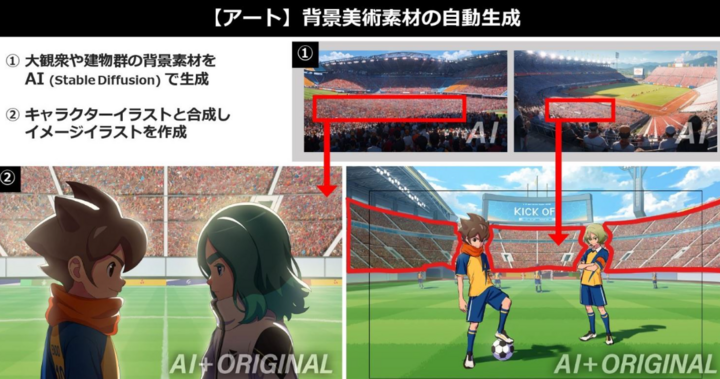
An example of a game environment created by AI. (Image: Level-5)
One notable point is that the game company Sega has established a “Generative AI Committee,” an internal committee dedicated to overseeing and managing the application of AI in its projects. This indicates that AI is no longer just an experimental auxiliary tool, but has become a seriously managed part of the production process. Many developers emphasize that AI plays a “supportive, not a replacement” role, providing humans with additional creative tools without diminishing the central role of designers and programmers.
AI-powered hardware: The highlight of technology companies
If AI has spread in software development, this year's hardware witnessed an explosion of AI-powered products. Among them, technology company MSI appeared impressively with a series of AI-powered products ranging from laptops, desktops to monitors and accessories.

The Prestige 13 AI+ Ukiyo-e Edition is a laptop that not only features an AI processor but also impresses with its design inspired by traditional Japanese Ukiyo-e art. The product demonstrates how technology can combine with culture to create new aesthetic value. (Image: MSI)

Stealth A16 AI+ Mercedes-AMG Motorsport: A limited-edition laptop created in collaboration with the AMG sports car brand, targeting gamers and speed enthusiasts with its powerful configuration and luxurious design. (Image: MSI)
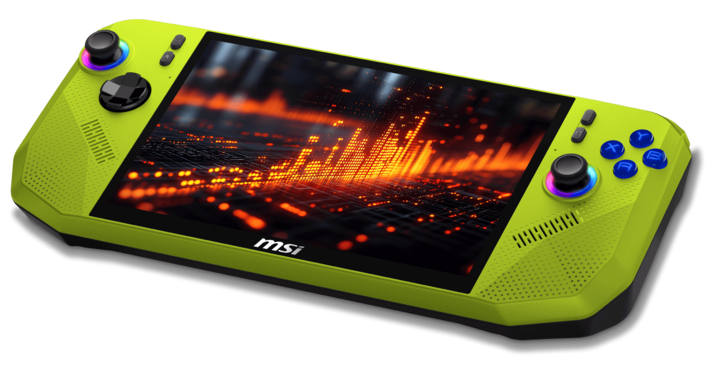
Claw A8 BZ2EM: A standout handheld gaming device featuring an AMD Ryzen Z2 Extreme chip, an 8-inch 120Hz display with VRR support, and an 80Wh battery. (Image: MSI)
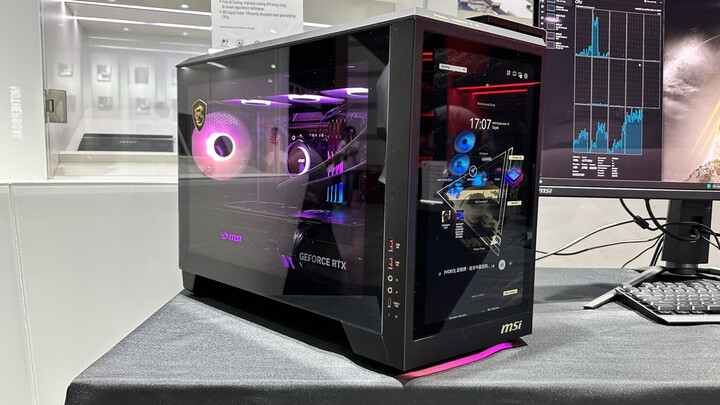
MEG Vision X AI desktop: A high-end desktop computer equipped with a 13-inch touchscreen secondary display integrated with AI, making it easy for users to control and monitor the system. (Image: PC Gamer)
Silent Storm Cooling AI technology also makes its debut, optimizing cooling performance using intelligent algorithms.
Not only MSI, but Thermaltake also surprised with its MagFloe Ultra AIO water cooling system. The special feature lies in its AI Forge functionality: Users can input AI prompts to create custom wallpapers or animations displayed directly on the small LCD screen mounted on the cooling block. This marks the first time generative AI technology has been integrated into PC components, transforming the cooling system into an aesthetic and personalized experience.
Tokyo Game Show 2025 paints a clear picture: the gaming and technology industry is entering an era of collaboration between human and artificial intelligence. And if this trend continues, AI will not only be a tool, but will become a "companion" for all developers and gamers in the future.
Source: https://vtcnews.vn/ai-va-phan-cung-thong-minh-len-ngoi-tai-tokyo-game-show-2025-ar968369.html

![[Photo] Explore the US Navy's USS Robert Smalls warship](/_next/image?url=https%3A%2F%2Fvphoto.vietnam.vn%2Fthumb%2F1200x675%2Fvietnam%2Fresource%2FIMAGE%2F2025%2F12%2F10%2F1765341533272_11212121-8303-jpg.webp&w=3840&q=75)
![[Photo] The captivating scenery of the fragrant maple forest in Quang Tri](/_next/image?url=https%3A%2F%2Fvphoto.vietnam.vn%2Fthumb%2F1200x675%2Fvietnam%2Fresource%2FIMAGE%2F2025%2F12%2F10%2F1765353233198_lan09046-jpg.webp&w=3840&q=75)
























![[Video] The craft of making Dong Ho folk paintings has been inscribed by UNESCO on the List of Crafts in Need of Urgent Safeguarding.](https://vphoto.vietnam.vn/thumb/402x226/vietnam/resource/IMAGE/2025/12/10/1765350246533_tranh-dong-ho-734-jpg.webp)



































































Comment (0)