

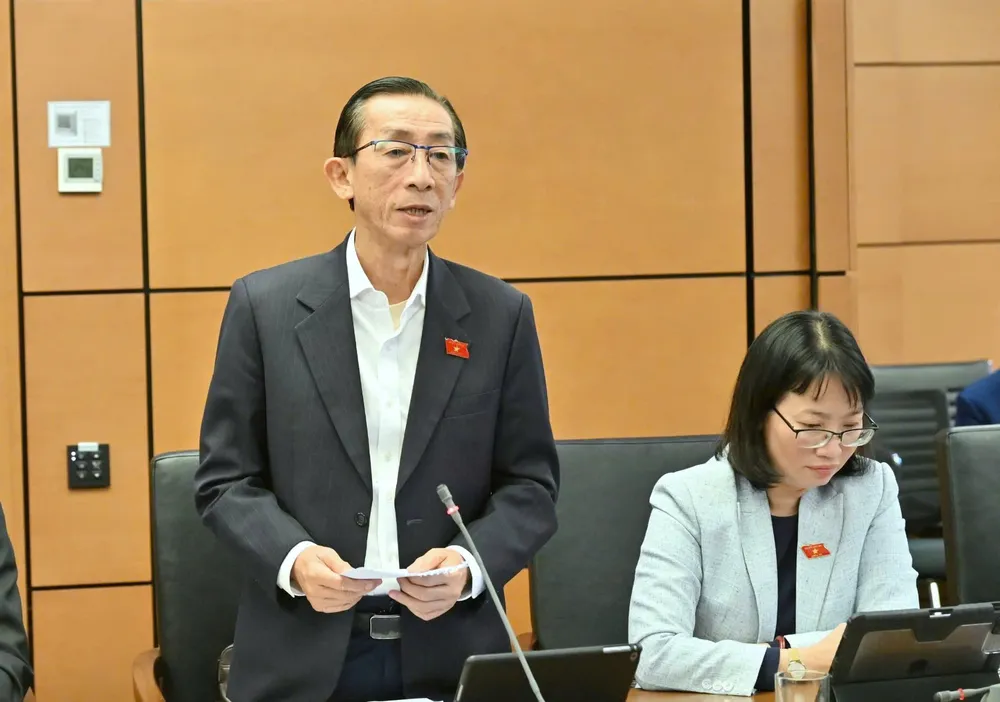
Pay attention to registering and protecting intellectual property rights.
Speaking at the Ho Chi Minh City delegation meeting on the amendment and supplementation of the Intellectual Property Law, citing data from the Intellectual Property Office (Ministry of Science and Technology), Deputy Tran Hoang Ngan stated that the number of registered trademarks has reached over 700,000, with an annual growth rate of approximately 10% - 11%. This is a positive sign; however, intellectual property rights violations remain prevalent. In 2024, violations increased to over 3,000 cases in six months.
"In the current development of science and technology and the digital environment, intellectual property infringement is becoming more complex. Counterfeit and fake goods are more sophisticated," Representative Tran Hoang Ngan remarked, suggesting greater attention should be paid to protecting the intellectual property of businesses and individuals, contributing to enhancing the competitiveness of businesses and the nation, especially in the trend of encouraging entrepreneurship and innovation.
“I propose that the Government provide support to establish the registration, recognition, publication, protection, exploitation, management, use, and development of intellectual property rights. Particular attention should be paid to the registration and protection of intellectual property rights for vulnerable groups, such as business households, farmers, and ethnic minorities. Their awareness or conditions for registering intellectual property are very limited, so the Government needs to find solutions to this problem,” Representative Tran Hoang Ngan stated.
Creating favorable conditions for businesses to develop AI.

According to National Assembly Deputy Dinh Thi Ngoc Dung (Hai Phong), the provision adding data exploitation for training artificial intelligence (AI) is a new regulation reflecting a shift in thinking, marking the first time this issue has been included in the law. With this regulation, Vietnam can proactively develop AI in the future and catch up with global trends, serving the digital economy . However, Deputy Dinh Thi Ngoc Dung believes the draft law remains quite strict technically. For example, the phrase "organizations and individuals are permitted to use legally published documents and data to train AI" is accompanied by the condition "not to copy, transmit, publish, create derivative works, or exploit commercially," which is difficult to meet if Vietnam wants to promote domestic AI development.
Representative Dinh Thi Ngoc Dung stated that, in reality, training AI models requires a large, diverse, and representative amount of data; this data can be collected from public sources such as books, newspapers, websites, or user-generated datasets, and is often commercially exploited. If the law stipulates "no commercial exploitation," the entire domestic AI ecosystem will fall into a situation where businesses are hesitant to invest, research institutes are hesitant to transfer their products, and creative workers lose the opportunity to commercialize their results.
Therefore, Representative Dinh Thi Ngoc Dung suggested that the law needs to be redesigned to clearly distinguish between "non-commercial" and "conditional commercial" data use purposes. Along with that, it is necessary to add regulations on data transparency, data source tracking, retrieval measures, and a willingness to cooperate when state agencies request the origin of AI training data.
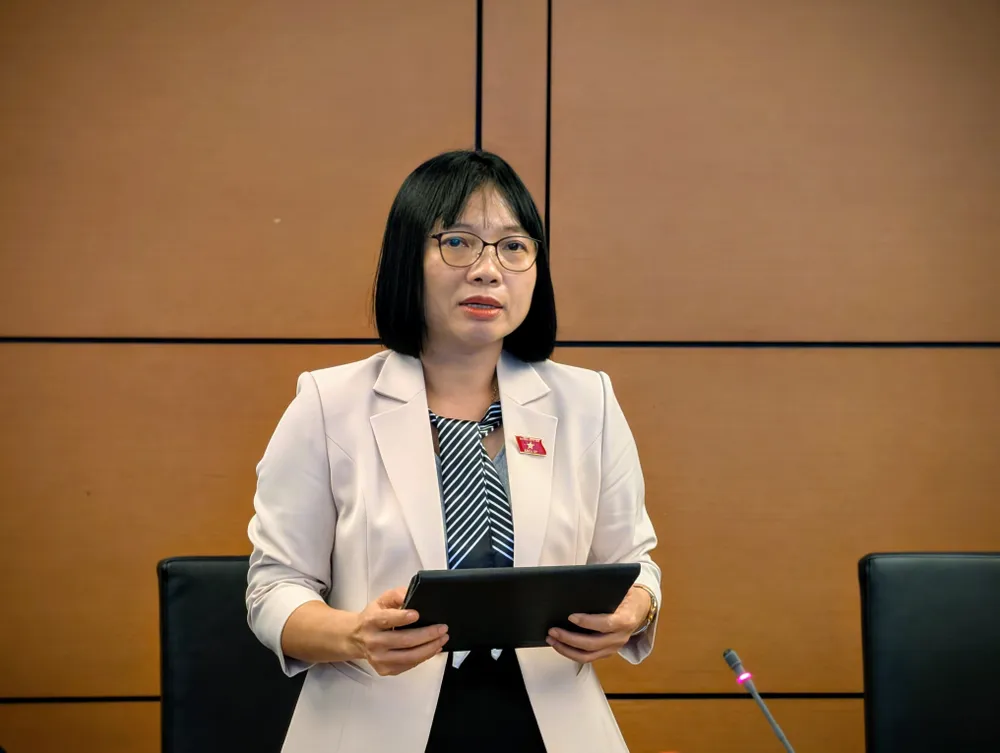
According to National Assembly Deputy Nguyen Thi Viet Nga (Hai Phong), the draft Law amending and supplementing several articles of the Intellectual Property Law lacks provisions to determine the subject of intellectual property rights in the case of products created by AI… Therefore, the Deputy proposed adding a principle that only intellectual property rights are recognized for products with decisive creative contributions from humans; and also suggested that the Government be tasked with specifying detailed criteria for evaluating the level of creativity owned by humans.
Sharing the same concern, National Assembly Deputy Ha Sy Dong (Quang Tri) highly appreciated the fact that the draft law has added regulations on the protection of intellectual property rights related to AI, digital content, and big data. According to the Deputy, many countries such as the UK, Japan, South Korea, and the US have issued their own guidelines on copyright for products created by AI or with the participation of AI.
"In Vietnam, many music, painting, and digital design products have used AI support, but there is no clear legal mechanism," commented Representative Ha Sy Dong, suggesting that the draft should specifically include this content to avoid legal loopholes, while simultaneously encouraging technological innovation and ensuring the rights of genuine creators.
In addition, Representative Ha Sy Dong suggested that the draft should also include provisions for recognizing and protecting traditional knowledge, open data, and the creative rights of ethnic minority communities. This is an aspect that international organizations have been recommending for many years. Many aspects of Vietnamese folk knowledge, such as traditional remedies, brocade patterns, pottery, and musical instruments, are not protected in any way and are easily commercialized or copied abroad without any benefit to the community.
Source: https://www.sggp.org.vn/bao-ho-quyen-so-huu-tri-tue-lien-quan-den-ai-post821773.html

![[Photo] Ba Lang An Lighthouse - the "eye of the sea" amidst the "rock museum" of Quang Ngai province.](https://vphoto.vietnam.vn/thumb/1200x675/vietnam/resource/IMAGE/2026/05/29/1780038698840_anh-man-hinh-2026-05-29-luc-14-10-42.png)
![[Image] Pleasant weather helps students enter the 10th grade entrance exam with confidence.](https://vphoto.vietnam.vn/thumb/1200x675/vietnam/resource/IMAGE/2026/05/29/1780034401612_ngay-1-thi-lop-10-minh-duy-8-5009-jpg.webp)









![[GALLERY] The million-dollar 007 blockbuster is causing a sensation on Steam, is it worth buying?](https://vphoto.vietnam.vn/thumb/402x226/vietnam/resource/IMAGE/2026/05/29/1780064112088_ta-2-png.webp)





























































Comment (0)