

 |
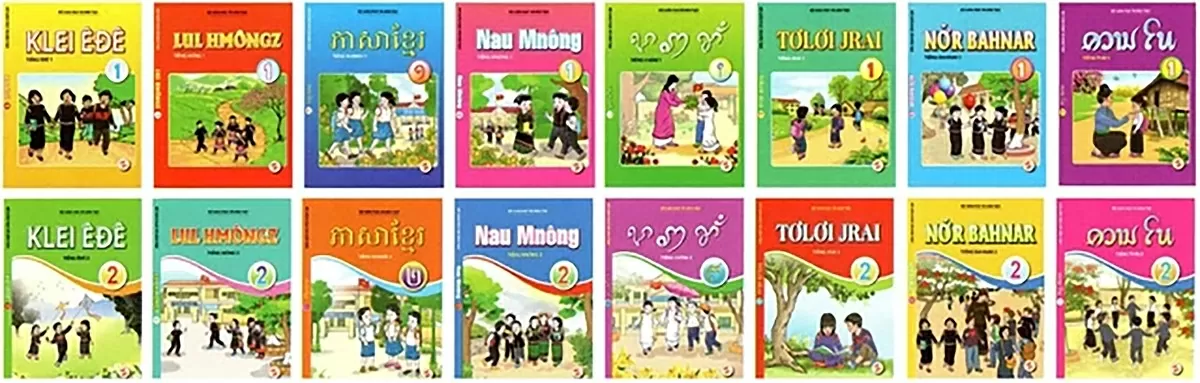
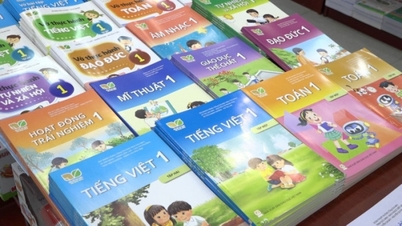
| Textbooks on ethnic minority languages published by Vietnam Education Publishing House. |
In the Vietnamese education system, textbooks are not only tools for transmitting knowledge but also cultural and linguistic bridges between generations. For ethnic minority communities, learning in their mother tongue holds special significance, not only educationally but also as an affirmation of identity, pride, and the right to equal development for each ethnic group.
It requires perseverance and dedication.
Compiling textbooks in ethnic minority languages is an extremely laborious process, requiring perseverance, dedication, and a deep understanding of the language and culture of each region.
|
Most minority languages have incomplete writing systems or many local variations. Therefore, researchers, authors, and editors must work closely with local authorities, village elders, language artisans, and indigenous people to standardize word usage, pronunciation, and writing that are both scientifically sound and accessible. Each letter and sentence structure is carefully considered so that students can easily understand it while preserving the spirit and rhythm of their mother tongue.
The challenges lie not only in the language but also in the content being conveyed. Textbooks in ethnic minority languages must both meet the requirements of the general education curriculum and preserve cultural identity. The compilers must find ways to express scientific and social concepts in simple language, familiar to the lives of people in mountainous and remote areas, while still ensuring accuracy.
Overcoming these obstacles is the particularly profound value of this work. The compilation of textbooks in ethnic minority languages clearly demonstrates the consistency in the Party and State's policy: "No student should be left behind." This is a humane policy aimed at equality in education – where all children, whether born in the lowlands or highlands, have the right to learn and develop using their own language and culture.
The breath of culture
If textbooks are the gateway to knowledge, then textbooks in ethnic minority languages also open up the world of the soul and community identity. Each page not only conveys knowledge but also preserves the cultural essence, helping students acquire knowledge, nurture national pride, and cultivate a sense of preserving traditions in the context of integration.
Therefore, each set of textbooks in ethnic minority languages is not just a published product, but a special cultural and educational work. It embodies the wisdom and dedication of many generations of educators, and at the same time contributes to the preservation and promotion of the country's linguistic heritage.
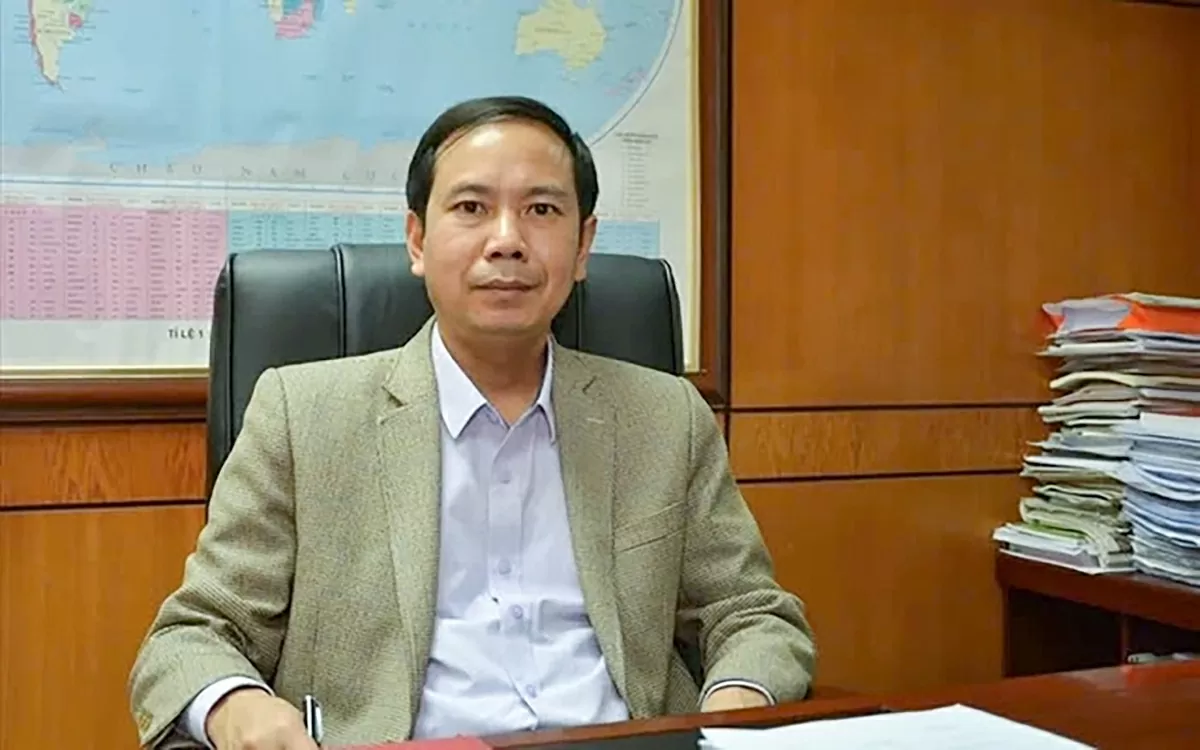
Speaking about that special journey, Associate Professor Dr. Nguyen Van Tung, Member of the Board of Directors and Deputy Editor-in-Chief of Vietnam Education Publishing House, shared that compiling textbooks in ethnic languages was a challenging but proud undertaking. “During the compilation process, Vietnam Education Publishing House had the advantage of having accumulated over two decades of experience. We have a highly capable team of professionals who understand modern publishing techniques and the unique cultural characteristics of ethnic regions. Many editors, illustrators, and designers have been dedicated to this specialized field for many years. The human element is our greatest advantage, enabling us to implement projects quickly and ensure the quality of each textbook,” said Dr. Nguyen Van Tung.
The workload for the team compiling textbooks in ethnic minority languages is enormous. From collecting documents, building evidence, proofreading, to submitting and approving, everything follows a strict process. At times, the editorial teams have to race against time to meet the deadline for submitting evaluation documents to the Ministry of Education and Training.
But above all, it is the belief and social responsibility of those who create these textbooks that matters: textbooks in ethnic languages not only help students access knowledge in their mother tongue, but also serve as a bridge to preserve the culture of each ethnic community.
“I believe that each completed set of textbooks is a step forward in improving the quality of education in ethnic minority areas. It not only supports learning but also awakens pride in the language and culture of the students themselves,” Assoc. Prof. Dr. Nguyen Van Tung emphasized.
It can be said that all efforts stem from the belief that textbooks in ethnic minority languages not only help students access knowledge in their mother tongue, but also contribute to preserving and promoting the culture of each ethnic community. This is a special social responsibility that the publisher always prioritizes.
From 2021 to the end of 2024, Vietnam Education Publishing House was the sole unit tasked with compiling textbooks in ethnic minority languages from grades one to five for eight minority languages, including: Bahnar, Cham, Ede, Khmer, Jrai, Mnong, Thai, and Hmong. As of December 2024, all textbooks from grades one to five, along with teaching guides, have been completed and approved.
It is the result of thousands of hours of silent labor, countless field trips to remote villages, and conversations with local people to perfect each word and illustration, ensuring they are accurate, beautiful, and reflect the local culture.
Beyond simply publishing physical books, the Vietnam Education Publishing House has proactively applied information technology and digital transformation in its compilation efforts, aiming to build an electronic language database and digitize textbooks in ethnic minority languages. This allows students in remote areas to easily access learning materials via computers, phones, or other digital devices provided by their schools. This is a pioneering step, opening up more equal opportunities for children in remote areas – where infrastructure is often limited.
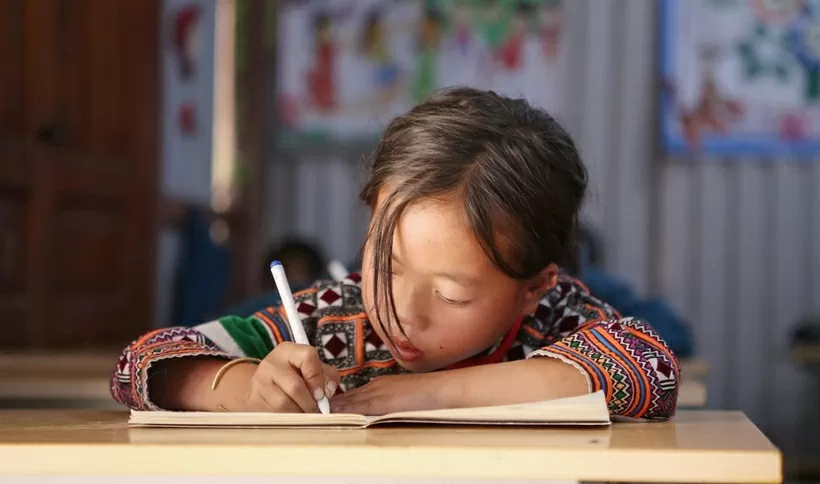 |
| The journey of compiling textbooks in ethnic minority languages by Vietnam Education Publishing House is a testament to the effort to build a fair, inclusive, and humane education system. |
Preserving the language – Preserving the soul of the nation
In the context of globalization and strong cultural exchange, many minority languages face the risk of extinction as younger generations use their mother tongues less. Therefore, introducing ethnic languages into schools, with well-structured and systematic textbooks, is not only an educational policy but also a cultural act, a commitment to preserving the nation's invaluable intangible cultural heritage.
Every child who learns their mother tongue from an early age will learn to love their ancestral language, be proud of their heritage, and gain more motivation to strive for success in life. These first lessons in their mother tongue about family, nature, filial piety, and the spirit of unity are the invisible threads that connect them to their national culture.
The journey of compiling textbooks in ethnic minority languages by the Vietnam Education Publishing House is a testament to the effort to build a fair, comprehensive, and humane education system – where every child has the opportunity to develop their potential, regardless of their region. It also concretizes the spirit of Resolution 29-NQ/TW on fundamental and comprehensive reform of education and training: Education is a top national priority; developing education means raising the intellectual level of the people, training human resources, and nurturing talents; making a significant contribution to building Vietnamese culture and people.
Looking back over more than two decades, those involved in creating textbooks for ethnic minority languages have quietly continued their work with the belief that each page reaching a student is another small step forward on the path to conquering knowledge, preserving culture, spreading love, and fostering national pride.
Compiling textbooks in ethnic minority languages is not just the professional work of a publishing house, but a national mission, connecting knowledge with identity, modernity with tradition, and written words with the soul. It is the silent but persistent journey of those who sow the seeds of knowledge in the vast mountains.
Therefore, each set of textbooks in ethnic languages is not only a product of knowledge, but also a symbol of the Vietnamese humanistic spirit – where every voice is heard, every identity is respected, and every child has the opportunity to grow up with pride in their roots.
Source: https://baoquocte.vn/bien-soan-sgk-tieng-dan-toc-thieu-so-cau-noi-tri-thuc-va-ban-sac-332051.html











































































Comment (0)