

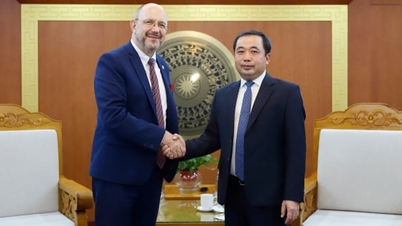
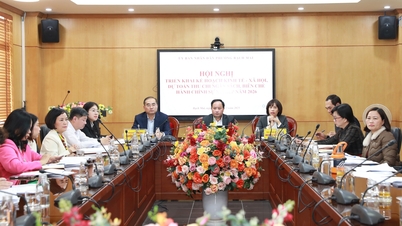
At the conference, representatives from the Environment, Export and International Cooperation Bureau of the Japanese Ministry of Agriculture, Forestry and Fisheries emphasized the strong cooperative relationship between the two countries in the agricultural sector. From rice varieties, planting techniques, preservation, personnel training, to high-tech agricultural projects according to JGAP and GlobalGAP standards, the two countries have jointly built a foundation to elevate the rice industry.
Mr. Le Duc Thinh, Director of the Department of Cooperative Economics and Rural Development, stated that the cooperation aims to build a modern rice production ecosystem, including organizing farmers into cooperatives, linking the rice value chain to reduce emissions, digital transformation, and participation in the carbon credit market. The goal is to create a closed value chain from seeds, production, harvesting, processing to consumption.
After two years of implementing the project, piloted at 11 locations with an area of 543.5 hectares and 355 participating households, the results showed an average yield increase of 5.12 quintals/hectare, and a cost reduction of 1.7 - 4.9 million VND/hectare. The alternating wet and dry irrigation technique allowed for water drainage 2-3 times per crop, while also reducing CO₂ emissions by 3.7 tons/hectare/crop.

In the 1 million hectare project, 354,800 hectares have been certified for sustainable production in 6 provinces of the Mekong Delta, including 7,493 hectares under VietGAP standards, 246 hectares under organic standards, and 5,659 hectares under food safety standards. Several green rice supply chains of some businesses have begun to form and operate effectively.
In the coming period, the rice industry needs to accelerate the application of technology in all stages: soil care, irrigation and straw management; deep processing and logistics to reduce losses; digital transformation of the entire chain, international standard traceability, and building a shared digital platform.
The Ministry of Agriculture and Environment recognizes the need for greater efforts in investing in emission reduction techniques, production organization, and science and technology; and hopes that Japan will support the implementation of a program to cultivate 1 million hectares of rice using advanced technology, green finance, and training of personnel, extension workers, cooperatives, and farmers according to international standards, in order to jointly achieve the goal of "green Vietnamese agriculture" for the global market.
At the conference, Mr. Nguyen Do Anh Tuan, Director of the International Cooperation Department (Ministry of Agriculture and Environment), invited Japanese businesses to invest in green finance and carbon credit technology; precision mechanization technology, resource saving; circular economy and byproduct processing technology.
Representatives from the Department of International Cooperation stated that the goal of the 1 million hectare rice project is to reduce irrigation water by 20% and chemical fertilizer use by 30%; this is an opportunity for Japanese businesses to expand their production lines for smart agricultural machinery, apply alternating dry-drain (AWD) irrigation technology, and implement comprehensive mechanization from sowing to harvesting. Vietnam also hopes that Japanese businesses will invest in factories producing biochar and organic fertilizer from rice straw, transforming agricultural waste into soil improvement materials and completing a closed-loop production cycle.
At the conference, experts noted that Vietnamese rice has undergone three important "revolutions." The first, in the 1960s and 1970s, saw Vietnam begin applying biotechnology to rice breeding. Short-duration, lodging-resistant, drought-tolerant, and high-yielding rice varieties were bred to gradually replace traditional long-duration varieties. The import and testing of IRRI varieties, along with the use of chemical fertilizers, laid the foundation for modern agriculture.
The second time, following Resolution 10-NQ/TW of 1988, when peasant households were granted autonomy, institutional changes unleashed a surge in production capacity, transforming Vietnam in just a few years from a state of food shortage to a rice exporter in 1989, ushering in a period of rapid and sustainable growth.
The third revolution in Vietnamese rice production, underway since 2023, is defined as green and digital in nature, linked to the Sustainable Development Project for 1 million hectares of rice. The goal is to increase productivity, "green" the value chain, reduce greenhouse gas emissions, and enhance the value of Vietnamese rice.
Source: https://baophapluat.vn/bo-nong-nghiep-va-moi-truong-moi-goi-doanh-nghiep-nhat-ban-dau-tu-vao-linh-vuc-nong-nghiep.html



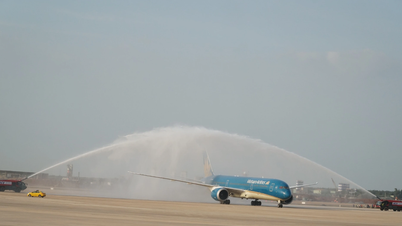
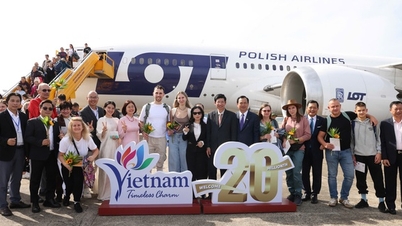
![[Photo] Two flights successfully landed and took off at Long Thanh Airport.](/_next/image?url=https%3A%2F%2Fvphoto.vietnam.vn%2Fthumb%2F1200x675%2Fvietnam%2Fresource%2FIMAGE%2F2025%2F12%2F15%2F1765808718882_ndo_br_img-8897-resize-5807-jpg.webp&w=3840&q=75)



















































Comment (0)