

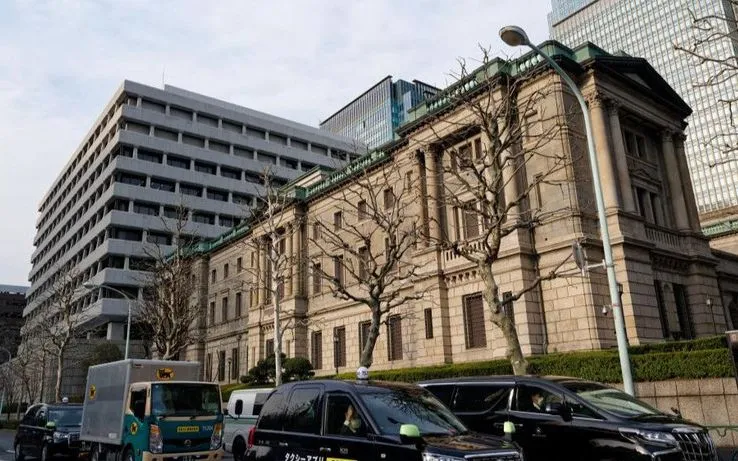
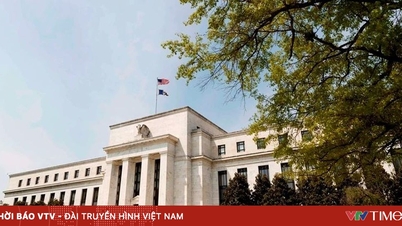
Bank of Japan headquarters in Tokyo. Photo: Xinhua News Agency
This is the Bank of Japan's first interest rate hike since January 2025, which could exacerbate instability in the debt market.
Japanese government bond yields have risen in recent weeks as the yen has weakened. The Bank of Japan's interest rate hikes have made Japanese bonds more attractive compared to other assets, thereby driving down bond prices and pushing yields higher.
Yields on 30-year Treasury bonds hit a record high in early December 2025, while yields on 10-year Treasury bonds reached their highest level in 19 years last week.
The Japanese economy is projected to contract by 0.6% in the third quarter of 2025, but Bank of Japan Governor Kazuo Ueda said the impact of US tariffs is less than previously feared. Ueda noted that US businesses have largely absorbed the tariff burden themselves so far, without passing the full cost on to product prices. Meanwhile, inflation has exceeded the Bank of Japan's 2% target for some time, with core consumer prices rising 3.0% in October 2025.
BMI (part of Fitch Solutions) suggests that the urgency stems from policymakers recognizing that the room for raising interest rates will narrow as external adversities increase.
Most economists surveyed by Bloomberg predict the Bank of Japan (BoJ) will raise its key interest rate from 0.5% to 0.75%, the highest level since 1995. The BoJ's move is expected to help control inflation, which is seen as positive news for Prime Minister Takaichi.
Last week, Japan's Lower House approved a supplemental budget of 18.3 trillion yen ($118 billion) to fund a large stimulus package aimed at supporting households.
Source: https://vtv.vn/boj-du-kien-tang-lai-suat-len-muc-cao-nhat-trong-30-nam-100251216161243425.htm
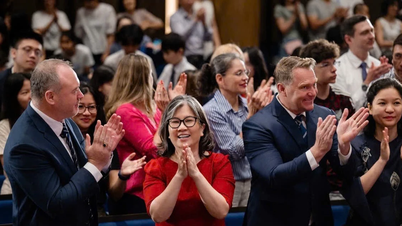
![[Photo] Prime Minister Pham Minh Chinh receives the Governor of Tochigi Province (Japan)](/_next/image?url=https%3A%2F%2Fvphoto.vietnam.vn%2Fthumb%2F1200x675%2Fvietnam%2Fresource%2FIMAGE%2F2025%2F12%2F16%2F1765892133176_dsc-8082-6425-jpg.webp&w=3840&q=75)

![[Photo] Prime Minister Pham Minh Chinh receives Lao Minister of Education and Sports Thongsalith Mangnormek](/_next/image?url=https%3A%2F%2Fvphoto.vietnam.vn%2Fthumb%2F1200x675%2Fvietnam%2Fresource%2FIMAGE%2F2025%2F12%2F16%2F1765876834721_dsc-7519-jpg.webp&w=3840&q=75)
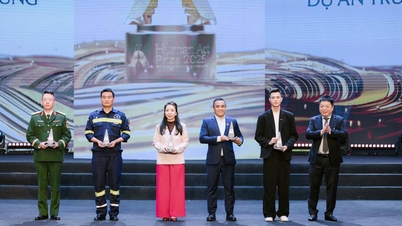
![[Image] Leaked images ahead of the 2025 Community Action Awards gala.](/_next/image?url=https%3A%2F%2Fvphoto.vietnam.vn%2Fthumb%2F1200x675%2Fvietnam%2Fresource%2FIMAGE%2F2025%2F12%2F16%2F1765882828720_ndo_br_thiet-ke-chua-co-ten-45-png.webp&w=3840&q=75)

![[Live] 2025 Community Action Awards Gala](/_next/image?url=https%3A%2F%2Fvphoto.vietnam.vn%2Fthumb%2F1200x675%2Fvietnam%2Fresource%2FIMAGE%2F2025%2F12%2F16%2F1765899631650_ndo_tr_z7334013144784-9f9fe10a6d63584c85aff40f2957c250-jpg.webp&w=3840&q=75)



















































Comment (0)