

Talking to Tri Thuc - Znews , Nguyen Thach Nam (residing in Ho Tram commune) said that at around 0:00 on November 30, while he and his wife were chatting with friends on the shore of Ho Coc beach, he saw magical blue rays of light flashing with each wave.
"At first I thought I was seeing things or the camp lights were reflecting off the sea. But when I got closer, I realized the sea water was actually glowing," Nam said.
He said he was born in a coastal area and had been to the sea many times day and night but had never witnessed such a scene.
"It takes a long time to see the sudden, unpredictable waves, but the time spent is completely worth it. Each wave emits a blue light, creating a magical scene," he shared. After searching for information on the Internet, Nam believes that this phenomenon is most likely related to algae blooms.
Camping at Ho Coc beach last weekend, Phan Ngoc Luan (Tan Thoi Hiep ward, Ho Chi Minh City) also encountered the magical scene above. "Witnessing the glowing sea with friends was a very impressive and unforgettable experience," Luan said.
Before that, when Luan arrived at the campsite, the sea water was still normal, a bit cloudy and there were no signs of anything unusual. That day the weather was good, he also had the opportunity to witness the brilliant sunset. Having seen many videos about the phenomenon of bioluminescent seas, Luan thought they only appeared abroad, so he was even more surprised to see it with his own eyes at Ho Coc. He thought this could become an interesting experience, attracting tourists to the pristine Ho Coc sea.
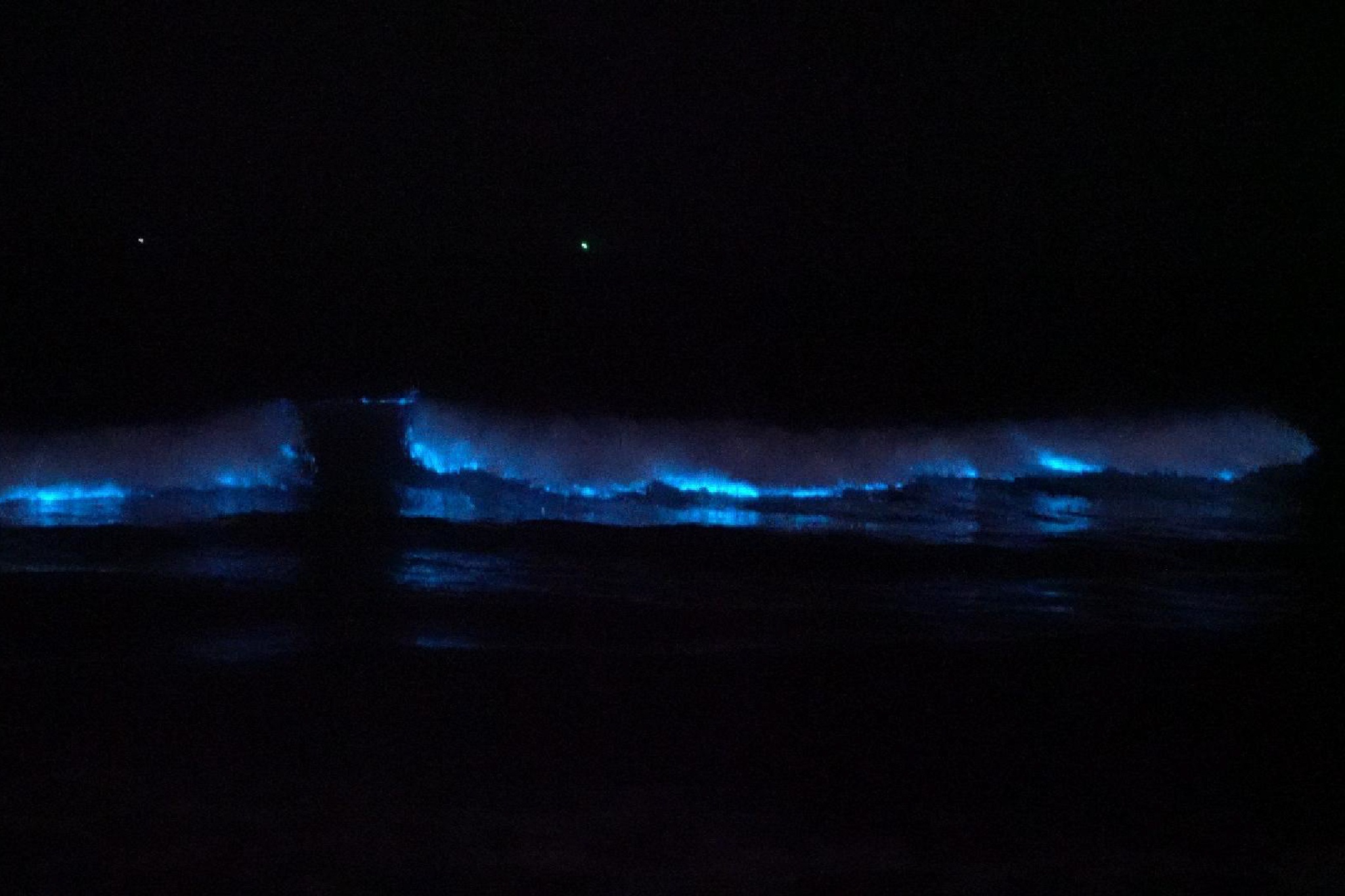 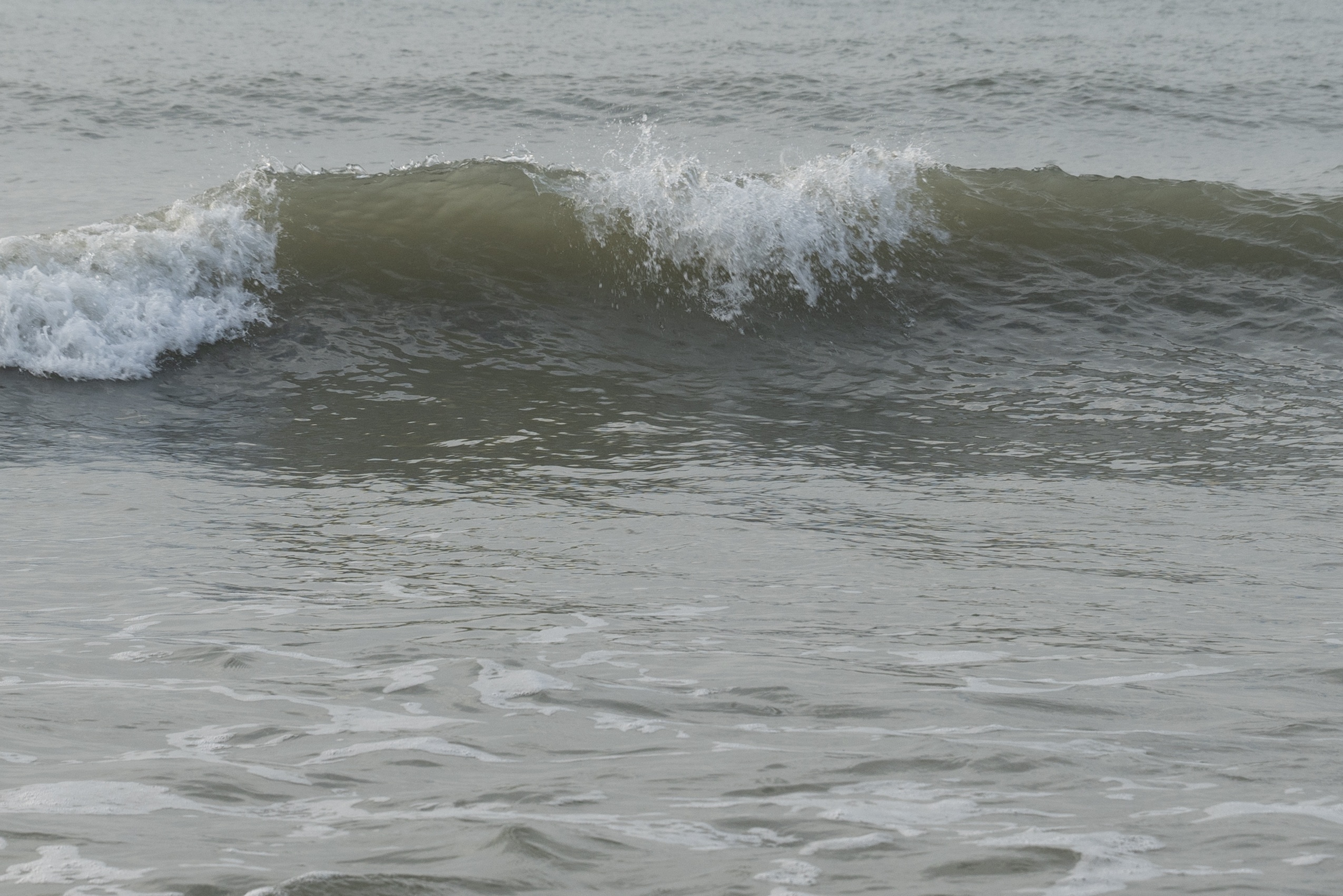 |
Ho Coc seawater on November 30 was recorded at night and during the day. Photo: Linh Huynh. |
According to the reporter's records, the blue light appeared in some offshore areas, moving with each wave closer to the sand and quickly dissolving into the sea foam. The phenomenon lasted all night.
Responding to Tri Thuc - Znews , Dr. Dang Do Hung Viet, an expert at the Department of Tropical Ecology, Coastal Branch, Vietnam - Russia Tropical Center, said that this phenomenon is due to the appearance of the algae Noctiluca scintillans, commonly known as "luminescent algae". This species has two forms: red form (non-photosynthetic symbiosis, often causing "red tides" during the day) and green form (green Noctiluca) with photosynthetic symbiotic cells that turn the seawater green.
The phenomenon of marine bioluminescence occurs when Noctiluca algae bloom at high densities. The bioluminescence is triggered by mechanical stimuli such as waves, collisions or hydrodynamic movements. The blue light is the result of a chemical reaction between scintillons and the luciferin-luciferase system. Each cell only glows for about 0.1-0.5 seconds when stimulated.
The higher the cell density, the stronger the stimulation, the greater the luminescence intensity. This is also the algae's defense mechanism when attacked by zooplankton. This algae species is not toxic, but when blooming at high density, it can cause oxygen deficiency, affecting the balance of the marine ecosystem.
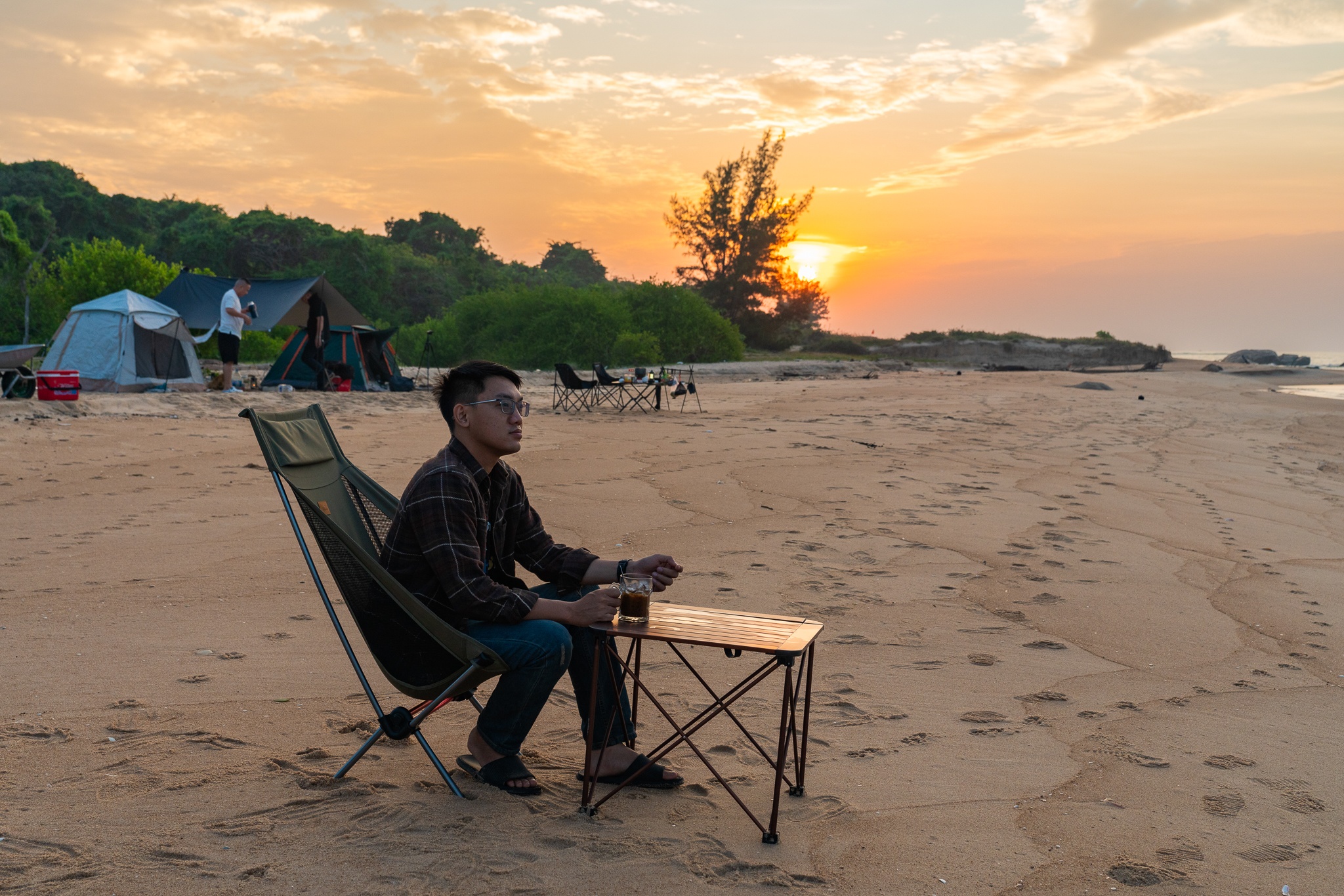 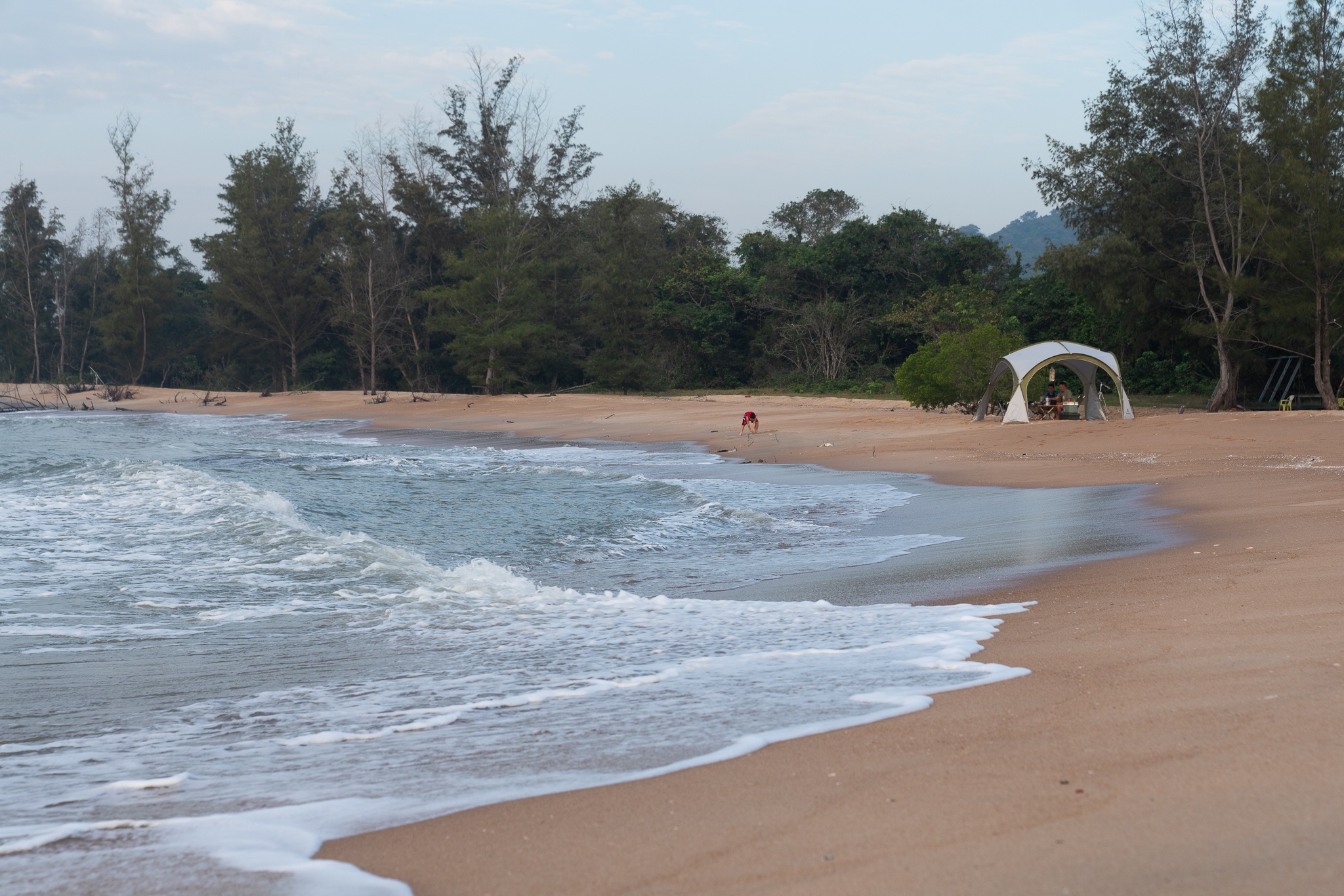 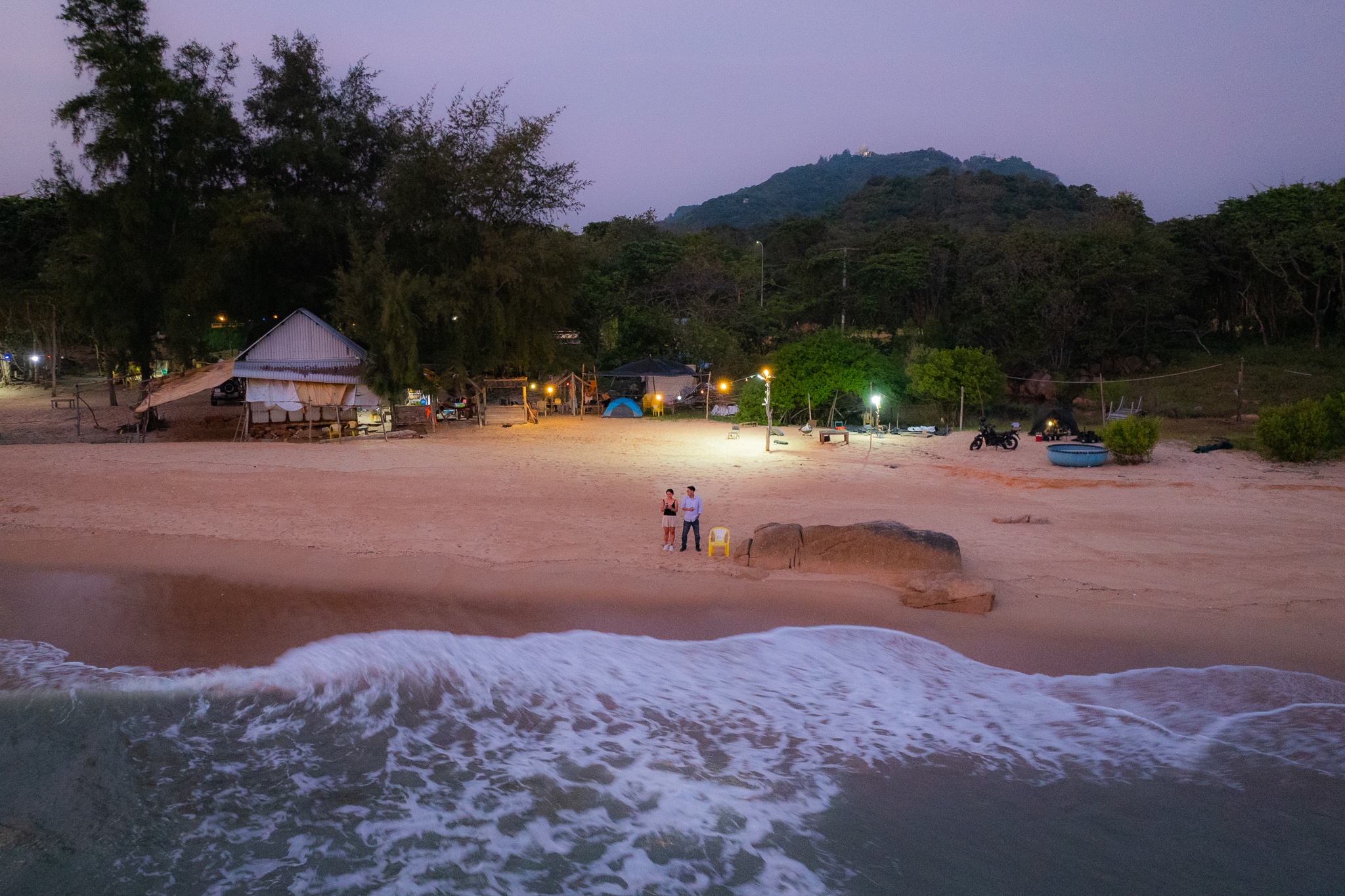 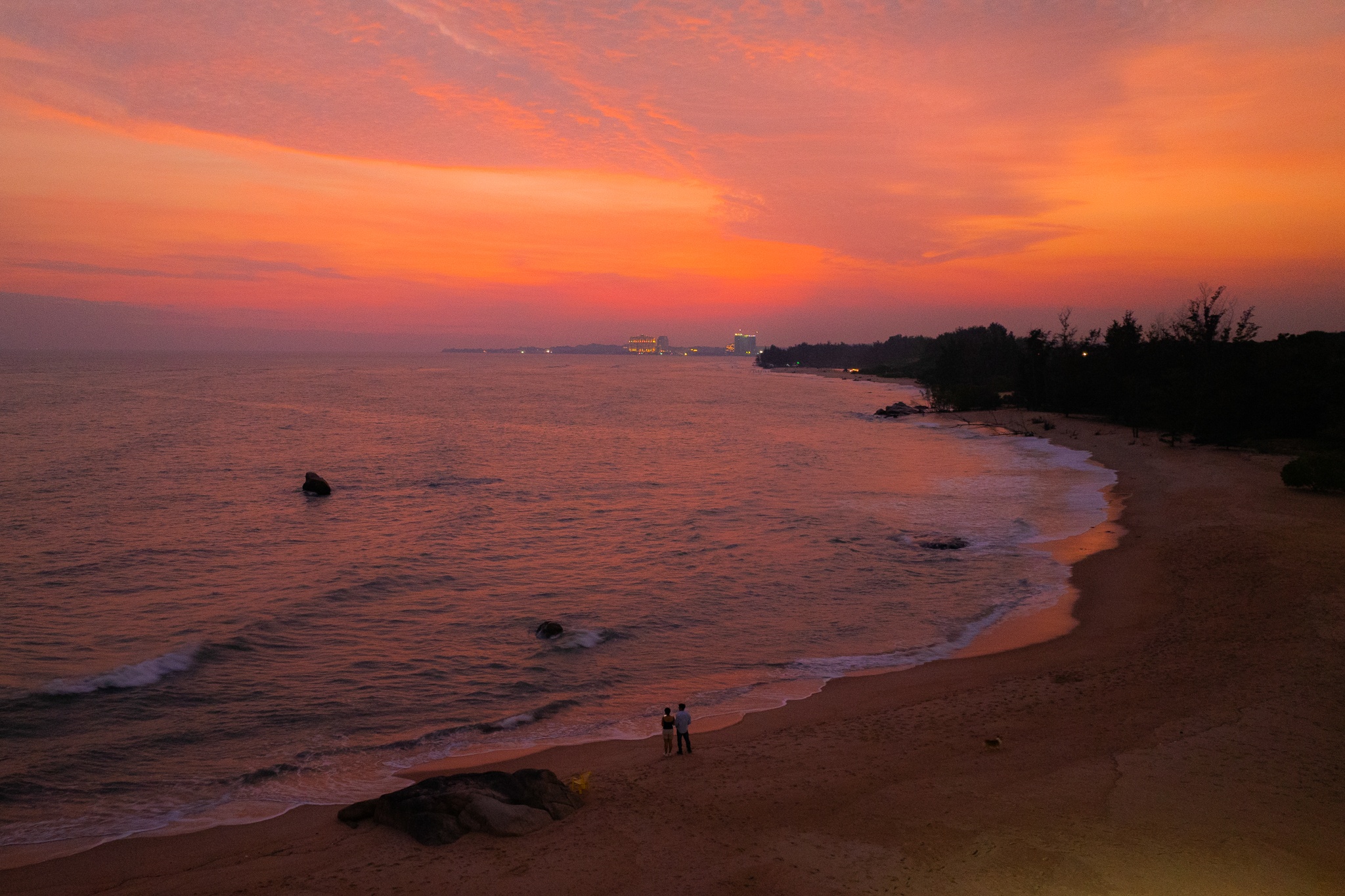 |
About 100 km from the center of Ho Chi Minh City, Ho Coc beach (Ho Tram commune) possesses a pristine beauty, attracting tourists to camp on weekends. Photo taken on November 29-30. Photo: Linh Huynh. |
Previously, on the afternoon of October 25, at Bai Sau (Vung Tau ward, Ho Chi Minh City), many tourists also recorded the sea water turning an unusual green color when the waves hit the shore. Test results in this area showed the appearance of Noctiluca scintillans with a density of about 80 cells/ml. Mr. Pham Khac To, Director of the Center for Culture - Information - Sports and Tourism of Vung Tau ward, said that the algae bloom is an annual phenomenon, closely monitored by the locality and does not affect the health of beachgoers.
At Hon Gai (Ha Long, Quang Ninh ), tourists also witnessed the sea surface turning red and then emitting blue light every time the waves hit the shore on May 17.
The book Science of the Total Environment once recorded the phenomenon of marine bioluminescence caused by Noctiluca bloom in the Gulf of Tonkin in February 2021, accompanied by red tide. On February 14, 2021, a large red patch appeared in the northwest of the gulf, marking an algal bloom outbreak covering an area of more than 6,000 km2 - the largest scale in the past 30 years.
Source: https://znews.vn/bien-tphcm-phat-sang-post1608203.html

![[Photo] Cat Ba - Green island paradise](/_next/image?url=https%3A%2F%2Fvphoto.vietnam.vn%2Fthumb%2F1200x675%2Fvietnam%2Fresource%2FIMAGE%2F2025%2F12%2F04%2F1764821844074_ndo_br_1-dcbthienduongxanh638-jpg.webp&w=3840&q=75)





































![[VIMC 40 days of lightning speed] Da Nang Port: Unity - Lightning speed - Breakthrough to the finish line](https://vphoto.vietnam.vn/thumb/402x226/vietnam/resource/IMAGE/2025/12/04/1764833540882_cdn_4-12-25.jpeg)












































Comment (0)