

Zi Char Popular Cuisine
"Zi Char" (or "Tze Char") means "cook and fry" in Hokkien. In Singapore, Zi Char has long been a familiar family eatery model, serving a diverse menu with large portions and reasonable prices.
A representative of this culinary style is Keng Eng Kee (KEK) Seafood - a family-run "Zi Char" restaurant that has been developed over 3 generations. KEK was born from a small food stall in the 1970s. The restaurant is famous for its traditional flavors that carry the typical family culinary spirit of Zi Char with dishes such as Chilli Crab (chili crab), Coffee Pork Ribs (stir-fried pork ribs covered in coffee sauce) or Moonlight Hor Fun (stir-fried rice noodles served with egg yolk). After more than half a century of operation, KEK is still the destination of many locals and tourists when looking for the "Zi Char" flavor recognized by the Michelin Guide.
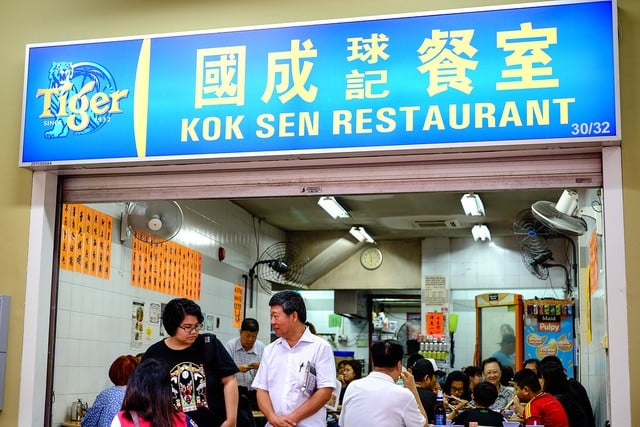
Kok Sen - a restaurant serving a popular Zi Char menu that is always crowded with visitors. (Photo: Time Out)
Besides KEK Seafood, Kok Sen is also a familiar destination for diners who want to fully explore the Zi Char culinary culture. Originating from a small restaurant in 1965 and developed through 3 generations in the same family, Kok Sen retains the rich flavor of traditional Zi Char with dishes such as Big Prawn Hor Fun (stir-fried noodles with large prawns and sauce), Claypot Yong Tau Foo (stir-fried tofu stuffed with meat in a clay pot) or Prawn Bee Hoon (stir-fried rice noodles with prawns). Thanks to maintaining the traditional "Zi Char" flavor for decades, the restaurant has been recognized by Michelin Bib Gourmand for 9 consecutive years and has become a destination for tourists looking for the opportunity to experience the cuisine that has been associated with Singapore for many generations.
Kopitiam Culture - Experience "Singaporean standard" coffee
In Singapore, the kopitiam culture - a traditional coffee shop name derived from the Malay word "kopi" (coffee) and Hokkien word "tiam" (shop) - has been a part of Singaporeans' lives for generations. Kopitiams originated in the late 19th century, when Chinese chefs who worked for British and Dutch families brought the habit of drinking morning coffee to the island nation and developed the technique of roasting coffee beans by hand with sugar and fat to create a distinctive caramel aroma and flavor. From hot cups of kopi mixed with condensed milk and fresh milk stirred until frothy, kopitiams have become familiar spaces where Singaporeans meet, chat and start their day in the familiar rhythm of life of the island nation.
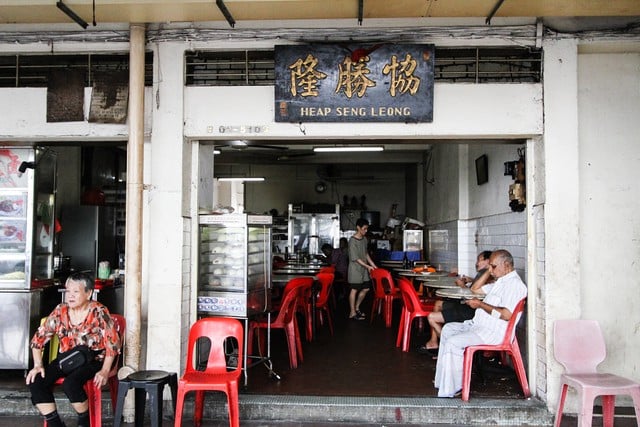
Heap Seng Leong has a nostalgic atmosphere where visitors can explore a simple Singapore. (Photo: Miss Tam Chiak)
Heap Seng Leong is one of the kopitiams that has remained largely unchanged over the decades. It was taken over by Mr. Shi Pong Shu from his Hainanese owners in 1974 and the space has remained largely unchanged since then. It evokes old Singapore with its brick walls, ceiling fans, wooden shelves and charcoal stove, along with old-fashioned items like orange payphones and abacuses for counting money. Each cup of kopi-o (black coffee with sugar) or kopi milk is made by hand: coffee powder is placed in a cloth sieve, steeped in water in a pot and heated over a charcoal stove, creating a rich flavor that is hard to find in modern coffee chains.
To replenish energy for a productive working day, Singaporeans often enjoy kopi coffee with kaya toast, a type of bread with a crispy, fatty crust served with soft-boiled eggs. Besides Heap Seng Leong, Tong Ah Eating House - a kopitiam that has been operating since 1939 - is also an address that tourists can visit to experience this "standard" Singaporean breakfast. This is a familiar breakfast spot for many locals, serving kaya toast and kopi in the traditional style that has been maintained for 86 years of operation.
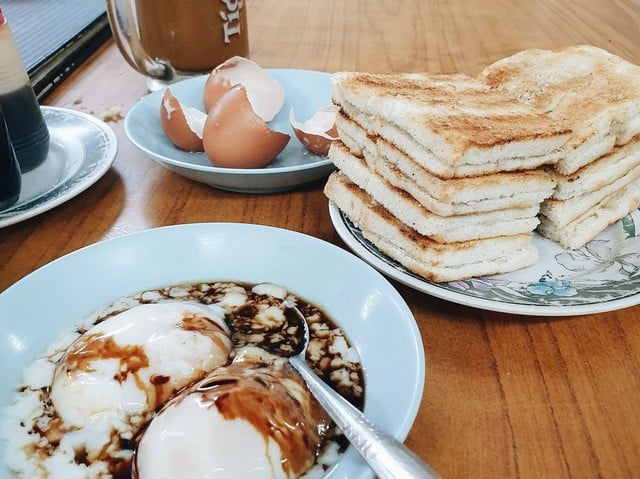
Start your day with a traditional menu typical of the island nation. (Photo: Tong Ah Eating House)
Traditional bakery preserves the taste of old Singapore
Traditional bakeries are an indispensable part of Singapore’s diverse culinary landscape. Without flashy signs or modern production lines, these shops still persist in preserving their handmade methods as a way to retain the old flavors in the midst of modern life.
One of the oldest bakeries in Singapore is Loong Fatt Tau Sar Piah. When it comes to tau sar piah - a typical Fujian red bean and green bean cake, visitors cannot miss this bakery that has been in operation since 1948. To this day, the shop still maintains the method of making cakes by hand. The small, crispy cakes with sweet or salty fillings are the childhood flavor of many Singaporeans, often appearing on holidays, ancestral worship days or simply as gifts when visiting relatives. In addition to tau sar piah, the shop also retains many "old-fashioned" cakes such as banana sponge cake, pandan cake, rolled cakes, etc., all handmade every day. The simplicity of the shop and the image of hard-working workers by the oven partly represent how Singaporeans persistently maintain traditional flavors in the midst of modern life.
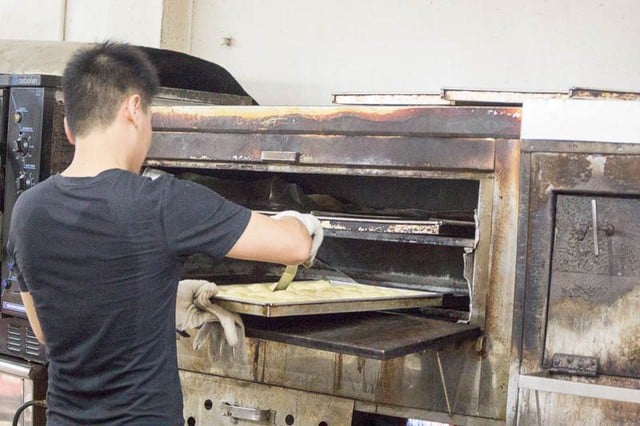
Each cake at Loong Fatt Tau Sar Piah is completely handmade by artisans. (Photo: Seth Lui)
Singapore’s culinary landscape is diverse thanks to the intersection of many cultures. Each traditional culinary destination reflects how Singaporeans preserve the values and flavors that have been attached to the local people for generations. From family-owned eateries, long-standing kopitiams to artisanal bakeries, these seemingly ordinary stops open up a different perspective of the Island Nation - where the vibrant, modern side goes hand in hand with the preserved cultural depth. These things help visitors not only have rich culinary experiences when visiting Singapore, but also understand more about the cultural stories that have shaped the identity of this place.
Source: https://phunuvietnam.vn/am-thuc-truyen-thong-di-san-dac-sac-cua-singapore-238251203142611582.htm


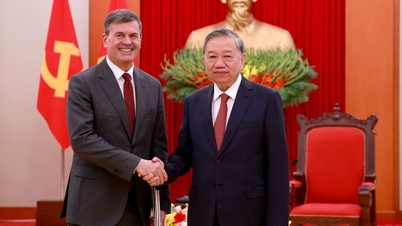
![[Photo] General Secretary To Lam receives the Director of the Academy of Public Administration and National Economy under the President of the Russian Federation](/_next/image?url=https%3A%2F%2Fvphoto.vietnam.vn%2Fthumb%2F1200x675%2Fvietnam%2Fresource%2FIMAGE%2F2025%2F12%2F08%2F1765200203892_a1-bnd-0933-4198-jpg.webp&w=3840&q=75)





























































Comment (0)