

A miniaturized prototype of the spacecraft designed by Polaris has completed a series of successful flights.
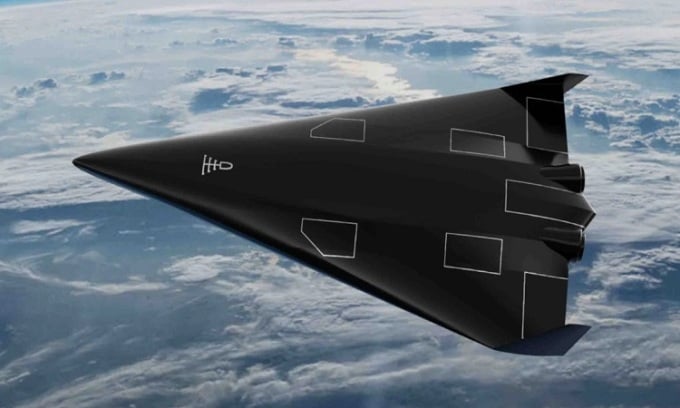
Polaris perfected the Aurora supersonic spacecraft through experimental versions such as Mira. Photo: Polaris Raumflugzenge
German aerospace company Polaris Raumflugzenge has completed a series of test flights to develop Aurora, its next-generation spaceplane design. In late August, the company successfully flew Mira-Light, a scaled-down version of its fourth test aircraft, Mira, which is expected to make its maiden flight later this year. Polaris has extensive experience in launching reusable spacecraft and developing flexible supersonic transport systems that can continue to function as conventional aircraft, according to Debrief .
The Aurora vehicle combines aircraft and rocket launch technology with a new design to provide significant cost advantages, paving the way for regular, safe, and inexpensive access to space. Accordingly, Polaris is creating several small, operational test aircraft to test the technology and accelerate the development of the spacecraft.
MIRA-Light is 2.5 cm long and is a technologically simplified version of the larger and heavier MIRA aircraft. Its primary objective is to thoroughly evaluate and optimize the MIRA's flight control system. The vehicle is equipped with four thrust-generating electric motors, while MIRA uses four kerosene-powered turbofan engines and liquid-fuel rocket engines.
MIRA-Light represents the company's fourth vehicle to take flight, following previous test aircraft Stella, Aleda, and Athena. The research team was able to keep the entire project budget, including design, manufacturing, and testing costs, relatively low, just tens of thousands of dollars, based on experience. According to Polaris, the design and manufacturing process of the vehicle was completed concurrently with MIRA within a few weeks.
"Because the first flight went smoothly, we immediately began flight control testing and calibration on the same day. By the end of the day, MIRA-Light had completed five flights without any problems. We plan to conduct 10-15 more flights in the next few weeks to complete the comprehensive testing program," Polaris said.
The company plans to complete flight testing with Mira by the end of 2023. The final test version, Nova, will take flight early next year. The advanced system on Aurora allows for launches from runways worldwide, just like conventional aircraft. In addition to significantly reducing costs thanks to its reusability and the absence of a launch pad, Aurora can carry 1,000 kg of payload on orbital missions and 10,000 kg on suborbital or supersonic missions. The turnaround time is less than 24 hours. The system also allows for aborted launches and safe return of the payload. According to Polaris, Aurora will enter service in 2026-2027.
An Khang (According to Debrief )
Source link























































































Comment (0)