

On September 4th, Savills Vietnam (part of the Savills real estate services group, UK) published a report on the industrial sector in Central Vietnam. The report noted that foreign direct investment (FDI) is expanding beyond traditional centers in the North or South, with Da Nang playing a leading role in attracting a new generation of FDI.
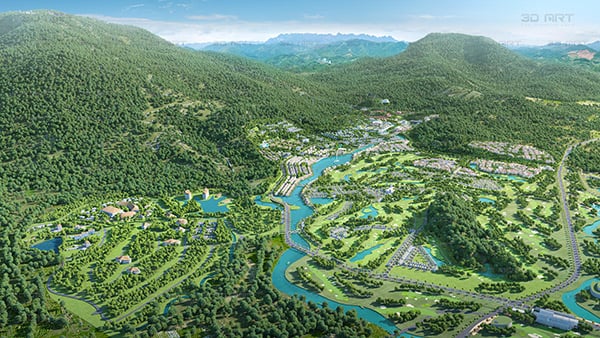
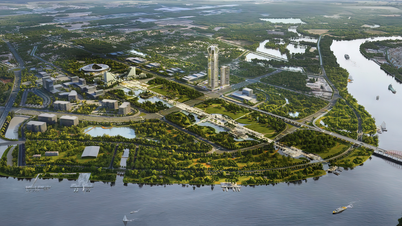
The project for the investment, construction, and operation of infrastructure in functional zone No. 5 FTZ Da Nang, which held its groundbreaking ceremony on August 27th, is shown in the rendering.
According to Savills Vietnam, with its strategic location on the North-South economic corridor, close to international shipping routes, and as a crucial link between the Central Highlands, Laos, and Northeast Thailand, Da Nang is a key hub for goods trade in the region. The recent wave of infrastructure investment and strong incentive policies has truly propelled the city into a comprehensive transformation.
According to Savills, FDI investors in Da Nang recently have not only come from Asian countries such as Japan, Singapore, and Taiwan, but have also expanded to include businesses from the Americas and Europe, demonstrating diversification and increasing confidence in the region. Currently, Da Nang has 3 new industrial parks and 6 existing industrial parks with a total area of over 1,160 hectares, playing a crucial role in the city's economic development strategy.
Furthermore, one of the major drivers attracting businesses to invest is the Da Nang Free Trade Zone (FTZ) project, approved in June 2025, covering nearly 1,900 hectares. The Da Nang FTZ will apply special tax incentives, simplify customs procedures, and integrate closely with Lien Chieu Port and the high-tech zone, forming an ecosystem for production, export, and logistics.
Simultaneously, the Vietnam International Finance Center in Da Nang is being developed in three phases, with the first office tower (27,000m²) expected to be operational by the end of 2025. This is an effort to build a modern financial and technology ecosystem, creating a foundation to attract financial institutions, digital asset services, and strategic investors.
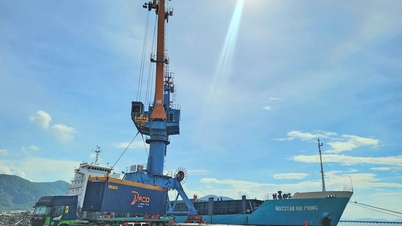
The Lien Chieu deep-water port, expected to be completed by the end of 2025, will replace the overloaded Tien Sa port, serving the needs of transporting large volumes of goods from domestic to international markets. The port will have multimodal connections with road, rail and the expanding ring road, creating a modern logistics platform for the entire region.
An attractive destination for the new generation of FDI.
According to Savills Vietnam, Da Nang has recently shown a significant shift in urban planning and development – from a tourist city to an integrated economic city, with high-tech industries, finance, and innovation as its pillars.
The Da Nang High-Tech Park, spanning over 3,600 hectares, is attracting major technology corporations such as Universal Alloy (USA), along with numerous investors from Japan, South Korea, and Singapore. Preferential policies regarding land lease fees and corporate income tax are creating a clear competitive advantage. The rapid development of this area has led to a strong demand for supporting real estate, from housing for workers and experts, serviced apartments, to logistics centers and offices.
Notably, Da Nang International DC, the largest data center in Da Nang, commenced construction in April 2025 in the Da Nang High-Tech Park. Spanning 2 hectares, it boasts a designed capacity of 18.5MW and meets Tier III standards. This is a crucial platform for the digital transformation of domestic and international businesses and signals Da Nang's readiness to welcome a wave of high-tech investment.
Mr. Thomas Rooney, Deputy Director of Industrial Consulting Services at Savills Vietnam, commented that the convergence of transportation infrastructure, logistics, digital infrastructure, open investment policies, and clear planning orientation is creating momentum for Da Nang to become an attractive destination for the new generation of FDI investors. They are not only looking for low costs but also interested in operational capacity, the legal environment, and the quality of the workforce.
However, this expert believes that Da Nang still faces many challenges in achieving a real breakthrough. These include upgrading logistics capacity, addressing the slow pace of land clearance, and improving the quality of technical and managerial human resources. Administrative reforms will also play a key role in improving the investment environment.
“Amidst the restructuring of global supply chains, coupled with the ‘China + 1’ trend continuing to drive manufacturing capital out of China, Da Nang – if it seizes the opportunity well – could absolutely become the ‘new FDI capital’ of Central Vietnam and the next bright spot on Vietnam’s investment map,” Mr. Thomas Rooney emphasized.
Source: https://doanhnghiepvn.vn/doanh-nghiep/da-nang-hap-dan-dong-von-fdi-the-he-moi/20250905102652875


































































Comment (0)