

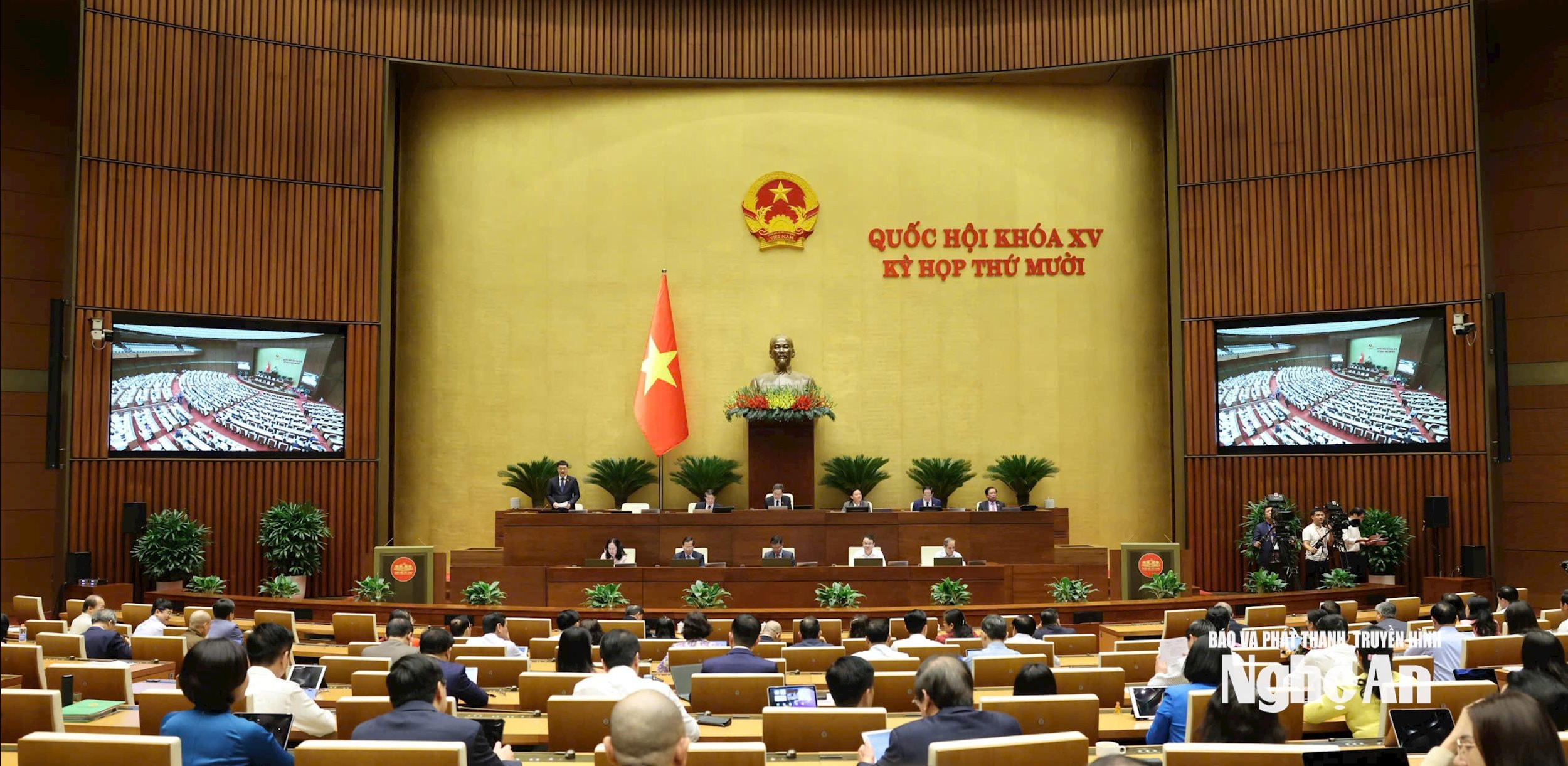
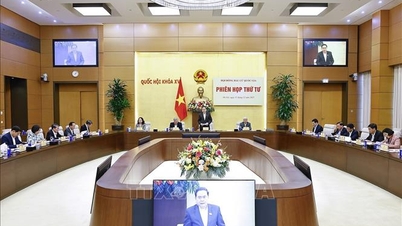
On the morning of October 29th, the 10th session of the 15th National Assembly continued its discussions in the assembly hall. The session was chaired by Comrade Tran Thanh Man, Member of the Political Bureau and Chairman of the National Assembly; and presided over by Comrade Vu Hong Thanh, Member of the Central Committee of the Party and Vice Chairman of the National Assembly.
The delegation of National Assembly deputies from Nghe An province included Ms. Vo Thi Minh Sinh - Deputy Secretary of the Provincial Party Committee, Chairwoman of the Vietnam Fatherland Front Committee of Nghe An province, Head of the National Assembly Delegation of Nghe An province, and other delegates attending the meeting.
Three major limitations in the development of social sciences.
Discussing the Government's report on the implementation results of the socio-economic development plan for 2025 and the five-year period 2021-2025, Mr. Hoang Minh Hieu - Standing Member of the National Assembly's Law Committee, National Assembly representative from Nghe An province - highly appreciated the achievements and the innovative spirit in managing national development.
He argued that the institutionalization and implementation of the Party's strategic guidelines and policies in recent years have created positive impacts, especially in the fields of science, technology, innovation, and national digital transformation. By 2025, Vietnam is ranked 44th out of 139 economies in the Global Innovation Index and 6th out of 40 countries in the World AI Index.
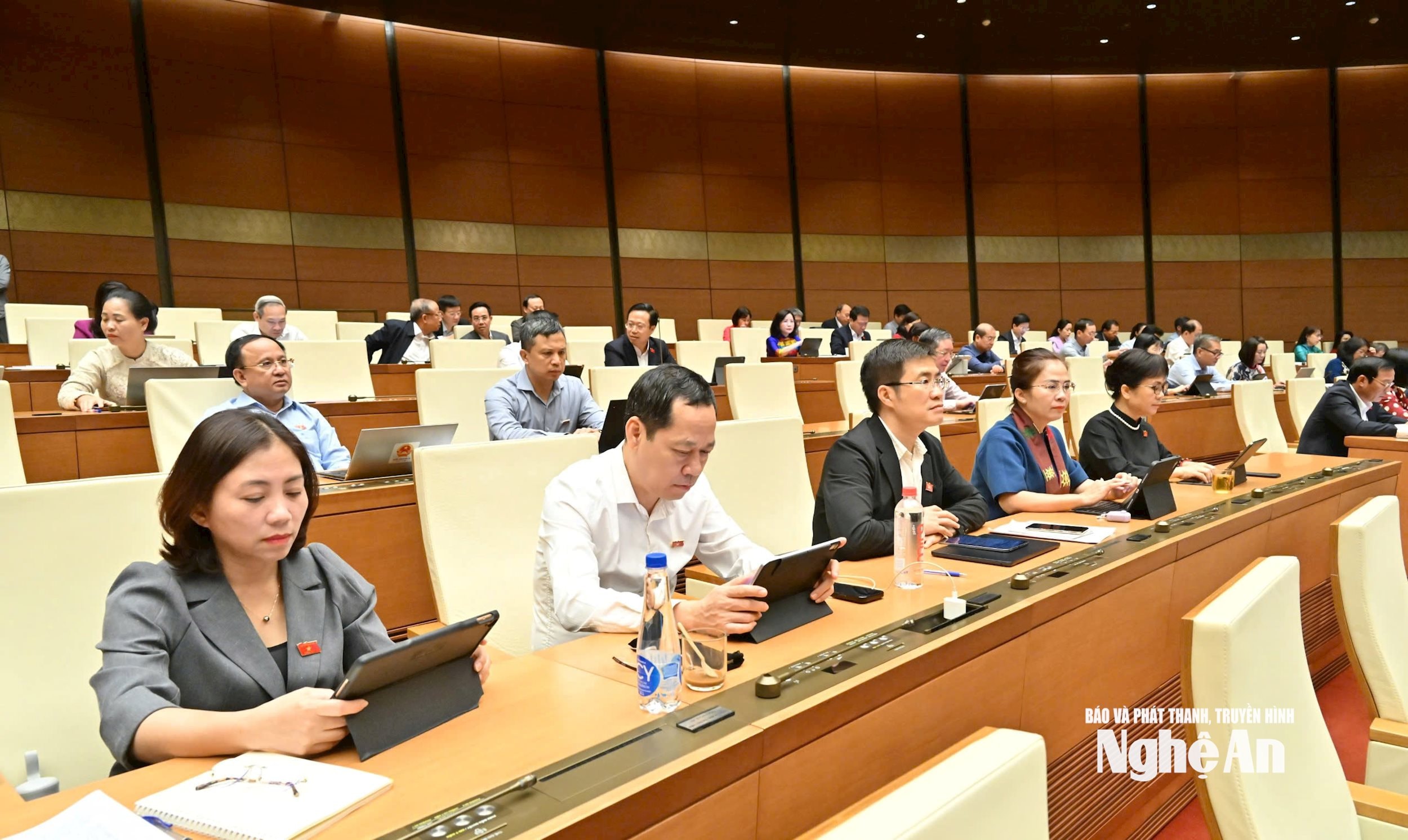
However, according to the delegates, for sustainable development, Vietnam needs not only to invest in natural sciences and technology, but also to pay special attention to the development of social sciences and humanities.
"If natural sciences and technology help people 'do more,' then social sciences help people 'understand better' themselves and the society they live in."
National Assembly representative Hoang Minh Hieu
In a more in-depth analysis, delegate Hoang Minh Hieu pointed out three major limitations in the current development of social sciences. Firstly, the connection between the results of social science research and policy planning and socio-economic development remains limited.
The reality is that many social science research topics are currently not closely linked to the practical needs of life and the government's policy-making. Social science research often only goes as far as publishing results without being translated into concrete, effective policies or solutions.
Furthermore, in some cases, policy-making has not fully utilized the results of social science research as a tool for policy design and measuring social impact.
Secondly, the financial and organizational mechanisms for social science research are not flexible enough and do not provide incentives for research activities. Many policies and strategies for the development of science and technology in our country to date have been fundamentally formulated for both natural and social sciences, but often stem from the realities and requirements of natural sciences and technology rather than social sciences and humanities.
“Meanwhile, social science studies human beings and social relationships, which are constantly changing and linked to values, culture, and political context. Therefore, the approach of social science cannot be applied similarly to models from natural sciences; it requires a more flexible mechanism for funding, evaluation, recognition, and implementation, based on academic quality and social value, rather than solely on the commercialization of research results,” the representative from Nghe An province stated.
Thirdly, the data infrastructure, research methods, and digital transformation for social sciences are still slow to innovate. Traditional research methods still predominate, and there hasn't been a strong shift towards modern research methods.
The digitization and standardization of data for research purposes, as well as the application of new research methods, still face many obstacles, such as the fragmented and unstandardized nature of research data systems and the lack of adequate analytical skills.
A social science development strategy is needed that is appropriate for the new context.
According to delegate Hoang Minh Hieu, in the context of rapid technological development, especially with the emergence of artificial intelligence (AI), the social, legal, and ethical issues raised by technology are becoming increasingly complex and urgent.
He raised a series of questions that only social science could answer: “To whom do AI-generated products belong? How can AI be prevented from creating discrimination? What ethical problems will allowing AI to make life-or-death decisions without human intervention create? And who will be held legally responsible for risks arising from the use of AI—the AI user or the creator of the AI algorithm…?”
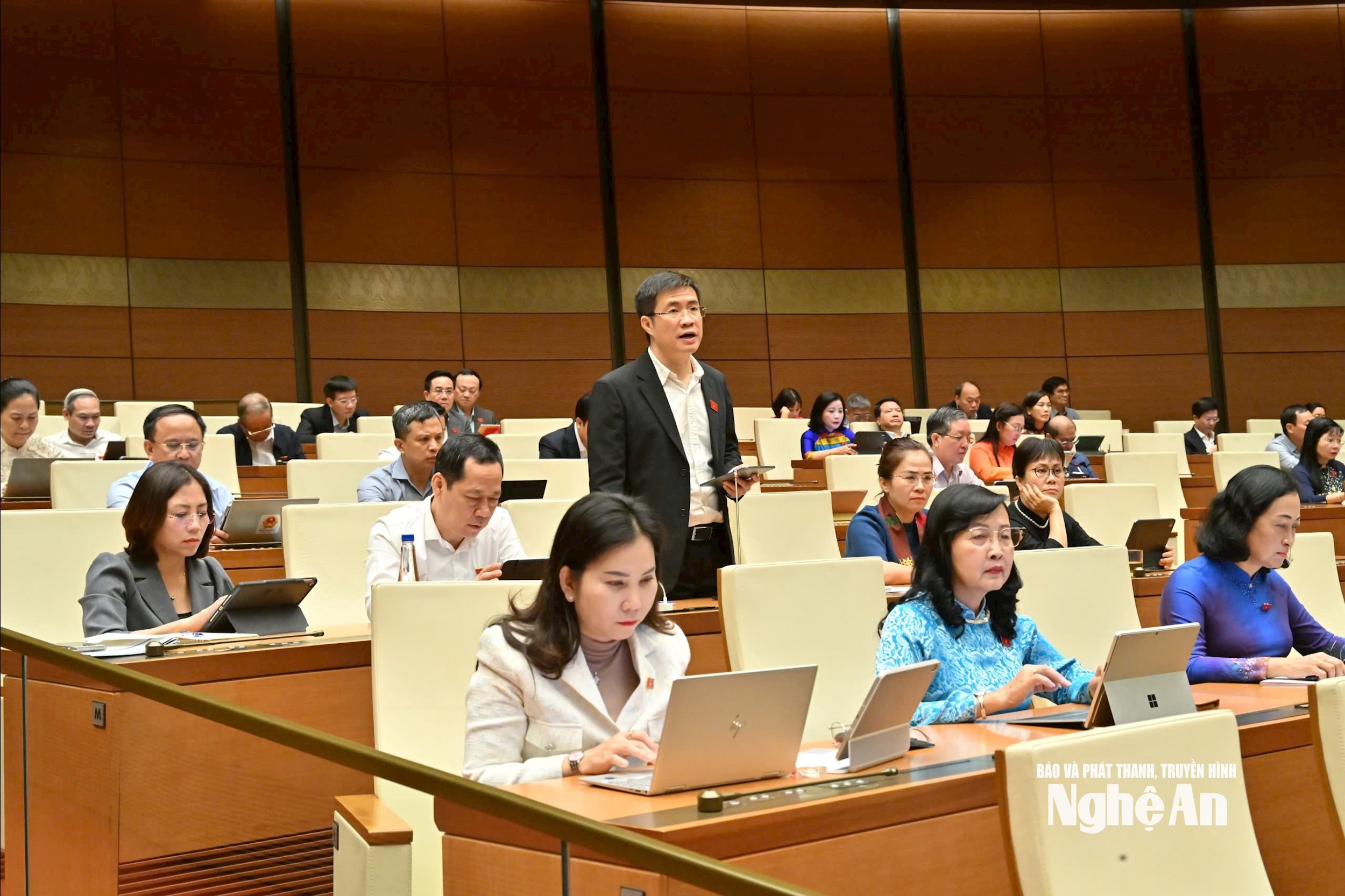
Based on this practical experience, the delegates from Nghe An province proposed that the Government needs a social science development strategy that is appropriate to the new context. First, it is necessary to research and develop key programs for the development of social sciences and humanities, focusing on new issues linked to the development of new technologies serving socio-economic development, such as legal issues regarding the use of new technologies, digital sociology research, and newly emerging non-traditional security issues…
Next, it is necessary to innovate the financial and evaluation mechanisms of social sciences, applying a mechanism where state agencies commission social science research to serve the planning of specific policies; continue to innovate the policy-making process to increase the scientific content in decision-making. Diversify the forms of publication and recognition of the value of research, such as policy reports, legal advice, social data, etc.; increase funding for social science projects with high practical application, not just based on the number of published research papers.
The delegates also emphasized the task of developing high-quality human resources in social sciences, such as increasing investment in postgraduate training and international cooperation. Policies should be implemented to value social scientists who possess strong character and intellect, and who have made significant contributions to the process of formulating socio-economic development policies for the country.
Another requirement mentioned by Mr. Hoang Minh Hieu is the need to build social data infrastructure and an academic ecosystem for social sciences, integrating digital transformation into social science research methods, from big data analysis and social simulation to the systematization of cultural knowledge.
Finally, the delegate from Nghe An emphasized the role of strengthening the connection between social sciences and natural sciences, for example, the issue of "artificial intelligence and law" mentioned above, or studying the social impact and community needs when implementing digital transformation projects in specific areas. "This is the 'intersection zone' where social sciences provide the framework of values and institutions to ensure that technology develops in the right direction," he said.
Source: https://baonghean.vn/dai-bieu-quoc-hoi-doan-nghe-an-chia-se-goc-nhin-phat-trien-khoa-hoc-xa-hoi-trong-ky-nguyen-so-10309575.html

![[Photo] Prime Minister Pham Minh Chinh receives Lao Minister of Education and Sports Thongsalith Mangnormek](/_next/image?url=https%3A%2F%2Fvphoto.vietnam.vn%2Fthumb%2F1200x675%2Fvietnam%2Fresource%2FIMAGE%2F2025%2F12%2F16%2F1765876834721_dsc-7519-jpg.webp&w=3840&q=75)
![[Photo] Prime Minister Pham Minh Chinh receives the Governor of Tochigi Province (Japan)](/_next/image?url=https%3A%2F%2Fvphoto.vietnam.vn%2Fthumb%2F1200x675%2Fvietnam%2Fresource%2FIMAGE%2F2025%2F12%2F16%2F1765892133176_dsc-8082-6425-jpg.webp&w=3840&q=75)
![[Image] Leaked images ahead of the 2025 Community Action Awards gala.](/_next/image?url=https%3A%2F%2Fvphoto.vietnam.vn%2Fthumb%2F1200x675%2Fvietnam%2Fresource%2FIMAGE%2F2025%2F12%2F16%2F1765882828720_ndo_br_thiet-ke-chua-co-ten-45-png.webp&w=3840&q=75)














































![[Photo] Prime Minister Pham Minh Chinh attends the Vietnam Economic Forum 2025](https://vphoto.vietnam.vn/thumb/402x226/vietnam/resource/IMAGE/2025/12/16/1765893035503_ndo_br_dsc-8043-jpg.webp)



























Comment (0)