

Representative Tran Quoc Tuan (Vinh Long) noted that, in addition to macroeconomic stability, institutional reform and streamlining of the administrative apparatus have also created a significant turning point in the operation of the two-tiered local government model in 34 provinces and cities.
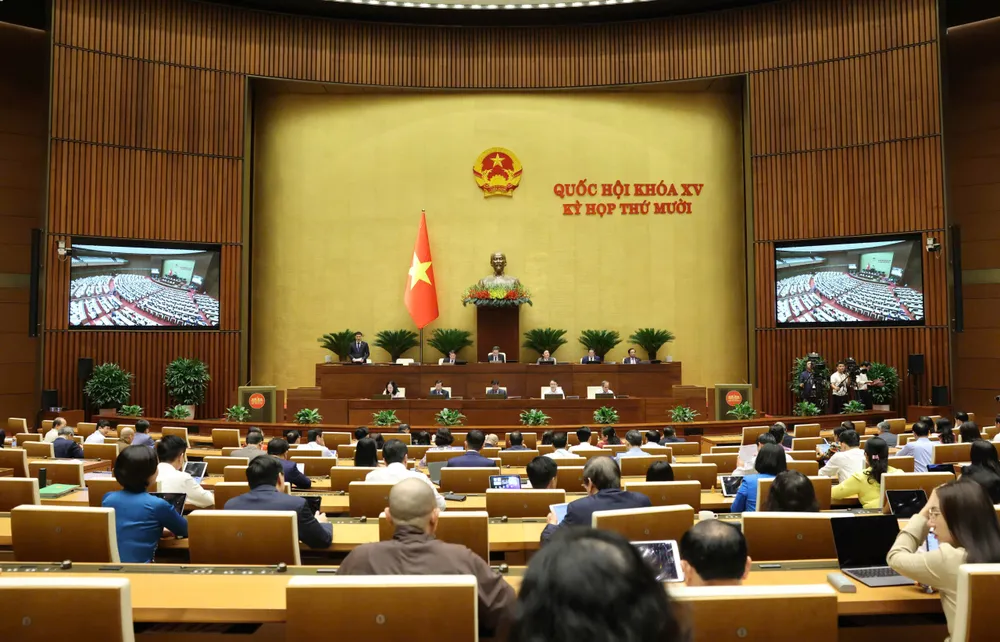
However, Delegate Tran Quoc Tuan informed that voters nationwide continue to hope that the Party and State will pay more attention to fundamental issues, especially the salary policy and living conditions of cadres, civil servants, and public employees. The delegate from Vinh Long province said that after nearly four months of operating the new government model, the administrative apparatus has become lighter in terms of organizational structure but heavier in terms of workload. Cadres and civil servants in many localities, especially at the grassroots level, have to travel further to work and do more tasks, while their income has not improved.
“According to reports submitted to the National Assembly, voters in many localities such as Quang Tri, Binh Thuan, and Vinh Long have reflected that after the administrative unit merger, many commune officials have to travel further, in some places 10-15km to reach the new headquarters. Meanwhile, travel allowances and public service allowances have not been adjusted. Voters in Nghe An, Lam Dong, and Dong Thap provinces requested the Government to have policies to support and encourage officials in the merged areas, because their lives are facing many difficulties, travel costs, housing, and living expenses have increased; and their actual income has decreased by 10-12% compared to before,” Representative Tran Quoc Tuan stated, emphasizing that these recommendations are not just numbers, but the heartfelt voice of the grassroots civil servants and officials – those who bear the heavy burden of the state apparatus.
According to National Assembly Deputy Tran Quoc Tuan, if the living standards of the workforce are not guaranteed, the effectiveness of policy implementation will also be difficult to meet requirements. He stated that although the basic salary has been increased recently, it is no longer appropriate compared to the current cost of living. Deputy Tran Quoc Tuan proposed considering adjusting the basic salary increase starting from January 1, 2026, instead of waiting until mid-year as in previous periods.
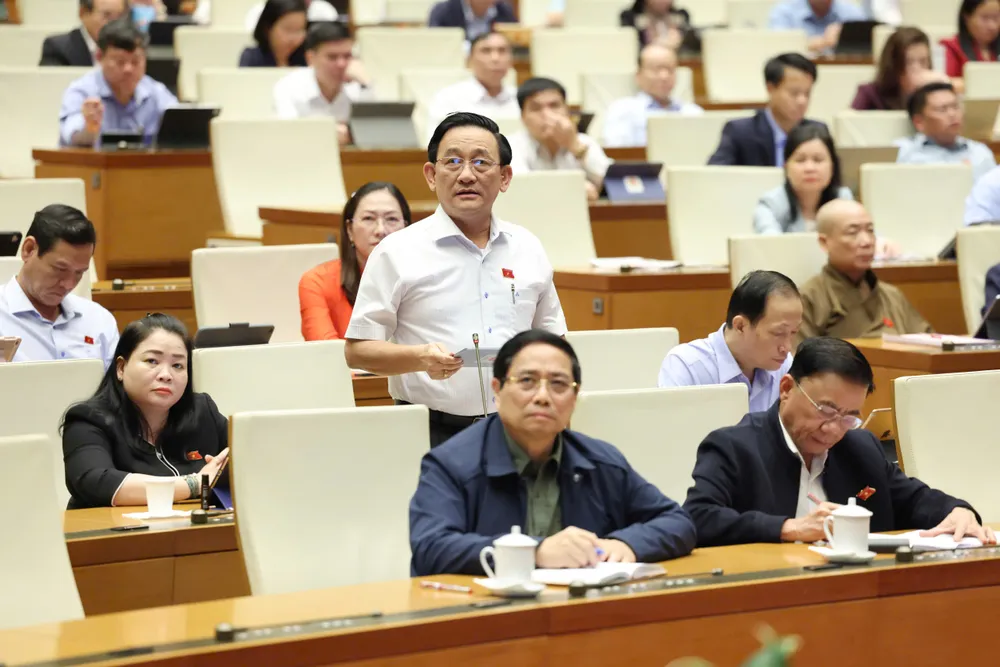
Sharing the same view, Delegate Duong Van Phuoc (Da Nang City) expressed high confidence that the two-tiered local government model has proven its correctness and has initially yielded positive results. However, practical experience raises many issues that need to be addressed. The operational process is facing obstacles related to mechanisms; many issued documents are not timely and overlap with reality, especially concerning the decentralization of budget revenue and expenditure, affecting investment projects; technical infrastructure does not adequately meet the requirements of the tasks, with offices varying in design; transportation infrastructure at the commune level is degraded in many places; and information technology has not been invested in comprehensively and smoothly, especially in the field of land registration in mountainous and midland areas.
According to Representative Duong Van Phuoc, during the operation of the new government model, in some places, officials have not been assigned uniformly according to their expertise, and there is an uneven distribution in terms of qualifications, capabilities, and numbers. The staffing allocation for communes has not taken into account geographical factors, regions, and socio-economic conditions, thus leading to a heavy workload in many communes.
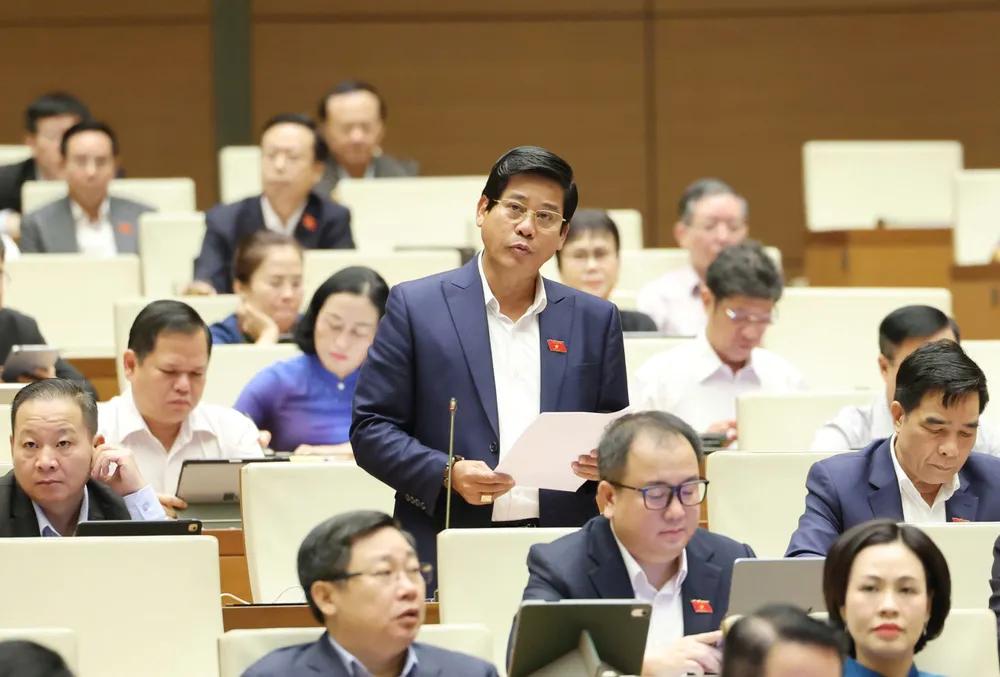
"Commune-level officials work under immense pressure, doing 2-3 times the workload, but their benefits and policies remain unchanged and are still very low, failing to encourage and motivate them to work with peace of mind and dedication," said Representative Duong Van Phuoc, proposing that the Government promptly issue the missing guiding documents, amend and supplement overlapping regulations, and research and issue appropriate policies and mechanisms for the commune level. He also suggested building a clear mechanism for decentralization, delegation of power, and authorization to ensure the proactive and flexible role of local governments.
In addition, Representative Duong Van Phuoc suggested that the Ministry of Interior should soon conduct a field survey to establish job positions and minimum staffing levels as a basis for determining staffing for communes, and advise the government to issue appropriate salary mechanisms to encourage commune-level officials and civil servants to work with peace of mind and attract officials to work in areas with difficult economic conditions.
“The success of the new model depends heavily on the coordination between a synchronized legal framework, a competent and responsible workforce, and modern technical infrastructure and technology based on a new management mindset. Therefore, we must shift strongly from administrative management to state governance. This is not simply a change in terminology, but a revolution in cultural and institutional thinking,” Representative Duong Van Phuoc stated.
Source: https://www.sggp.org.vn/de-nghi-nhanh-chong-co-chinh-sach-ho-tro-can-bo-cap-xa-post820506.html















































































Comment (0)