

 |
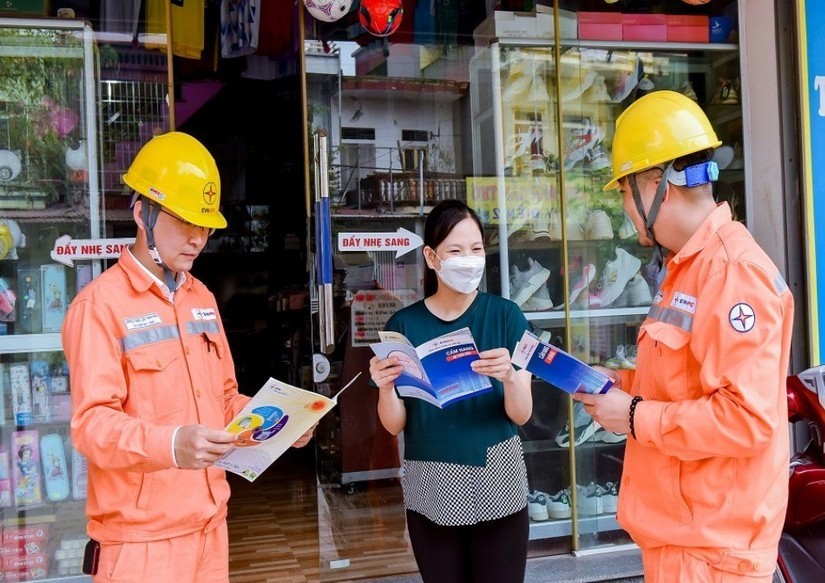
Proposed 5-tiered electricity pricing for household consumption: Tier 1 (0-50kWh) is eliminated.
The content refers to the draft Decision of the Prime Minister regulating the structure of retail electricity tariffs.
The retail electricity pricing structure is a table listing the percentage (%) of the average retail electricity price used to calculate the specific retail electricity price for each group of electricity users.
Accordingly, the proposed five-tiered electricity pricing system for household consumption is as follows:
TT | target customer group | The rate relative to the average retail electricity price is adjusted according to authority. (%) |
|---|---|---|
Retail electricity prices for household use. | ||
1 | Retail price of electricity for household use | |
Level 1: For kWh from 0 - 100 | 90% | |
Level 2: For kWh from 101 - 200 | 108% | |
Level 3: For kWh from 201 - 400 | 136% | |
Level 4: For kWh from 401 - 700 | 162% | |
Tier 5: For kWh from 701 and above | 180% | |
2 | Retail price of electricity for household use with prepaid card meters. | 132% |
The retail price of electricity for household use with prepaid meter cards is applied when technical conditions permit for groups of customers purchasing electricity temporarily and short-term for household purposes.
Electricity bill subsidy
Poor households, according to income criteria stipulated by the Prime Minister , will receive electricity subsidies for domestic use. The monthly subsidy will be equivalent to the cost of 30 kWh of electricity, calculated at the current retail price for residential electricity at tier 1.
Households eligible for social welfare policies according to criteria stipulated by the Prime Minister (excluding poor households eligible for electricity subsidies as stipulated in Clause 1, Article 4 of the draft) and whose monthly electricity consumption for domestic purposes does not exceed 50 kWh will receive an electricity subsidy equivalent to the cost of 30 kWh of electricity calculated at the current retail price for residential electricity at tier 1.
Funding for electricity subsidies for poor households and households eligible for social welfare policies is allocated from the state budget and other legitimate financial sources.
Compared to Decision 28/2014/QD-TTg, the draft new Decision only has 5 tiers, eliminating tier 1 (0 - 50kWh), while increasing prices in the remaining tiers, with tier 5 having the highest rate at 180% of the average retail electricity price adjusted according to authority.
TT | target customer group | Ratio to the average retail electricity price adjusted by authorized authority (%) |
Retail electricity prices for household use. | ||
1 | Retail price of electricity for household use | |
Level 1: For kWh from 0 - 50 | 92% | |
Step 2: For kWh from 51 - 100 | 95% | |
Level 3: For kWh from 101 - 200 | 110% | |
Step 4: For kWh from 201 - 300 | 138% | |
Level 5: For kWh from 301 - 400 | 154% | |
Level 6: For kWh from 401 and above | 159% | |
2 | Retail price of electricity for household use with prepaid card meters. | 132% |
The latest 6-tiered electricity tariff for household consumption in 2023 is currently in effect.
The latest 6-tiered electricity tariff for household consumption, effective from May 4, 2023, according to Decision 1062/QD-BCT, is as follows:
Retail price of electricity for household use | Electricity selling price (VND/kWh) |
Level 1: For kWh from 0 - 50 | 1,728 |
Level 2: For kWh from 51 - 100 | 1,786 |
Level 3: For kWh from 101 - 200 | 2,074 |
Level 4: For kWh from 201 - 300 | 2,612 |
Level 5: For kWh from 301 - 400 | 2,919 |
Level 6: For kWh from 401 and above | 3,015 |
Source
![[Image] Vietnam's colorful journey of innovation](/_next/image?url=https%3A%2F%2Fvphoto.vietnam.vn%2Fthumb%2F1200x675%2Fvietnam%2Fresource%2FIMAGE%2F2025%2F12%2F14%2F1765703036409_image-1.jpeg&w=3840&q=75)




























































![[Image] Vietnam's colorful journey of innovation](https://vphoto.vietnam.vn/thumb/402x226/vietnam/resource/IMAGE/2025/12/14/1765703036409_image-1.jpeg)



























Comment (0)