

Big challenge
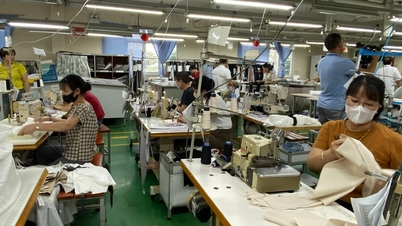
Recently, the Vietnam Textile and Apparel Association informed that the textile and garment industry is expected to reach 64.5 billion USD in export turnover by 2030, with an average growth of 6.5-7%/year. This is not a small number.
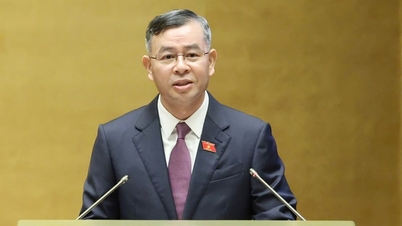
According to Mr. Vu Duc Giang, Chairman of the Vietnam Textile and Apparel Association, it is possible to clearly identify major challenges that will impact the industry in the next 5 years and beyond.

Mr. Vu Duc Giang, Chairman of Vietnam Textile and Apparel Association. Photo: Hai Linh
“ First and foremost is the transformation in political relations and global purchasing methods. That forces Vietnamese enterprises to have appropriate solutions to improve sales capacity, gradually turning the textile and garment business model into a multinational enterprise ,” said Mr. Giang.
Currently, a number of Vietnamese textile and garment enterprises have begun to invest abroad, expanding their production systems. According to the Chairman of the Vietnam Textile and Apparel Association, this is a huge change, opening up new development space for the entire industry, in the context that some of Vietnam's advantages are no longer strong competitive advantages, such as human resources.
In addition, automation and robotization are happening at a rapid pace. In just one year, many factories have introduced robots to transport between stages. This is not just a story about productivity, any company that is slow to adapt will be eliminated from the global supply chain.
The challenge of sustainable development is also "breathing hot air" into each production unit. The world fashion industry is entering a period of tightening environmental requirements, transparency of origin, and emission reduction. Although many Vietnamese enterprises have proactively invested in wastewater treatment, recycled materials, and conversion to clean energy, there is still a big gap to meet the requirements of the "big" importers.
“ The textile industry is also at risk from natural disasters and floods. Currently, many factories have had to stop production and disrupt deliveries, affecting tens of thousands of workers. This is an uncertain factor that the industry must consider in its long-term strategy ,” Mr. Giang emphasized.
He also said that there are three major pillars that the industry will focus on for development in the next 5 years and beyond, including: Diversifying markets, partners and customers; promoting technology, from automation to AI; building chain links, learning management among domestic enterprises.
Along with that are three Go Global goals: Forming multinational textile and garment enterprises; building a fashion industry, developing Vietnamese brands to the world ; improving resources to meet new purchasing models and technologies.
However, the biggest problem still lies in internal strength when most textile and garment enterprises are small and medium-sized, lacking capital and high-quality human resources. Mr. Giang frankly said that enterprises must proactively plan their own development path in the context of global integration.
Take further advantage of incentives from FTAs
One of the key factors helping the textile and garment industry set a growth target of 6-7% in the next 5 years, although the ability to grow in breadth may have "reached its limit", is the system of free trade agreements (FTAs) that have come into effect and those under negotiation.
The agreements help Vietnam's textile and garment industry expand into new markets besides traditional importing countries, Mr. Giang acknowledged, which is necessary. In particular, the Middle East market with a GDP of about 5,500 billion USD, a population of 370 million people only brings 400 - 500 million USD/year to Vietnam's textile and garment industry, so the room for the industry is still very large.
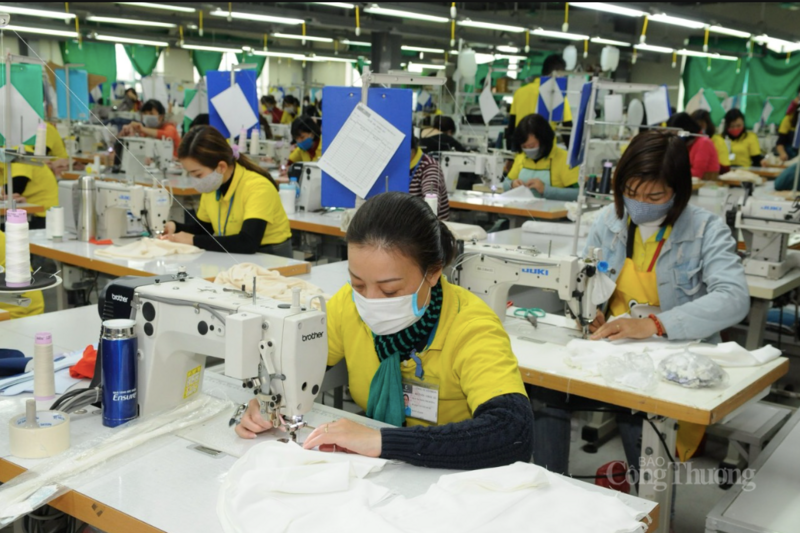
Vietnam's textile and garment industry is expected to maintain an export growth rate of 6.5-7% per year by 2030. Photo: Can Dung
However, taking advantage of free trade agreements, especially textiles and garments, is also a matter worth discussing when the rate of using preferential C/O is not high, for example, the Comprehensive and Progressive Agreement for Trans-Pacific Partnership (CPTPP) is about 15%.
The reasons for this limitation are not new: lack of market information, lack of resources, lack of specialized FTA departments in enterprises. In textiles, lack of raw material supply is a prominent problem that has not had an effective solution for a long time.
With the above limitations, the Program to Reach the International Market 2026 - 2035 (Go Global) developed by the Ministry of Industry and Trade and submitted to the Government opens a radical solution. Mr. Tran Huy Hoan (Department of Financial Planning and Enterprise Management, Ministry of Industry and Trade) said that the program has 3 key contents: First, not only promoting the export of goods, the program also focuses on the export of services. In particular, the goal is not to export by quantity but to increase the added value of domestically produced products.
Second, an area that has not received due attention for a long time is foreign investment. In fact, many countries, when signing FTAs with Vietnam, have used our country as a "gateway" to invest in production and export to other markets. Meanwhile, Vietnam has not yet exploited this direction well. Currently, foreign investment opportunities have begun to appear more clearly and that is the important direction of the program.
Third, the program aims to increase Vietnam’s presence in the international market. The goal is not only to export or invest, but also to build the national image and brand, which means promoting the strength of the Vietnamese community and Vietnamese values on a global scale.
From the three key contents above, looking at the Vietnamese textile and garment industry, we can see that with the program approved by the Government, the textile and garment industry will have an additional system of support policies to overcome current weaknesses and improve internal strength, such as: Shortage of supply, human resource training, and market network connection.
However, as many experts share, to firmly advance into the global market and achieve long-term goals, the mindset of the business community plays a decisive role; "dare to think, dare to do" is necessary.
The textile and garment industry aims to achieve an export turnover of 64.5 billion USD by 2030, with an average growth rate of 6.5 - 7%/year. Developing the domestic market to reach a scale of 8 - 9 billion USD. The strategic focus is 'Greening - Digitalization', increasing the localization rate to over 60% and building a strong Vietnamese fashion brand.
Source: https://congthuong.vn/det-may-viet-nam-chinh-phuc-muc-tieu-64-5-ty-usd-va-hon-the-nua-432927.html
![[Photo] Worshiping the Tuyet Son statue - a nearly 400-year-old treasure at Keo Pagoda](/_next/image?url=https%3A%2F%2Fvphoto.vietnam.vn%2Fthumb%2F1200x675%2Fvietnam%2Fresource%2FIMAGE%2F2025%2F12%2F02%2F1764679323086_ndo_br_tempimageomw0hi-4884-jpg.webp&w=3840&q=75)


![[Photo] Parade to celebrate the 50th anniversary of Laos' National Day](/_next/image?url=https%3A%2F%2Fvphoto.vietnam.vn%2Fthumb%2F1200x675%2Fvietnam%2Fresource%2FIMAGE%2F2025%2F12%2F02%2F1764691918289_ndo_br_0-jpg.webp&w=3840&q=75)




















































































Comment (0)