

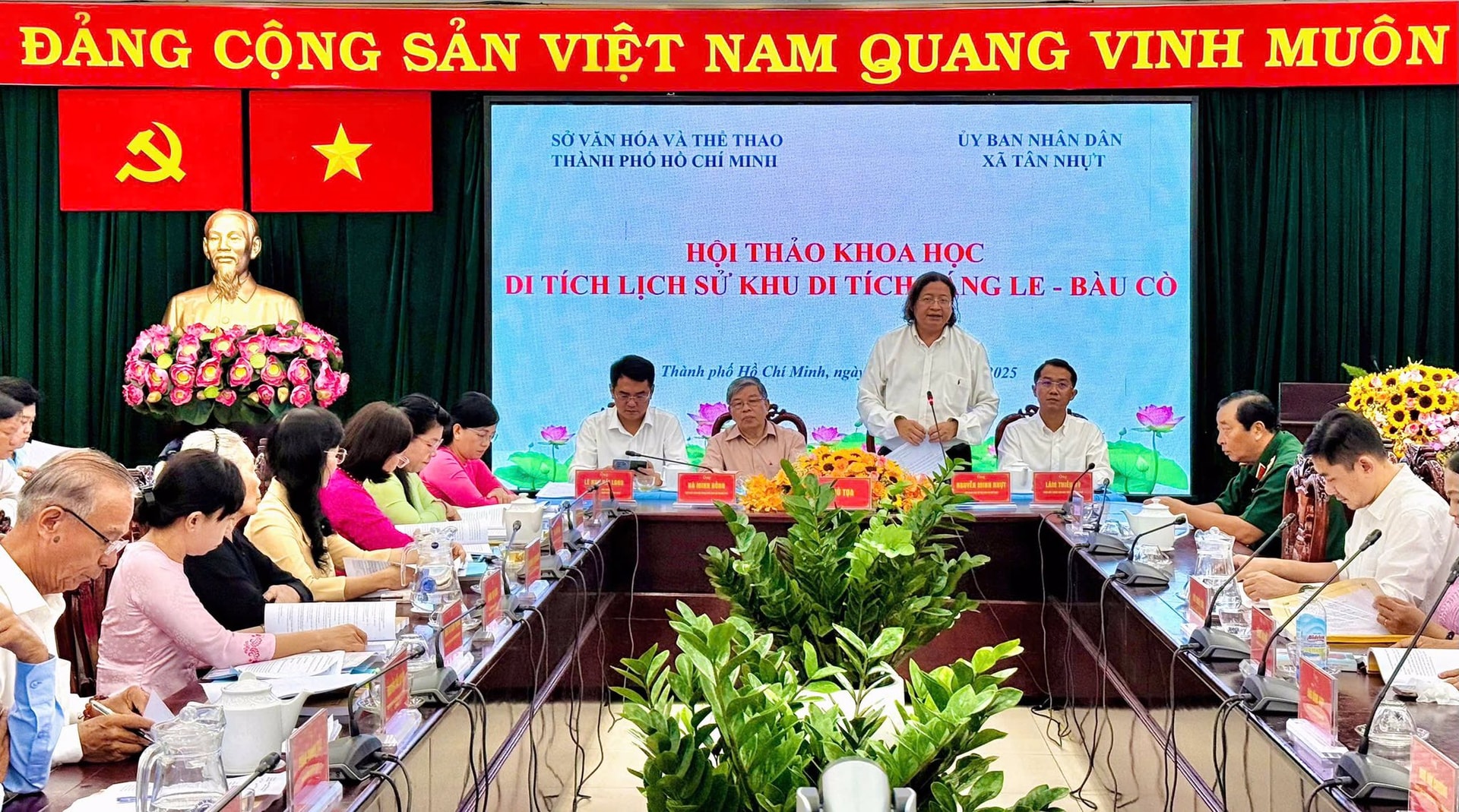
Presenting his paper at the conference, Associate Professor Dr. Ha Minh Hong, Vice President of the Ho Chi Minh City Historical Science Association, summarized the historical process of this area, considering Lang Le - Bau Co as a typical example of the fighting spirit and unique military art of the people and army of Southern Vietnam in the early years of the resistance against the French, transforming the remote swampy area into a tenacious resistance base.
According to Dr. Nguyen Thi Hoai Huong ( Ho Chi Minh City Development Research Institute), the most profound lesson from Lang Le - Bau Co is the art of utilizing terrain and the combined strength of people's warfare.
From the characteristics of the swampy terrain and canals, our soldiers and people transformed their disadvantage into an advantage, creating a "resistance channel," using hidden obstacles and close-combat tactics to neutralize the enemy's superior firepower, affirming the decisive role of human spirit and ingenuity. More than 3,000 people in the Tam Tan area sacrificed their lives, contributing their blood to protect the revolutionary forces and base until the day of complete victory.
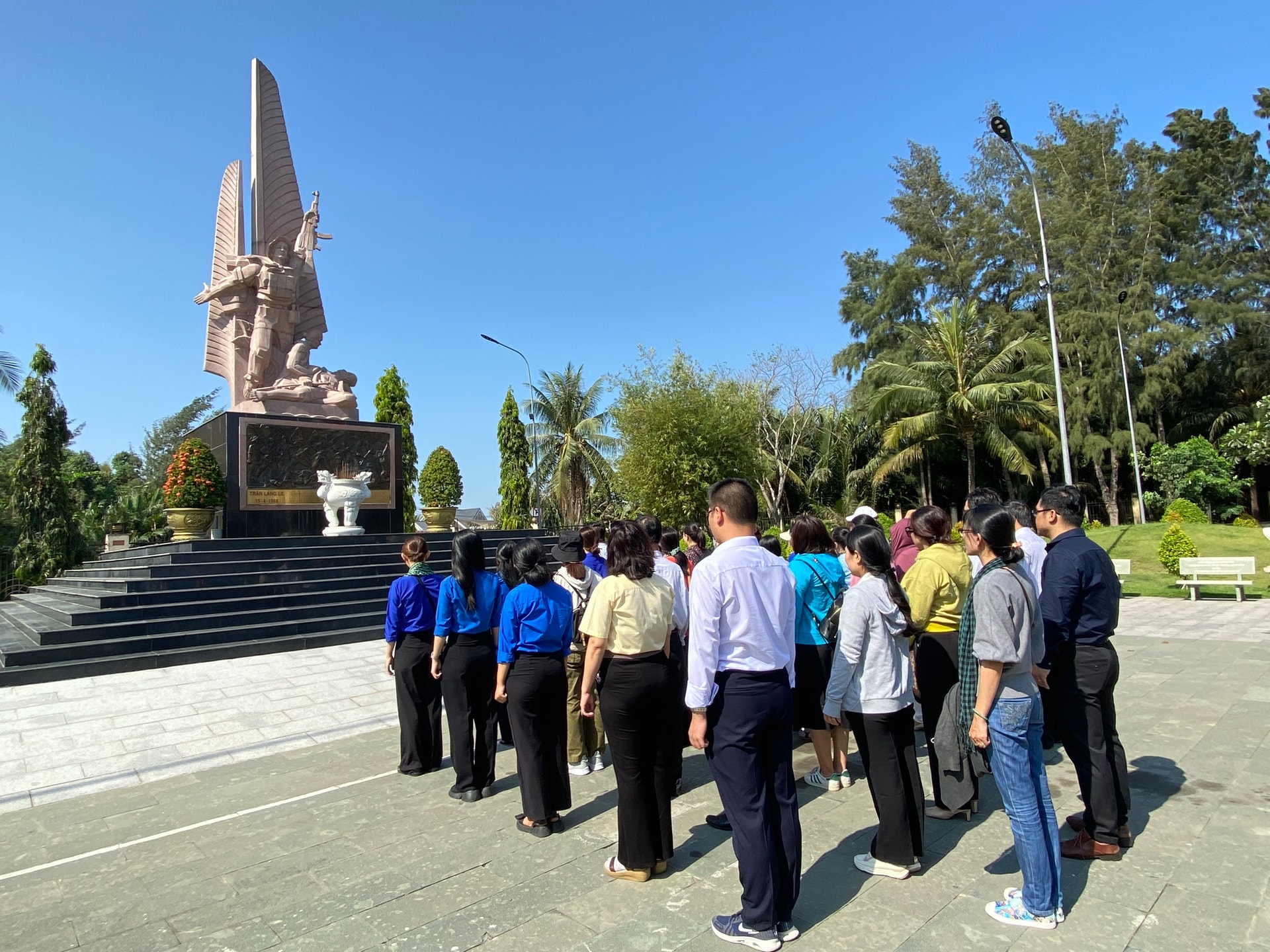
Speaking at the conference, writer Tram Huong affirmed: “The Vuon Thom - Ba Vu, Lang Le - Bau Co historical sites are vivid symbols of the tenacious fighting spirit and the close bond between the army and people in the suburbs of Saigon - Cholon, deeply imprinted with the sacrifices of many generations who died for the independence and freedom of the Fatherland. These sites deserve to be classified as national historical relics.”
The delegates participating in the workshop also unanimously agreed on the view that preserving the Lang Le - Bau Co historical site is not only about retaining a historical location, but also about restoring the ecosystem of the bamboo forest, swamps, and canals, which were once the "natural front" of war, and are now a peaceful land, evoking the image of "cranes flying, fish swimming, and people and nature in harmony."

Concluding the workshop, Mr. Nguyen Minh Nhut, Deputy Director of the Ho Chi Minh City Department of Culture and Sports, acknowledged that the workshop had contributed to clarifying the historical value and strategic position of Lang Le - Bau Co throughout the two wars of resistance against French colonialism and American imperialism. The Department of Culture and Sports requested that relevant parties continue to evaluate and complete the scientific dossier of the Lang Le - Bau Co historical site, and promptly submit it to the City People's Committee and the Ministry of Culture, Sports and Tourism for consideration and decision as a national historical site.
In 1988, the Lang Le - Bau Co Victory Monument was erected in Hamlet 1, Tan Nhut Commune, covering an area of over 1,000 square meters, commemorating the revolutionary victory.
In 2003, this site was classified as a city-level historical relic by the People's Committee of Ho Chi Minh City. In 2020, the site was upgraded and connected with the Revolutionary Tradition Area of the 1968 Tet Offensive and Uprising, forming a historical link – battlefield space – and memory of this heroic land.
Every year, on April 15th, the commemoration of the Lang Le - Bau Co Victory is held solemnly, expressing profound gratitude to the heroic martyrs, cadres, soldiers, and compatriots who sacrificed their lives for the independence and unification of the country.
Source: https://hanoimoi.vn/di-tich-lich-su-lang-le-bau-co-huong-den-duoc-cong-nhan-la-di-tich-quoc-gia-720779.html


















































































Comment (0)