

Businesses are investing heavily.
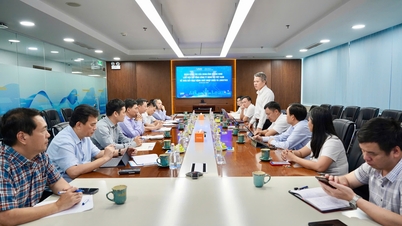
At a meeting of member units of the Vietnam Maritime Corporation ( VIMC ) in early 2025, the fleet development plan was displayed on a screen: 11 bulk carriers, 6 container ships, and 4 oil tankers – a number that clearly demonstrates the Vietnam Maritime Corporation's ambition to rejuvenate its fleet.
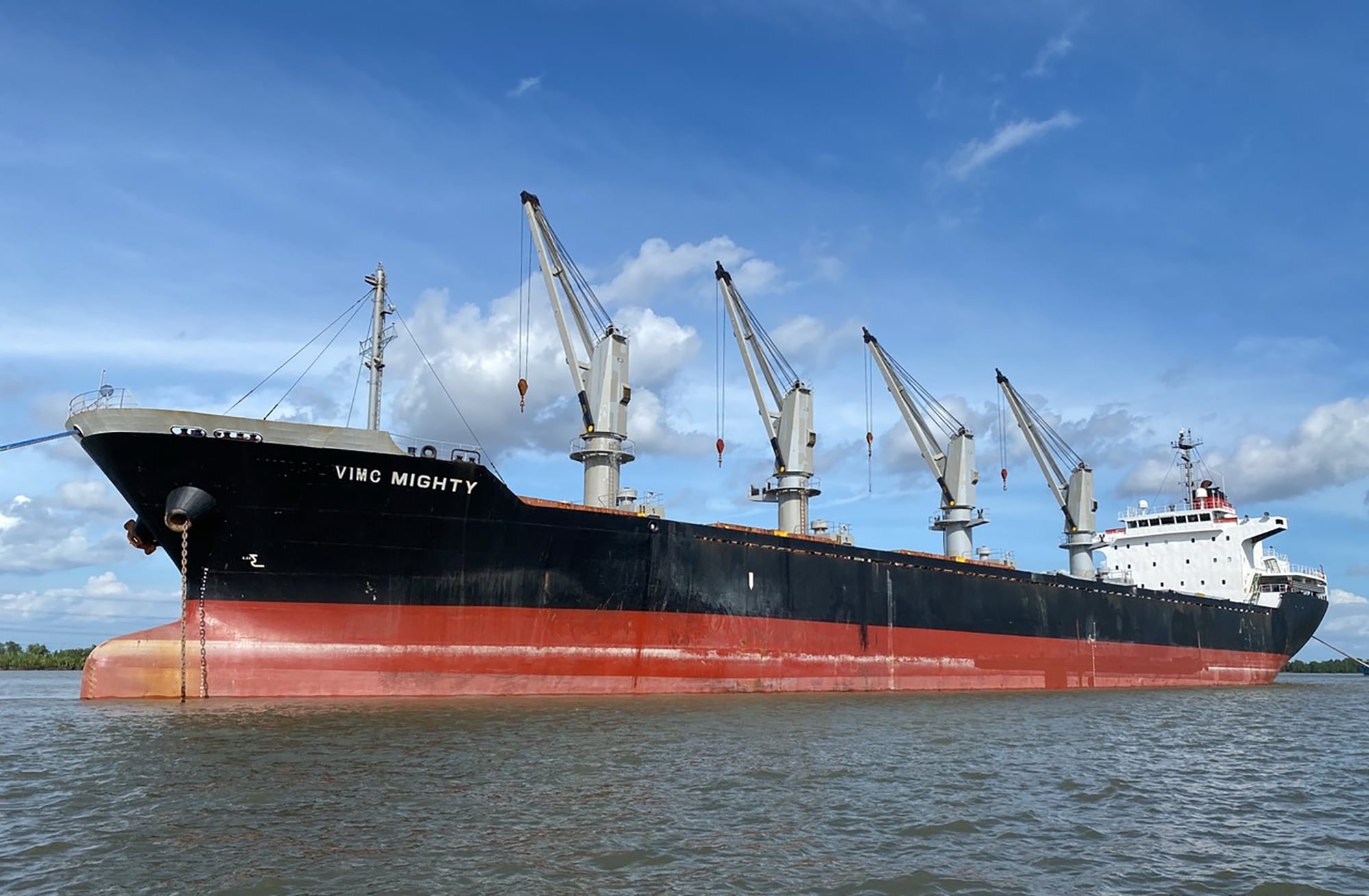
Investing in and developing the fleet to meet transportation needs and international trends is becoming increasingly urgent.
According to the company's leaders, the plan is scrutinized down to the smallest detail, because even a small fluctuation could alter the entire investment financial flow.
Not only VIMC, but recently, many shipping companies have also accelerated the upgrading of their fleets. Among them, Hai An Transport and Stevedoring Joint Stock Company recently received the container ship Haian Iris, bringing its total number of container ships to 18.
In the large cargo ship segment, Viet Thuan Transport Company Limited has launched a project to build 8 new international vessels with no restrictions, with a total investment of over 2,600 billion VND, determined to break into offshore shipping routes.
PV Trans – a major oil and gas transportation company – also plans to invest 3,525 billion VND in its fleet this year. The investment portfolio is broad, ranging from MR product tankers, bulk carriers, Aframax crude oil tankers, to LNG/VLGC gas tankers. Last year alone, the company added 8 new vessels.
Fleet capacity barriers
However, behind these grandiose investment plans lies an overall picture that is not yet truly promising. According to statistics up to the end of August 2025, the Vietnamese maritime fleet has more than 1,400 vessels, with a total deadweight tonnage of approximately 9.4 million DWT and a total gross tonnage of over 5.8 million GT.
Of these, cargo ships account for 933 vessels, with a total deadweight tonnage of 8.2 million DWT. Although the average deadweight tonnage has increased from 6,000 to 8,900 DWT/ship, the average annual growth rate is only 4.8%, and Vietnam's fleet still only holds 0.8% of the global fleet.
In 2022, the plan to develop Vietnam's maritime transport fleet was approved, with the expectation of increasing Vietnam's market share of import and export cargo transport by 10% by 2026. However, after three years of implementation, the results have only reached an average of 7.3% per year – a significant gap compared to the target.
According to Mr. Hoang Hong Giang, Deputy Director of the Vietnam Maritime and Inland Waterways Administration, many policies have been adjusted to create favorable conditions for businesses. Notably, Decree 247/2025 allows extending the age limit for container ships to 17 years in some special cases; and changes the method of calculating ship age based on the handover date, giving businesses more flexibility in investment.
However, the biggest obstacle is not the procedures, but the fact that Vietnam's fleet capacity is increasing too slowly compared to the market.
While cargo throughput at Vietnamese ports has increased by over 10% annually, the Vietnamese shipping fleet has only grown by 0.91% annually. Conversely, international shipping companies have seen their fleets grow by 3.15% annually, continuously adding large-tonnage vessels and deploying them on global routes.
Therefore, although the Vietnamese fleet handles almost the entire domestic market, when entering the international arena, Vietnamese businesses immediately face disadvantages: small ships, short routes, lack of service networks, lack of a complete supply chain, and high operating costs.
Restrictions on access to long-term credit, low interest rates, and the complexity of procedures for investing in ships using state capital also make it more difficult for businesses to compete.
Competition is not just about buying ships.
A business leader shared that some shipbuilding projects drag on for years simply because of inconsistent appraisal procedures and technical requirements. By the time the project is approved, the prices of materials and ships worldwide have changed, requiring the entire financial plan to be revised.
In addition, the Vietnam Maritime and Inland Waterways Administration stated that the Vietnamese fleet lacks high-quality crew members, especially those meeting the standards for operating vessels using new fuels such as LNG or methanol – standards that are becoming the "green passport" of global maritime transport.
Vietnamese businesses are virtually empty-handed in the international container shipping market – a sector where foreign shipping companies have established massive global networks, investing in everything from seaports and logistics to mother ships and smaller vessels.
In light of this situation, Mr. Do Tien Duc, a member of the VIMC Board of Directors, believes that for the sustainable development of the Vietnamese fleet, especially in the context of green transition, the State needs to enact specific, practical, and sufficiently strong preferential policies.
These include key solutions such as: preferential long-term credit for businesses building new green ships; exemption and reduction of import tax, VAT, and corporate income tax for LNG, methanol, and hybrid ships; exemption from import tax on green technology equipment and materials that Vietnam cannot yet produce; and building a model of leading maritime transport enterprises capable of international competitiveness…
According to the leaders of the Vietnam Maritime and Inland Waterway Administration, they are studying the consolidation of the Maritime Code and the Law on Inland Waterway Traffic to eliminate overlaps, create a unified legal framework, and meet the requirements of multimodal transport.
Ship registration, flag change, and licensing procedures are also being heavily digitized to shorten processing times and reduce costs for businesses.
According to Decree 247/2025 amending and supplementing a number of articles of Government Decree No. 171/2016 on registration, deregistration and purchase, sale and construction of seagoing vessels, the age limit for seagoing vessels registered in Vietnam is no more than 10 years for passenger ships, submarines, submersibles, floating storage facilities, and mobile platforms flying foreign flags when registered in Vietnam. This limit is no more than 15 years for other types of seagoing vessels, floating storage facilities, and mobile platforms.
In special cases, as decided by the Minister of Construction, the lifespan shall not exceed 17 years for container ships with a capacity of 1500 TEUs or more; and not exceed 20 years for other types of vessels: chemical tankers, liquefied gas carriers, oil tankers, or floating storage vessels…
Construction Newspaper
Source: https://vimc.co/doi-tau-viet-can-gi-de-vuon-ra-bien-lon/





![[Photo] “Red Journey” 2026: Vietnamese Youth Continue Building the Bridge of Friendship Between Vietnam and China](https://vphoto.vietnam.vn/thumb/1200x675/vietnam/resource/IMAGE/2026/04/20/1776629730866_4055880775670638308-9618-4200-jpg.webp)














































































Comment (0)