Rare wild animals were rescued and brought back to Vu Quang National Park.
Vu Quang National Park has received many rare animals such as pythons, flamingos, and golden monkeys for conservation and release back into the wild.
Báo Khoa học và Đời sống•12/12/2025
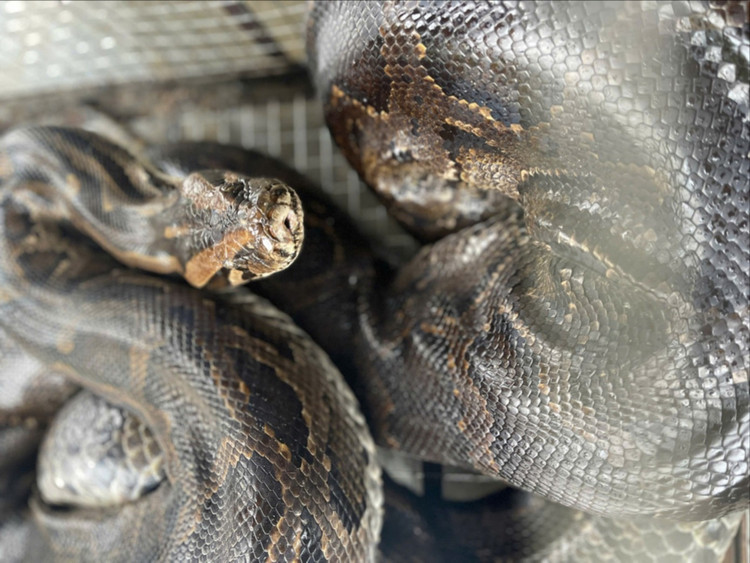
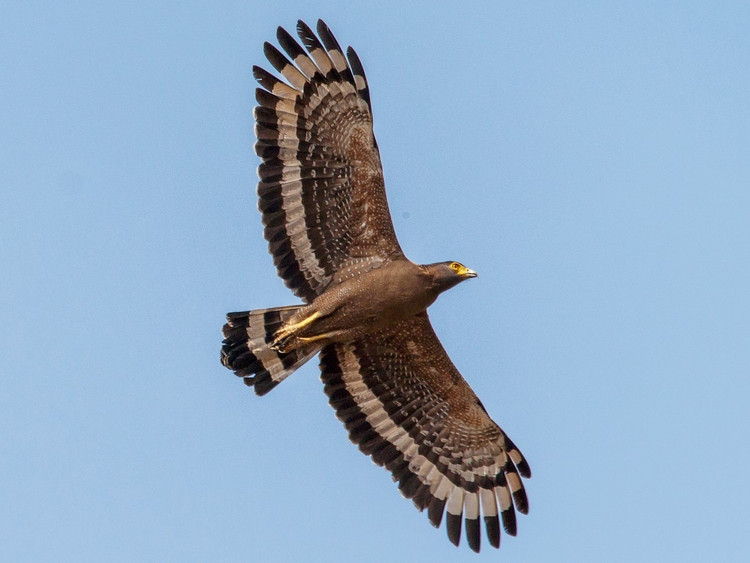
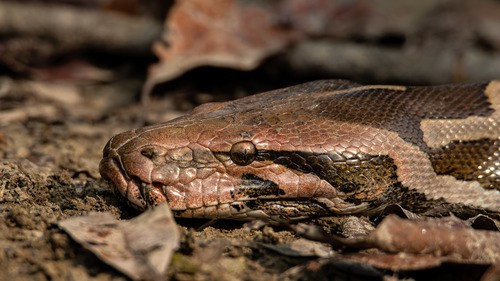
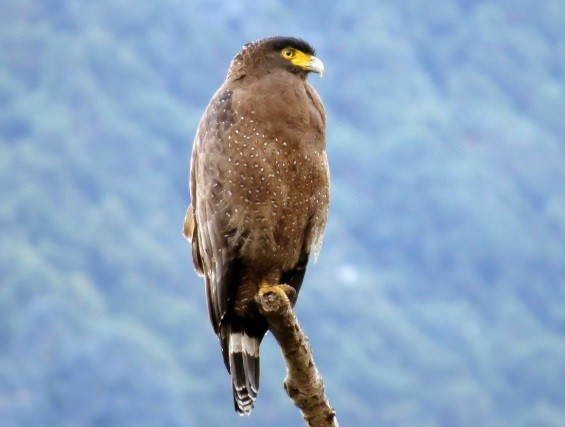
Recently, Vu Quang National Park ( Ha Tinh province ) has received many rare animals surrendered by local people. Most recently, on December 11th, the Duc Dong commune police persuaded Mr. Nguyen Van Thuyet (born in 1966, residing in Tan Thanh village, Duc Dong commune) to hand over two pythons weighing 11 kg to Vu Quang National Park for release back into the wild. Photo: Tien Phong. Previously, on December 10th, the Ky Anh Commune Police, in coordination with the Ky Anh Forest Management Unit, persuaded the family of Ms. Do Thi Dung (born in 1989, residing in Dong Phu village, Ky Anh commune) to hand over two Burmese Kite birds, belonging to group IB, for release back into Vu Quang National Park. Photo: Macaulay Library ML 60729071.
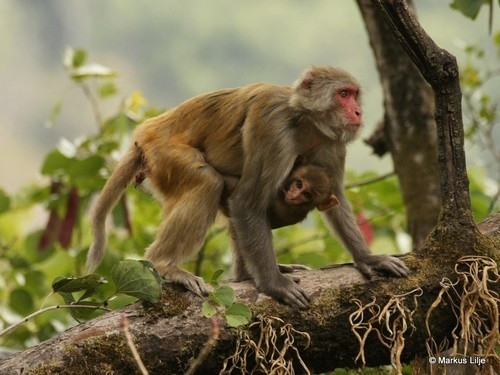
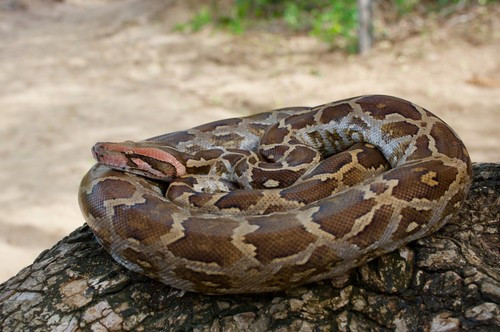
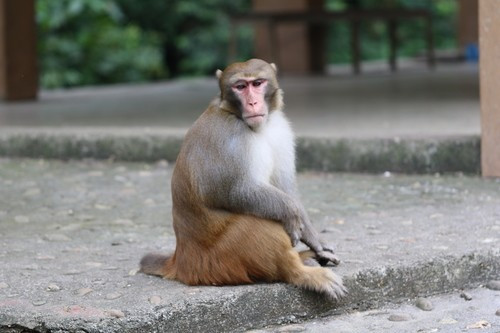
On December 9th, the Son Kim 1 commune police successfully persuaded the family of Ms. Pham Thi Nhung (residing in Kim Cuong 2 village, Son Kim 1 commune) to hand over a golden monkey to Vu Quang National Park for care and eventual release back into the wild. Photo: Markus Lilje. The Burmese python, scientifically known as Python molurus, belongs to group IIB. This endangered and rare forest animal is also listed in the Red Book of Vietnamese animals and needs to be protected and conserved; its exploitation and use are strictly prohibited. Photo: John Sullivan. The diet of the Burmese python mainly consists of rodents, frogs, and reptiles. In recent times, the Burmese python population has declined due to habitat loss and hunting. Photo: Uday Agashe.
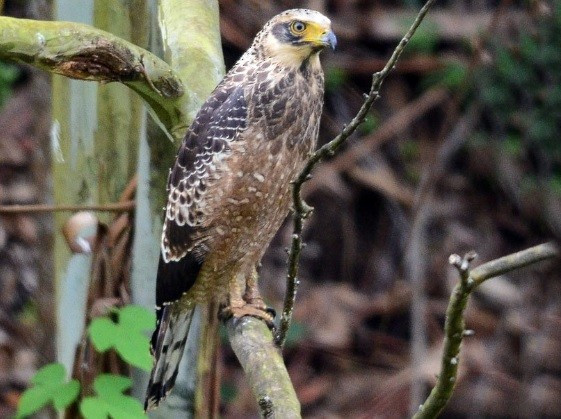
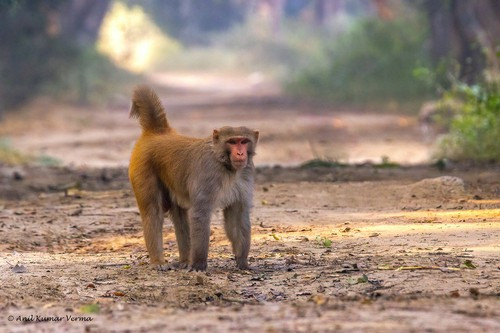
The Burmese Kite, scientifically known as Spilornis cheela, is a Group IIB species that is strictly protected. Photo: Donnie Tsui. The Burmese Flower Eagle, also known as the Burmese Flower Hawk, is a medium-sized bird of prey (approximately 56-74 cm) belonging to the Accipitridae family. They specialize in eating snakes and primarily inhabit tropical forests throughout Asia. Photo: Nikolaj Mølgaard Thomsen. The golden monkey, scientifically known as Macaca mulatta, has a distribution range in South Asia, Southeast Asia, and the United States. It is an endangered and rare forest animal belonging to Group IIB according to Decree 84/2021/ND-CP and is listed in the Vietnamese Red Book, designated as a priority species for protection. Photo: Donald Hobern.
In Vietnam, the rhesus monkey is distributed from the northern border to the Central Highlands provinces. This animal is the primary source of raw materials for producing tens of millions of polio vaccine doses each year. Photo: Anil Kumar Verma. Readers are invited to watch the video : More new species discovered in the Mekong River region. Source: THĐT1.

 Báo Khoa học và Đời sống•12/12/2025






![[INFOGRAPHIC] Who is the former President of Bolivia who was recently arrested?](https://vphoto.vietnam.vn/thumb/402x226/vietnam/resource/IMAGE/2025/12/12/1765543468412_thumb-cuu-tong-thong-bolivia-jpg.webp)





![[Image] Close-up of the newly discovered "sacred road" at My Son Sanctuary](/_next/image?url=https%3A%2F%2Fvphoto.vietnam.vn%2Fthumb%2F1200x675%2Fvietnam%2Fresource%2FIMAGE%2F2025%2F12%2F13%2F1765587881240_ndo_br_ms5-jpg.webp&w=3840&q=75)
























































Comment (0)